
Sooty Grouse Identification Guide
A large, dark gray grouse of Pacific coastal forests, males identified by a yellow-orange eyebrow comb and inflatable yellow neck sac during their deep hooting display.
Read the full Sooty Grouse encyclopedia entry →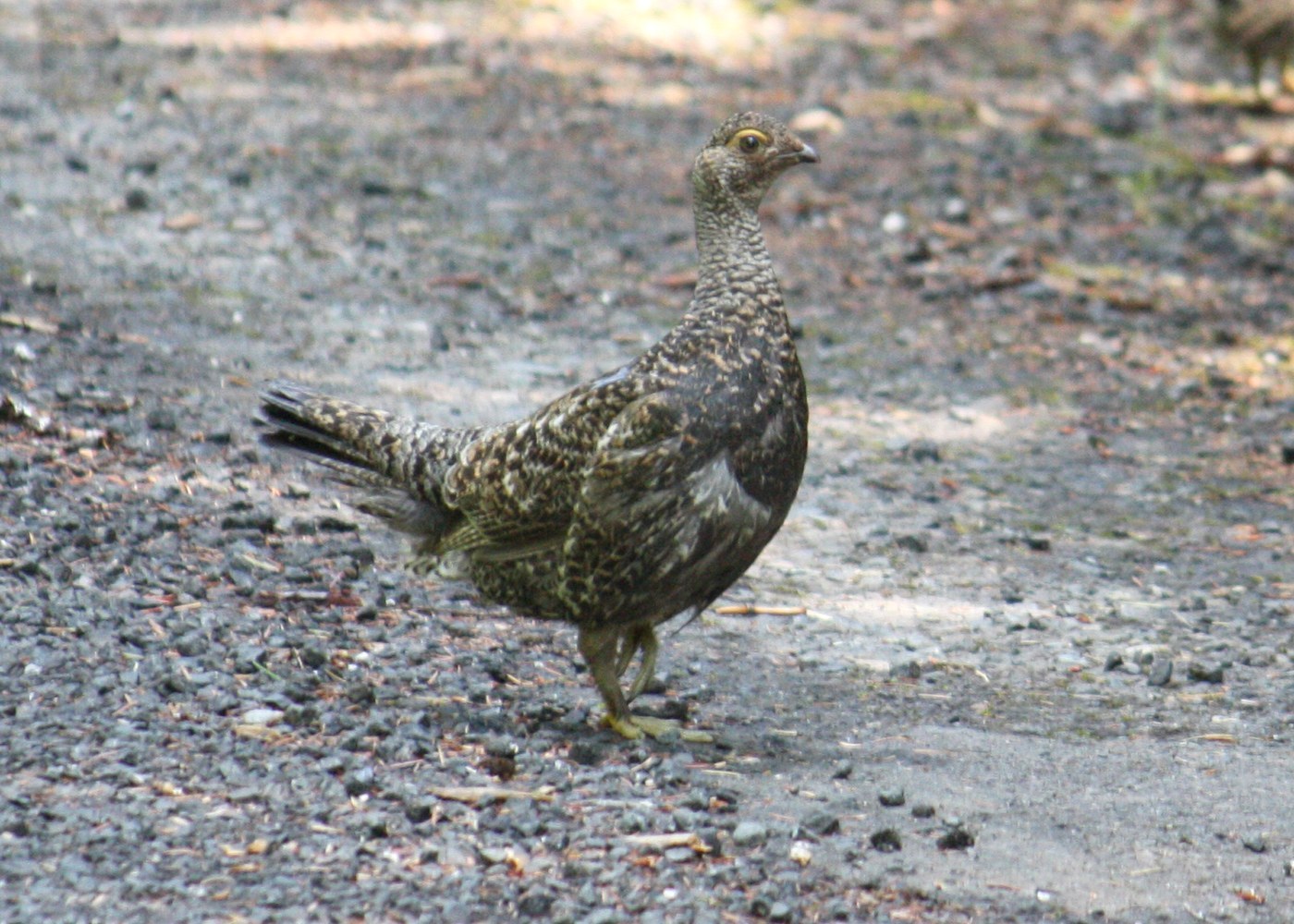
Key Field Marks
- Size & shape: Large grouse, males up to about 20 inches, females somewhat smaller; a plump body with a small head and, in males, an inflatable neck sac used in display.
- Plumage: Males are sooty gray to blackish overall with a plain dark tail often showing a pale gray terminal band; during display, males show a bright yellow-orange comb over the eye and inflate a yellow neck sac framed by white feather patches. Females are cryptically mottled brown, gray, and buff for camouflage on the nest.
- Habitat cue: Found in coniferous forest along the Pacific coast — a key range clue separating it from its close relative.
Separating It From Similar Species
- Dusky Grouse: The former "Blue Grouse" was split into Sooty Grouse (Pacific coastal ranges) and Dusky Grouse (interior Rocky Mountains); the most reliable field difference is the neck sac color during male display — yellow in Sooty Grouse versus purplish-red to purple in Dusky Grouse — along with largely non-overlapping ranges.
- Ruffed Grouse: Smaller, with a ruffed neck collar, a strongly banded tail with a broad dark subterminal band, and a very different low wing-drumming display rather than vocal hooting.
- Overall: Large size, dark sooty coloration, and coastal Pacific range point to Sooty Grouse; confirm males with a yellow (not reddish-purple) neck sac if seen displaying.
Where & When to See One
- Habitat: Coniferous and mixed forests along the Pacific coast, from sea level up into subalpine forest.
- Range: Coastal mountains and ranges from southern Alaska south through British Columbia, Washington, Oregon, and California.
- Behavior/season: Performs an unusual reversed altitudinal migration — moving to lower-elevation, more open forest edges and clearings to breed in spring, then climbing to dense high-elevation conifers for winter. Males display and hoot mainly in spring.
Voice
- Males give a series of deep, muffled, far-carrying hoots from a tree perch during spring display — the low frequency makes the sound notoriously hard to pinpoint by ear, often seeming to come from everywhere and nowhere at once.
Frequently asked questions
How do you tell Sooty Grouse from Dusky Grouse?
The two were once considered one species (Blue Grouse). The clearest difference is the male's neck sac color during display — yellow in Sooty Grouse versus purplish-red in Dusky Grouse — combined with their largely separate ranges, Sooty Grouse along the Pacific coast and Dusky Grouse in the interior Rockies.
Why is it hard to locate a hooting Sooty Grouse?
Its deep, low-frequency hoots are very difficult for the human ear to localize, so a displaying male can sound close by while actually being far away or vice versa.
What kind of migration does Sooty Grouse make?
It makes a reversed altitudinal migration, moving down to lower, more open elevations to breed in spring and then climbing up into dense high-elevation conifer forest for winter.
What habitat should I search for Sooty Grouse?
Coniferous and mixed forest along the Pacific coast mountains from Alaska south to California, from near sea level up to subalpine elevations depending on season.