Wild Turkey Identification Guide
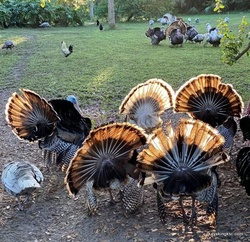
A large, unmistakable ground bird of North American woodlands with iridescent bronze-green plumage, a bare blue-and-red head, and a fanning tail displayed by strutting males.
Read the full Wild Turkey encyclopedia entry →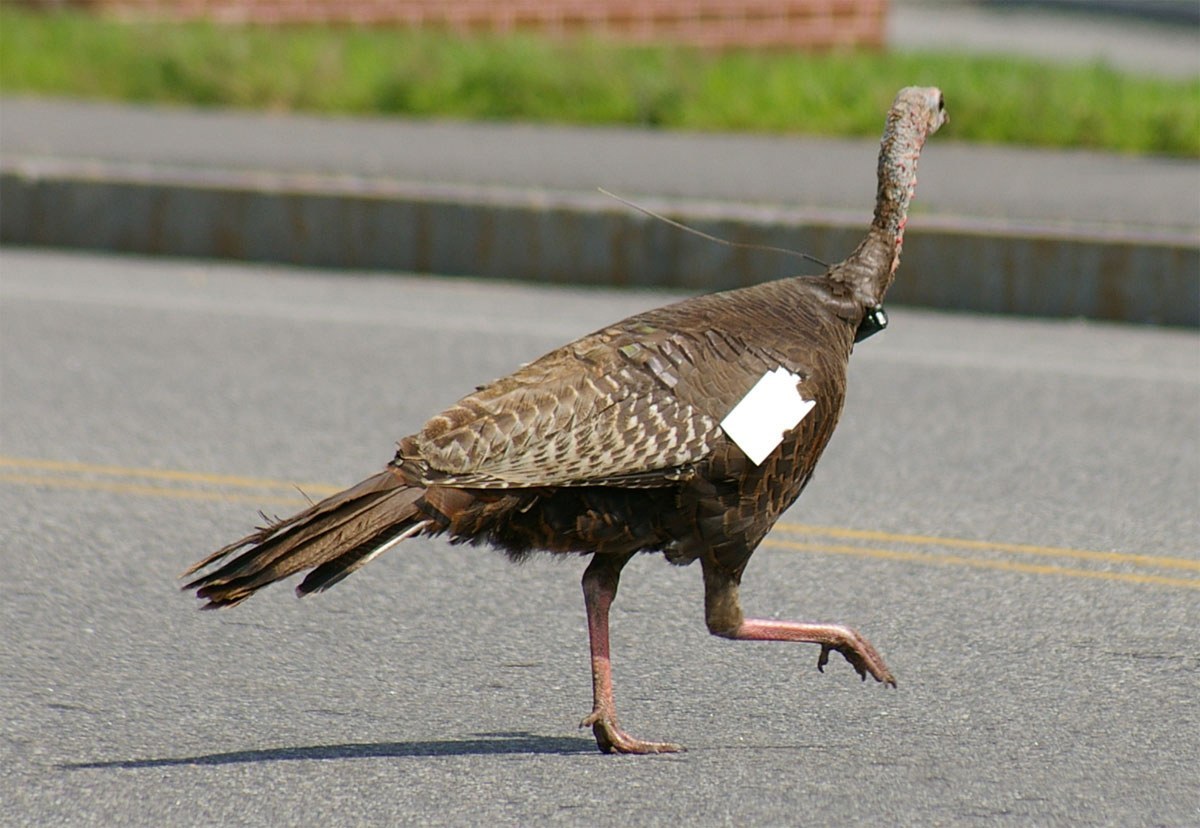
Overview
The Wild Turkey (Meleagris gallopavo) is North America's largest game bird and an unmistakable resident of forests, woodland edges, and increasingly suburban areas across most of the continental United States and parts of Canada and Mexico. Once eliminated from much of its range, restoration efforts have made it common and widespread again.
Key Field Marks
- Size & shape: Very large, plump-bodied, with a small bare head on a longish neck, sturdy legs, and a broad, fan-shaped tail.
- Plumage: Overall dark, with iridescent bronze, green, and copper sheen on the body feathers; wings show barred black-and-white flight feathers.
- Head: Bare skin on the head and neck, colored blue, red, and white in varying combinations, becoming more intensely colored and blue on displaying males; males have a fleshy wattle under the chin and a snood hanging over the bill.
- Sexual differences: Males (toms) are larger with a "beard" of coarse, hair-like feathers projecting from the breast and often spurs on the legs; females (hens) are smaller, duller brown overall, and usually lack a beard (though a small percentage of hens can grow one).
- Tail: Broad tail with a pale buffy-brown to chestnut terminal band (varies somewhat by subspecies); males fan the tail dramatically in courtship strutting displays.
- Behavior: Forages on the ground in flocks, scratching through leaf litter for seeds, nuts (especially acorns), and insects; roosts in trees at night; strong runner, capable of powerful, brief bursts of flight.
Separating It From Similar Species
- Domestic/feral turkeys: Farmyard or feral turkeys can resemble Wild Turkeys but often show white feather tips, all-white plumage, or other odd color patterns from domestic breeding, plus tamer behavior around humans; wild birds are wary and flee quickly.
- Vultures (at a distance, silhouette only): Roosting or ground-perched Turkey Vultures can superficially suggest a dark bird of similar bulk, but vultures have a small, naked reddish head with a hooked bill, not the fan tail or bronze iridescence of a turkey, and soar rather than walk in flocks.
- Grouse species: Much smaller than Wild Turkey, with feathered heads (not bare), and generally more secretive.
Where and When to Find One
Wild Turkeys are year-round residents across most of the continental United States, southern Canada, and parts of Mexico, found in a wide range of habitats including deciduous and mixed forests, woodland edges adjacent to fields, and, increasingly, parks and suburban neighborhoods. They are non-migratory, so any time of year is good for finding them, though spring is especially notable for the loud gobbling and strutting displays of courting males at dawn.
Voice
The classic "gobble" is given by males, especially in spring, a loud, rapid, gurgling series audible over long distances and used to attract hens and assert territory. Both sexes also give a variety of clucks, yelps, and purrs used in flock communication, along with a sharp "putt" alarm call.
Frequently asked questions
How can I tell a male from a female Wild Turkey?
Males are larger with more vividly colored blue-and-red heads, iridescent body plumage, and typically a beard of hair-like feathers on the breast, while females are smaller, duller brown, and usually lack a beard.
What does a Wild Turkey eat?
It forages on the ground for acorns and other nuts, seeds, berries, and insects, scratching through leaf litter with its feet.
Do Wild Turkeys migrate?
No, they are non-migratory and remain in the same general area year-round, though they may shift locally between roosting and foraging habitat with the seasons.
What time of year is best for hearing turkeys gobble?
Spring, particularly early morning during the breeding season, when males gobble loudly and strut to attract hens.
Wild Turkey identified by the community
Recent Wild Turkey sightings identified with Bird Identifier.