
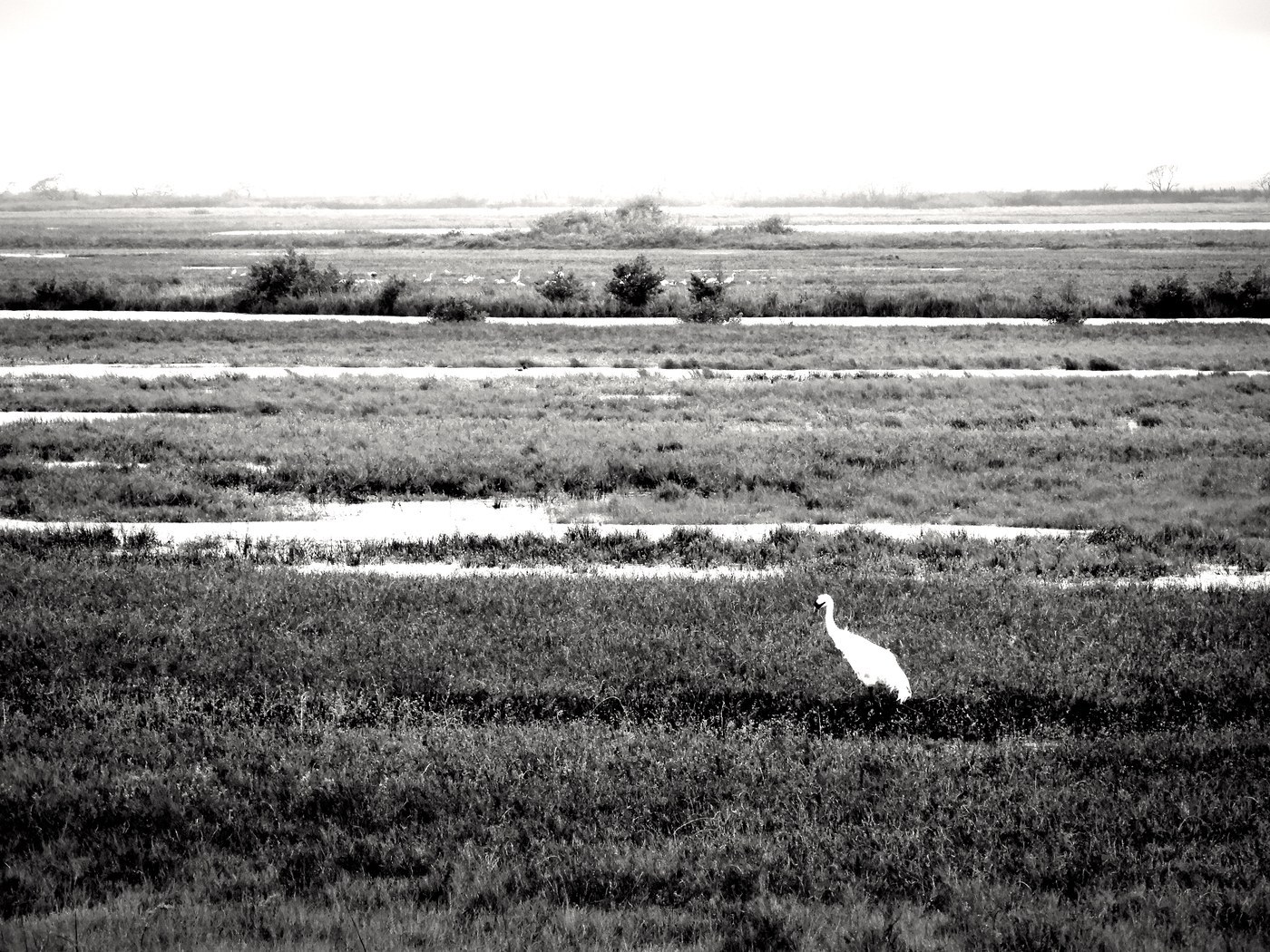
Whooping Crane
Grus americana
North America's tallest bird, a rare, snow-white crane with black wingtips that has become a flagship symbol of wildlife conservation after nearly going extinct.
- Size
- 150-160 cm (59-63 in) long, 200-230 cm wingspan
- Habitat
- wetlands, marshes, and coastal estuaries of North America
- Type
- wading-bird
Spotted a bird like this?
Identify any bird from a photo, free.
Overview
The Whooping Crane is the tallest bird in North America, standing up to about 1.5 meters, with immaculate white plumage set off by black wingtips visible in flight, a red crown, and a dark facial 'mustache' mark. Its name comes from its loud, far-carrying whooping call.
The species is one of the most celebrated conservation success stories in North America, having declined to as few as around 15-21 individuals in the wild by the 1940s before intensive protection, captive breeding, and reintroduction efforts helped the population slowly recover, though it remains Endangered.
How to identify it
Key field marks
- Very tall, entirely white body with black primary flight feathers visible in flight
- Red bare crown patch and a black 'mustache' stripe near the base of the bill
- Long dark legs and a long, straight, dark bill
- Flies with neck extended, unlike herons or egrets
Similar species
The Sandhill Crane is grey rather than white and lacks black wingtips. Snow Goose and American White Pelican are both white with black wingtips but are much smaller (goose) or have a huge orange bill and pouch (pelican) and do not fly with the long, extended crane silhouette.
Habitat & range
The only self-sustaining wild migratory population of Whooping Cranes breeds in the wetlands of Wood Buffalo National Park in northern Canada and winters along the Texas Gulf Coast at Aransas National Wildlife Refuge, undertaking one of the longest migrations of any crane species, roughly 4,000 km round trip.
Additional reintroduced, non-migratory and migratory populations have been established in Florida, Louisiana, and a route between Wisconsin and Florida (the latter aided historically by ultralight-led migration training of captive-reared birds), as part of ongoing efforts to build redundancy into the species' recovery.
Behavior & voice
Whooping Cranes forage in shallow wetlands and coastal marshes for crabs, fish, frogs, insects, and plant matter including waste grain in agricultural fields, and are highly territorial while breeding, defending large wetland territories from other cranes.
Their call is a loud, resonant, bugling 'whoop' that can carry for several kilometers, produced by an elongated trachea coiled within the breastbone. Pairs perform elaborate dancing displays, including bowing, jumping, and wing-flapping, and generally mate for life. Nests are built on the ground in marshes, typically with a clutch of two eggs, though usually only one chick survives to fledging. Both parents share incubation and chick-rearing duties.
Frequently asked questions
Why is the Whooping Crane endangered?
Historic hunting and, especially, widespread loss of wetland habitat reduced the population to roughly 15-21 wild birds by the 1940s; intensive conservation has since helped numbers recover to several hundred, but the species remains vulnerable.
Where do Whooping Cranes migrate?
The main wild population breeds in Wood Buffalo National Park, Canada, and winters at Aransas National Wildlife Refuge on the Texas Gulf Coast, a migration of roughly 4,000 km.
How can you tell a Whooping Crane from a Sandhill Crane?
Whooping Cranes are entirely white with black wingtips, while Sandhill Cranes are grey overall; Whooping Cranes are also somewhat taller.
How many Whooping Cranes are left in the wild?
Ongoing recovery efforts have grown the total wild and reintroduced population to several hundred birds, up from a low of around 15-21 in the 1940s, though the species remains Endangered.
What does a Whooping Crane's call sound like?
It is a loud, resonant, trumpeting 'whoop' that can be heard from several kilometers away, produced by an unusually long, coiled windpipe.
Whooping Crane guides
In-depth guides for identifying, finding, and understanding Whooping Crane.
Other birds you may enjoy
Demoiselle Crane
85-100 cm (33-39 in) long, 155-180 cm wingspan
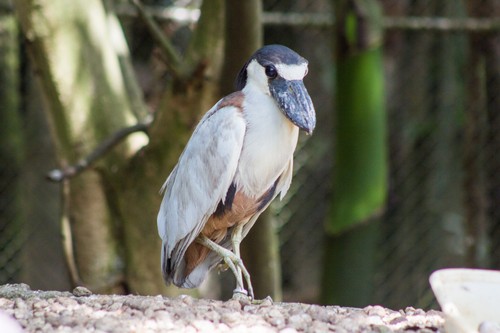
Boat-billed Heron
41-56 cm (16-22 in) long
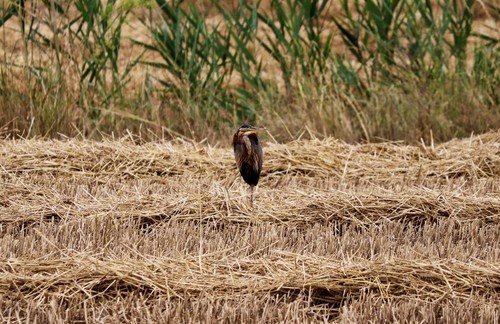
Purple Heron
78-90 cm (31-35 in) long, 120-152 cm wingspan
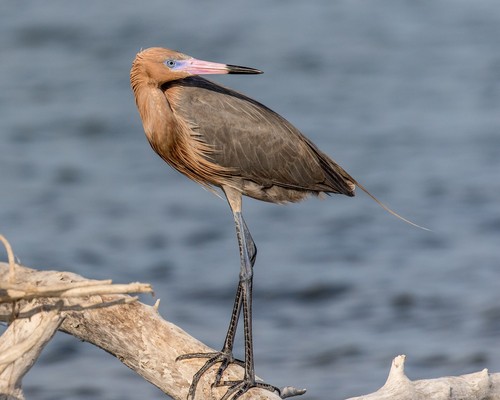
Reddish Egret
68-82 cm (27-32 in) long, 116-125 cm wingspan
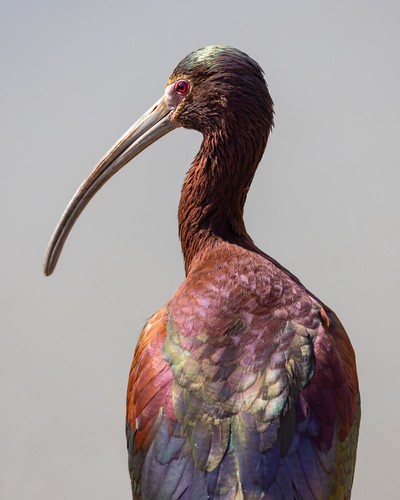
White-faced Ibis
46-56 cm (18-22 in) long, 88-93 cm wingspan
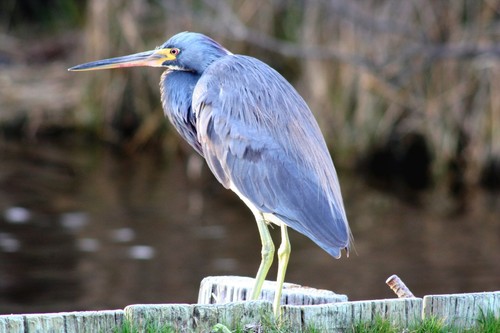
Tricolored Heron
61-76 cm (24-30 in) long, about 96 cm wingspan
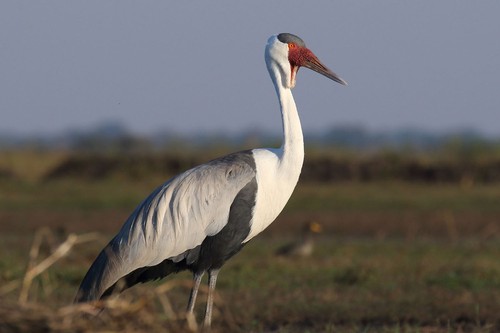
Wattled Crane
120-175 cm (47-69 in) tall, one of the tallest cranes, wingspan up to about 230 cm (7.5 ft)
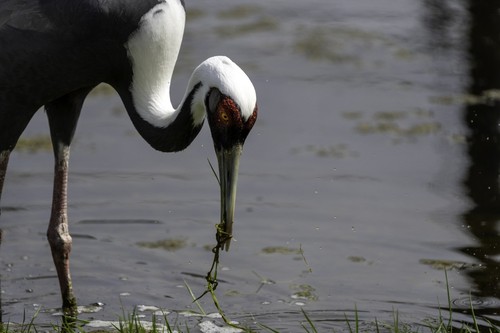
White-naped Crane
112-125 cm (44-49 in) long, 195-210 cm wingspan
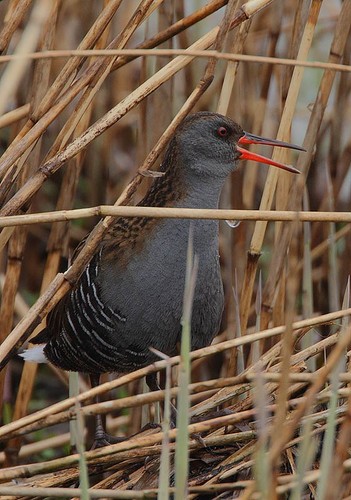
Water Rail
23-28 cm (9-11 in) long, wingspan 38-45 cm
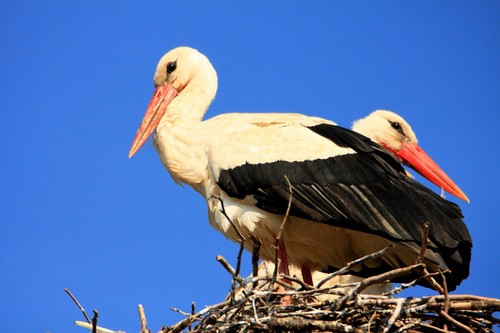
White Stork
100-125 cm (39-49 in) long, 155-215 cm wingspan
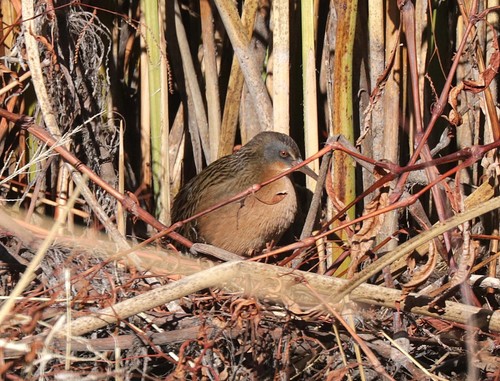
Virginia Rail
20-27 cm (8-11 in) long, wingspan 32-38 cm
Wattled Jacana
17-23 cm (7-9 in) long