
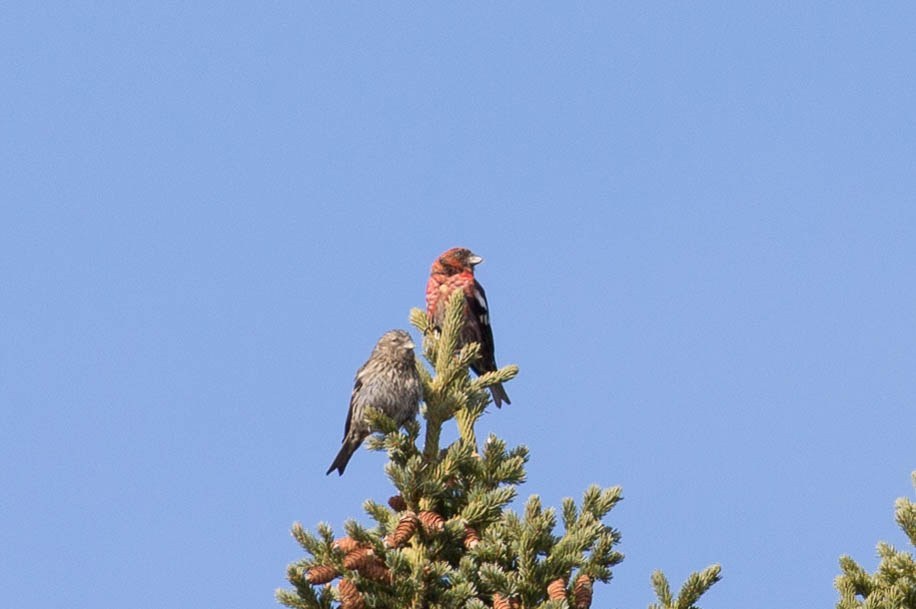
White-winged Crossbill
Loxia leucoptera
A boreal finch with a crossed bill and two bold white wing bars, specialized for feeding on spruce cones.
- Size
- 15-17 cm (6-6.7 in) long, 26-29 cm wingspan
- Habitat
- boreal spruce and tamarack forests
- Type
- songbird
Spotted a bird like this?
Identify any bird from a photo, free.
Overview
The White-winged Crossbill is a slightly smaller, more delicate relative of the Red Crossbill, sharing the same distinctive crossed mandible tips but easily distinguished by its two broad, bright white wing bars set against black wings. Adult males are rosy pink to raspberry-red overall, while females are yellowish-olive with grayish streaking. Both sexes and juveniles show the diagnostic wing bars at all ages past the nestling stage.
This species is a boreal forest specialist, most strongly tied to spruce seed crops, and like the Red Crossbill it wanders nomadically and breeds opportunistically wherever and whenever cone crops are abundant, sometimes in the depths of winter.
How to identify it
Key Field Marks
- Crossed bill tip, generally finer and more slender than in Red Crossbill
- Two broad, bold white wing bars on black wings — the single best field mark
- Males: rosy-pink to red body
- Females: olive-yellow with gray streaking, grayish rump
Similar Species
- Red Crossbill: lacks white wing bars and is generally brick-red to orange rather than pink in males.
- Pine Grosbeak: much larger and bulkier, with a straight (not crossed) bill.
- Purple Finch: lacks the crossed bill and white wing bars, and is more heavily streaked below.
Habitat & range
Habitat
White-winged Crossbills favor boreal and subalpine forests dominated by spruce and tamarack (larch), tracking cone abundance across the landscape.
Range
The species breeds across the boreal forest belt of Canada and Alaska, and in Eurasia, with the American population sometimes treated as a distinct form from the Eurasian Two-barred Crossbill.
Migration
Like the Red Crossbill, this species is a nomadic, irruptive wanderer, moving irregularly outside its core range — sometimes well south into the northern and even central United States — during years when spruce seed crops fail in the boreal zone.
Behavior & voice
Behavior
Flocks forage acrobatically in cone-laden treetops, often hanging upside down like small parrots to reach cones, and calling frequently in flight, which helps locate wandering flocks.
Voice
The flight call is a dry, rapid "chif-chif-chif"; the song is a bright, varied series of trills and warbled phrases delivered from a high perch.
Feeding
Diet is dominated by spruce seeds, supplemented by tamarack, hemlock, and other conifer seeds, plus occasional buds and insects.
Nesting
Nesting timing follows cone abundance rather than season, and can occur even in extreme winter cold. Nests are well-insulated cups built high in a conifer, and females typically lay 2-4 eggs.
Frequently asked questions
How can I tell a White-winged Crossbill from a Red Crossbill?
Look for two bold white wing bars on black wings — White-winged Crossbills have them, Red Crossbills do not — and note the more pink (rather than orange-red) tone of male White-winged Crossbills.
Why does it have crossed mandibles?
The crossed bill tips act like a specialized tool to pry apart cone scales and extract seeds, particularly from spruce cones, which are its primary food.
Where does the White-winged Crossbill live?
It breeds in boreal spruce and tamarack forests across Canada and Alaska, wandering irregularly south when cone crops fail.
Can White-winged Crossbills nest in winter?
Yes, breeding is tied to food availability rather than season, so they can nest during cold winter months if spruce cone crops are abundant.
What do White-winged Crossbills eat?
Mostly spruce seeds, along with tamarack and other conifer seeds, occasionally supplemented with buds and insects.
White-winged Crossbill guides
In-depth guides for identifying, finding, and understanding White-winged Crossbill.
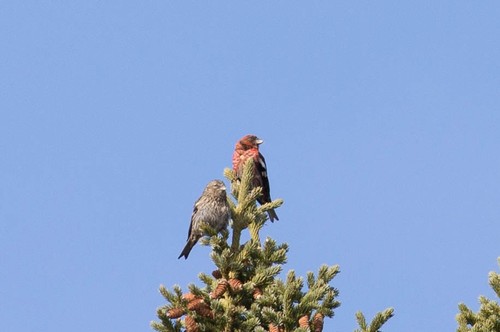
White-winged Crossbill identified by the community
Real birds identified with Bird Identifier.
Other birds you may enjoy
Black Redstart
13-14.5 cm (5.1-5.7 in) long, 23-26 cm wingspan
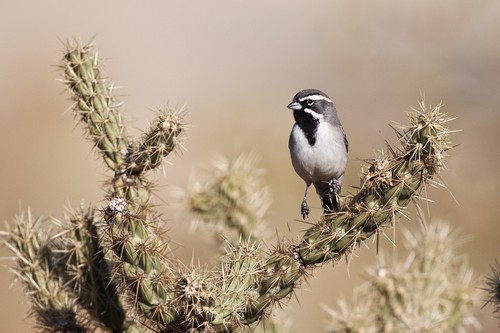
Black-throated Sparrow
12-14 cm (4.7-5.5 in) long, about 19-20 cm (7.5-8 in) wingspan
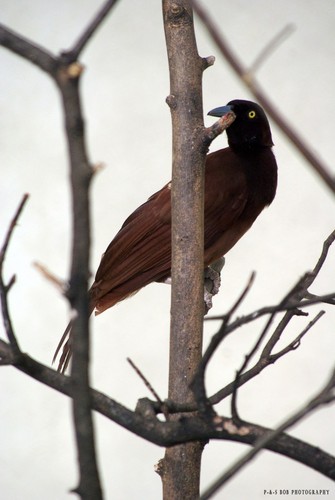
Greater Bird-of-paradise
Body about 43 cm; males with additional flank plumes up to 50 cm and long tail wires
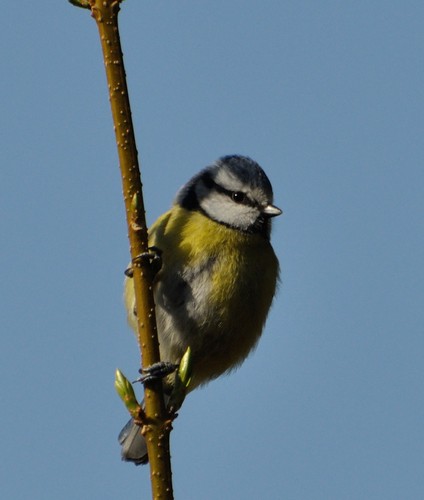
Blue Tit
11-12 cm (4.3-4.7 in) long, 17-20 cm wingspan
Red-billed Quelea
11.5–13 cm long, wingspan about 20–22 cm
White-plumed Antbird
13-14 cm (5-5.5 in) long
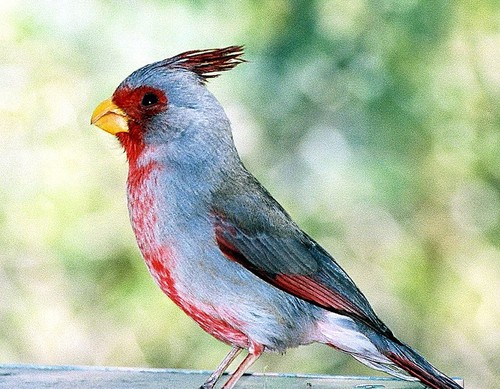
Pyrrhuloxia
19-22 cm (7.5-8.7 in) long, 30 cm wingspan
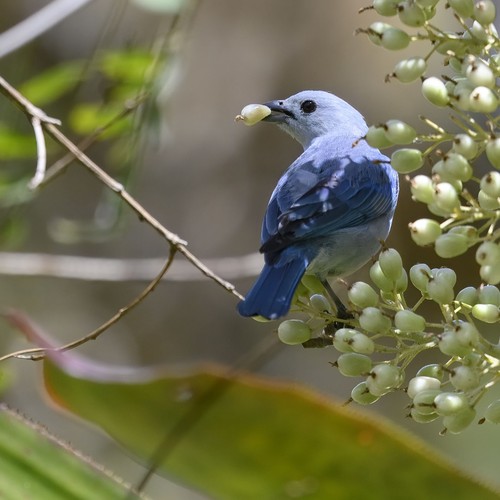
Blue-gray Tanager
16-18 cm (6-7 in) long
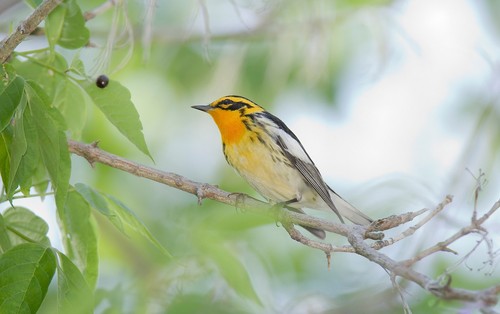
Blackburnian Warbler
11-13 cm (4.3-5.1 in) long, 20-22 cm wingspan
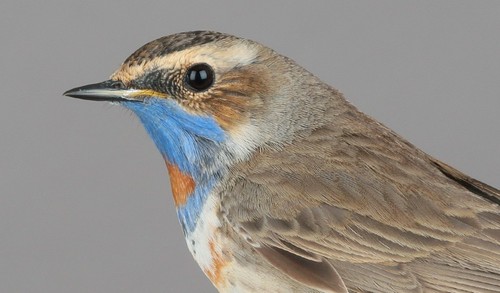
Bluethroat
13-14 cm (5.1-5.5 in) long, 20-22 cm wingspan
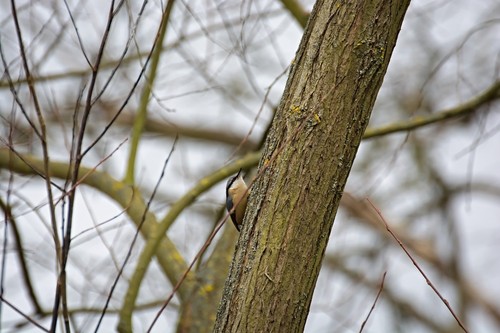
Eurasian Nuthatch
12-14.5 cm (4.7-5.7 in) long, 22.5-27 cm wingspan
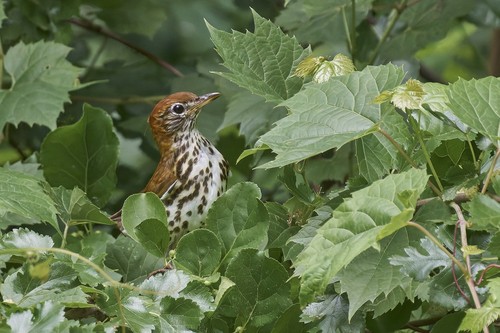
Wood Thrush
19-21 cm (7.5-8.3 in) long, about 33 cm (13 in) wingspan