
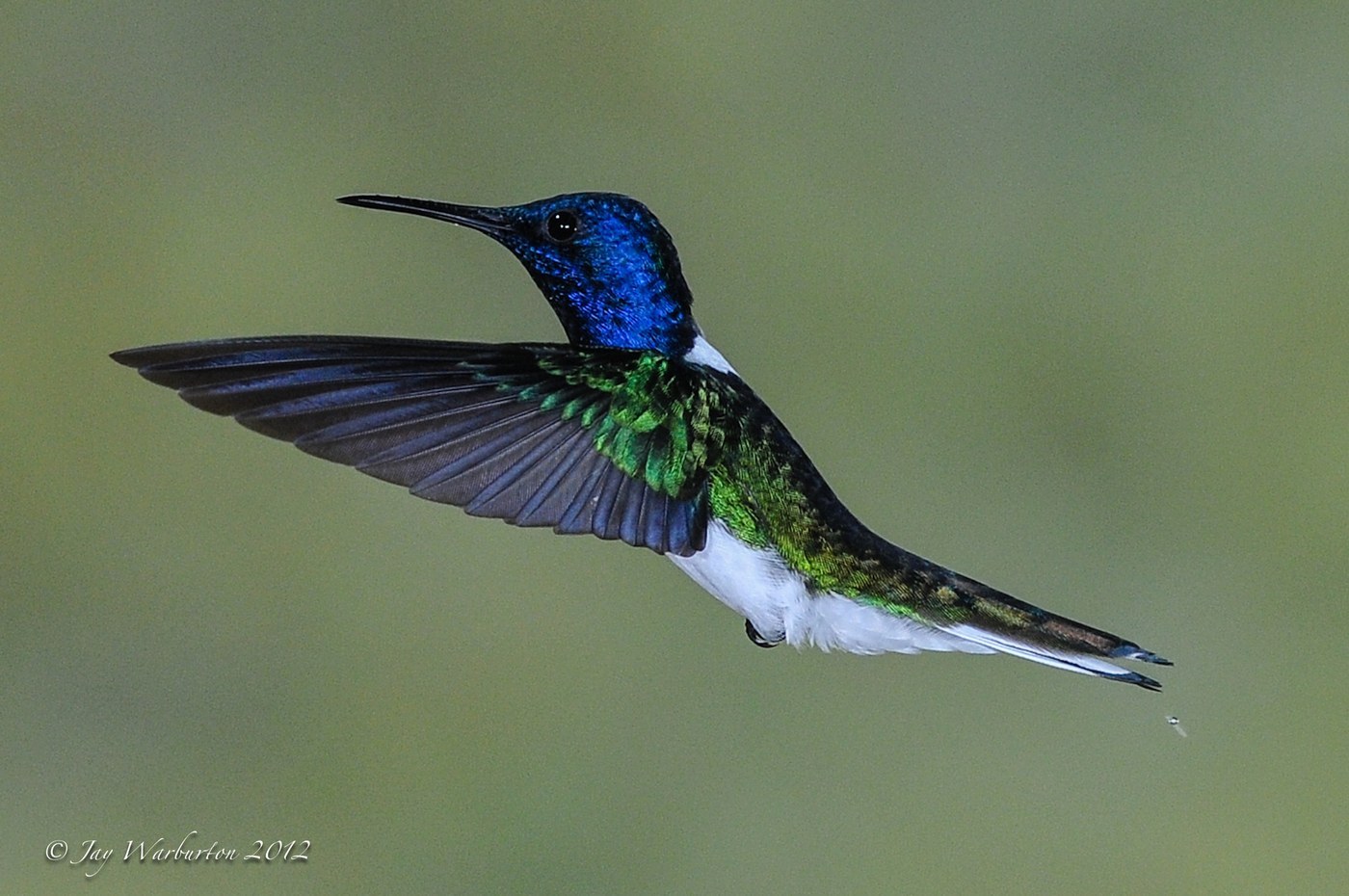
White-necked Jacobin
Florisuga mellivora
A striking Neotropical hummingbird with males showing a deep blue-violet hood, snow-white underparts, and a bold white band across the tail.
- Size
- 11-12 cm (4.3-4.7 in) long
- Habitat
- forest edges, clearings, and canopy of humid lowland forest
- Type
- hummingbird
Spotted a bird like this?
Identify any bird from a photo, free.
Overview
The White-necked Jacobin is a bold, handsome hummingbird found from Mexico south through much of tropical South America. The adult male shows a rich blue-violet head and throat that contrasts sharply with a broad white band across the nape, a green back, and clean white underparts, while the tail is mostly white with a dark central band and edge, forming a conspicuous pattern in flight.
Females and immatures are more variable, often showing a scaled or mottled green-and-white pattern on the throat and underparts rather than the male's clean-cut blocks of color, and some females can even resemble males. This species is a frequent and often dominant visitor at flowering trees and feeders, using its size and boldness to displace smaller hummingbirds.
How to identify it
Key field marks
- Males: deep blue-violet head and throat, white nape band, green back, white underparts, white tail with dark band
- Females: variable, often scaled green-and-white on throat and underparts, less clean-cut than males
- Fairly large, robust build for a hummingbird
- White in the tail is conspicuous in flight for both sexes to varying degrees
Similar species
- No other widespread lowland hummingbird combines the male's blue-violet hood with a white nape band and mostly white tail, making adult males distinctive.
- Females can be confused with various other hummingbirds but the white-based tail and often scaly underparts are helpful clues.
Habitat & range
Habitat
Found at forest edges, clearings, and in the canopy of humid lowland forest, as well as gardens and plantations near forest.
Range
Widespread from southern Mexico through Central America and into much of tropical South America, including the Amazon basin.
Migration
Generally resident, though some local and altitudinal movements occur in response to flowering.
Behavior & voice
Behavior
Bold and often dominant at flowering trees and feeders, aggressively chasing off smaller hummingbirds; frequently forages high in the canopy but also visits lower flowering shrubs.
Voice
A variety of high, squeaky chattering notes and thin chips, without a highly distinctive song.
Feeding
Feeds on nectar from a wide range of flowering trees and shrubs, and catches small insects in aerial sallies.
Nesting
Builds a cup nest of plant down and moss, often on a horizontal branch or vine; the female incubates the typical clutch of 2 white eggs alone.
Frequently asked questions
How do you identify a White-necked Jacobin?
Adult males show a blue-violet head, a white band across the nape, a green back, white underparts, and a mostly white tail; females are more variable with scaled green-and-white underparts.
What does a White-necked Jacobin eat?
Mainly nectar from flowering trees and shrubs, along with small insects caught in flight.
Where does the White-necked Jacobin live?
From southern Mexico through Central America and much of tropical South America, in forest edges and clearings.
Are White-necked Jacobins aggressive at feeders?
Yes, they are often bold and dominant, frequently chasing smaller hummingbirds away from flowering trees and feeders.
White-necked Jacobin guides
In-depth guides for identifying, finding, and understanding White-necked Jacobin.
Other birds you may enjoy
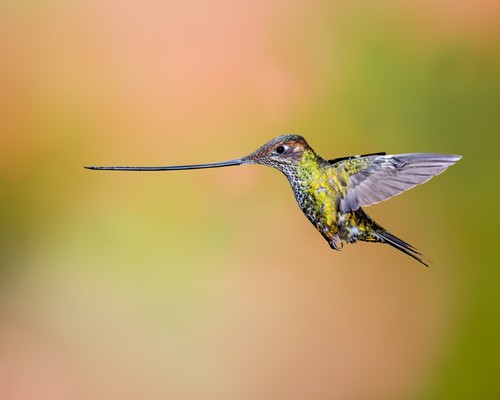
Sword-billed Hummingbird
Body about 13-15 cm (5-6 in) including a bill up to 10 cm long, the longest bill relative to body size of any bird
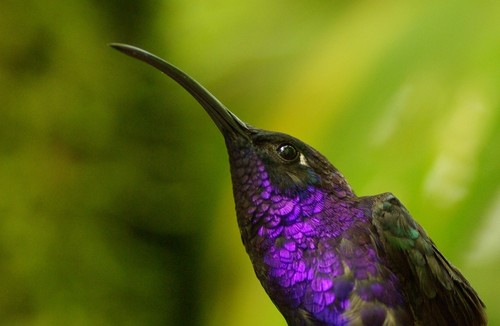
Violet Sabrewing
14-15 cm (5.5-6 in) long
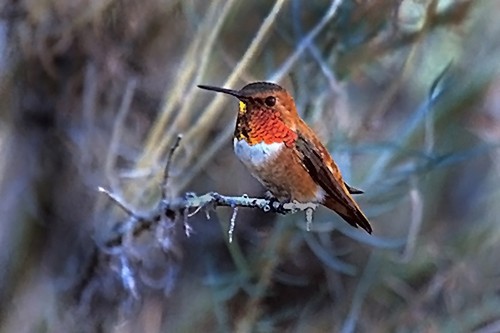
Rufous Hummingbird
8-9 cm (3-3.5 in) long, 11 cm wingspan
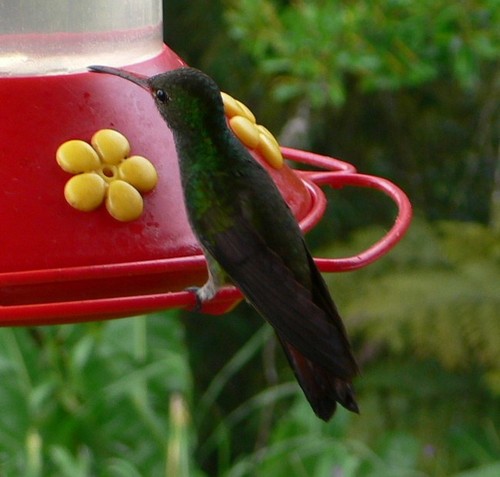
Rufous-tailed Hummingbird
10-11.5 cm (4-4.5 in) long
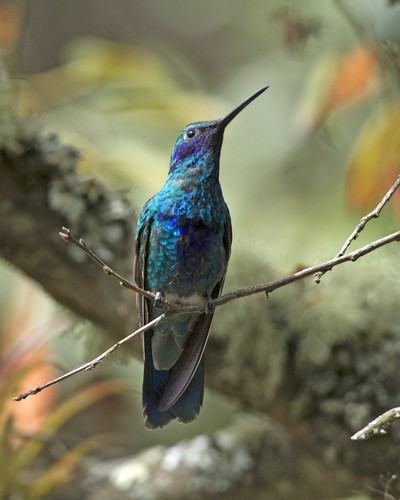
Sparkling Violetear
13-14 cm (5-5.5 in) long including bill
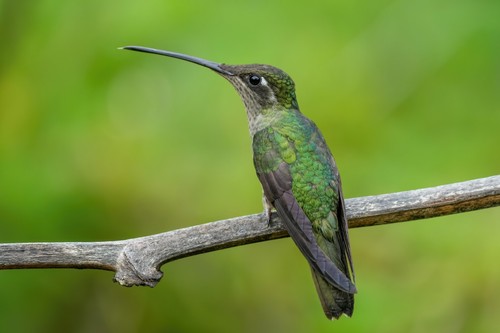
Rivoli's Hummingbird
11-14 cm (4.5-5.5 in) long, 17-18 cm wingspan
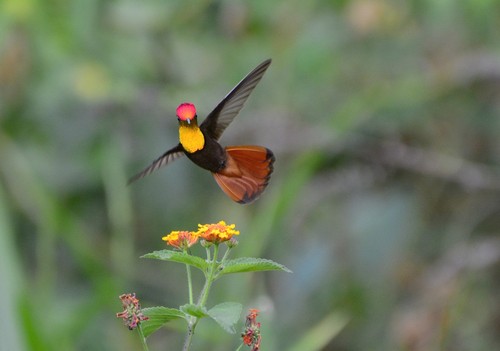
Ruby-topaz Hummingbird
7.5-9 cm (3-3.5 in) long
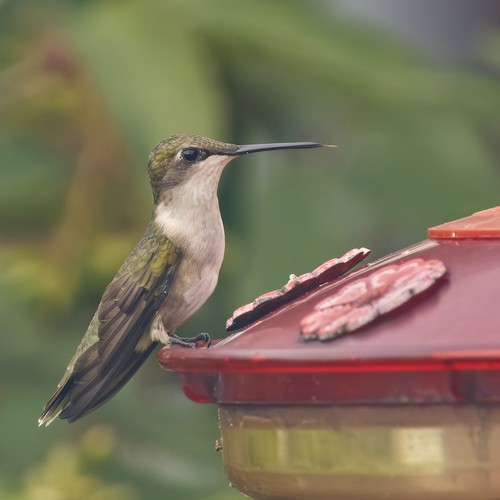
Ruby-throated Hummingbird
7-9 cm (3-3.5 in) long, 8-11 cm wingspan
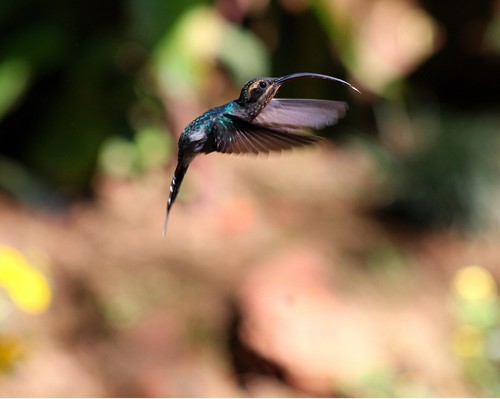
Green Hermit
15-16 cm (6-6.3 in) long including elongated central tail feathers
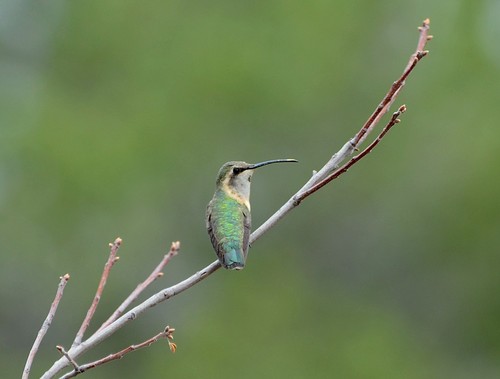
Lucifer Hummingbird
8.5-9.5 cm (3.5 in) long, 11 cm wingspan
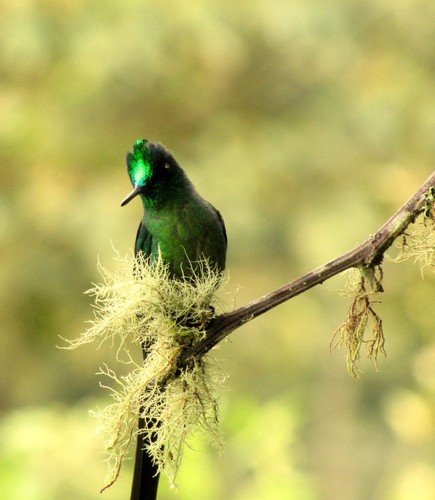
Long-tailed Sylph
males 18-19 cm (7-7.5 in) including tail; females 9-10 cm (3.5-4 in)
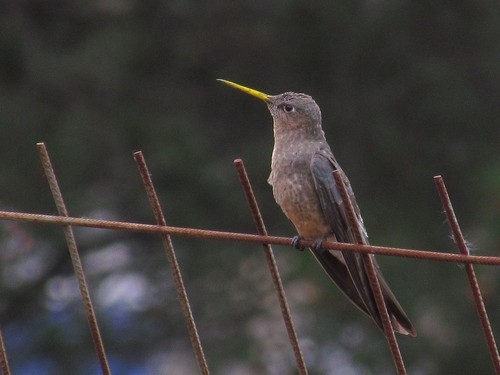
Giant Hummingbird
20-23 cm (8-9 in) long, largest hummingbird species in the world