
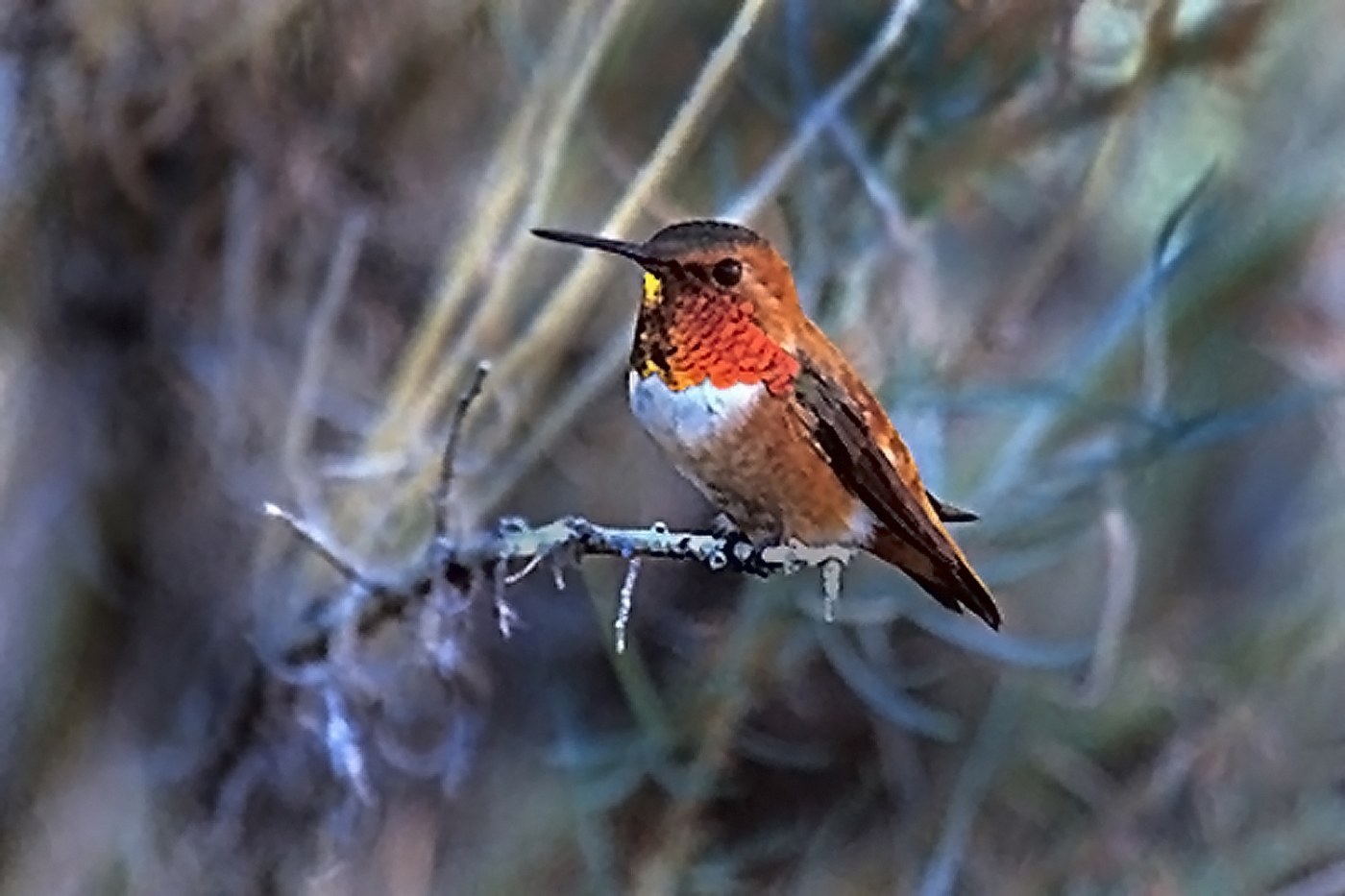
Rufous Hummingbird
Selasphorus rufus
A tiny, fiery-orange hummingbird famous for its feisty temperament and one of the longest migrations of any bird its size.
- Size
- 8-9 cm (3-3.5 in) long, 11 cm wingspan
- Habitat
- open woodlands, forest edges, mountain meadows, and gardens
- Type
- hummingbird
Spotted a bird like this?
Identify any bird from a photo, free.
Overview
The Rufous Hummingbird is a small, fast, and famously pugnacious hummingbird of western North America. Adult males are unmistakable, with a body washed almost entirely in bright orange-rufous and a throat (gorget) that flashes an iridescent orange-red in good light. Females and immatures are more subdued, with a metallic green back, rufous patches on the flanks and at the base of the tail, and a scattering of orange-red spots on an otherwise white throat.
Despite weighing only about as much as a penny, Rufous Hummingbirds are known for undertaking one of the longest migratory journeys relative to body size of any bird, breeding as far north as southern Alaska and wintering in Mexico.
How to identify it
Key Field Marks
- Small, compact hummingbird with a fairly straight, thin bill
- Adult male: solid rufous-orange back, flanks, and tail; brilliant orange-red gorget
- Female/immature: green back, rufous wash on flanks and tail base, spotted throat
- Tail feathers are notably narrow and pointed, producing a slight buzzy wing/tail sound in flight
Similar Species
- Allen's Hummingbird is nearly identical; males are best separated by tail feather shape (best assessed in the hand) since some Rufous males show a greenish back like Allen's.
- Broad-tailed Hummingbird males have a rose-magenta (not orange) gorget and a green back.
- Calliope Hummingbird is smaller with streaked, not solid, magenta gorget rays.
Habitat & range
Habitat
Rufous Hummingbirds favor open and semi-open habitats: forest edges, subalpine meadows, streamside thickets, and residential gardens with abundant flowering plants and feeders.
Range
They breed farther north than any other hummingbird, ranging from the Pacific Northwest through British Columbia into southern Alaska.
Migration
The species makes an extraordinary elliptical migration, moving north along the Pacific Coast in spring and returning south through the Rocky Mountains in late summer and fall to wintering grounds in Mexico, tracking the bloom of mountain wildflowers along the way.
Behavior & voice
Behavior
Rufous Hummingbirds are extremely aggressive and territorial, frequently chasing off much larger hummingbirds, and even bees and rodents, from feeders and flower patches.
Voice
They give sharp, buzzy "zeee-chuppity-chup" chase calls and a series of chip notes; males perform diving courtship displays accompanied by a rising-and-falling buzzy tone.
Feeding
They feed on nectar from a wide variety of tubular flowers and supplement their diet with small insects and spiders caught in flight or gleaned from foliage, as well as tree sap from sapsucker wells.
Nesting
Females alone build a small cup nest of plant down, moss, and spider silk on a horizontal branch, and raise the young without help from the male.
Frequently asked questions
How can I tell a Rufous Hummingbird from an Allen's Hummingbird?
The two species look almost identical; the most reliable difference is the shape of the outer tail feathers, which usually requires a bird in the hand or a very close photo to assess.
Why are Rufous Hummingbirds so aggressive?
Their small size and long migration mean they must defend limited food resources fiercely, so they aggressively chase off other hummingbirds, insects, and even larger birds from feeding territories.
Where do Rufous Hummingbirds spend the winter?
Most winter in central and southern Mexico, though small numbers regularly overwinter along the U.S. Gulf Coast and Southeast.
What does a Rufous Hummingbird eat?
It feeds mainly on flower nectar and tree sap, supplemented with small insects and spiders for protein.
Rufous Hummingbird guides
In-depth guides for identifying, finding, and understanding Rufous Hummingbird.
Other birds you may enjoy
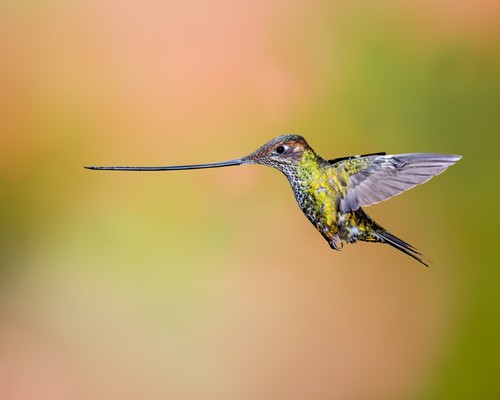
Sword-billed Hummingbird
Body about 13-15 cm (5-6 in) including a bill up to 10 cm long, the longest bill relative to body size of any bird
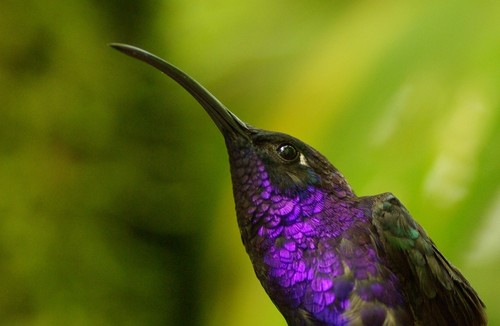
Violet Sabrewing
14-15 cm (5.5-6 in) long
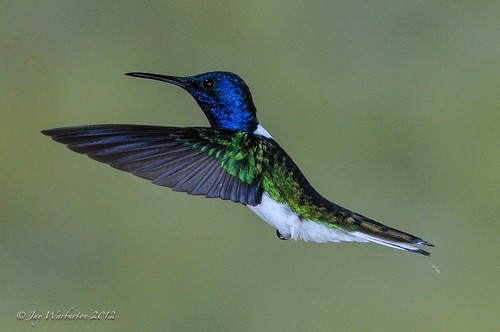
White-necked Jacobin
11-12 cm (4.3-4.7 in) long
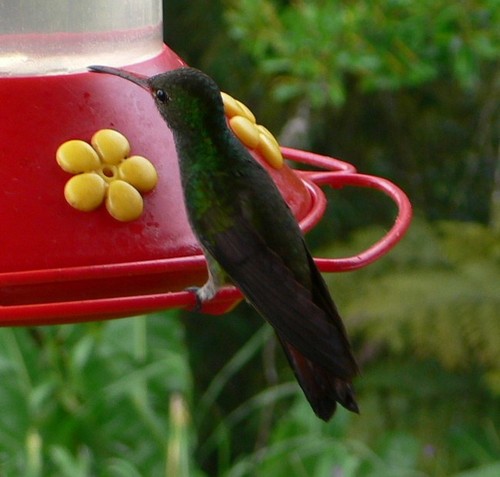
Rufous-tailed Hummingbird
10-11.5 cm (4-4.5 in) long
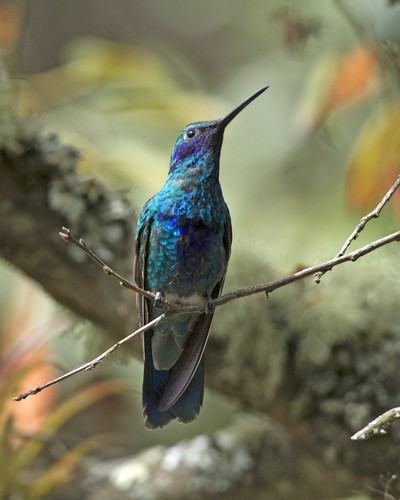
Sparkling Violetear
13-14 cm (5-5.5 in) long including bill
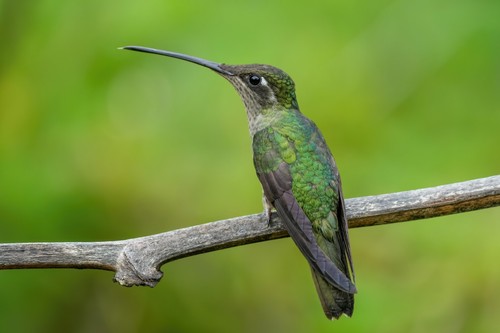
Rivoli's Hummingbird
11-14 cm (4.5-5.5 in) long, 17-18 cm wingspan
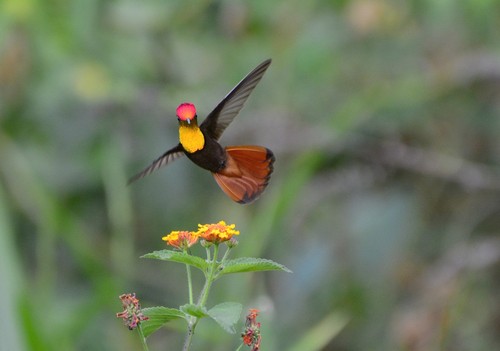
Ruby-topaz Hummingbird
7.5-9 cm (3-3.5 in) long
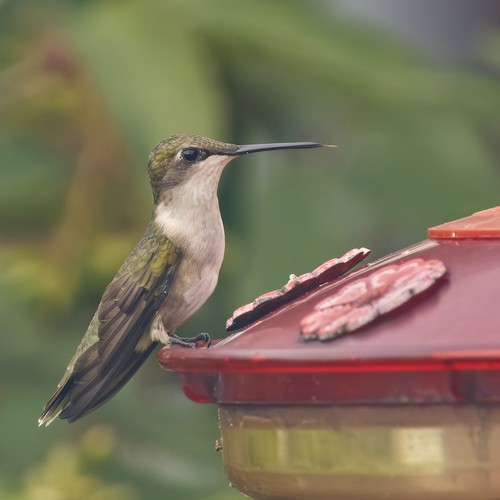
Ruby-throated Hummingbird
7-9 cm (3-3.5 in) long, 8-11 cm wingspan
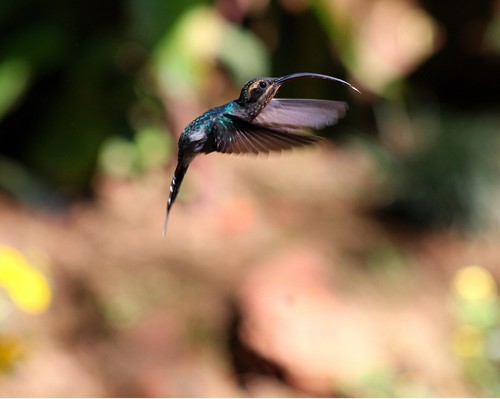
Green Hermit
15-16 cm (6-6.3 in) long including elongated central tail feathers
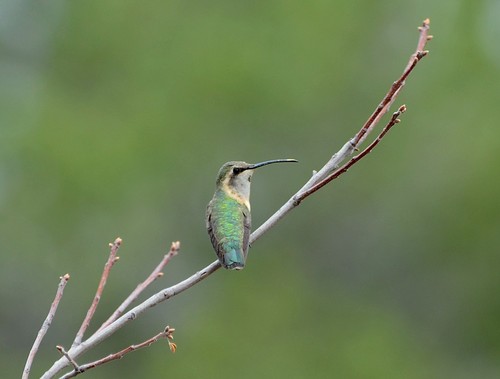
Lucifer Hummingbird
8.5-9.5 cm (3.5 in) long, 11 cm wingspan
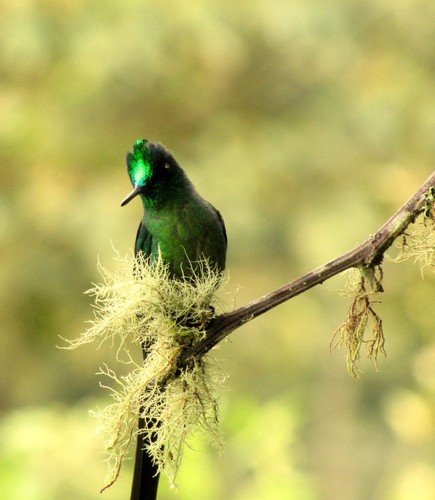
Long-tailed Sylph
males 18-19 cm (7-7.5 in) including tail; females 9-10 cm (3.5-4 in)
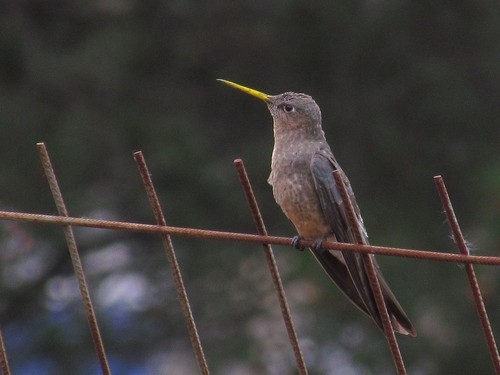
Giant Hummingbird
20-23 cm (8-9 in) long, largest hummingbird species in the world