
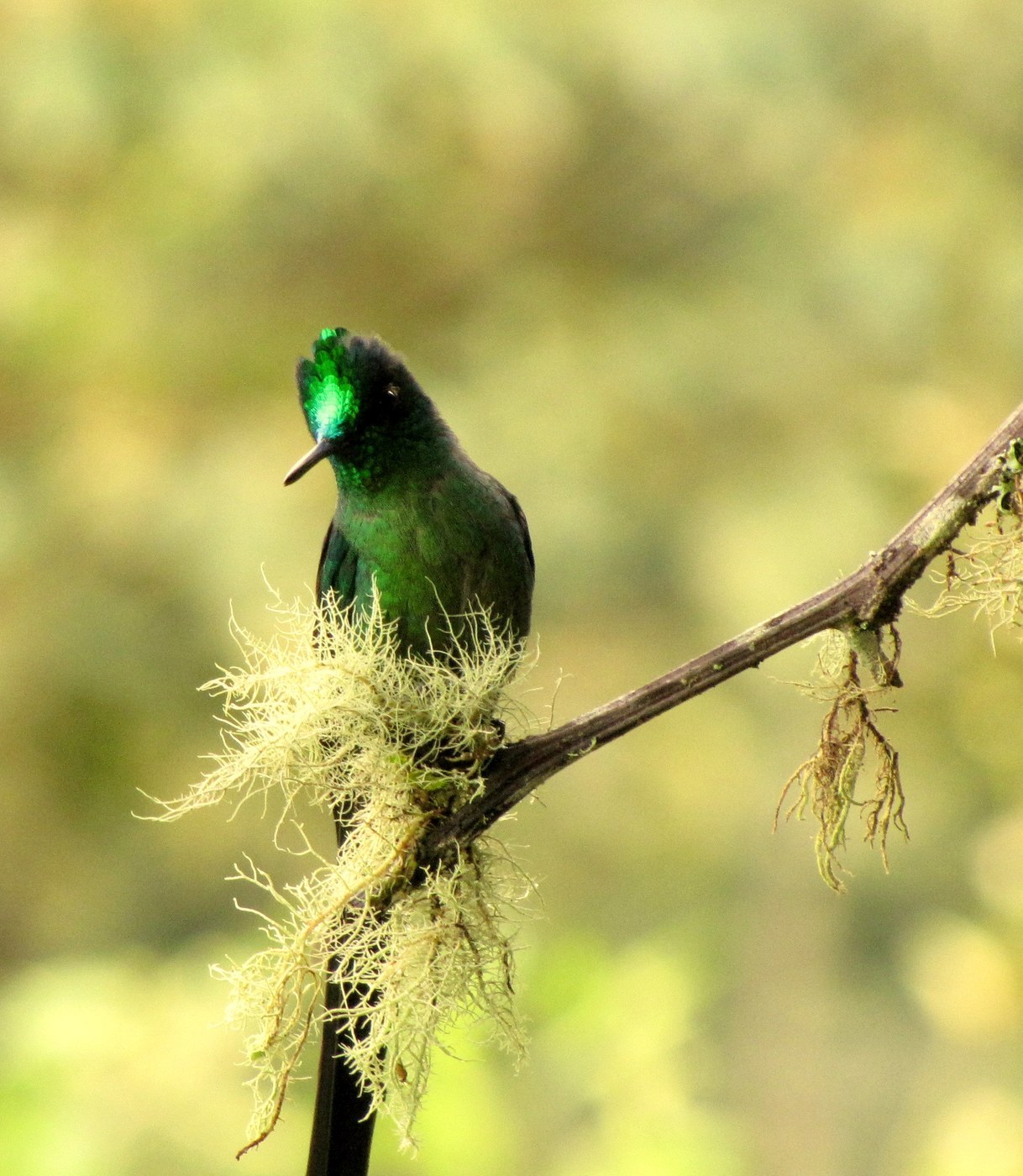
Long-tailed Sylph
Aglaiocercus kingii
An Andean hummingbird whose males trail a spectacularly long, deeply forked, iridescent blue-green tail nearly three times the length of the body.
- Size
- males 18-19 cm (7-7.5 in) including tail; females 9-10 cm (3.5-4 in)
- Habitat
- montane forest edge, cloud forest, and shrubby ravines
- Type
- hummingbird
Spotted a bird like this?
Identify any bird from a photo, free.
Overview
The Long-tailed Sylph is one of the most elegant hummingbirds of the Andes, named for the male's extraordinarily long, deeply forked tail, which shimmers with iridescent blue-green and can be nearly triple the length of the bird's body. The male's crown glows violet-blue, the throat is emerald green, and the body is a rich green, making for a dazzling combination when caught in sunlight.
Females lack the long tail, instead having a much shorter, notched tail, and are duller green above with buffy or cinnamon underparts. Despite the male's cumbersome-looking tail, the species is an agile flier, threading through dense vegetation at forest edges and along shrubby ravines in search of flowers.
How to identify it
Key field marks
- Males: extremely long, deeply forked, iridescent blue-green tail; violet-blue crown; green throat and body
- Females: much shorter notched tail, green upperparts, buffy-cinnamon underparts
- Medium-length, slightly downcurved black bill
- Male's tail alone can exceed the length of the rest of the bird
Similar species
- Violet-tailed Sylph is similar but has a more violet-blue tail rather than blue-green, and occurs primarily on the Pacific slope of Colombia and Ecuador with limited overlap.
- Female sylphs can resemble other small green hummingbirds but the notched (not simply rounded) tail shape is a useful clue.
Habitat & range
Habitat
Inhabits montane forest edge, cloud forest borders, shrubby ravines, and adjacent secondary growth.
Range
Found along the Andes from Venezuela and Colombia south through Ecuador to Peru and Bolivia, typically between about 1,500 and 3,000 m elevation.
Migration
Mostly resident, with some local altitudinal movement tied to flowering seasons.
Behavior & voice
Behavior
Agile and active despite the male's long tail, frequently seen darting along forest edges and hovering at flowers, with the tail streaming behind or occasionally cocked upward.
Voice
A series of thin, high-pitched squeaky notes and chattering calls, typical of many Andean hummingbirds.
Feeding
Feeds on nectar from a variety of flowering shrubs and epiphytes, and catches small insects in brief sallies.
Nesting
Builds a small cup nest of moss and plant down; the female alone incubates the typical clutch of 2 white eggs.
Frequently asked questions
Why does the male Long-tailed Sylph have such a long tail?
The elongated, iridescent tail is a sexually selected ornament used in display to attract females; it plays no role in flight efficiency and is unique to adult males.
How do you identify a Long-tailed Sylph?
Adult males are unmistakable with an extremely long, forked, iridescent blue-green tail; females lack the long tail and are duller green with buffy underparts.
What does a Long-tailed Sylph eat?
Mainly nectar from flowering shrubs and epiphytes, along with small insects caught in flight.
Where does the Long-tailed Sylph live?
In montane forest edge and cloud forest along the Andes from Venezuela and Colombia to Peru and Bolivia.
Long-tailed Sylph guides
In-depth guides for identifying, finding, and understanding Long-tailed Sylph.
Other birds you may enjoy
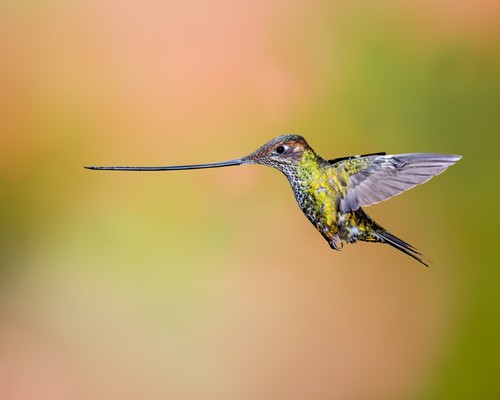
Sword-billed Hummingbird
Body about 13-15 cm (5-6 in) including a bill up to 10 cm long, the longest bill relative to body size of any bird
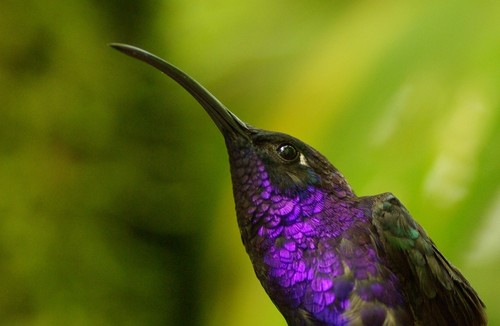
Violet Sabrewing
14-15 cm (5.5-6 in) long
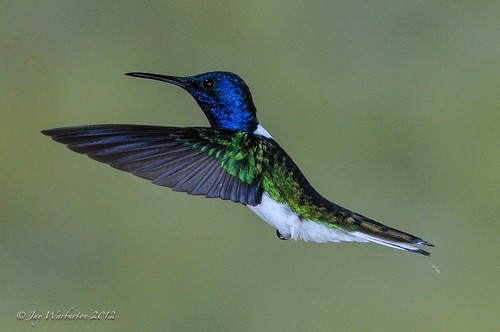
White-necked Jacobin
11-12 cm (4.3-4.7 in) long
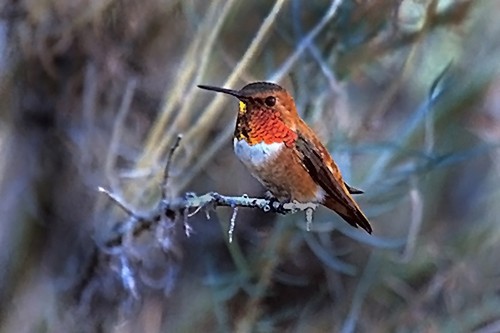
Rufous Hummingbird
8-9 cm (3-3.5 in) long, 11 cm wingspan
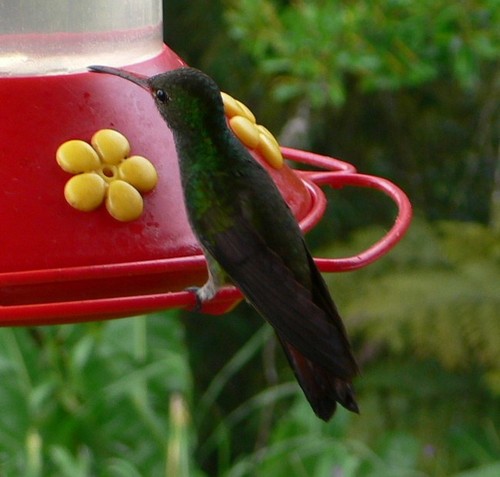
Rufous-tailed Hummingbird
10-11.5 cm (4-4.5 in) long
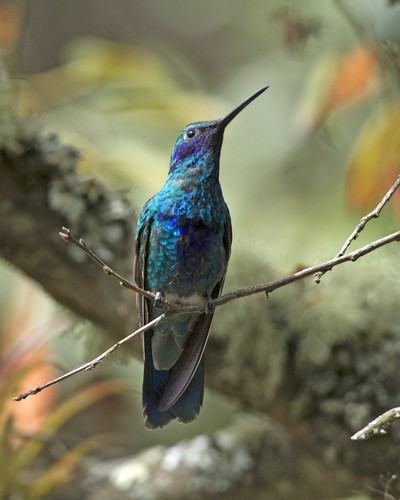
Sparkling Violetear
13-14 cm (5-5.5 in) long including bill
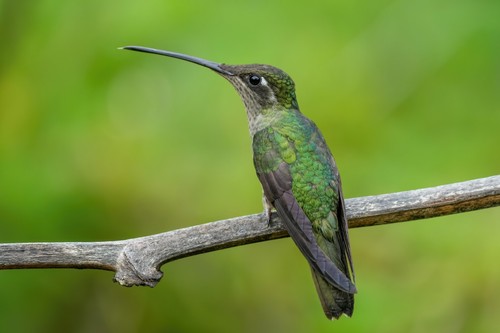
Rivoli's Hummingbird
11-14 cm (4.5-5.5 in) long, 17-18 cm wingspan
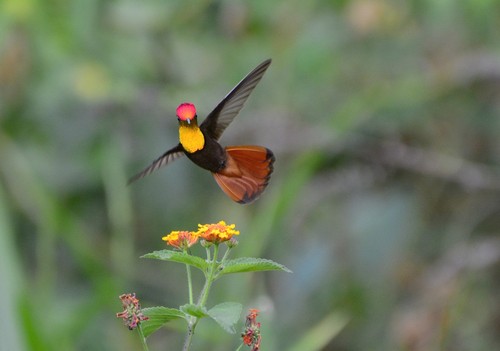
Ruby-topaz Hummingbird
7.5-9 cm (3-3.5 in) long
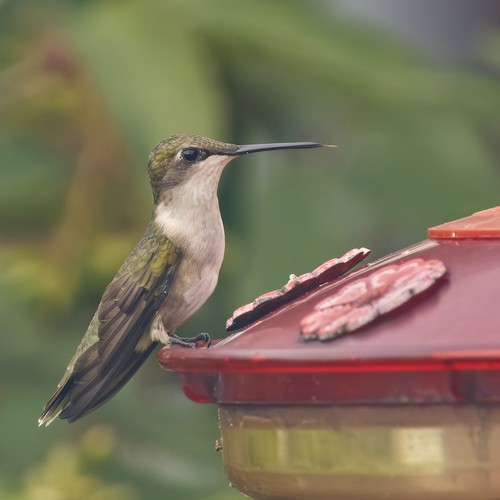
Ruby-throated Hummingbird
7-9 cm (3-3.5 in) long, 8-11 cm wingspan
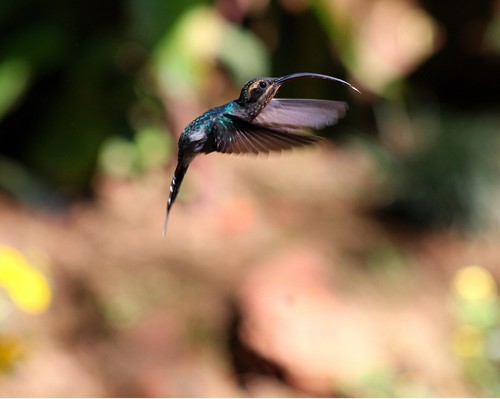
Green Hermit
15-16 cm (6-6.3 in) long including elongated central tail feathers
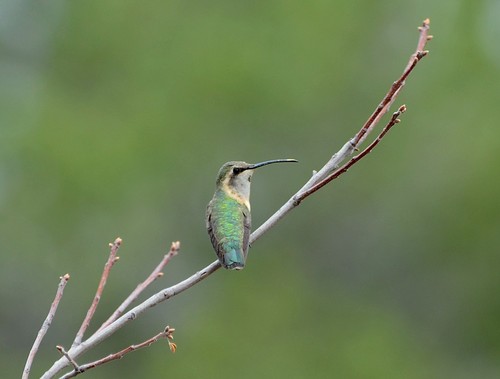
Lucifer Hummingbird
8.5-9.5 cm (3.5 in) long, 11 cm wingspan
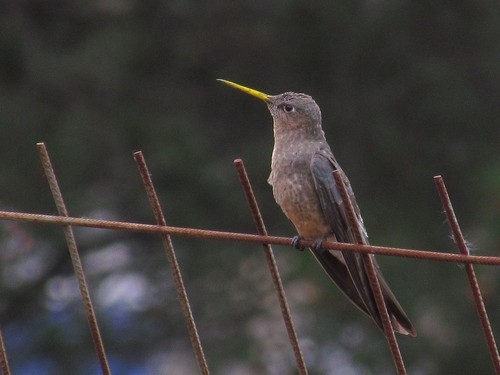
Giant Hummingbird
20-23 cm (8-9 in) long, largest hummingbird species in the world