
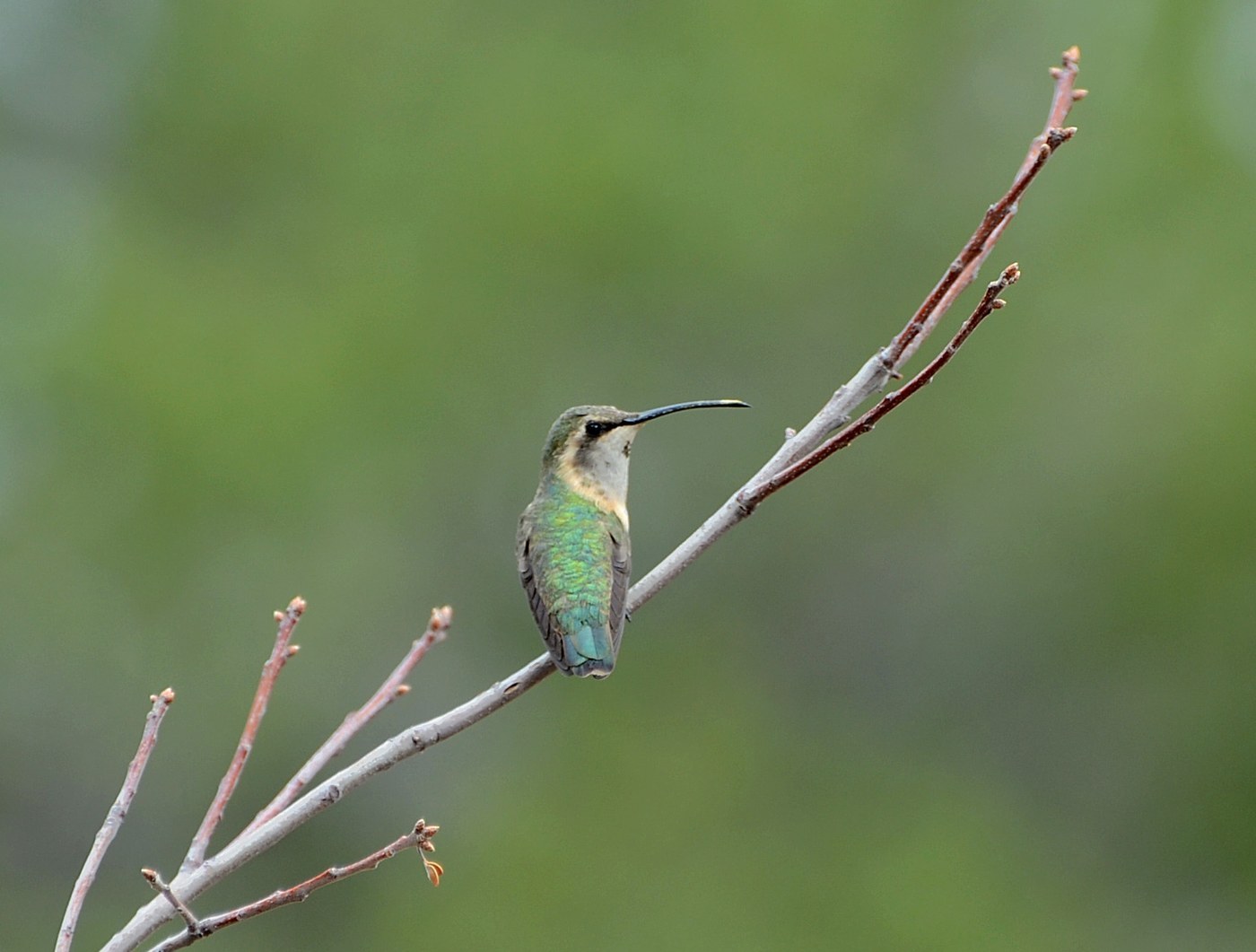
Lucifer Hummingbird
Calothorax lucifer
A rare desert hummingbird with a distinctly curved bill and, in males, an elongated glittering purple gorget.
- Size
- 8.5-9.5 cm (3.5 in) long, 11 cm wingspan
- Habitat
- desert scrub and agave-studded slopes
- Type
- hummingbird
Spotted a bird like this?
Identify any bird from a photo, free.
Overview
The Lucifer Hummingbird is a scarce and sought-after species found in the United States only in a small area of desert borderlands. Adult males are striking, with a slender, distinctly decurved bill, a green back, and an iridescent purple gorget whose feathers extend outward into elongated points along the sides of the neck, along with a deeply forked tail. Females lack the colorful throat, showing a green back, buffy underparts, and the same curved bill, which helps distinguish them from other female hummingbirds.
How to identify it
Key Field Marks
- Distinctly decurved (downward-curving) bill in both sexes
- Male: elongated, glittering purple gorget with pointed sides, deeply forked tail
- Female: green back, buffy underparts, curved bill, no gorget
- Small overall size
Similar Species
- Black-chinned Hummingbird has a straight bill and a black-and-purple, not fully purple, gorget.
- Costa's Hummingbird has a straight bill and violet crown as well as throat.
- The curved bill is the most reliable mark separating Lucifer Hummingbird from similarly sized relatives.
Habitat & range
Habitat
Lucifer Hummingbirds favor arid, agave- and ocotillo-rich desert slopes and canyons, often in rugged, rocky terrain.
Range
In the United States, it is found in very limited numbers in the Big Bend region of west Texas and parts of southeastern Arizona, with the core of its range in the highlands of central and northern Mexico.
Migration
U.S. populations are summer visitors, arriving in spring to breed and withdrawing south into Mexico by fall.
Behavior & voice
Behavior
Males are territorial around stands of blooming agave, a key nectar source, and perform display flights to attract mates during the breeding season.
Voice
Calls include thin, high-pitched chip notes; the species lacks a musical song.
Feeding
The curved bill is well suited to probing the deep, curved flowers of agave and other desert plants for nectar, and the species also catches small insects for protein.
Nesting
Females build a small cup nest, often on a low shrub such as ocotillo, in exposed desert habitat.
Frequently asked questions
What makes the Lucifer Hummingbird's bill unusual?
Unlike most North American hummingbirds, its bill is distinctly curved downward, an adaptation for probing the curved, tubular flowers of agave and similar desert plants.
Where can you see a Lucifer Hummingbird in the United States?
It occurs in very limited numbers in the Big Bend region of west Texas and in a few desert mountain ranges of southeastern Arizona.
What does a male Lucifer Hummingbird's throat look like?
It shows an iridescent purple gorget with feathers that extend outward into elongated points along the sides of the neck, unlike the more rounded gorgets of many other hummingbirds.
What do Lucifer Hummingbirds eat?
They rely heavily on nectar from agave and other desert flowers, supplemented with small insects for protein.
Lucifer Hummingbird guides
In-depth guides for identifying, finding, and understanding Lucifer Hummingbird.
Other birds you may enjoy
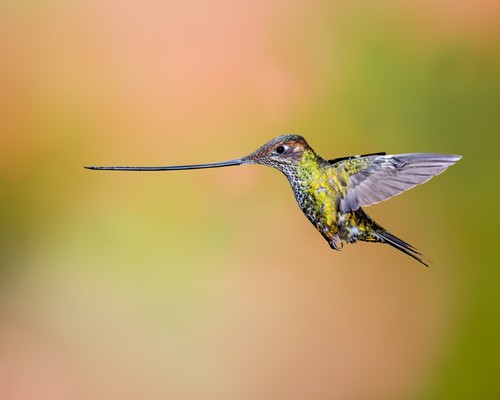
Sword-billed Hummingbird
Body about 13-15 cm (5-6 in) including a bill up to 10 cm long, the longest bill relative to body size of any bird

Violet Sabrewing
14-15 cm (5.5-6 in) long
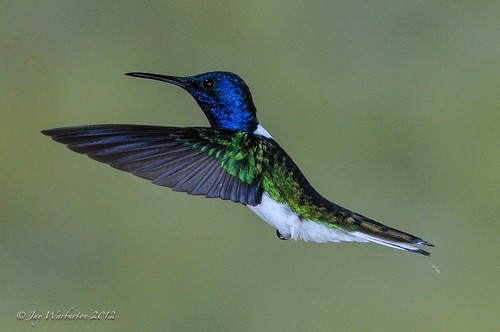
White-necked Jacobin
11-12 cm (4.3-4.7 in) long
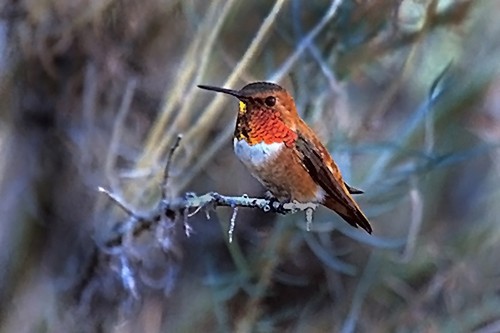
Rufous Hummingbird
8-9 cm (3-3.5 in) long, 11 cm wingspan
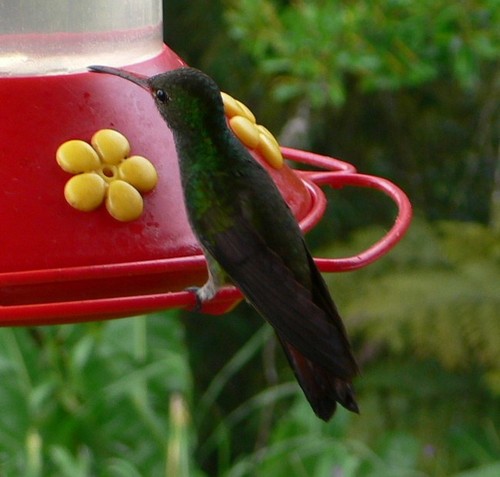
Rufous-tailed Hummingbird
10-11.5 cm (4-4.5 in) long
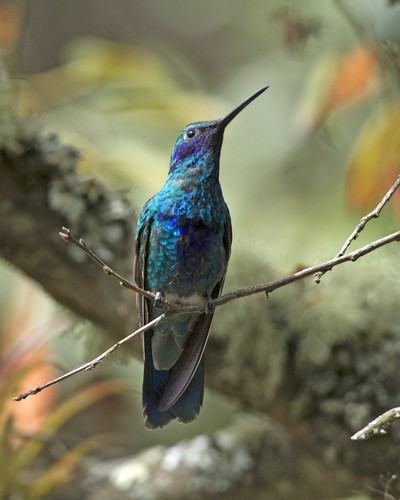
Sparkling Violetear
13-14 cm (5-5.5 in) long including bill
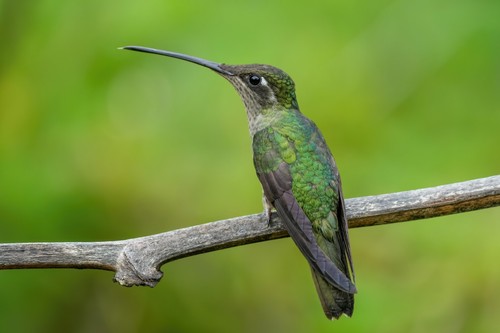
Rivoli's Hummingbird
11-14 cm (4.5-5.5 in) long, 17-18 cm wingspan

Ruby-topaz Hummingbird
7.5-9 cm (3-3.5 in) long
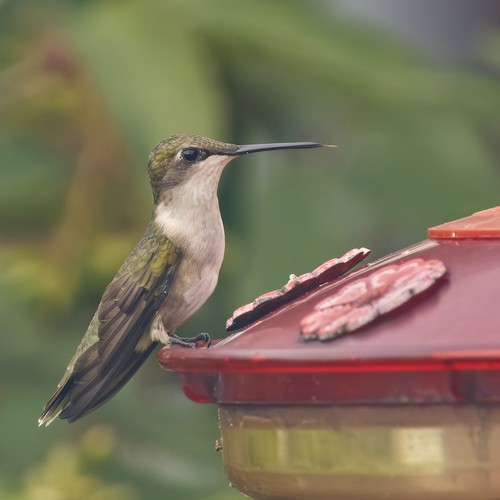
Ruby-throated Hummingbird
7-9 cm (3-3.5 in) long, 8-11 cm wingspan
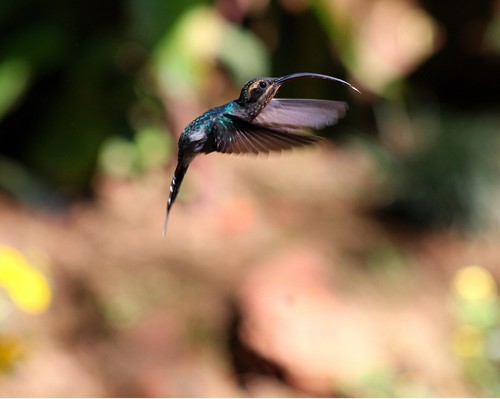
Green Hermit
15-16 cm (6-6.3 in) long including elongated central tail feathers
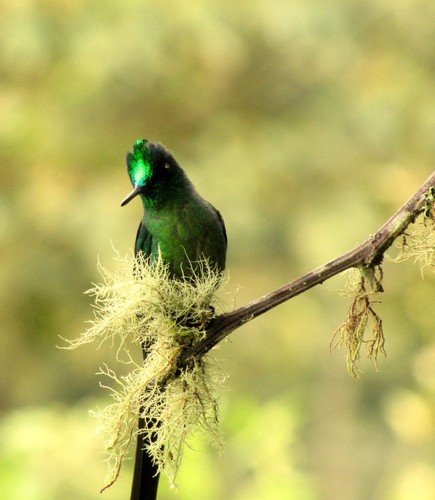
Long-tailed Sylph
males 18-19 cm (7-7.5 in) including tail; females 9-10 cm (3.5-4 in)
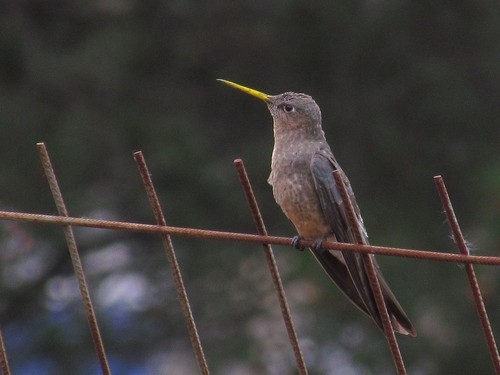
Giant Hummingbird
20-23 cm (8-9 in) long, largest hummingbird species in the world