
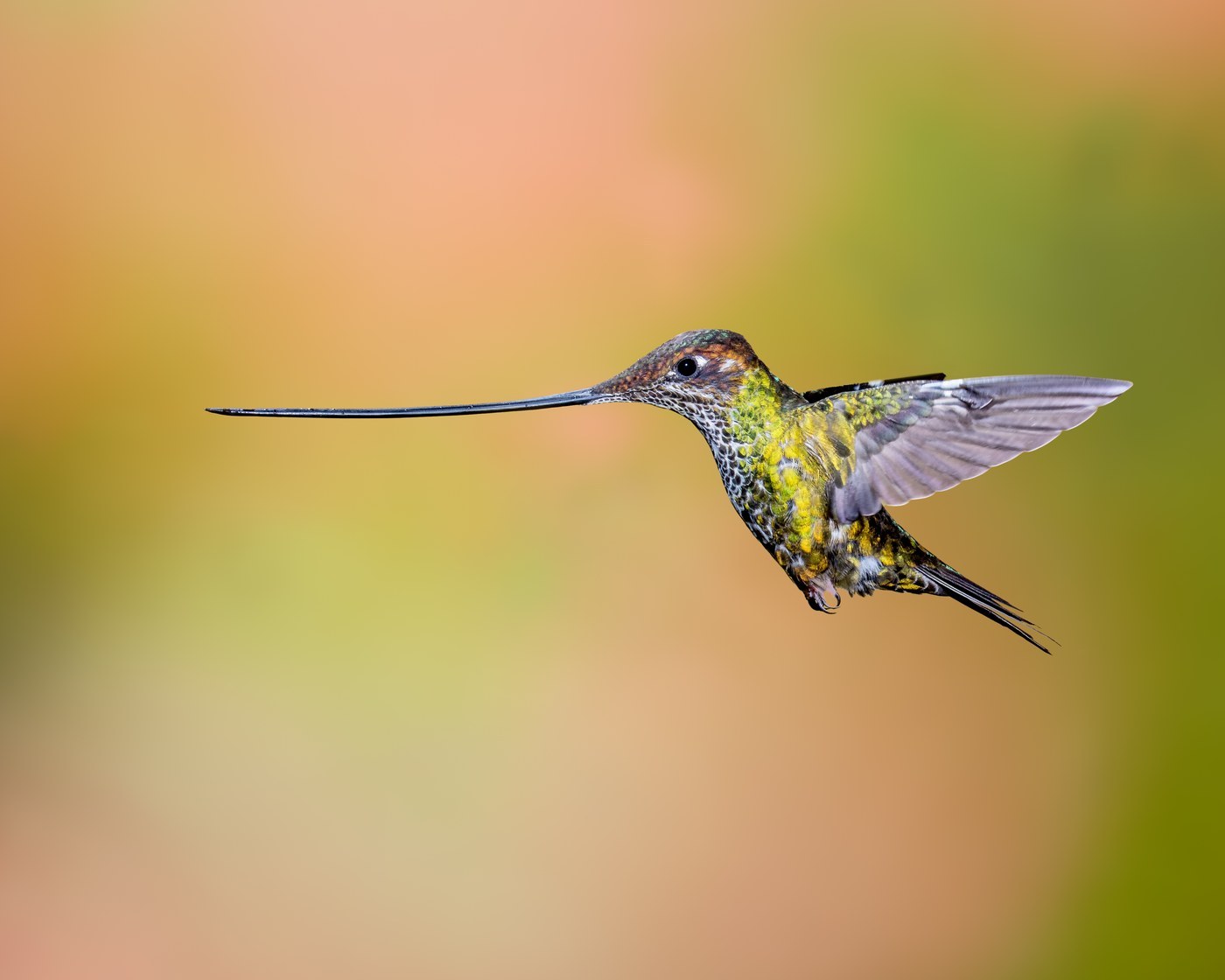
Sword-billed Hummingbird
Ensifera ensifera
A high-Andean hummingbird with an extraordinarily long, straight bill, longer than its own body, specialized for feeding on long-tubed flowers.
- Size
- Body about 13-15 cm (5-6 in) including a bill up to 10 cm long, the longest bill relative to body size of any bird
- Habitat
- Humid montane forest and forest edge in the Andes
- Type
- hummingbird
Spotted a bird like this?
Identify any bird from a photo, free.
Overview
The Sword-billed Hummingbird is unmistakable for possessing the longest bill relative to body length of any bird species, with the bill alone often as long as, or longer than, the rest of its body. This remarkable adaptation allows it to feed from deep, tubular flowers inaccessible to other hummingbirds.
Plumage is relatively subdued for a hummingbird, with males showing bronze-green upperparts, a coppery to green throat, and a duller grayish or buffy belly. Because the bill is so long and heavy, the bird often perches with its bill tilted upward to balance its weight.
How to identify it
Key field marks
- Extraordinarily long, straight, thin black bill, often exceeding total body length
- Medium-large hummingbird with bronze-green upperparts and a coppery-green throat
- Distinctive upward-tilted resting posture to counterbalance the heavy bill
Similar species
- No other hummingbird approaches this bill length, making adults unmistakable
- Silhouette in flight can suggest a large hummingbird with an odd elongated profile, but the extreme bill-to-body ratio is diagnostic
Habitat & range
Habitat
Humid montane and cloud forest, forest edge, and adjacent shrubby areas, typically at elevations of about 1,700 to 3,500 m.
Range
Found along the Andes from Venezuela and Colombia south through Ecuador, Peru, to Bolivia.
Migration
Largely sedentary, though it may make local altitudinal movements tracking the flowering of key food plants such as Passiflora and Datura.
Behavior & voice
Behavior
Often perches with its head tilted back and bill pointed upward due to the weight and length of the bill; also uses its feet to help preen since the bill is too long and unwieldy for typical feather care.
Voice
Relatively quiet; gives soft, high-pitched chips and twittering notes, without an elaborate song.
Feeding
Specializes in nectar from long, tubular flowers, particularly certain Passiflora (passionflower) and Datura species that few other pollinators can access, using its long bill and extensible tongue; also hawks small insects for protein.
Nesting and breeding
Builds a small cup nest of plant material bound with spider silk; the female incubates and raises the brood alone, as in most hummingbirds.
Frequently asked questions
Why is the Sword-billed Hummingbird's bill so long?
It is adapted to reach nectar deep inside long, tubular flowers that other pollinators cannot access.
How long is the Sword-billed Hummingbird's bill?
It can reach up to about 10 cm, often longer than the rest of the bird's body.
Where does the Sword-billed Hummingbird live?
In humid montane and cloud forests along the Andes from Venezuela and Colombia south to Bolivia.
How does it groom itself with such a long bill?
It uses its feet to help preen feathers that its long, unwieldy bill cannot easily reach.
Sword-billed Hummingbird guides
In-depth guides for identifying, finding, and understanding Sword-billed Hummingbird.
Other birds you may enjoy
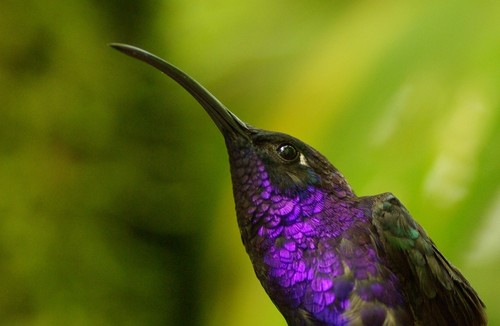
Violet Sabrewing
14-15 cm (5.5-6 in) long
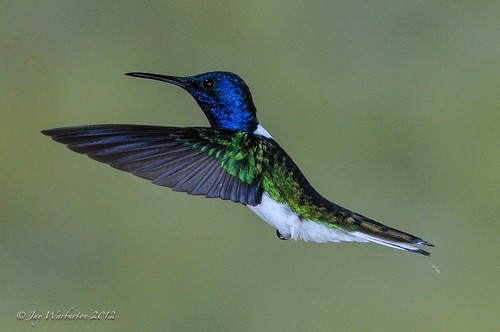
White-necked Jacobin
11-12 cm (4.3-4.7 in) long
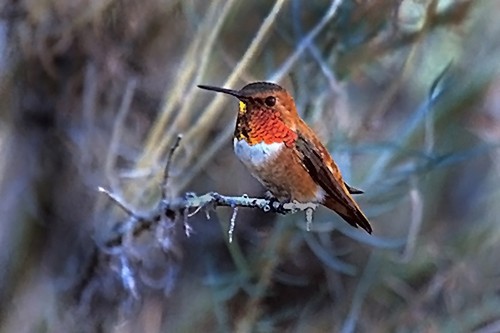
Rufous Hummingbird
8-9 cm (3-3.5 in) long, 11 cm wingspan
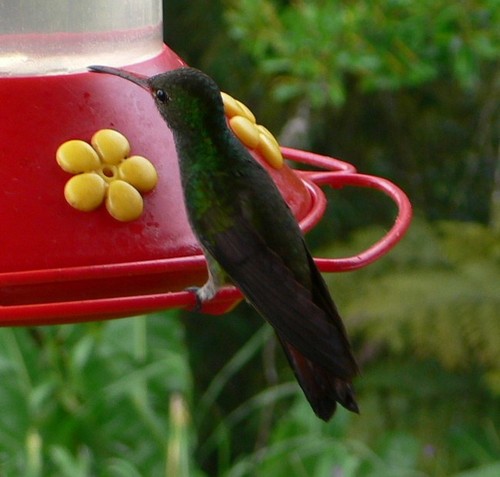
Rufous-tailed Hummingbird
10-11.5 cm (4-4.5 in) long
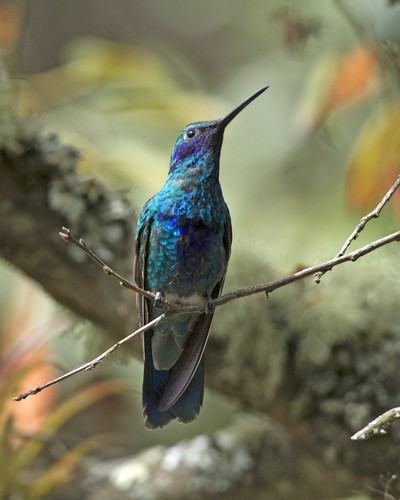
Sparkling Violetear
13-14 cm (5-5.5 in) long including bill
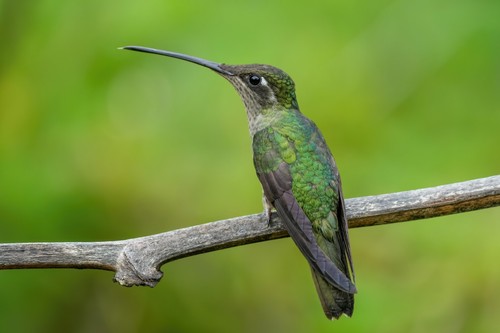
Rivoli's Hummingbird
11-14 cm (4.5-5.5 in) long, 17-18 cm wingspan
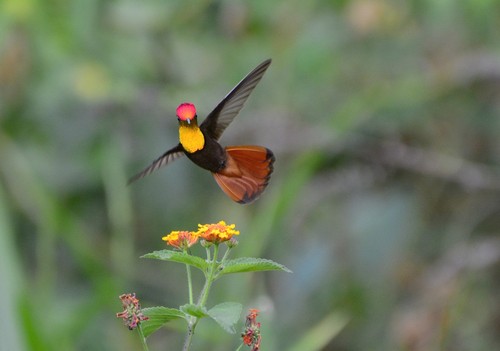
Ruby-topaz Hummingbird
7.5-9 cm (3-3.5 in) long
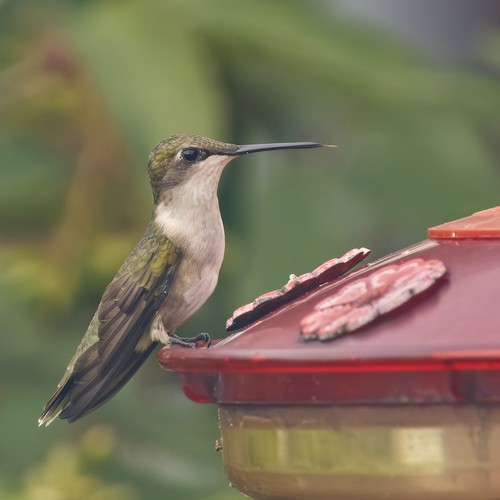
Ruby-throated Hummingbird
7-9 cm (3-3.5 in) long, 8-11 cm wingspan
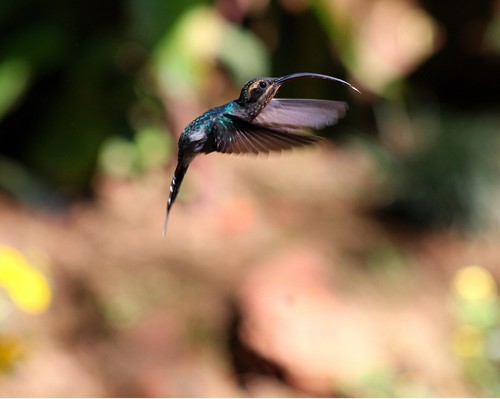
Green Hermit
15-16 cm (6-6.3 in) long including elongated central tail feathers
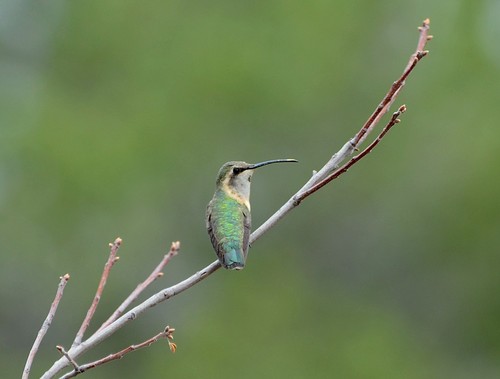
Lucifer Hummingbird
8.5-9.5 cm (3.5 in) long, 11 cm wingspan
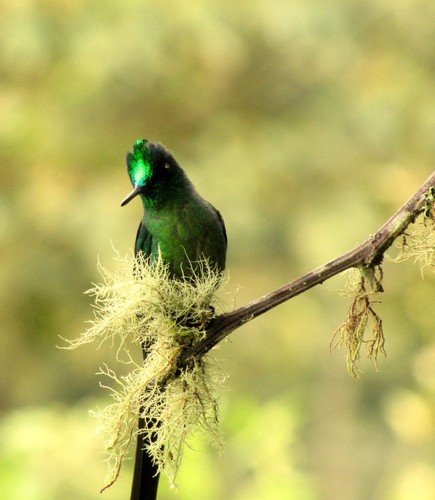
Long-tailed Sylph
males 18-19 cm (7-7.5 in) including tail; females 9-10 cm (3.5-4 in)
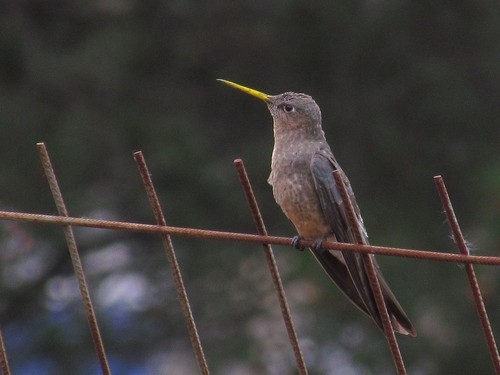
Giant Hummingbird
20-23 cm (8-9 in) long, largest hummingbird species in the world