
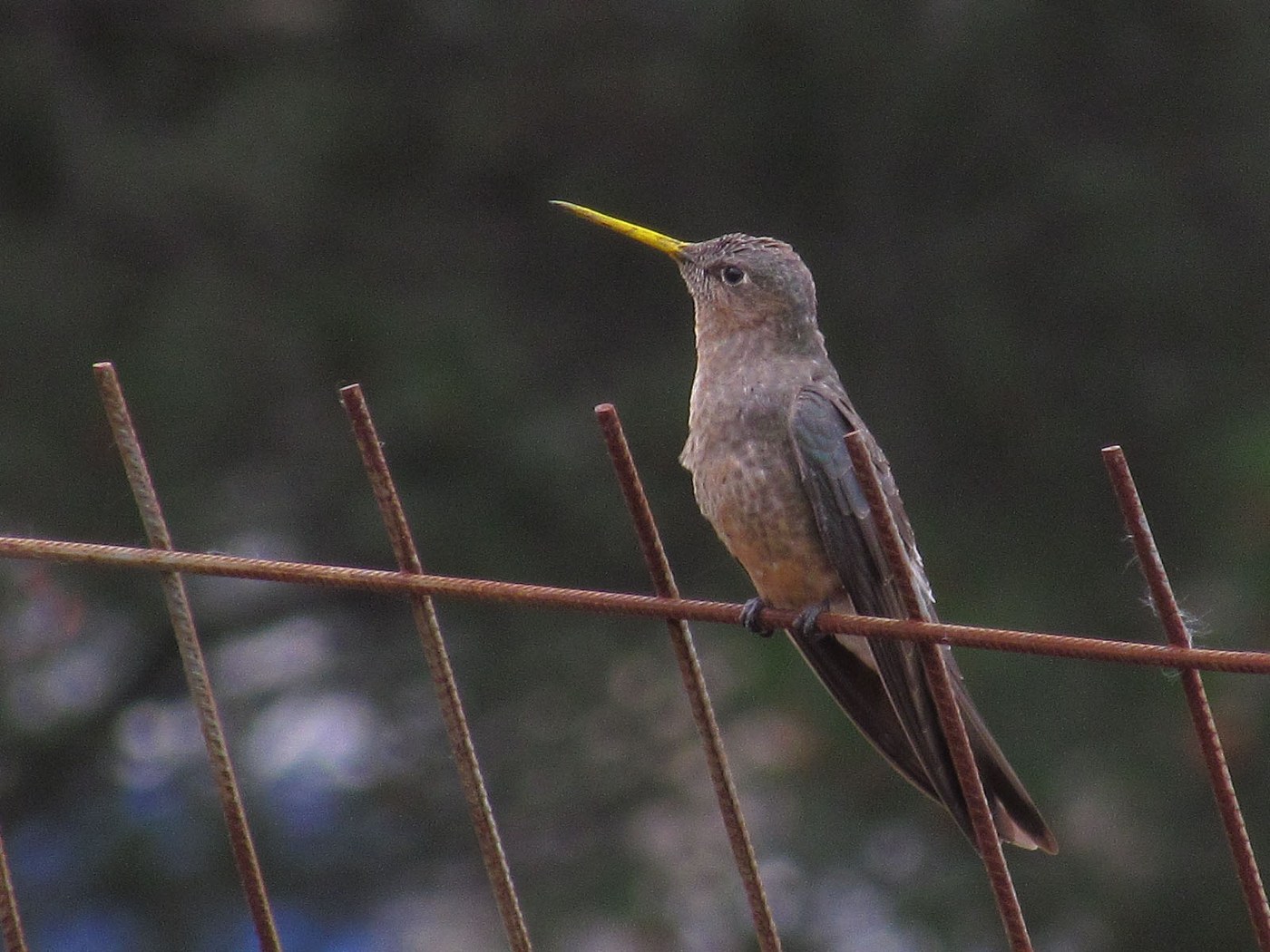
Giant Hummingbird
Patagona gigas
The largest hummingbird species in the world, a grayish-brown Andean bird nearly the size of a swallow with slow, distinctly visible wingbeats.
- Size
- 20-23 cm (8-9 in) long, largest hummingbird species in the world
- Habitat
- arid Andean scrub, valleys, gardens, and high-elevation grassland
- Type
- hummingbird
Spotted a bird like this?
Identify any bird from a photo, free.
Overview
The Giant Hummingbird is, as its name suggests, by far the largest member of the hummingbird family, roughly the size of a large swallow or a small thrush and dwarfing typical hummingbirds many times over. Its plumage is comparatively subdued for a hummingbird, mostly grayish-brown to bronze with a paler, sometimes rufous-tinged belly, lacking the intense iridescent patches common in smaller relatives.
Because of its unusually large size, its wingbeats are slow enough to be visible to the naked eye, roughly 10-15 beats per second compared to the 50 or more beats per second typical of small hummingbirds, giving its flight a somewhat labored, almost bat-like quality that is immediately distinctive in the field.
How to identify it
Key field marks
- Very large size for a hummingbird, roughly 20-23 cm long
- Grayish-brown to bronze plumage, paler and sometimes rufous-tinged belly
- Slow, clearly visible wingbeats compared to other hummingbirds
- Long, straight bill
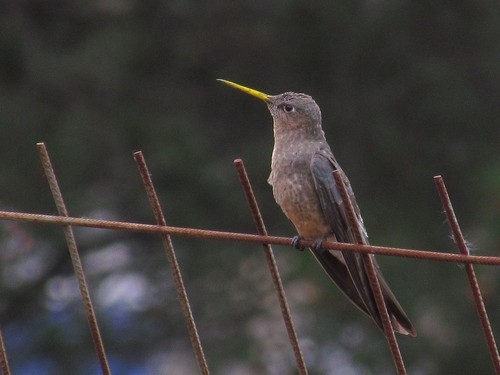
- Often perches upright on wires, poles, or bare branches
Similar species
- No other hummingbird approaches its size; confusion is more likely with swifts or swallows in flight, but the hovering behavior at flowers and hummingbird-shaped bill quickly clarify identification.
Habitat & range
Habitat
Found in arid and semi-arid Andean scrub, valleys, agricultural land, gardens, and high-elevation grassland (puna).
Range
Distributed along the Andes from Ecuador south through Peru, Bolivia, Chile, and Argentina; southern populations are migratory.
Migration
Southern (Chilean/Argentine) breeding populations migrate north to lower latitudes for the austral winter, while northern populations are largely resident.
Behavior & voice
Behavior
Often perches conspicuously upright on wires, fence posts, or bare branches between bouts of feeding; can be territorial at good nectar sources despite its bulk.
Voice
A short, sharp chip or squeak, along with buzzy chase notes during territorial disputes, generally less musical than smaller hummingbirds.
Feeding
Feeds on nectar from a variety of flowering plants, including cacti in arid habitats, and catches small insects in flight; its large size allows it to hover for extended periods.
Nesting
Builds a relatively large cup nest of plant material; the female incubates the typical clutch of 2 white eggs alone.
Frequently asked questions
Is the Giant Hummingbird really the largest hummingbird?
Yes, at roughly 20-23 cm long it is by far the largest of the more than 350 hummingbird species, several times the size of most other hummingbirds.
Why does the Giant Hummingbird's flight look different from other hummingbirds?
Because of its large size, it beats its wings much more slowly, around 10-15 times per second compared to 50 or more in small hummingbirds, so the wingbeats are visible to the naked eye rather than appearing as a blur.
What does a Giant Hummingbird eat?
Mainly nectar from flowering plants, including cactus flowers in arid habitats, supplemented with small insects.
Where does the Giant Hummingbird live?
Along the Andes from Ecuador south through Peru, Bolivia, Chile, and Argentina, in arid scrub, valleys, and high-elevation grassland.
Giant Hummingbird guides
In-depth guides for identifying, finding, and understanding Giant Hummingbird.
Other birds you may enjoy
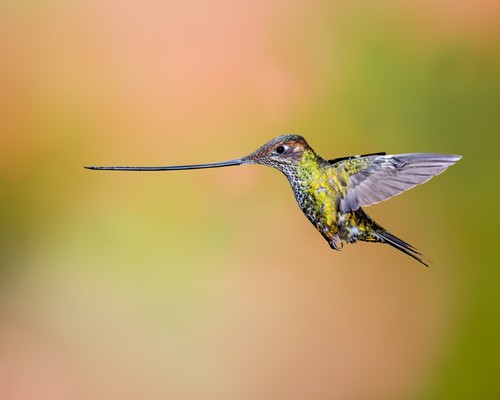
Sword-billed Hummingbird
Body about 13-15 cm (5-6 in) including a bill up to 10 cm long, the longest bill relative to body size of any bird
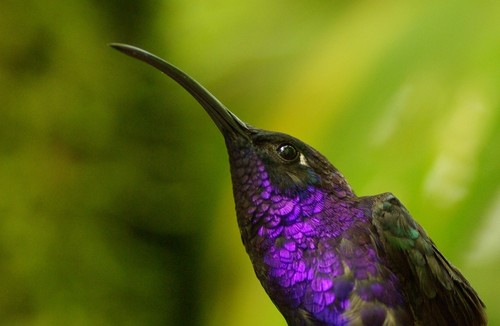
Violet Sabrewing
14-15 cm (5.5-6 in) long
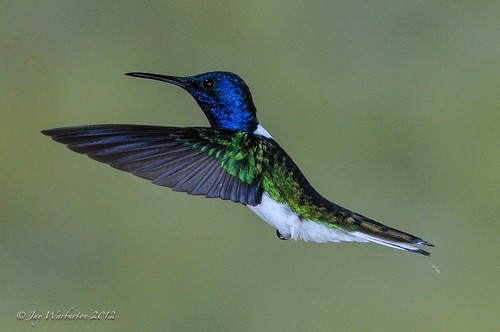
White-necked Jacobin
11-12 cm (4.3-4.7 in) long
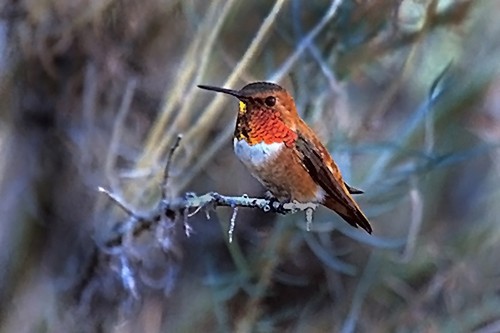
Rufous Hummingbird
8-9 cm (3-3.5 in) long, 11 cm wingspan
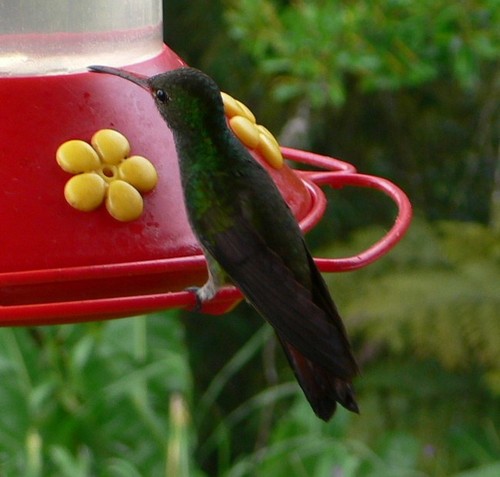
Rufous-tailed Hummingbird
10-11.5 cm (4-4.5 in) long
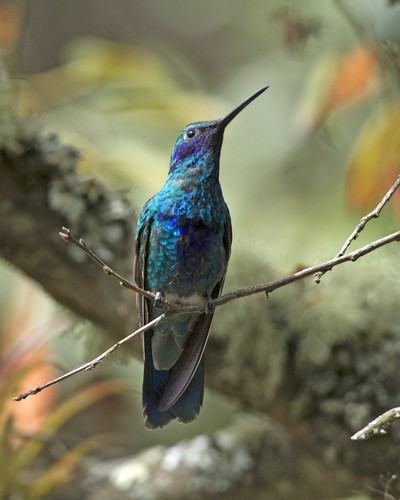
Sparkling Violetear
13-14 cm (5-5.5 in) long including bill
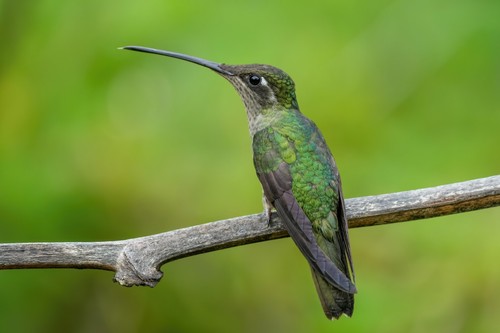
Rivoli's Hummingbird
11-14 cm (4.5-5.5 in) long, 17-18 cm wingspan
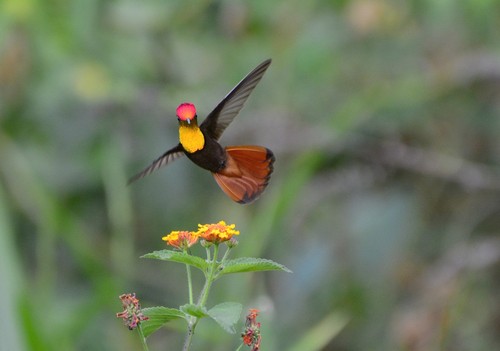
Ruby-topaz Hummingbird
7.5-9 cm (3-3.5 in) long
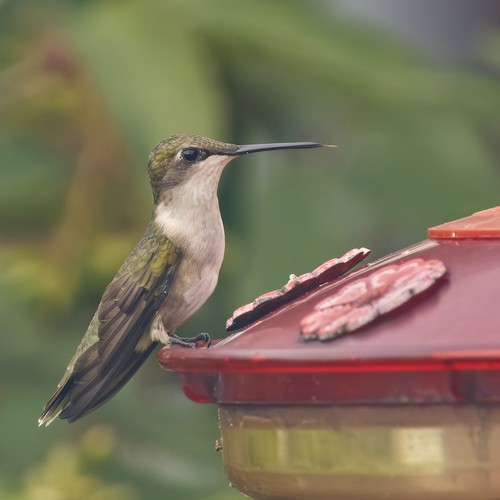
Ruby-throated Hummingbird
7-9 cm (3-3.5 in) long, 8-11 cm wingspan
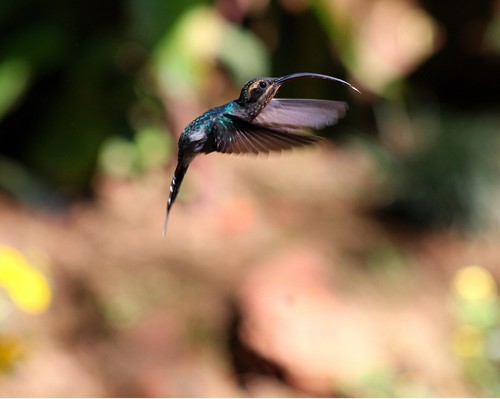
Green Hermit
15-16 cm (6-6.3 in) long including elongated central tail feathers
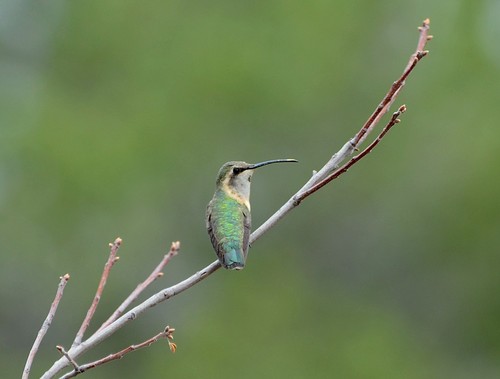
Lucifer Hummingbird
8.5-9.5 cm (3.5 in) long, 11 cm wingspan
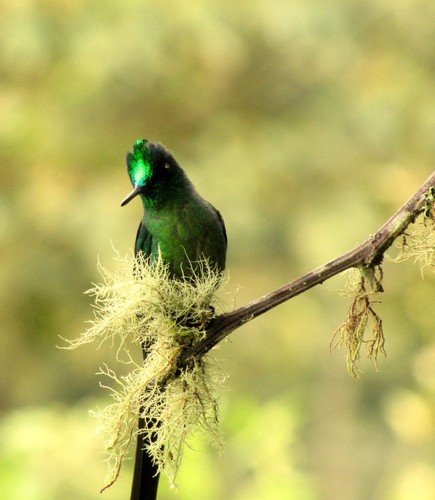
Long-tailed Sylph
males 18-19 cm (7-7.5 in) including tail; females 9-10 cm (3.5-4 in)