
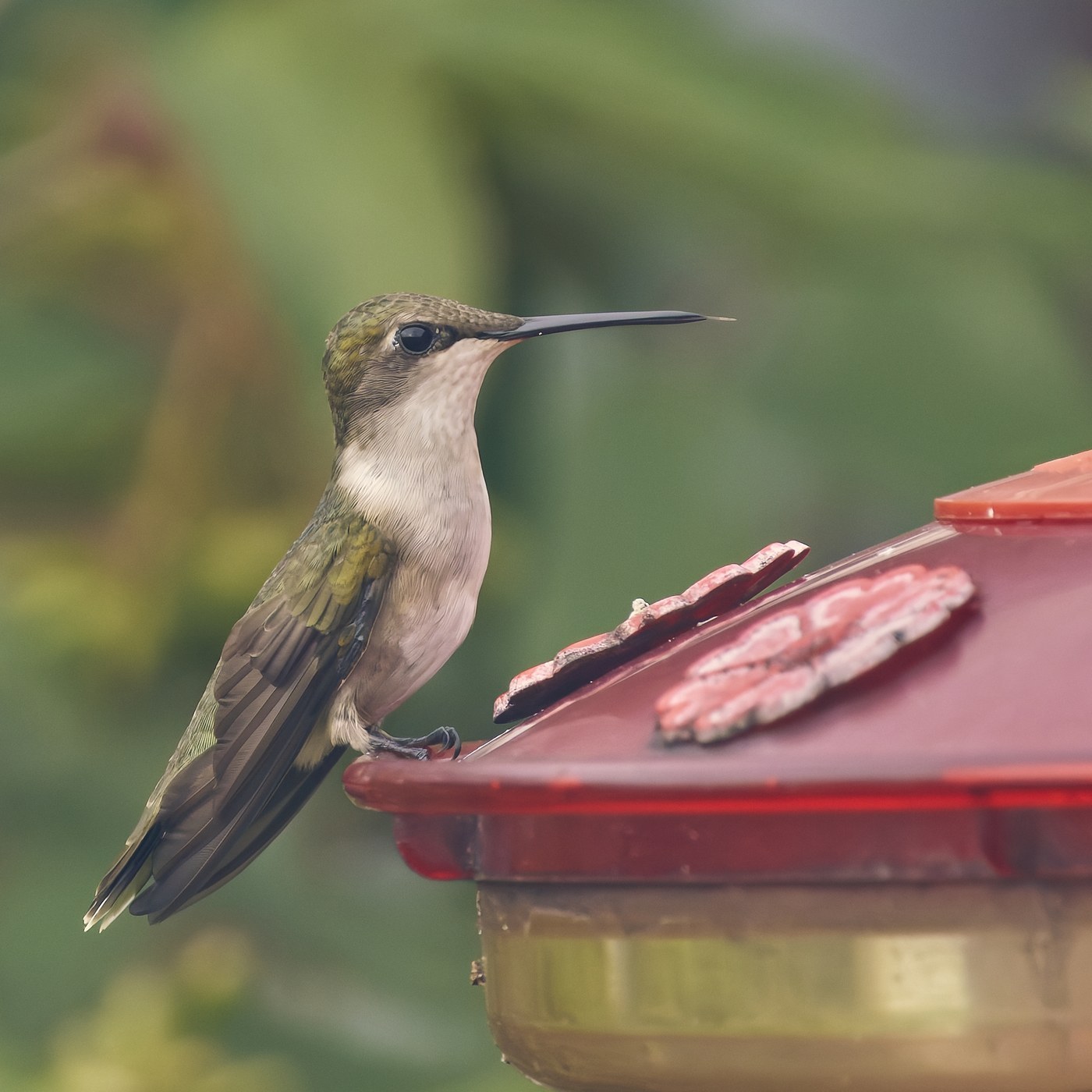
Ruby-throated Hummingbird
Archilochus colubris
The only hummingbird that regularly breeds in eastern North America, with males showing a brilliant iridescent ruby-red throat that can flash black in poor light.
- Size
- 7-9 cm (3-3.5 in) long, 8-11 cm wingspan
- Habitat
- gardens, woodland edges, and meadows across eastern North America
- Type
- hummingbird
Spotted a bird like this?
Identify any bird from a photo, free.
Overview
The Ruby-throated Hummingbird is a tiny, dazzling bird and the sole hummingbird species that breeds across most of eastern North America. Males have an emerald-green back and crown and a brilliant, iridescent red throat patch (gorget) that can appear velvety black when not catching direct light—a common source of identification confusion. Females and immatures lack the red throat, instead showing a plain whitish throat, along with a green back and a rounded tail edged in white.
Despite weighing only about as much as a penny, this species undertakes an astonishing migration, with many individuals crossing the Gulf of Mexico in a single nonstop flight of roughly 800 km (500 miles).
How to identify it
Key field marks
- Male: brilliant iridescent ruby-red throat (gorget), emerald-green back, forked tail
- Female: white throat (no red), green back, rounded tail with white tips
- Very small size, needle-thin bill, hovering flight
Similar species
- Black-chinned Hummingbird: male shows a black throat with a thin purple band at the base, mostly a western species with limited range overlap.
- Other female/immature hummingbirds: often very difficult to distinguish; range and season are important clues since Ruby-throated is the only breeding hummingbird across most of the East.
Habitat & range
Range and habitat
Ruby-throated Hummingbird breeds across the eastern United States and southern Canada, using gardens, woodland edges, meadows, and forest clearings with abundant flowering plants.
Migration
A long-distance migrant, wintering mainly in Mexico and Central America. Many individuals fly nonstop across the Gulf of Mexico during spring and fall migration, an especially demanding feat for such a small bird.
Behavior & voice
Behavior
Highly territorial at flowers and feeders, males often chase off rivals with fast, aggressive dives and chases; wings beat roughly 50 times per second, producing the characteristic humming sound.
Voice
Soft chip and squeak notes; the audible hum of the wings is often the first clue to its presence.
Feeding
Feeds on nectar from a wide variety of tubular flowers, as well as sugar-water feeders, and also catches small insects and spiders in flight or gleans them from spiderwebs and foliage—an important protein source, especially for feeding nestlings.
Nesting and breeding
Builds a tiny, walnut-sized cup nest of plant down bound with spider silk and camouflaged with lichen, saddled on a thin branch. The female alone incubates 2 eggs for about 2 weeks and raises the young without help from the male.
Frequently asked questions
Is the Ruby-throated Hummingbird the only hummingbird in the eastern US?
Yes, it is the only hummingbird species that regularly breeds across most of eastern North America, though a few other species occur rarely as vagrants, especially in winter.
How far do Ruby-throated Hummingbirds migrate?
They winter mainly in Mexico and Central America, and many individuals cross the Gulf of Mexico in a single nonstop flight of roughly 800 km (500 miles).
How can you tell a male from a female Ruby-throated Hummingbird?
Males have a brilliant iridescent red throat patch, while females have a plain white throat with no red coloring.
What do Ruby-throated Hummingbirds eat?
Mainly flower nectar and sugar-water from feeders, supplemented with small insects and spiders for protein.
Why does the male's red throat sometimes look black?
The red gorget is iridescent structural color that only flashes bright red when it catches direct light at the right angle; otherwise it can appear dark or black.
Ruby-throated Hummingbird guides
In-depth guides for identifying, finding, and understanding Ruby-throated Hummingbird.
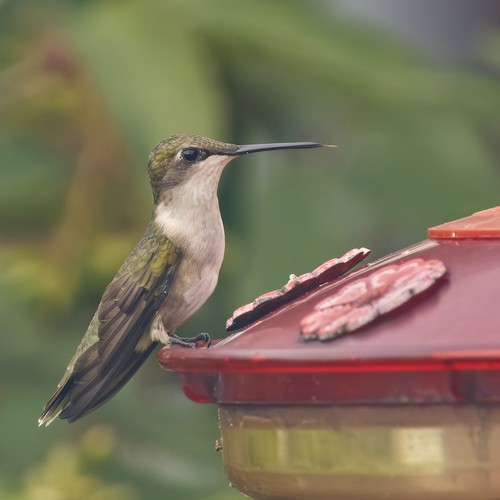
Ruby-throated Hummingbird identified by the community
Real birds identified with Bird Identifier.
Other birds you may enjoy
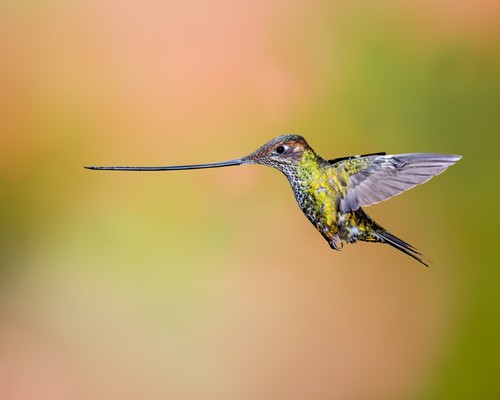
Sword-billed Hummingbird
Body about 13-15 cm (5-6 in) including a bill up to 10 cm long, the longest bill relative to body size of any bird
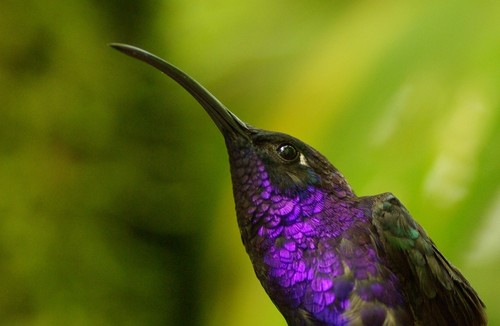
Violet Sabrewing
14-15 cm (5.5-6 in) long
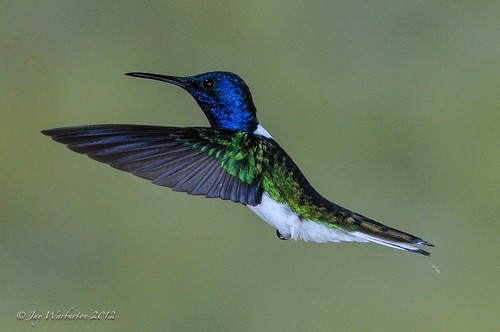
White-necked Jacobin
11-12 cm (4.3-4.7 in) long
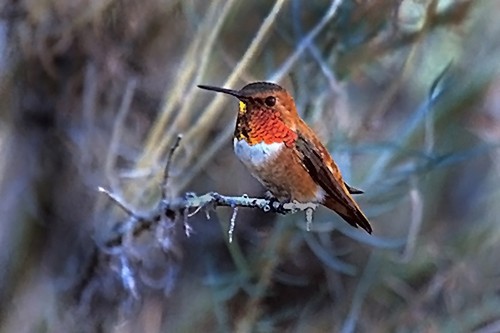
Rufous Hummingbird
8-9 cm (3-3.5 in) long, 11 cm wingspan
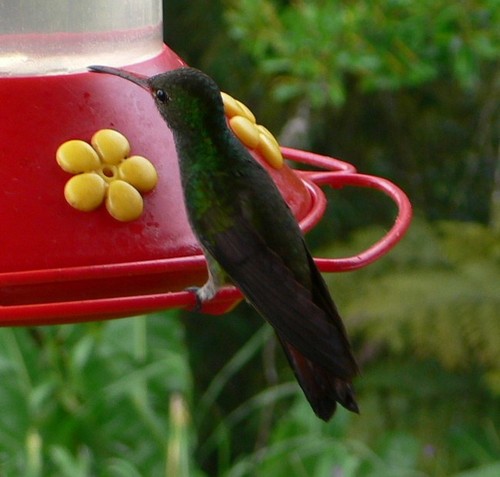
Rufous-tailed Hummingbird
10-11.5 cm (4-4.5 in) long
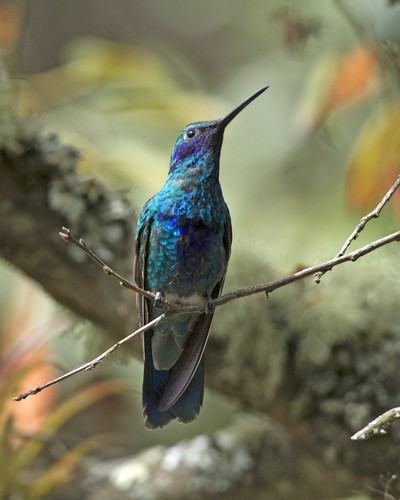
Sparkling Violetear
13-14 cm (5-5.5 in) long including bill
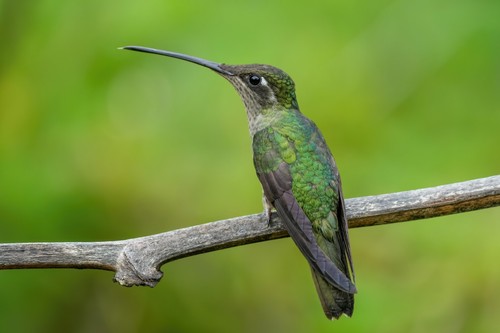
Rivoli's Hummingbird
11-14 cm (4.5-5.5 in) long, 17-18 cm wingspan

Ruby-topaz Hummingbird
7.5-9 cm (3-3.5 in) long
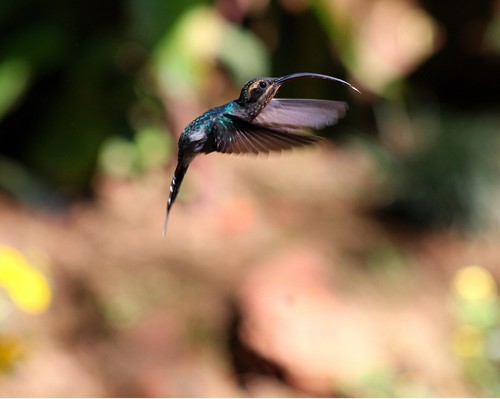
Green Hermit
15-16 cm (6-6.3 in) long including elongated central tail feathers
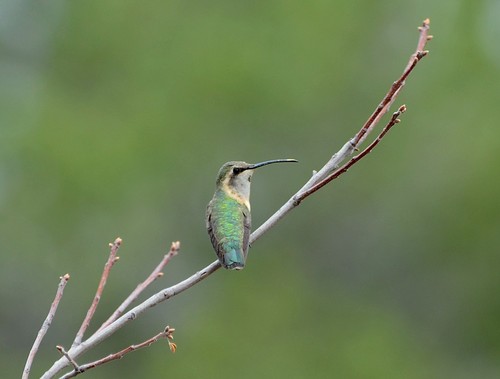
Lucifer Hummingbird
8.5-9.5 cm (3.5 in) long, 11 cm wingspan
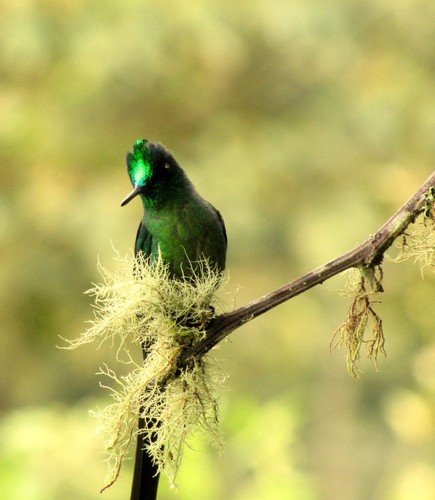
Long-tailed Sylph
males 18-19 cm (7-7.5 in) including tail; females 9-10 cm (3.5-4 in)
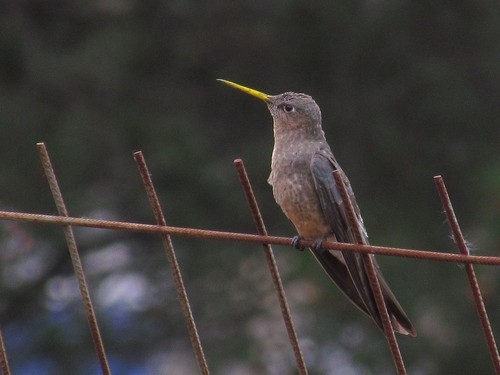
Giant Hummingbird
20-23 cm (8-9 in) long, largest hummingbird species in the world