Ruby-throated Hummingbird Identification Guide
The only breeding hummingbird across most of eastern North America, told by the male's flashing ruby-red throat and the female's plain white underparts and rounded, white-tipped tail.
Read the full Ruby-throated Hummingbird encyclopedia entry →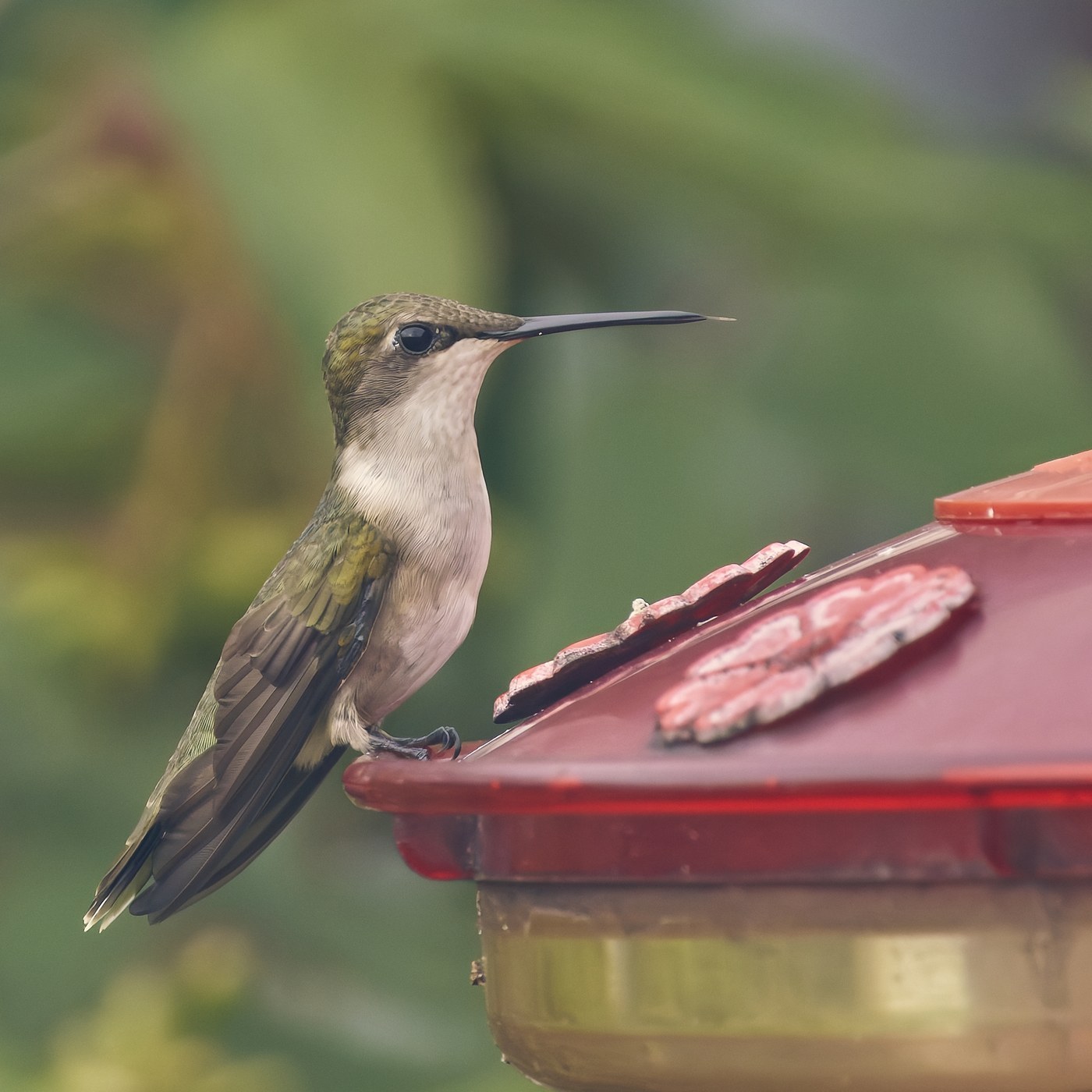
Key Field Marks
- Tiny bird, 3–3.75 inches long, with a straight, needle-like black bill.
- Adult male: iridescent emerald-green crown and back, clean white breast, and a brilliant ruby-red throat (gorget) that can flash black or dull in poor light and turn fiery red only when it catches the sun.
- Adult male tail is dark and deeply forked.
- Female and immatures: green above, white below, throat plain white or lightly flecked with dusky spots, and a rounded tail with white corners/tips visible in flight or when fanned.
- Wings appear all dark and are held straight back at rest, extending close to the tail tip.
Separating It From Similar Species
- Across nearly all of eastern North America, this is the only regularly occurring breeding hummingbird, which makes identification straightforward there.
- Where ranges approach in the west (rare vagrant records), compare with Black-chinned Hummingbird: that species' male shows a black chin grading into a thin purple lower band rather than an all-red gorget.
- Broad-tailed Hummingbird males have a rose-pink (not ruby-red) gorget and a broader, less deeply notched tail, and occur mainly in the Rockies and Southwest, not the humid East.
- Female/immature Ruby-throated can be confused with female Black-chinned; look at overall range first, then note the Ruby-throated's slightly shorter bill and more rounded wingtip.
Where and When to Look
- Breeds throughout the eastern United States and southern Canada, from the Great Plains east to the Atlantic.
- Favors woodland edges, gardens, meadows, and any area with nectar flowers or feeders; readily visits suburban and urban yards.
- Migrates to Mexico and Central America for winter; many individuals cross the Gulf of Mexico in a single nonstop flight.
- Look for spring arrivals as early as March in the Gulf states and April–May farther north; fall migration peaks in August–September.
Voice and Behavior
- Calls include a sharp, high-pitched "chip" or "tik," often repeated rapidly when birds squabble over feeders.
- Wings produce an audible buzzy hum in flight, close to 50 beats per second.
- Highly territorial at flowers and feeders; males perform steep U-shaped diving displays near females or rivals.
- Flight is fast, direct, and can stop instantly to hover before a flower.
Frequently asked questions
How can I tell a male from a female Ruby-throated Hummingbird?
Males show a brilliant red throat patch (which can look dark in shade) and a forked tail; females have a plain white throat and a rounded tail with white tips.
Why doesn't the male's throat always look red?
The gorget feathers are iridescent structural color, so they only flash ruby-red when light hits them at the right angle; otherwise they can appear black or dull brown.
Is the Ruby-throated Hummingbird the only hummingbird in the eastern US?
Yes, it is the only species that regularly breeds east of the Great Plains, though rare western vagrants like Rufous Hummingbird occasionally show up in fall and winter.
What time of year are Ruby-throated Hummingbirds most common?
They are present from spring through early fall (roughly April to September in most of their range), migrating south to Mexico and Central America for winter.
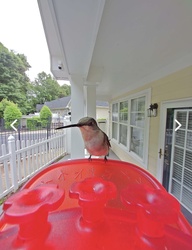
Ruby-throated Hummingbird identified by the community
Recent Ruby-throated Hummingbird sightings identified with Bird Identifier.