
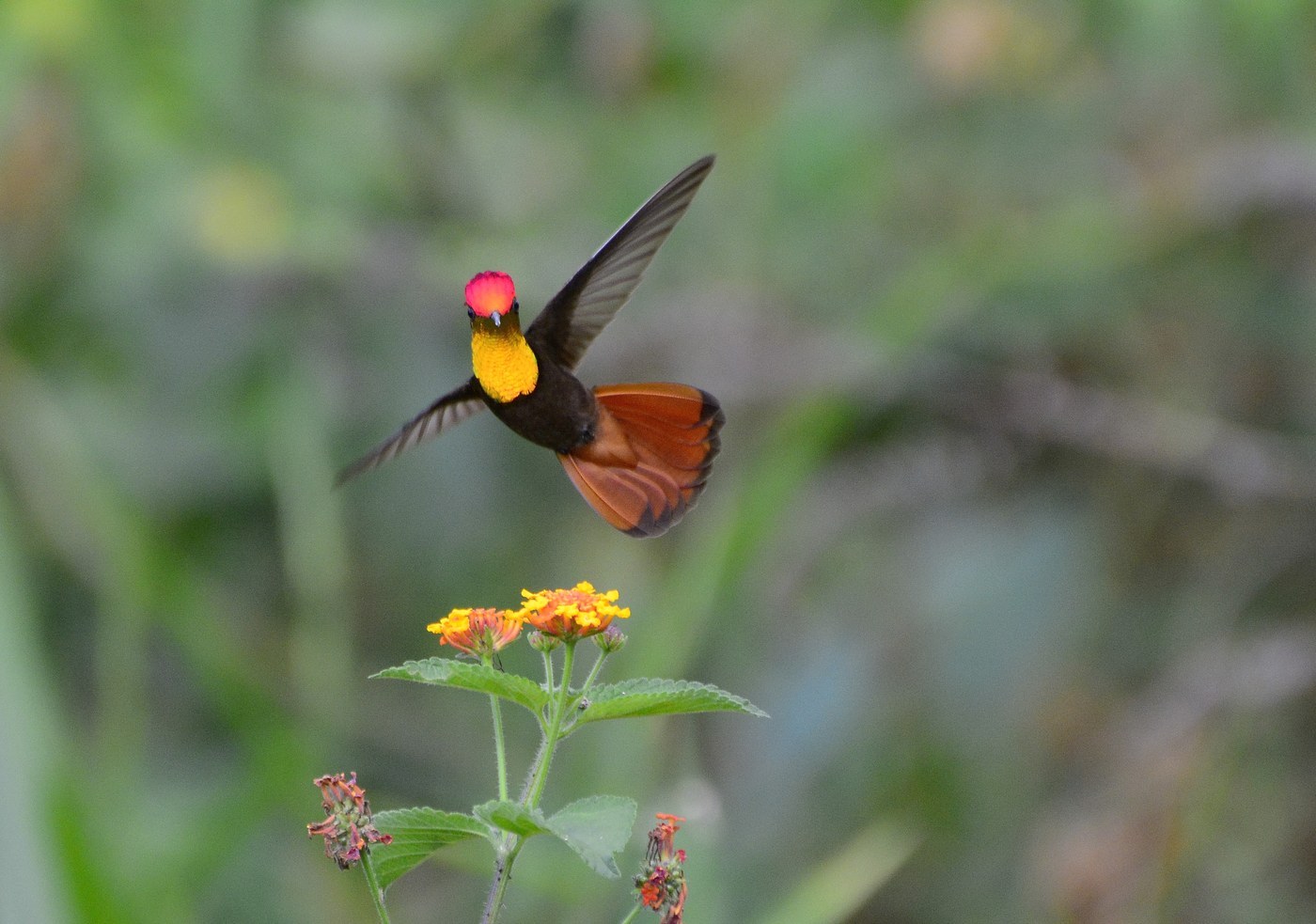
Ruby-topaz Hummingbird
Chrysolampis mosquitus
A small, dazzling hummingbird whose male sports a fiery ruby-red crown and glowing golden-topaz throat that shift dramatically with the angle of light.
- Size
- 7.5-9 cm (3-3.5 in) long
- Habitat
- open country, scrub, gardens, and savanna edges
- Type
- hummingbird
Spotted a bird like this?
Identify any bird from a photo, free.
Overview
The Ruby-topaz Hummingbird is a small but spectacular species of northern South America and parts of the southern Caribbean. The adult male shows an iridescent ruby-red crown and a glowing golden-topaz throat and upper breast, colors so intensely reflective that they can flare bright orange-gold or appear nearly black depending on the angle of light, set off against a warm chestnut body and dark, slightly notched tail.
Females are far more subdued, with bronze-green upperparts, whitish underparts, and a chestnut-based tail tipped in white, lacking the male's fiery head and throat colors. Males perform a striking display in which the crown and gorget flash vividly while the bird hovers or perches, making it a favorite subject for photographers when the light is right.
How to identify it
Key field marks
- Males: iridescent ruby-red crown and golden-topaz throat/breast, chestnut body, dark tail
- Females: bronze-green above, whitish below, chestnut-and-white tail
- Small, compact size with a short, straight black bill
- Male head and throat colors can appear dull black or blaze bright gold/red depending on light angle
Similar species
- No other hummingbird in its range combines a ruby crown with a golden-topaz throat; male Ruby-topaz Hummingbirds are essentially unmistakable in good light.
- Females can be confused with other small chestnut-tailed hummingbirds but are best identified by range and the white-tipped chestnut tail.
Habitat & range
Habitat
Found in open and semi-open country, savanna, scrub, gardens, and cultivated land, generally avoiding dense forest.
Range
Widespread across northern South America, including Venezuela, the Guianas, Colombia, and northern Brazil, plus Trinidad and Tobago and other southern Caribbean islands.
Migration
Some populations are partially migratory or nomadic, moving seasonally in response to flowering, particularly in drier parts of the range.
Behavior & voice
Behavior
Active and often pugnacious, males aggressively defend flowering territories and perform display flights that show off the iridescent crown and gorget.
Voice
A thin, high, twittering series of notes and sharp chip calls, typical of small hummingbirds.
Feeding
Feeds on nectar from a wide range of flowering shrubs and trees, and takes small insects in brief aerial sallies.
Nesting
Builds a tiny cup nest of plant down and spider web, often saddled on a low branch; lays 2 white eggs, incubated solely by the female.
Frequently asked questions
Why does the Ruby-topaz Hummingbird change color?
Its crown and throat feathers are iridescent, meaning their structure reflects light at specific angles; this makes the colors flare bright ruby-red and golden-topaz in direct light but appear dark or blackish when viewed from other angles.
How do you identify a Ruby-topaz Hummingbird?
Adult males show a fiery ruby-red crown and golden-topaz throat over a chestnut body; females are duller bronze-green with a chestnut-and-white tail.
What does a Ruby-topaz Hummingbird eat?
Mainly nectar from flowering plants, along with small insects caught in flight.
Where is the Ruby-topaz Hummingbird found?
In open country and scrub across northern South America and parts of the southern Caribbean, including Trinidad and Tobago.
Ruby-topaz Hummingbird guides
In-depth guides for identifying, finding, and understanding Ruby-topaz Hummingbird.
Other birds you may enjoy
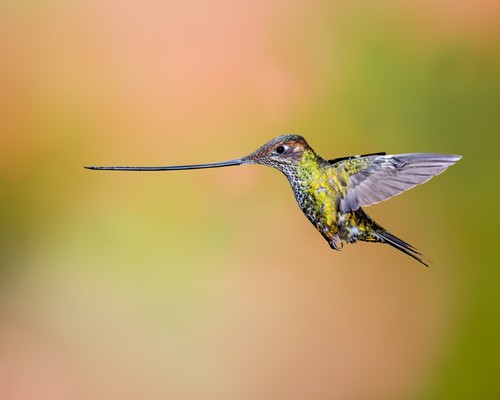
Sword-billed Hummingbird
Body about 13-15 cm (5-6 in) including a bill up to 10 cm long, the longest bill relative to body size of any bird
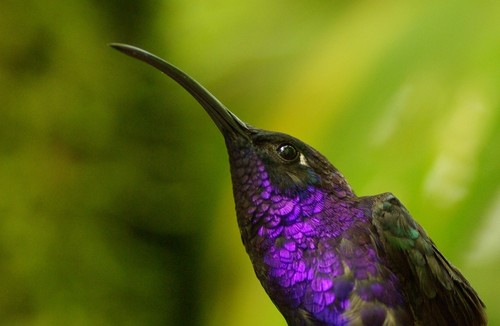
Violet Sabrewing
14-15 cm (5.5-6 in) long
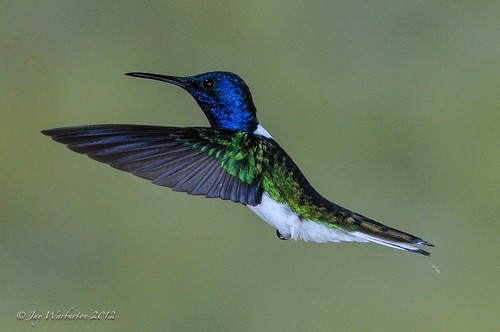
White-necked Jacobin
11-12 cm (4.3-4.7 in) long
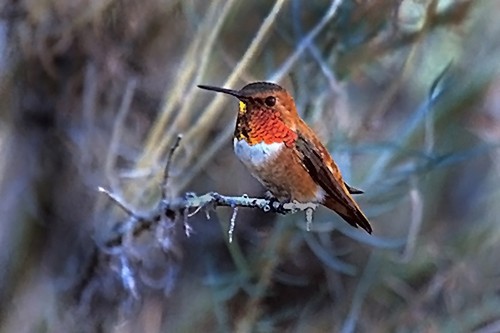
Rufous Hummingbird
8-9 cm (3-3.5 in) long, 11 cm wingspan
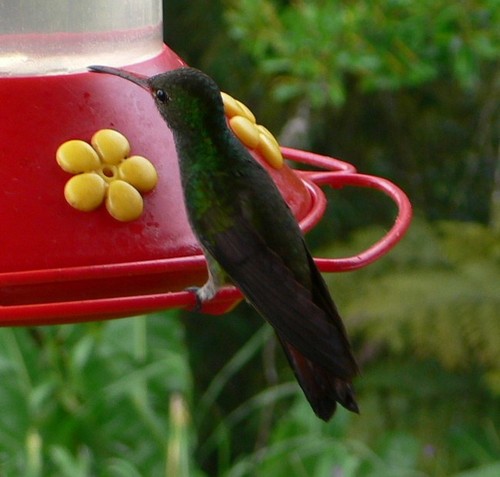
Rufous-tailed Hummingbird
10-11.5 cm (4-4.5 in) long
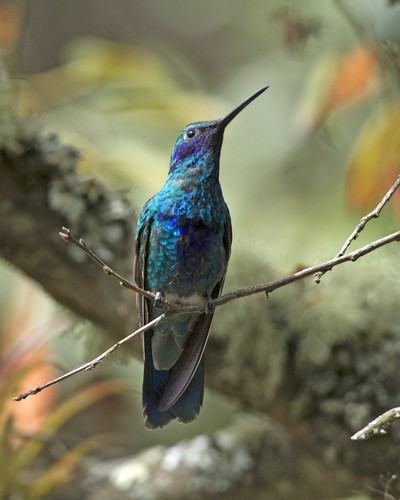
Sparkling Violetear
13-14 cm (5-5.5 in) long including bill
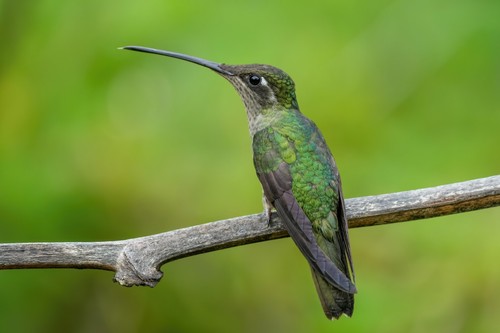
Rivoli's Hummingbird
11-14 cm (4.5-5.5 in) long, 17-18 cm wingspan
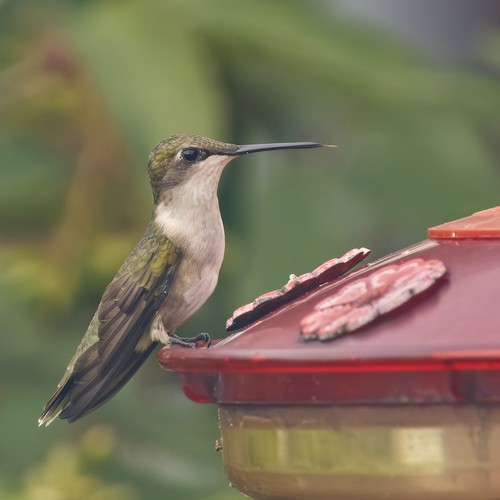
Ruby-throated Hummingbird
7-9 cm (3-3.5 in) long, 8-11 cm wingspan
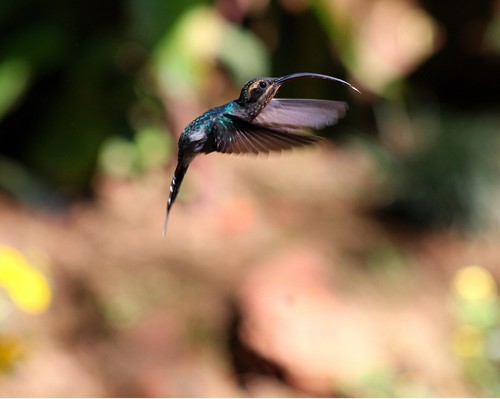
Green Hermit
15-16 cm (6-6.3 in) long including elongated central tail feathers
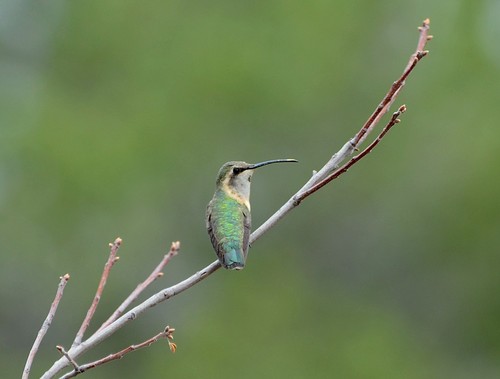
Lucifer Hummingbird
8.5-9.5 cm (3.5 in) long, 11 cm wingspan
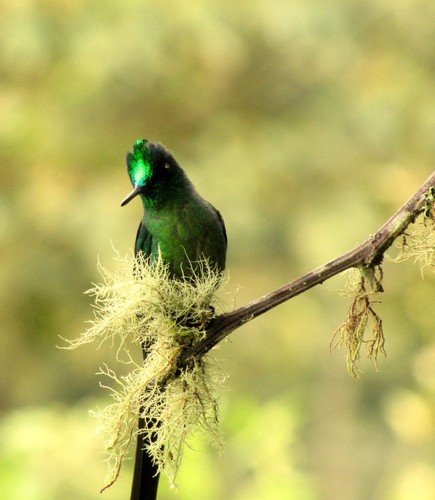
Long-tailed Sylph
males 18-19 cm (7-7.5 in) including tail; females 9-10 cm (3.5-4 in)
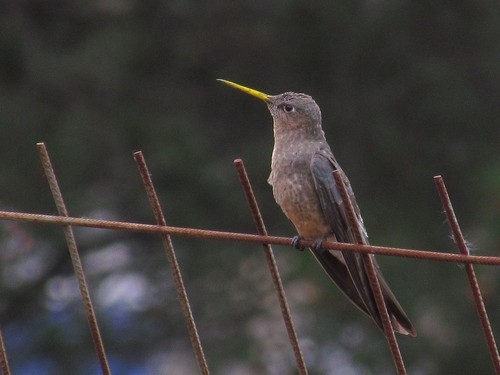
Giant Hummingbird
20-23 cm (8-9 in) long, largest hummingbird species in the world