
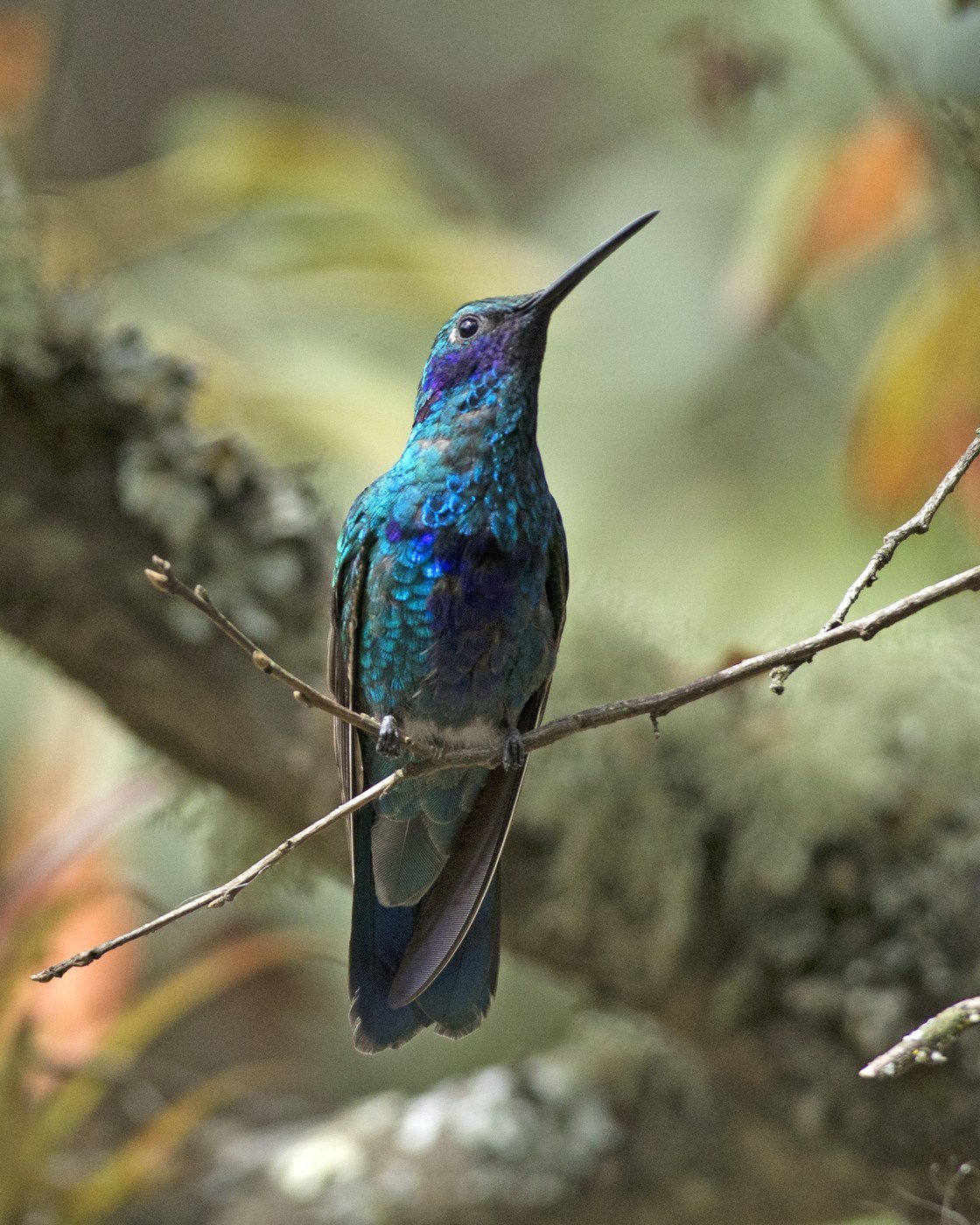
Sparkling Violetear
Colibri coruscans
A large, vocal Andean hummingbird with shimmering green plumage and iridescent violet patches on the ear coverts and chest.
- Size
- 13-14 cm (5-5.5 in) long including bill
- Habitat
- gardens, forest edge, montane scrub, and open Andean country
- Type
- hummingbird
Spotted a bird like this?
Identify any bird from a photo, free.
Overview
The Sparkling Violetear is a large, robust hummingbird of the Andes, clothed mostly in shimmering emerald-green with a slightly duskier tail. Its name comes from the glittering violet-blue patches that flare out from the sides of the head (the "ear" tufts) and a smaller violet patch on the center of the chest, both of which flash brilliantly in direct sunlight but can appear dark or muted in shade.
One of the most widespread and vocal hummingbirds of the high Andes, it is a familiar sight in gardens, parks, and montane scrub, frequently perching in the open on bare twigs to sing and defend its feeding territory, unlike many hummingbirds that stay hidden in foliage.
How to identify it
Key field marks
- Overall shimmering green plumage with a slightly forked, dusky tail
- Iridescent violet-blue patches flared on the sides of the head (ear tufts)
- Small violet patch on the center of the chest
- Large size and fairly straight, medium-length black bill
- Frequently perches conspicuously in the open, singing repetitively
Similar species
- Green Violetear (a related species, sometimes considered the same species complex) is very similar but generally found at somewhat different elevations and regions with limited overlap.
- Female and immature Sparkling Violetears show duller, less extensive violet patches but retain the same overall shape and green body color.
Habitat & range
Habitat
Found in gardens, parks, montane scrub, forest edge, and open country, from valleys up into high-elevation páramo edges.
Range
Widespread through the Andes from Venezuela and Colombia south through Ecuador, Peru, and Bolivia to northern Argentina, typically between roughly 1,500 and 3,500 m elevation.
Migration
Mostly resident, with some local altitudinal movement in response to flowering seasons.
Behavior & voice
Behavior
Bold and vocal, males frequently perch in the open on exposed twigs for long periods, repeating a sharp call while defending flowering territory from rivals.
Voice
A loud, sharp, metallic "tsip" or "chip" repeated persistently and monotonously, often for extended periods from a favored perch.
Feeding
Feeds on nectar from a wide variety of flowering plants and shrubs, and catches small insects in short aerial sallies.
Nesting
Builds a small cup nest of plant down and moss bound with spider web, typically low in a shrub or tree; lays 2 white eggs, incubated solely by the female.
Frequently asked questions
How do you identify a Sparkling Violetear?
Look for a large green hummingbird with flared violet-blue patches on the sides of the head and a smaller violet patch on the chest, often seen perched in the open.
Why does the Sparkling Violetear perch so often?
Males frequently perch on exposed twigs to sing and watch over their feeding territory, a more conspicuous habit than many other hummingbirds.
What does a Sparkling Violetear eat?
Mainly nectar from flowering plants, supplemented with small insects caught in flight.
Where does the Sparkling Violetear live?
In gardens, scrub, and forest edge throughout the Andes from Venezuela and Colombia to northern Argentina.
Sparkling Violetear guides
In-depth guides for identifying, finding, and understanding Sparkling Violetear.
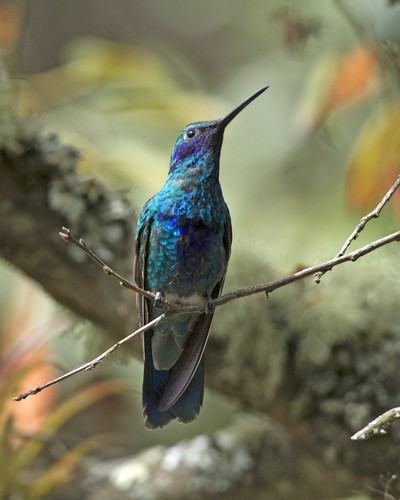
Other birds you may enjoy
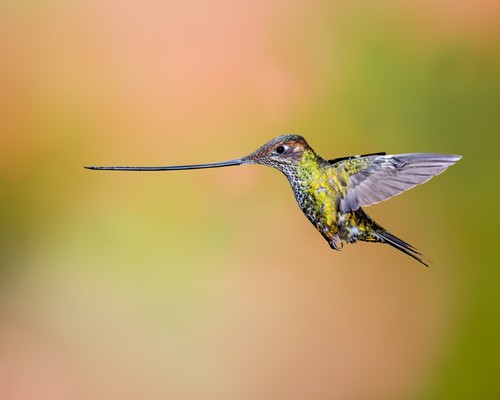
Sword-billed Hummingbird
Body about 13-15 cm (5-6 in) including a bill up to 10 cm long, the longest bill relative to body size of any bird
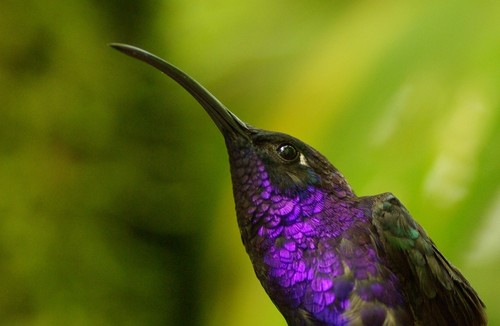
Violet Sabrewing
14-15 cm (5.5-6 in) long
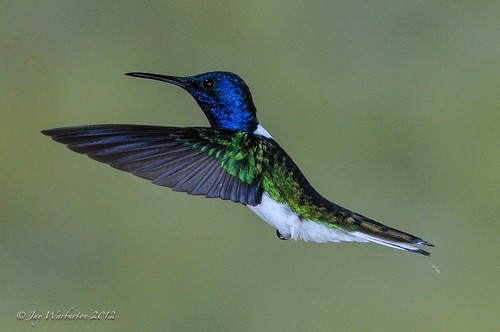
White-necked Jacobin
11-12 cm (4.3-4.7 in) long
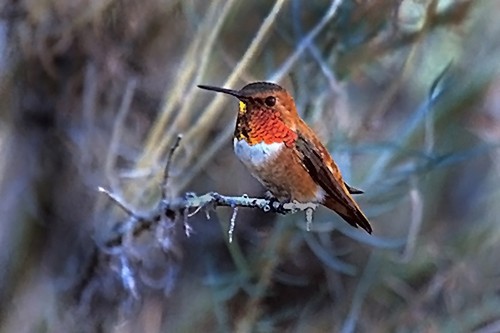
Rufous Hummingbird
8-9 cm (3-3.5 in) long, 11 cm wingspan
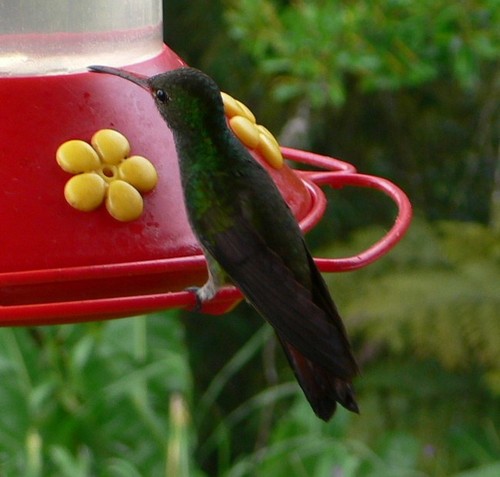
Rufous-tailed Hummingbird
10-11.5 cm (4-4.5 in) long
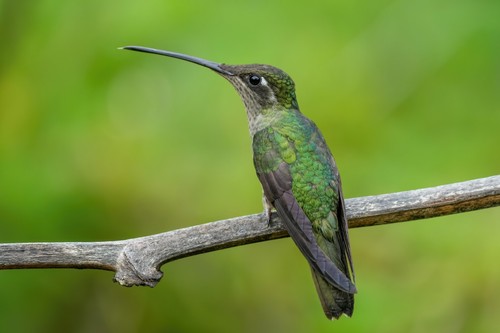
Rivoli's Hummingbird
11-14 cm (4.5-5.5 in) long, 17-18 cm wingspan
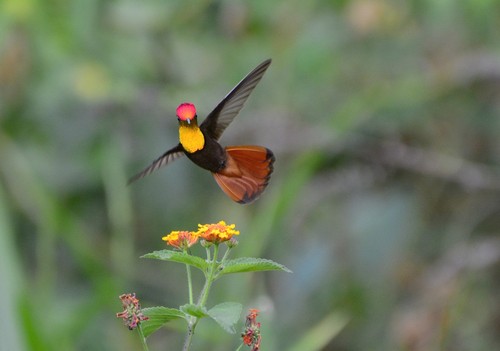
Ruby-topaz Hummingbird
7.5-9 cm (3-3.5 in) long
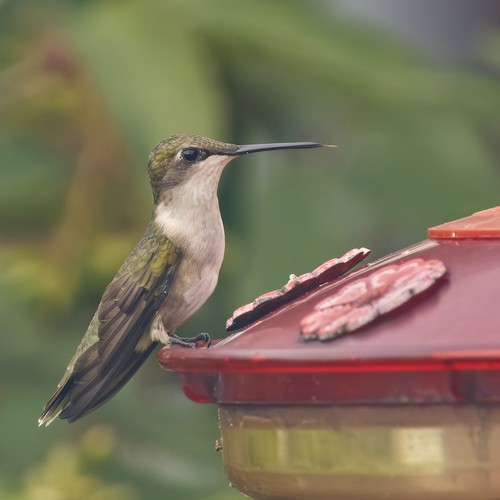
Ruby-throated Hummingbird
7-9 cm (3-3.5 in) long, 8-11 cm wingspan
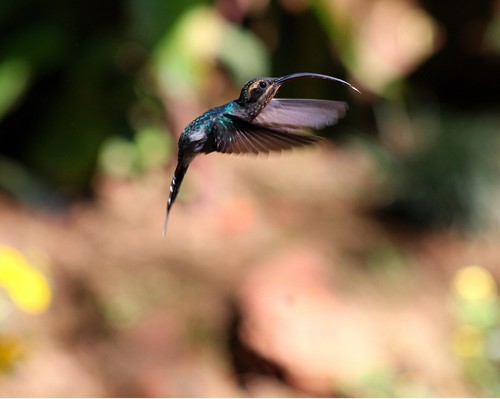
Green Hermit
15-16 cm (6-6.3 in) long including elongated central tail feathers
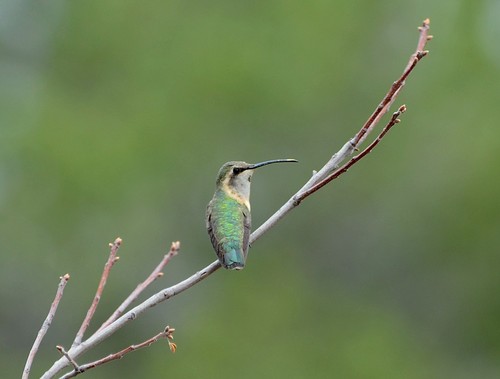
Lucifer Hummingbird
8.5-9.5 cm (3.5 in) long, 11 cm wingspan
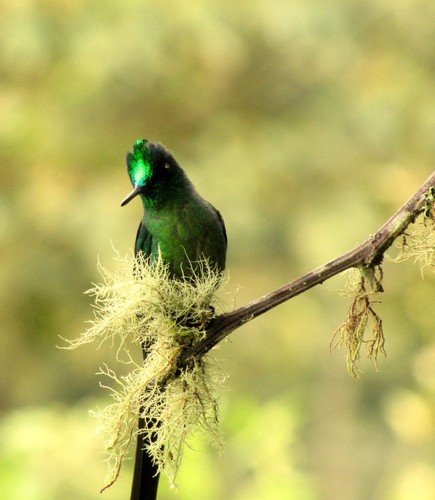
Long-tailed Sylph
males 18-19 cm (7-7.5 in) including tail; females 9-10 cm (3.5-4 in)
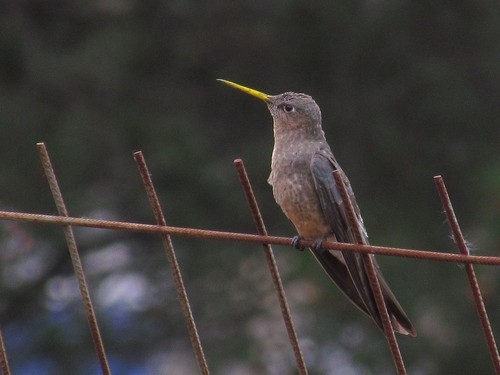
Giant Hummingbird
20-23 cm (8-9 in) long, largest hummingbird species in the world