
Sparkling Violetear Identification Guide
A large, noisy Andean hummingbird identified by its shimmering green body and flashing violet ear patches and chest spot.
Read the full Sparkling Violetear encyclopedia entry →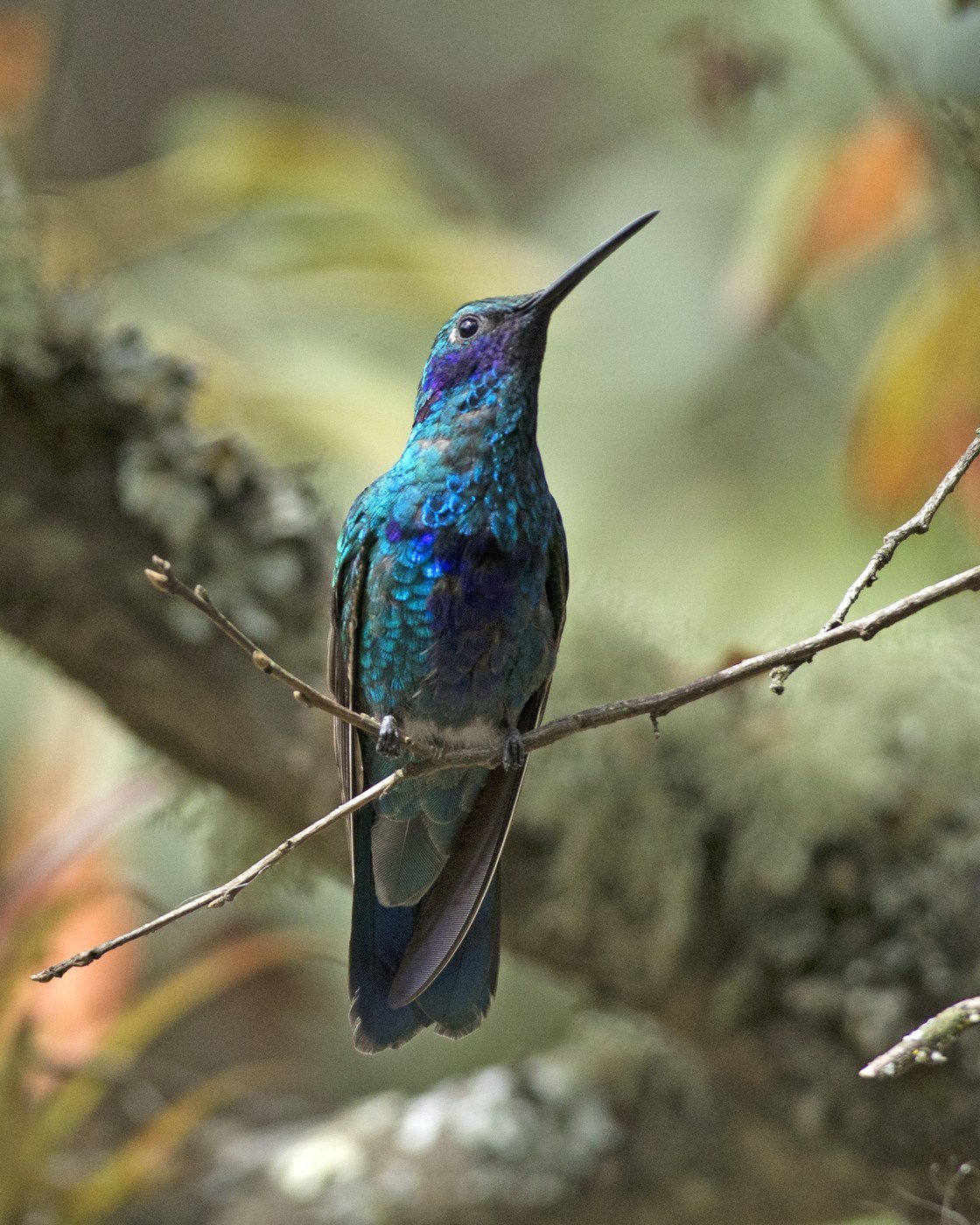
Key Field Marks
- Size & shape: A large hummingbird (about 5.5 inches / 14 cm) with a long, slightly decurved black bill and a squared, blue-black tail with a darker subterminal band.
- Plumage: Overall shimmering metallic green body. Adults show iridescent violet-blue ear tufts that flare out behind the eye and a violet-blue patch in the center of the chest — both can look dull blackish in poor light and only "spark" violet when they catch the sun.
- Bare parts: Black bill, dark legs.
- Behavior: Perches conspicuously on high, exposed twigs to sing and defend territory; feeds at flowering shrubs, agaves, and feeders; frequently chases other hummingbirds aggressively.
Separating It From Similar Species
- Green Violetear (Mexican Violetear) — a close relative found farther north (Mexico to Costa Rica); very similar but ranges barely overlap, so location is the best clue.
- Brown Violetear — smaller, dull brown overall, lacks the extensive green body plumage.
- Sword-billed Hummingbird and other Andean hummingbirds — much longer, straighter bills; violetears have a comparatively short, only gently curved bill.
- Female and immature violetears look like duller males; the violet ear and chest patches are usually still visible but less extensive.
Habitat, Range & Season
Found along the Andes from Venezuela and Colombia south through Ecuador, Peru, and Bolivia into northern Argentina and Chile, roughly 1,500–3,500 m elevation. Common in gardens, forest edges, scrub, and montane parks; often one of the most conspicuous hummingbirds in Andean cities and towns. Present year-round with some local elevational movement tied to flowering.
Voice
A loud, sharp, metallic "tsip" or "chip" repeated persistently and monotonously from an exposed perch — often the first clue to its presence before it's seen.
Frequently asked questions
What makes the violet patches visible?
The violet ear tufts and chest spot are iridescent structural colors that only flash violet-blue when light hits them at the right angle; from other angles they can look black or dull.
Where is the best place to see a Sparkling Violetear?
Andean gardens, parks, and forest edges from Venezuela to northern Argentina, typically between 1,500 and 3,500 meters elevation.
How can I tell males from females?
Both sexes look similar with green bodies and violet ear/chest patches, though females often show slightly less extensive violet coloring; the species lacks strong sexual dimorphism compared to many hummingbirds.
Is the Sparkling Violetear aggressive at feeders?
Yes, it is known for chasing and dominating other hummingbirds at flowers and feeders within its territory.