
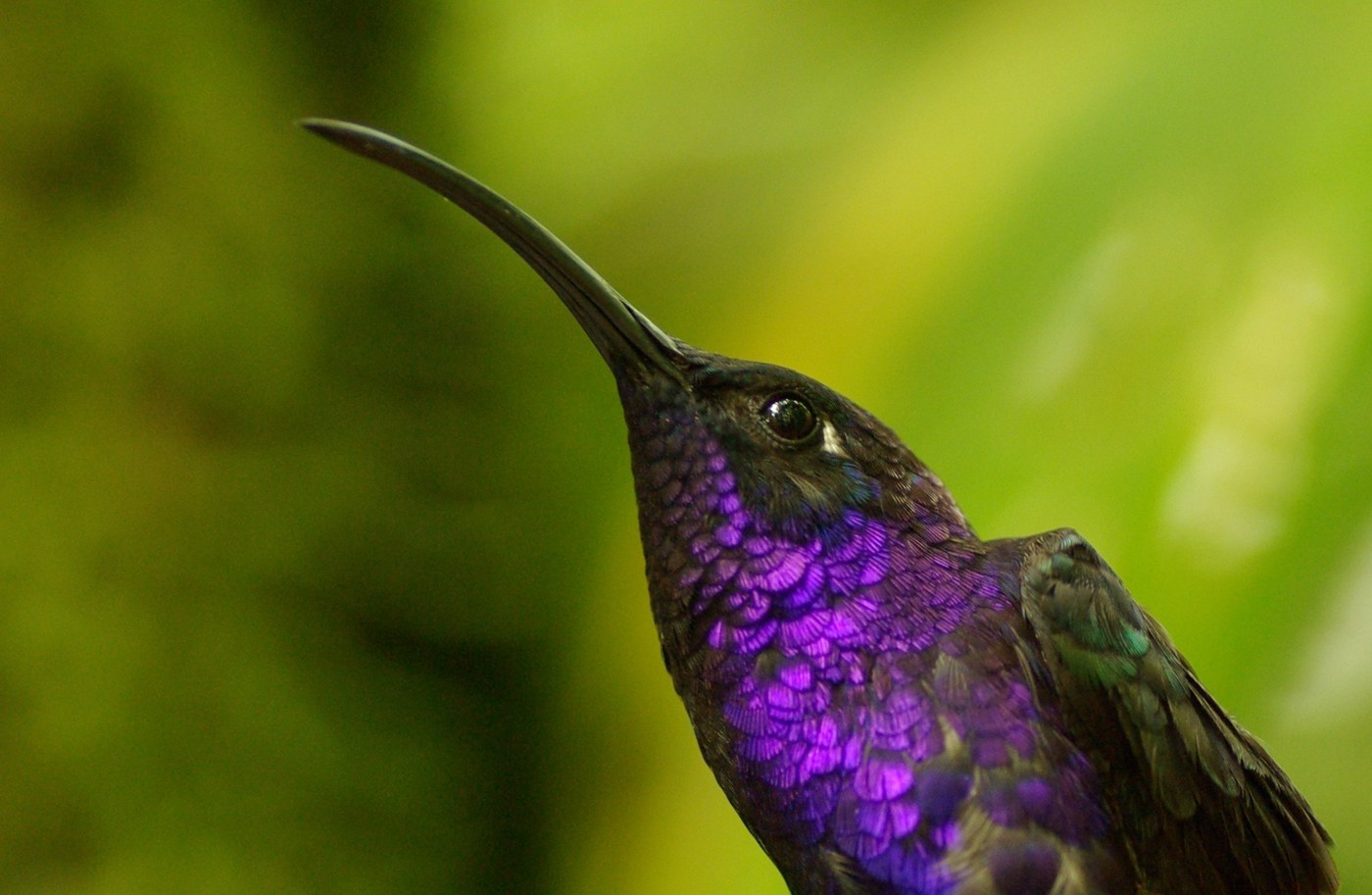
Violet Sabrewing
Campylopterus hemileucurus
One of the largest hummingbirds in its Central American range, with males glowing deep violet-blue overall and a heavy, slightly curved black bill.
- Size
- 14-15 cm (5.5-6 in) long
- Habitat
- humid forest, forest edge, and mid-elevation cloud forest
- Type
- hummingbird
Spotted a bird like this?
Identify any bird from a photo, free.
Overview
The Violet Sabrewing is a large, powerful hummingbird found from Mexico south to Panama, and males are strikingly colored in an almost uniform, rich violet-blue that can appear nearly black in poor light but glows vividly in the sun. The wings and back show green tones, and the tail is broad and dark with white corners visible on the outer feathers.
Females are duller, mostly green above with grayish underparts and a similarly broad, white-cornered tail, lacking the male's saturated violet coloring. Its large size and heavy bill allow it to dominate smaller hummingbirds at flowering plants, and its deep, buzzing wingbeats produce an audible hum distinct from smaller species.
How to identify it
Key field marks
- Males: rich, nearly uniform violet-blue plumage, green-tinged wings and back
- Females: green above, gray below, both sexes show a broad dark tail with white corners
- Large size and heavy, slightly downcurved black bill
- Loud, deep wingbeat hum audible at close range
Similar species
- No other hummingbird within its range shows the male's extensive, saturated violet-blue coloring, making adult males essentially unmistakable.
- Females can resemble other large green hummingbirds but the broad white-cornered tail and large size are useful clues.
Habitat & range
Habitat
Inhabits humid forest, forest edge, and mid-elevation cloud forest, often near streams and ravines.
Range
Found from central Mexico south through Central America to western Panama, generally at mid-elevations.
Migration
Mostly resident, with some altitudinal movement tied to flowering seasons.
Behavior & voice
Behavior
Bold and often dominant at flowering plants due to its large size, aggressively chasing off smaller hummingbirds; frequently forages at low to mid-story flowering shrubs.
Voice
A sharp, repeated "chip" or scratchy chattering call, along with an audible, deep wingbeat hum in flight.
Feeding
Feeds on nectar from a variety of flowering plants, including heliconias and other tubular flowers, and catches small insects in flight.
Nesting
Builds a cup nest of plant fibers, often placed under an overhang, bank, or building eave for shelter; the female incubates the typical clutch of 2 white eggs alone.
Frequently asked questions
How do you identify a Violet Sabrewing?
Adult males are large hummingbirds with rich, nearly uniform violet-blue plumage; females are duller green above and gray below, and both sexes show a broad dark tail with white corners.
Why is it called a sabrewing?
The genus name refers to the somewhat thickened, curved shape of the outer wing feathers found in sabrewing hummingbirds, though this is more subtle than the bird's dramatic plumage color.
What does a Violet Sabrewing eat?
Mainly nectar from a variety of flowering plants, supplemented with small insects caught in flight.
Where does the Violet Sabrewing live?
In humid forest and forest edge from central Mexico south through Central America to western Panama.
Violet Sabrewing guides
In-depth guides for identifying, finding, and understanding Violet Sabrewing.
Other birds you may enjoy
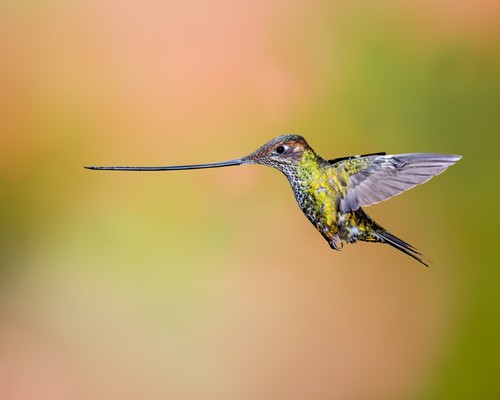
Sword-billed Hummingbird
Body about 13-15 cm (5-6 in) including a bill up to 10 cm long, the longest bill relative to body size of any bird
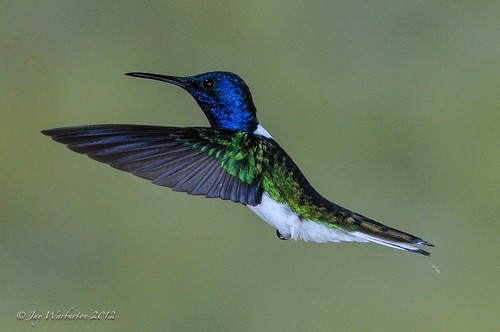
White-necked Jacobin
11-12 cm (4.3-4.7 in) long
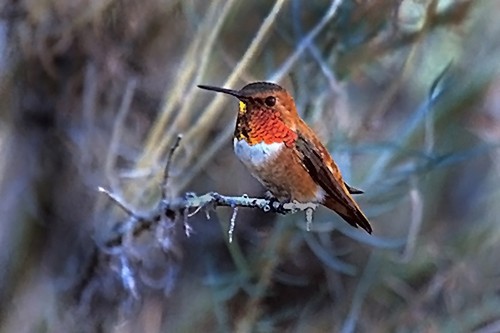
Rufous Hummingbird
8-9 cm (3-3.5 in) long, 11 cm wingspan
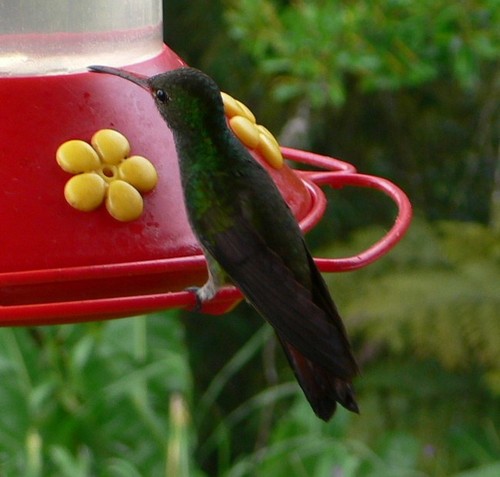
Rufous-tailed Hummingbird
10-11.5 cm (4-4.5 in) long
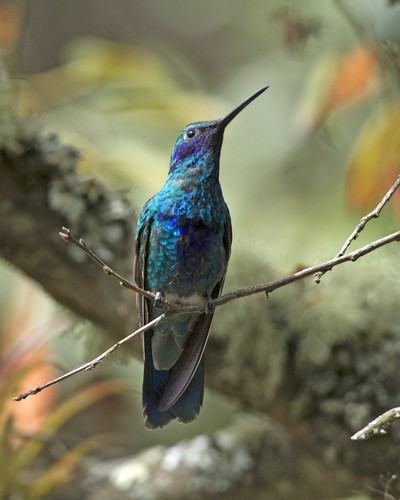
Sparkling Violetear
13-14 cm (5-5.5 in) long including bill
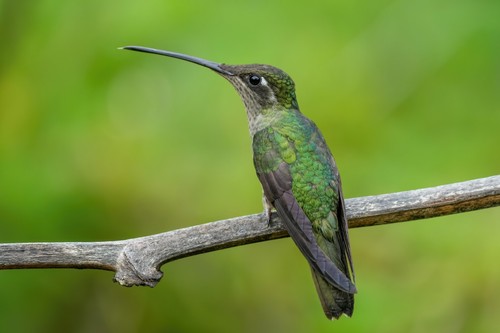
Rivoli's Hummingbird
11-14 cm (4.5-5.5 in) long, 17-18 cm wingspan
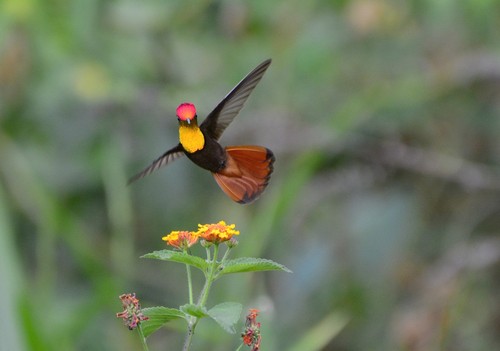
Ruby-topaz Hummingbird
7.5-9 cm (3-3.5 in) long
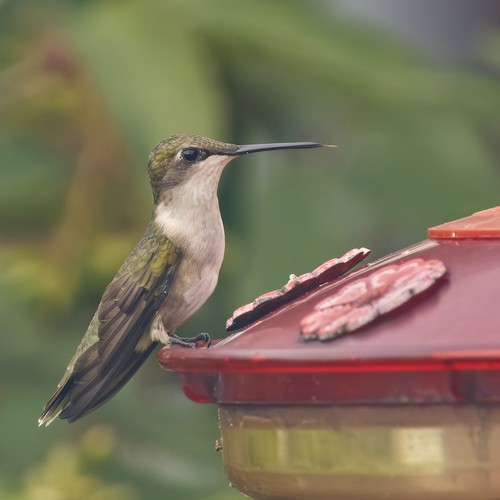
Ruby-throated Hummingbird
7-9 cm (3-3.5 in) long, 8-11 cm wingspan
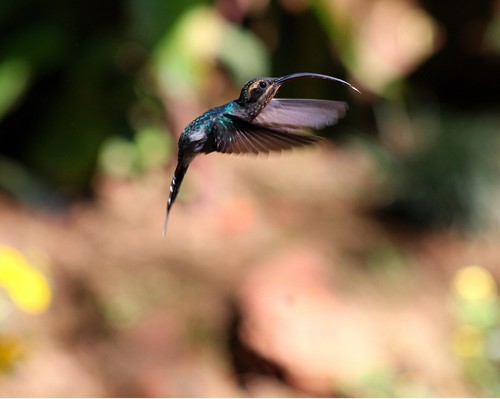
Green Hermit
15-16 cm (6-6.3 in) long including elongated central tail feathers
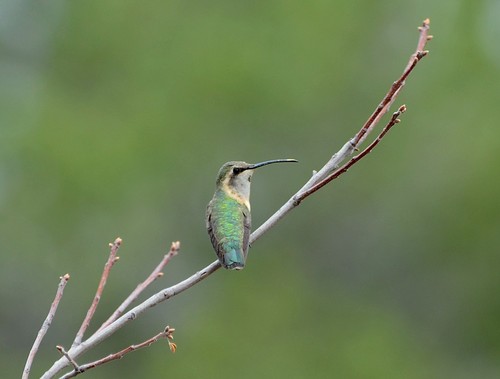
Lucifer Hummingbird
8.5-9.5 cm (3.5 in) long, 11 cm wingspan
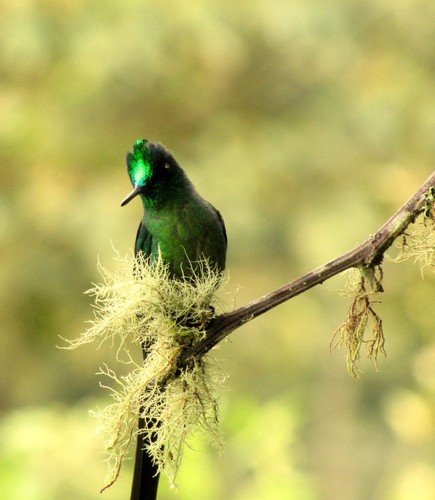
Long-tailed Sylph
males 18-19 cm (7-7.5 in) including tail; females 9-10 cm (3.5-4 in)
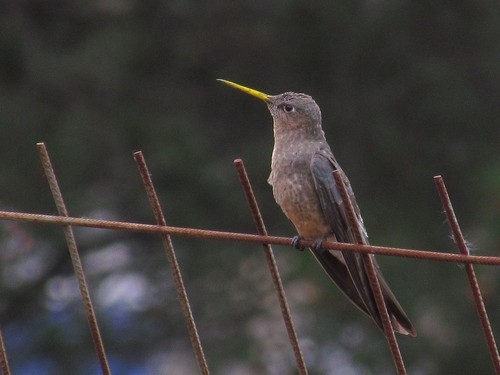
Giant Hummingbird
20-23 cm (8-9 in) long, largest hummingbird species in the world