
Violet Sabrewing Identification Guide
A large, deep violet-blue hummingbird of Central American cloud forests, recognized by its size, curved black bill, and white-tipped outer tail feathers.
Read the full Violet Sabrewing encyclopedia entry →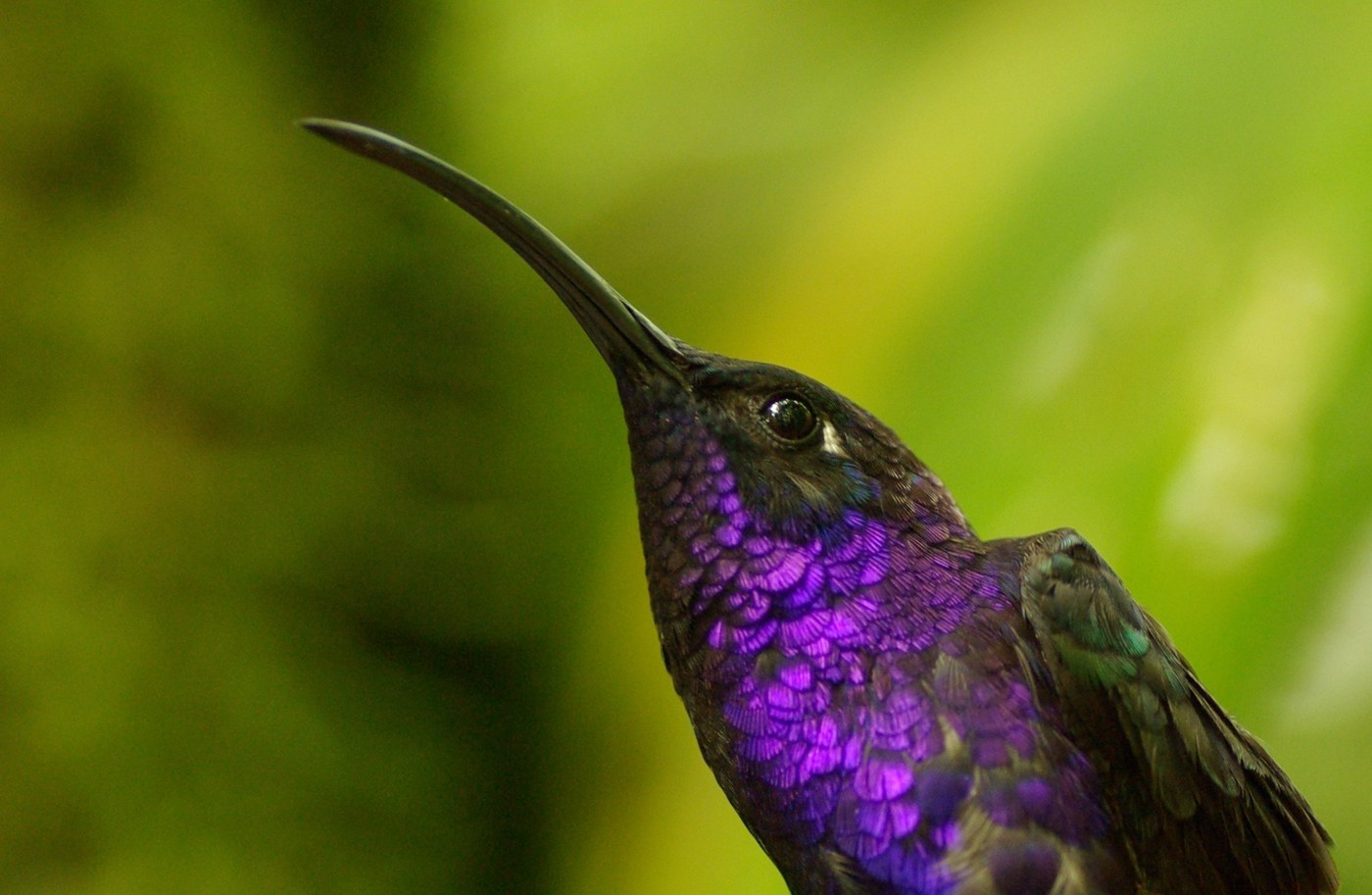
Key Field Marks
- Size & shape: One of the largest hummingbirds in its range, noticeably bulkier and longer than most other hummingbird species it shares habitat with.
- Bill: Long and distinctly decurved (sabre-shaped), dark, adapted for feeding on long tubular flowers.
- Adult male: Deep, rich violet-blue covering most of the body, with a dark green-blue tail showing white tips on the outer feathers, visible when the tail is spread.
- Adult female: Duller and less saturated — greenish above with grayish underparts, lacking the male's extensive violet coloring, though retaining the large size and curved bill.
- Behavior: Powerful, direct flight; often dominates smaller hummingbirds at flowering shrubs and feeders due to its size, and gives loud chase calls when defending territory.
Separating Violet Sabrewing from Similar Species
- Size and bill: The combination of very large size and a strongly decurved bill immediately narrows identification, as few other hummingbirds in its range share both traits.
- Female vs. male: Females can be confused with other large green hummingbirds, but the long curved bill and overall bulk remain useful, along with habitat and range.
Where & When to See One
Resident from central Mexico south through Central America to western Panama, primarily in humid forest, forest edge, and cloud forest at middle to higher elevations, though it also visits gardens and flowering shrubs near forest. Non-migratory, present year-round within its range, with some birds making local elevational movements tied to flowering seasons.
Voice
Sharp, insistent chip notes, along with buzzy, aggressive calls given during chases at flowers and feeders, reflecting its dominant, territorial behavior around nectar sources.
Frequently asked questions
What makes the Violet Sabrewing easy to identify?
Its combination of large size, deep violet-blue plumage in males, and a long, strongly decurved black bill sets it apart from most other hummingbirds in its range.
What does a female Violet Sabrewing look like?
Duller greenish above and grayish below compared to the male, but she retains the species' large size and distinctive curved bill.
Where does the Violet Sabrewing live?
Humid forest, forest edge, and cloud forest from central Mexico through Central America to western Panama, mostly at middle to higher elevations.
Is the Violet Sabrewing aggressive at feeders?
Yes, due to its large size it often dominates and chases away smaller hummingbird species at flowers and feeders.