
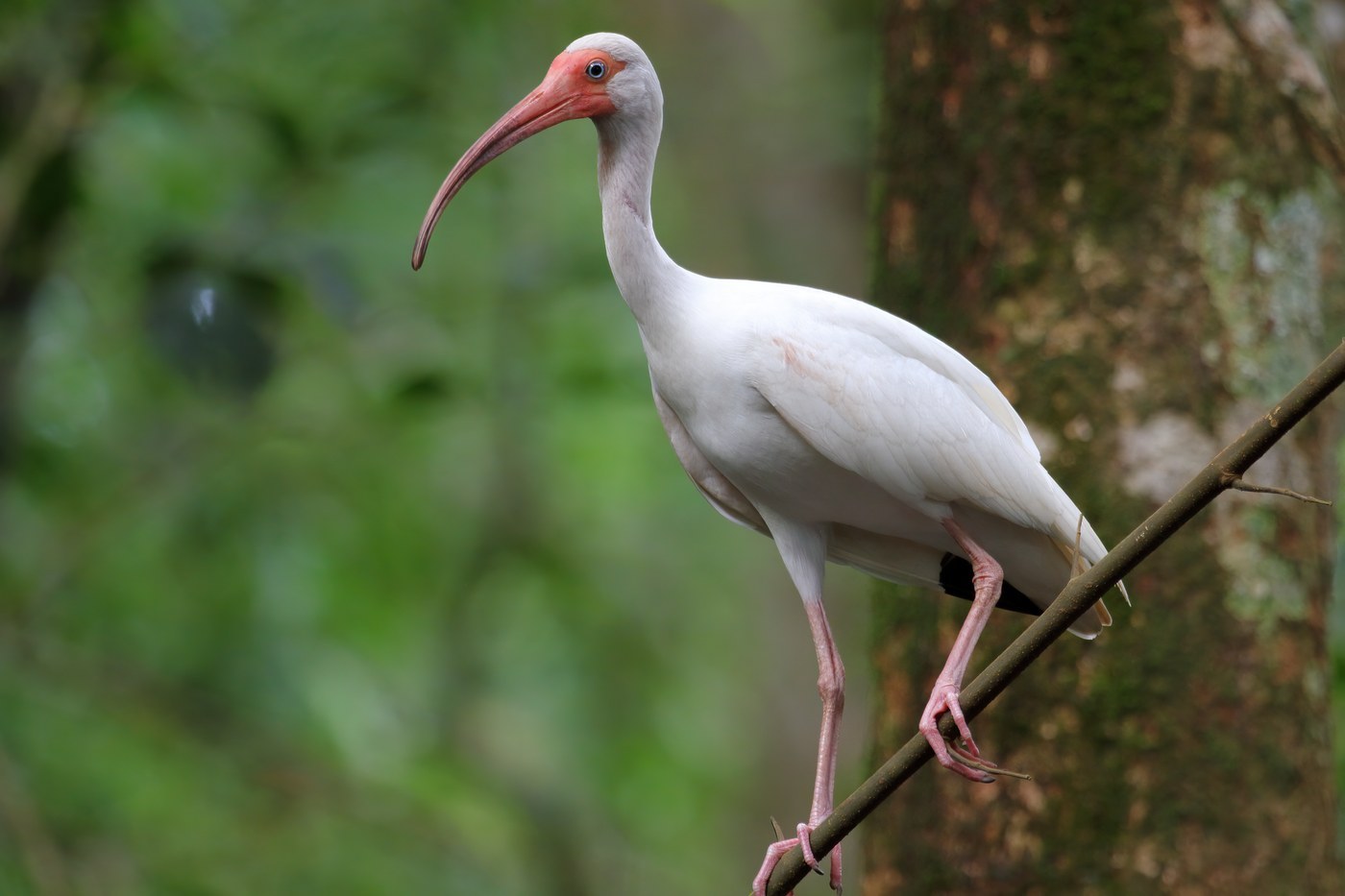
White Ibis
Eudocimus albus
A familiar bright-white wading bird of the American South, with a curved pink bill and legs, often seen probing lawns and marshes for crayfish.
- Size
- 53-70 cm (21-28 in) long, 90-105 cm wingspan
- Habitat
- coastal marshes, wetlands, and lawns of the southeastern United States, Mexico, and Central America
- Type
- wading-bird
Spotted a bird like this?
Identify any bird from a photo, free.
Overview
The White Ibis is an entirely white-bodied wading bird except for black wingtips visible only in flight, paired with a distinctive long, down-curved bill and legs that flush bright pink to red-orange during the breeding season. Juveniles look quite different, showing brown upperparts and a white belly before molting into adult plumage over their first couple of years.
This is one of the most familiar wading birds in the southeastern United States, often seen in large flocks probing lawns, golf courses, and shallow wetlands with its curved bill, sometimes far from typical marsh habitat.
How to identify it
Key field marks
- All-white body with black wingtips visible in flight
- Long, down-curved pink to red-orange bill
- Pink to red legs, brightest during breeding season
- Juveniles are brown above with a white belly
Similar species
Adult Scarlet Ibis is unmistakably red rather than white, though hybrids and occasional white-with-red-tinge birds occur where ranges overlap. Egrets lack the curved bill entirely, distinguishing them at a glance from White Ibis.
Habitat & range
Habitat
White Ibis use a wide range of wetlands, from coastal salt marshes and mangroves to freshwater marshes, flooded fields, and even lawns and parks near water.
Range and migration
The species is resident across the southeastern United States coastal plain, the Caribbean, and portions of Mexico and Central America, with some seasonal and post-breeding dispersal but no long-distance migration.
Behavior & voice
Behavior
Highly social, White Ibis forage, roost, and nest in large flocks, often mixing with egrets and other wading birds, and can become tame around people in urban parks.
Voice
A nasal, grunting "hunh-hunh-hunh" call, along with various honks given in flight and at colonies.
Feeding
It forages by probing its curved bill into mud, shallow water, or grass to find crayfish, crabs, and insects, relying heavily on touch rather than sight.
Nesting and breeding
White Ibis nest colonially in trees or shrubs near water, often in large mixed-species colonies; clutches typically contain 2-4 eggs.
Frequently asked questions
How can you tell an adult White Ibis from a juvenile?
Adults are entirely white with black wingtips, while juveniles are brown above with a white belly and duller bill and legs.
Where do White Ibis live?
They are common across the southeastern United States, the Caribbean, and parts of Mexico and Central America, in marshes, lawns, and wetlands.
What do White Ibis eat?
Mainly crayfish and other crustaceans, along with aquatic insects, probed from mud and shallow water using their curved bill.
Why do White Ibis have pink legs and bills?
Breeding condition brightens their bare parts to a vivid pink or red-orange, which fades outside the breeding season.
White Ibis guides
In-depth guides for identifying, finding, and understanding White Ibis.
Other birds you may enjoy
Demoiselle Crane
85-100 cm (33-39 in) long, 155-180 cm wingspan
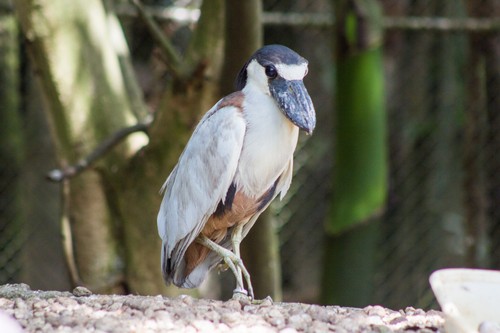
Boat-billed Heron
41-56 cm (16-22 in) long
Purple Heron
78-90 cm (31-35 in) long, 120-152 cm wingspan
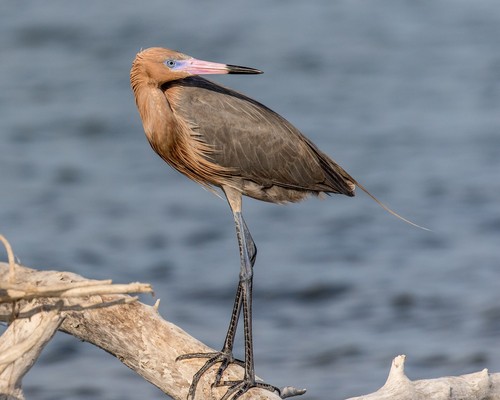
Reddish Egret
68-82 cm (27-32 in) long, 116-125 cm wingspan
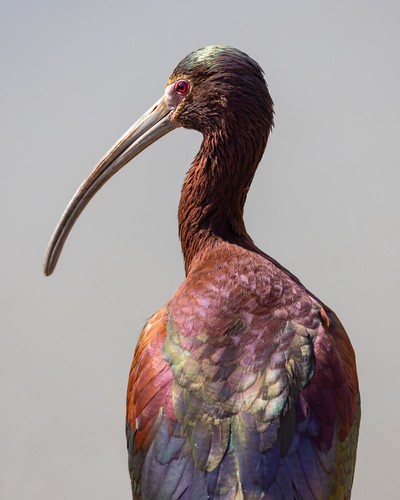
White-faced Ibis
46-56 cm (18-22 in) long, 88-93 cm wingspan
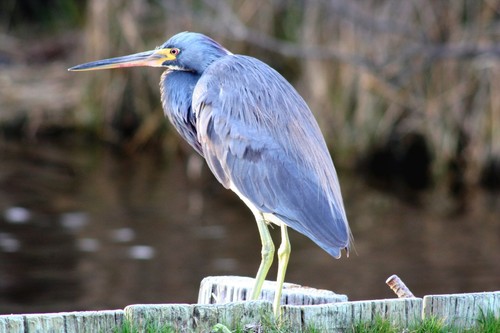
Tricolored Heron
61-76 cm (24-30 in) long, about 96 cm wingspan
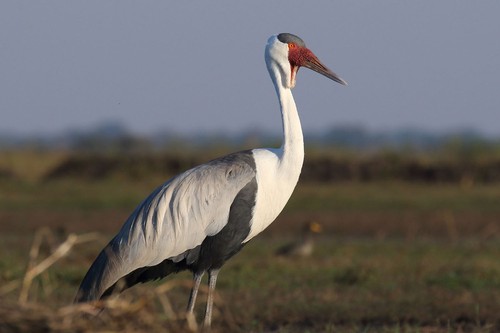
Wattled Crane
120-175 cm (47-69 in) tall, one of the tallest cranes, wingspan up to about 230 cm (7.5 ft)
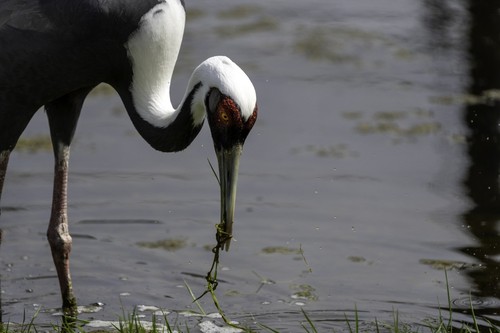
White-naped Crane
112-125 cm (44-49 in) long, 195-210 cm wingspan
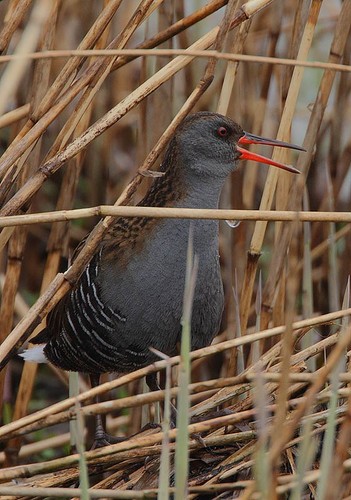
Water Rail
23-28 cm (9-11 in) long, wingspan 38-45 cm
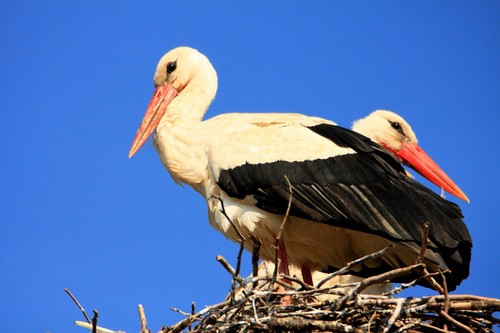
White Stork
100-125 cm (39-49 in) long, 155-215 cm wingspan
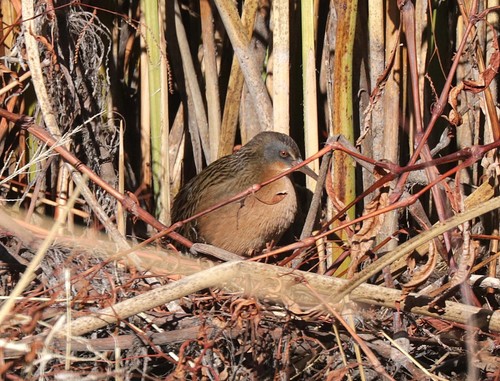
Virginia Rail
20-27 cm (8-11 in) long, wingspan 32-38 cm
Wattled Jacana
17-23 cm (7-9 in) long