
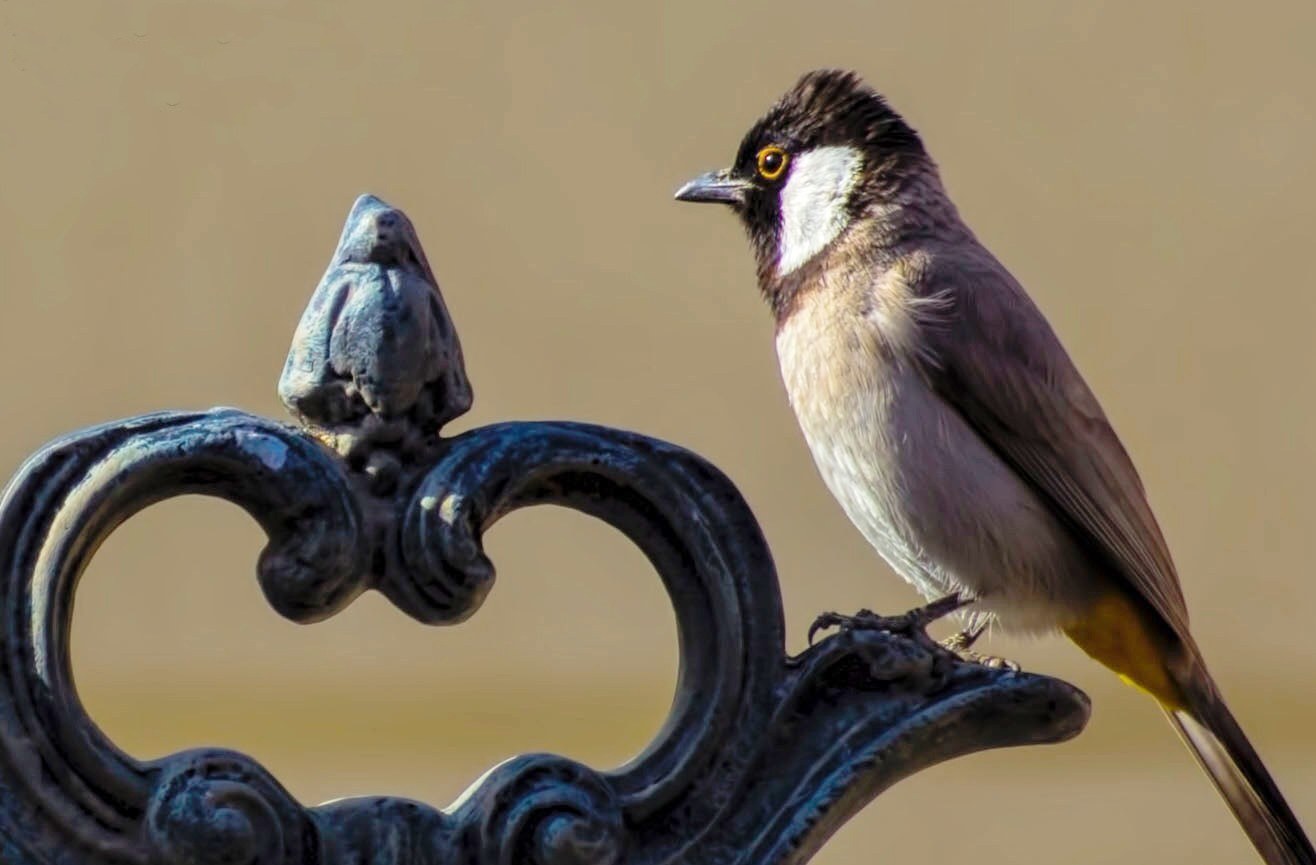
White-eared Bulbul
Pycnonotus leucotis
A dusky-grey bulbul with a black head, a bold white ear patch, and a bright yellow vent, common in gardens across the Middle East and South Asia.
- Size
- 18-20 cm (7-8 in) long, 26-30 cm wingspan
- Habitat
- gardens, scrub, semi-arid woodland, and urban areas
- Type
- songbird
Spotted a bird like this?
Identify any bird from a photo, free.
Overview
The White-eared Bulbul is a smart, medium-sized songbird with a black head and throat set off by a prominent, crisp white patch covering the ear coverts -- the feature that gives the species its name. The body is a soft brownish-grey, and the undertail coverts (vent) glow bright yellow, a splash of color against the otherwise muted plumage.
A highly vocal and confiding bird, it is a familiar sight in gardens, parks, and semi-arid scrub across the Middle East and parts of South Asia, often seen in pairs perched prominently and calling.
How to identify it
Key field marks
- Black head and throat with a bold white patch covering the ear coverts
- Brownish-grey body plumage, bright yellow undertail coverts (vent)
- Slim build without a prominent crest
- Frequently seen in pairs, perching conspicuously
Similar species
The Himalayan (White-cheeked) Bulbul has a black crest and a smaller white cheek patch restricted mainly below the eye, plus a yellow vent similar in tone. The Red-vented Bulbul lacks the white ear patch entirely and shows a red (not yellow) vent.
Habitat & range
Range
Found from the Arabian Peninsula and the Middle East east through Iran, Pakistan, and north-western India.
Habitat
Adaptable to gardens, parks, semi-arid scrub, oases, and urban areas, often near water in otherwise dry landscapes.
Migration
Largely resident, with limited local movements.
Behavior & voice
Behavior
Sociable and confiding, typically seen in pairs or small groups, often perching in the open on shrubs, wires, or garden trees.
Voice
A cheerful, bubbly chattering song, along with sharp call notes, frequently heard around gardens and settlements.
Feeding
Feeds mainly on fruit, berries, and nectar, supplemented with insects; readily visits gardens with fruiting shrubs and flowering trees.
Nesting and breeding
Builds a cup nest of twigs and grass in a bush or small tree. Lays 2-3 eggs, with both parents helping to feed the young.
Frequently asked questions
What gives the White-eared Bulbul its name?
A bold, crisp white patch covering the ear coverts on an otherwise black head is the source of its common name.
Where is the White-eared Bulbul found?
It ranges from the Arabian Peninsula and Middle East east through Iran, Pakistan, and north-western India.
How is the White-eared Bulbul different from the Himalayan Bulbul?
The White-eared Bulbul lacks a prominent crest and has a larger white ear patch, while the Himalayan Bulbul has a black crest and a smaller white cheek patch.
What color is the White-eared Bulbul's vent?
It has bright yellow undertail coverts (vent), contrasting with its grey-brown body and black head.
White-eared Bulbul guides
In-depth guides for identifying, finding, and understanding White-eared Bulbul.
Other birds you may enjoy
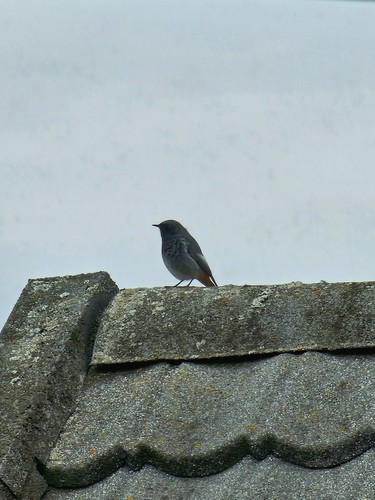
Black Redstart
13-14.5 cm (5.1-5.7 in) long, 23-26 cm wingspan
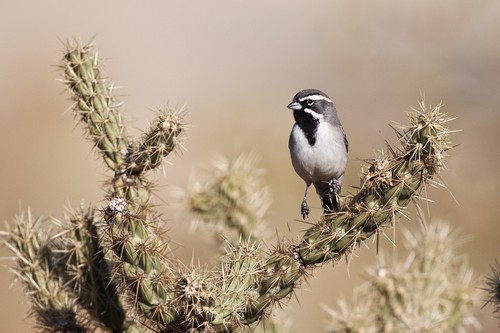
Black-throated Sparrow
12-14 cm (4.7-5.5 in) long, about 19-20 cm (7.5-8 in) wingspan
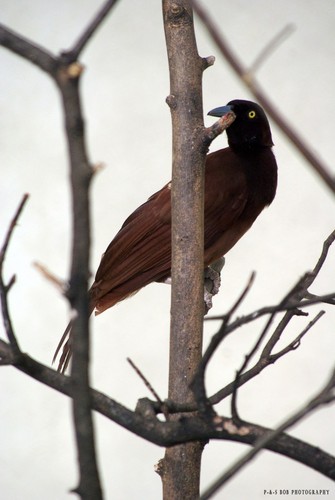
Greater Bird-of-paradise
Body about 43 cm; males with additional flank plumes up to 50 cm and long tail wires
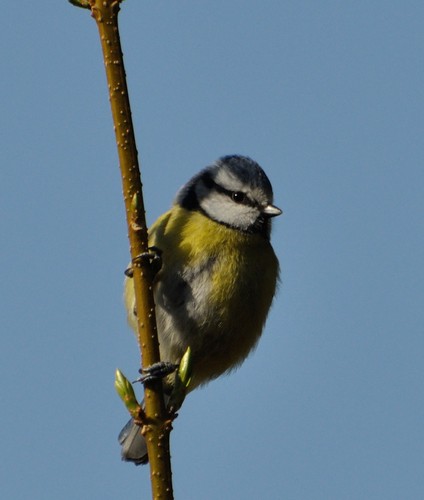
Blue Tit
11-12 cm (4.3-4.7 in) long, 17-20 cm wingspan

Red-billed Quelea
11.5–13 cm long, wingspan about 20–22 cm
White-plumed Antbird
13-14 cm (5-5.5 in) long
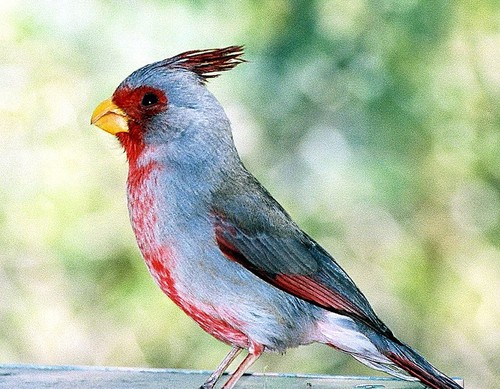
Pyrrhuloxia
19-22 cm (7.5-8.7 in) long, 30 cm wingspan
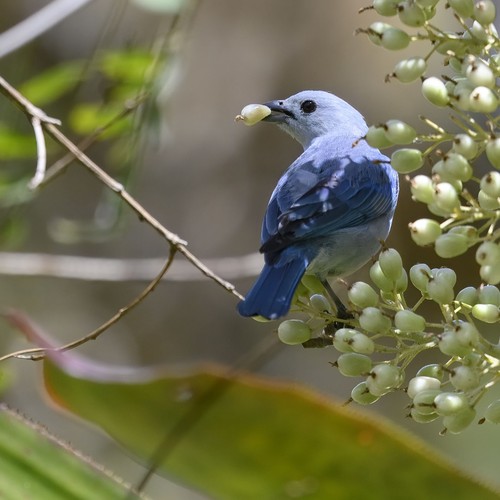
Blue-gray Tanager
16-18 cm (6-7 in) long
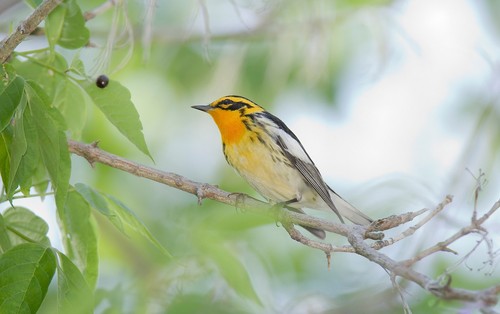
Blackburnian Warbler
11-13 cm (4.3-5.1 in) long, 20-22 cm wingspan
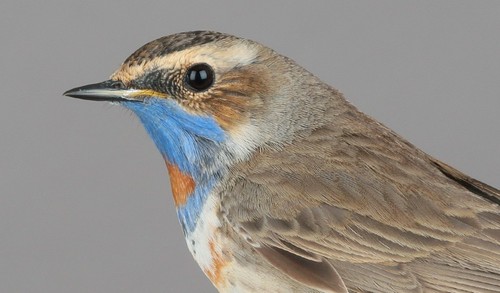
Bluethroat
13-14 cm (5.1-5.5 in) long, 20-22 cm wingspan
Eurasian Nuthatch
12-14.5 cm (4.7-5.7 in) long, 22.5-27 cm wingspan
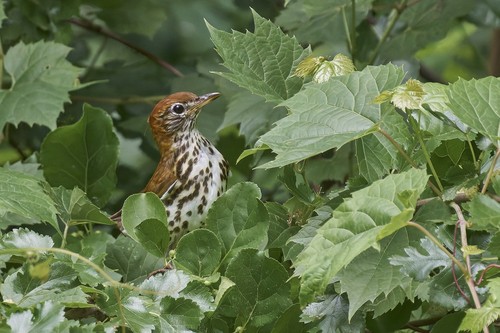
Wood Thrush
19-21 cm (7.5-8.3 in) long, about 33 cm (13 in) wingspan