
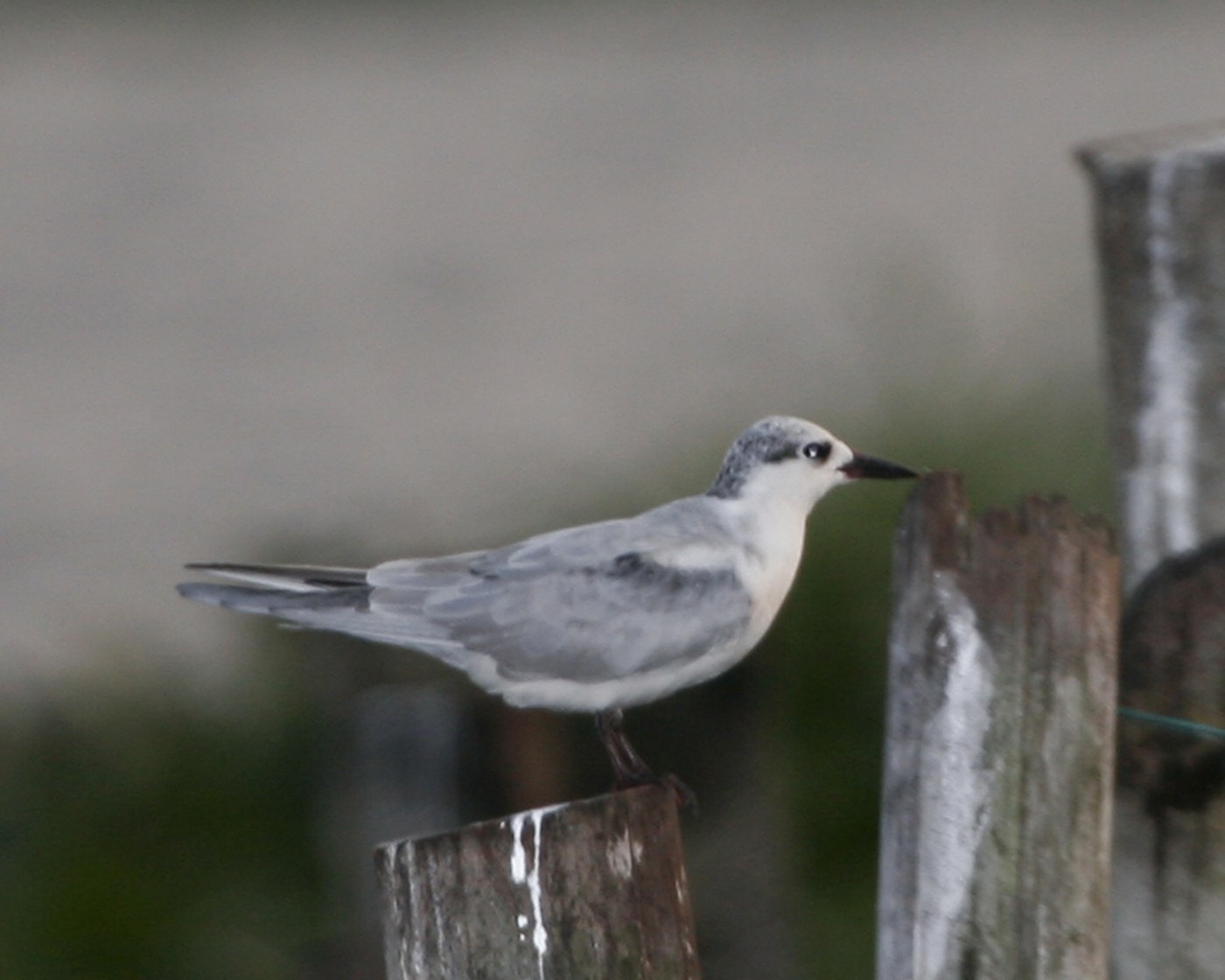
Whiskered Tern
Chlidonias hybrida
A marsh tern with dark grey underparts, a black cap, and a crisp white cheek stripe that gives it a distinctive 'whiskered' face pattern.
- Size
- 23-29 cm (9-11 in) long, 74-78 cm wingspan
- Habitat
- freshwater marshes, lakes, and rice paddies
- Type
- seabird
Spotted a bird like this?
Identify any bird from a photo, free.
Overview
The Whiskered Tern is a medium-sized marsh tern widespread across warmer parts of Europe, Asia, Africa, and Australia. It shares the buoyant, surface-dipping foraging style typical of its close relatives the Black Tern and White-winged Tern, but is somewhat larger and stockier.
Appearance
Breeding adults have a black cap, dark slate-grey underparts, pale grey wings and back, and a striking white stripe along the cheek that separates the black cap from the dark throat and breast, giving rise to the name "whiskered." The bill and legs are deep red.
How to identify it
Key field marks
- Dark grey underparts contrasting with a black cap and white cheek stripe
- Red bill and red legs
- White undertail coverts, distinguishing it from the White-winged Tern's black underwing coverts
- Relatively shallow tail fork compared to sea terns
- Buoyant flight, foraging low over marshes and lakes
Similar species
The Whiskered Tern can be confused with the Black Tern and White-winged Tern, but its paler grey (not black) underparts, white cheek stripe, and red bill and legs help distinguish it. Non-breeding birds are much paler and require close attention to head pattern and bill shape.
Habitat & range
Habitat and range
Whiskered Terns breed on freshwater wetlands with abundant floating and emergent vegetation, including marshes, lakes, and rice paddies, across southern Europe, Africa, Asia, and Australia. Populations in temperate regions are migratory, while those in tropical areas may be resident or locally nomadic, following flooded habitats.
Outside the breeding season, birds disperse to lakes, wetlands, and sometimes coastal lagoons across a broad range spanning Africa and southern Asia.
Behavior & voice
Behavior
Whiskered Terns forage with light, buoyant flight over water, hovering briefly before dipping down to snatch insects, small fish, tadpoles, and frogs from the surface, rarely plunging fully underwater.
Voice
The call is a harsh, grating "kek" or "krekk," often given repeatedly in flight near breeding colonies.
Nesting and breeding
They nest colonially on floating vegetation such as water-lily pads or built-up platforms of aquatic plants, laying two to three eggs. Colonies can shift location from year to year depending on water levels and vegetation growth.
Frequently asked questions
How do you identify a Whiskered Tern?
Look for a black cap, dark grey underparts, a white cheek stripe, and a red bill and legs during the breeding season.
What is the difference between a Whiskered Tern and a Black Tern?
Whiskered Terns are paler grey below (not black), show a white cheek stripe, and have red rather than dark bills and legs.
Where do Whiskered Terns build their nests?
On floating aquatic vegetation such as water-lily pads in freshwater marshes, lakes, and rice paddies.
What do Whiskered Terns eat?
Insects, small fish, tadpoles, and frogs, picked from the water surface during low, buoyant foraging flights.
Whiskered Tern guides
In-depth guides for identifying, finding, and understanding Whiskered Tern.
Other birds you may enjoy
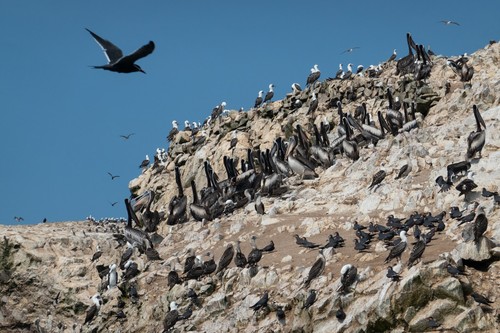
Peruvian Pelican
137-152 cm (54-60 in) long, up to 228 cm wingspan
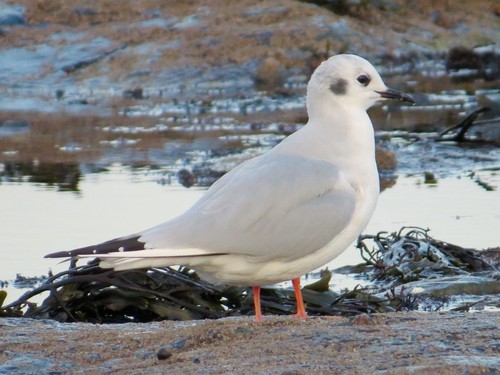
Bonaparte's Gull
28-33 cm (11-13 in) long, 76-84 cm wingspan
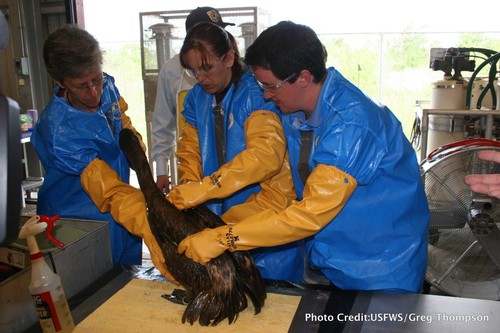
Brown Pelican
106-137 cm (42-54 in) long, 200-230 cm wingspan
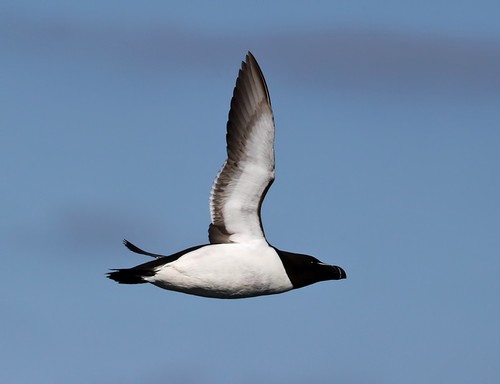
Razorbill
37-39 cm (15-15.5 in) long, 63-68 cm wingspan
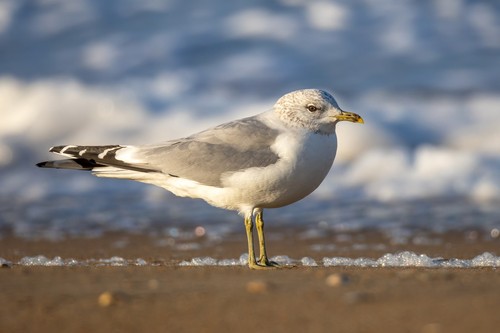
Common Gull
40-46 cm (16-18 in) long, 110-130 cm wingspan
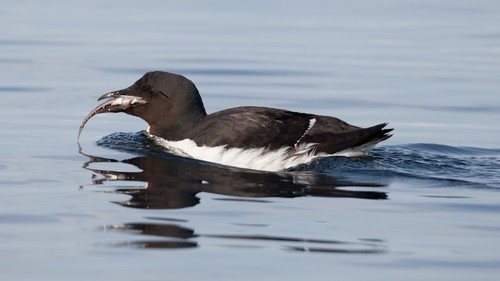
Thick-billed Murre
40-48 cm (16-19 in) long, 65-75 cm wingspan
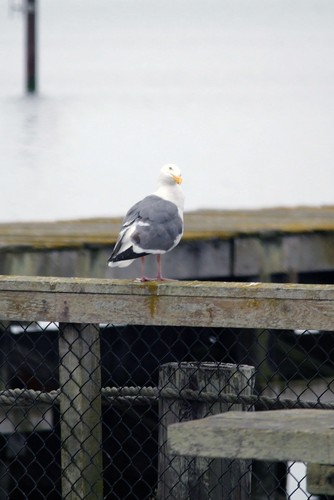
Western Gull
55-68 cm (22-27 in) long, 130-144 cm wingspan
Yellow-billed Loon
76-97 cm (30-38 in) long, 135-152 cm wingspan
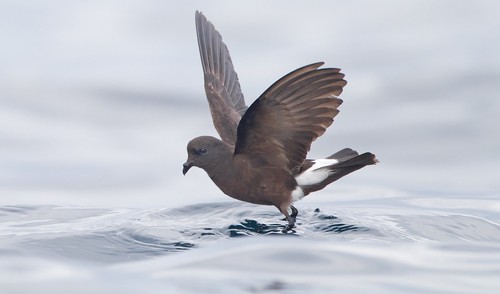
Wilson's Storm-Petrel
15-19 cm (6-7.5 in) long, wingspan 38-42 cm (15-16.5 in)
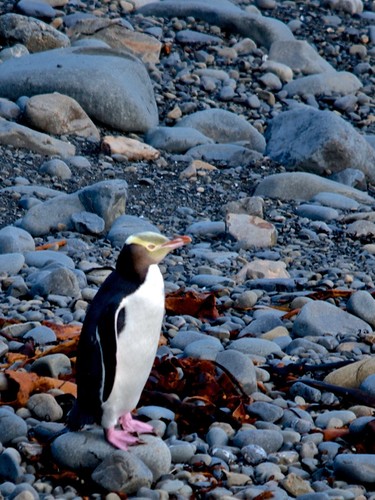
Yellow-eyed Penguin
62-79 cm (24-31 in) tall, 3-8.5 kg (6.6-18.7 lb)
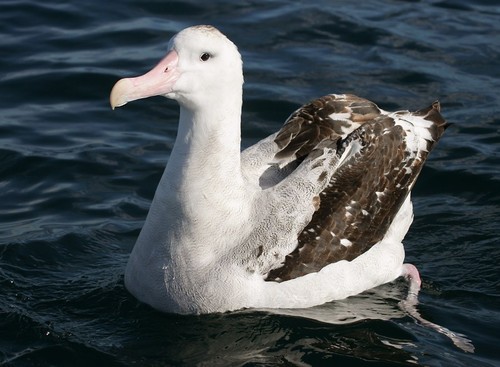
Wandering Albatross
107-135 cm (42-53 in) long, wingspan up to 3.5 m (11.5 ft)
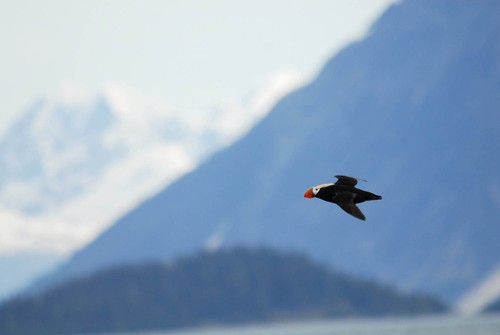
Tufted Puffin
35-41 cm (14-16 in) long, about 63-70 cm wingspan