
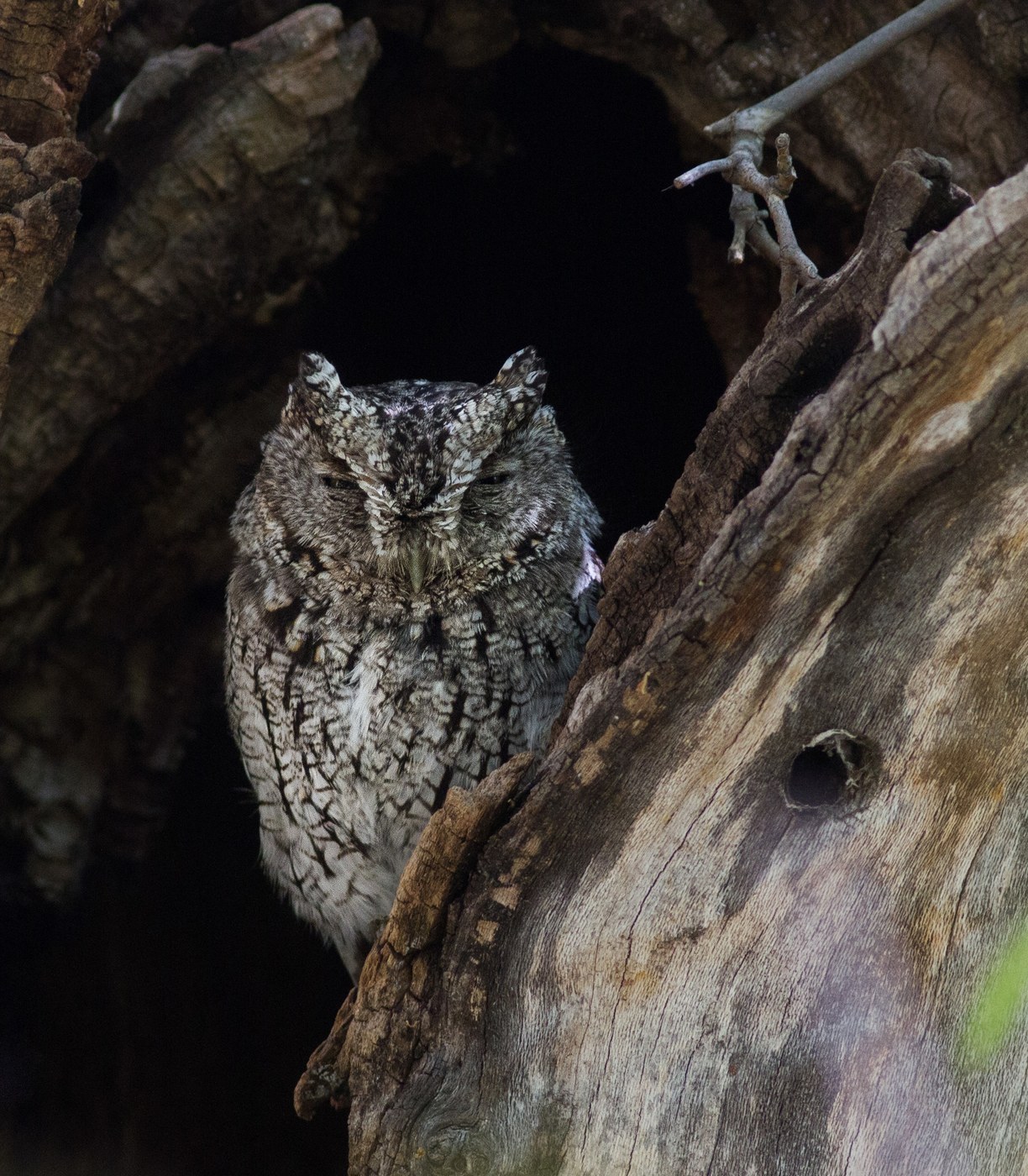
Whiskered Screech-Owl
Megascops trichopsis
A small, gray, ear-tufted owl of southwestern oak canyons, best distinguished from the similar Western Screech-Owl by its distinctive irregular-rhythm song.
- Size
- 17-19 cm (6.7-7.5 in) long, 43 cm wingspan
- Habitat
- montane oak and oak-pine woodland canyons
- Type
- owl
Spotted a bird like this?
Identify any bird from a photo, free.
Overview
The Whiskered Screech-Owl is a small, compact owl closely resembling the more widespread Western Screech-Owl but restricted to mountain oak and pine-oak woodlands of the borderlands. It has short ear tufts, yellow eyes, and finely patterned gray plumage with fine vermiculations and streaking that provide excellent camouflage against bark.
The common name refers to fine, whisker-like feathers around the bill, though this feature is subtle and rarely diagnostic in the field; the species is far more reliably identified by voice.
Because it so closely resembles its more common relative in plumage, birders in its limited U.S. range rely heavily on its distinctive irregular song to confirm identification.
How to identify it
Key Field Marks
- Small size with short ear tufts and yellow eyes
- Gray, finely vermiculated plumage very similar to Western Screech-Owl
- Restricted largely to oak and pine-oak canyons in "sky island" mountains
- Best identified by its irregular, morse-code-like song
Similar Species
- Western Screech-Owl is nearly identical in plumage but slightly larger, occupies a broader range of habitats including lowland desert and riparian areas, and gives an accelerating "bouncing ball" song rather than the Whiskered's irregular rhythm.
- Eastern Screech-Owl does not overlap in range with the Whiskered Screech-Owl.
Habitat & range
This species is largely restricted, within the United States, to isolated "sky island" mountain ranges of southeastern Arizona and southwestern New Mexico, where it inhabits oak and pine-oak woodland in canyons, typically at middle elevations. Its range extends much more broadly through the highlands of Mexico and Central America.
Most populations are non-migratory residents within their oak-pine woodland habitat.
Behavior & voice
Behavior
Strictly nocturnal, the Whiskered Screech-Owl roosts by day in dense foliage or tree cavities and becomes active at dusk, calling from within the oak canopy.
Voice
The primary song is a series of short, evenly paced hoots given in an irregular, uneven rhythm, often described as sounding like Morse code, clearly different from the accelerating, bouncing-ball rhythm of the Western Screech-Owl.
Feeding
Insects and other arthropods, including moths, beetles, and centipedes, make up the bulk of the diet, supplemented occasionally by small vertebrates, captured by pouncing from a perch or gleaning from foliage and bark.
Nesting & Breeding
Whiskered Screech-Owls nest in natural cavities and old woodpecker holes in oaks and pines, typically laying 2-4 eggs, with both parents involved in raising the brood through summer.
Frequently asked questions
How do you tell a Whiskered Screech-Owl from a Western Screech-Owl?
The two look almost identical, so voice is the most reliable clue: the Whiskered gives an irregular, uneven series of hoots, while the Western Screech-Owl gives an accelerating series likened to a bouncing ball.
Where does the Whiskered Screech-Owl live in the US?
It is found mainly in oak and pine-oak canyons of the sky island mountain ranges of southeastern Arizona and southwestern New Mexico, with a much broader range through Mexico and Central America.
What does the Whiskered Screech-Owl eat?
It feeds mostly on insects and other arthropods such as moths, beetles, and centipedes, occasionally taking small vertebrates.
Why is it called the Whiskered Screech-Owl?
The name refers to fine, whisker-like feathers around the bill, though this trait is subtle and not a practical field mark; the species is best identified by its distinctive song.
Whiskered Screech-Owl guides
In-depth guides for identifying, finding, and understanding Whiskered Screech-Owl.
Other birds you may enjoy
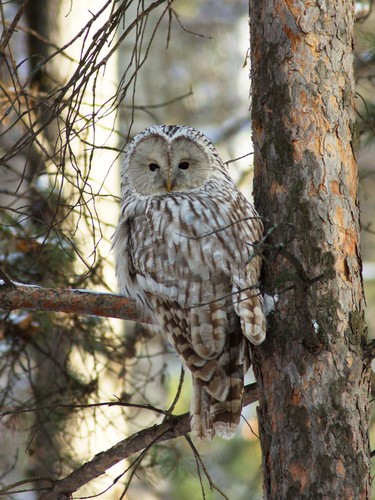
Ural Owl
50-62 cm long, wingspan about 1.0-1.3 m
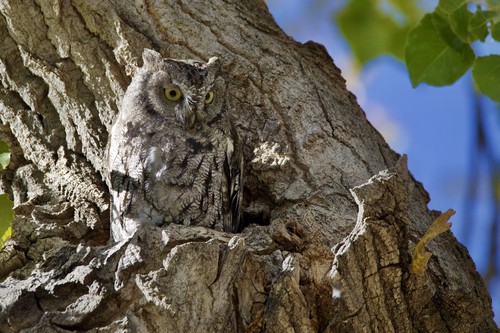
Western Screech-Owl
19-25 cm (7.5-10 in) long, about 55 cm (21.5 in) wingspan
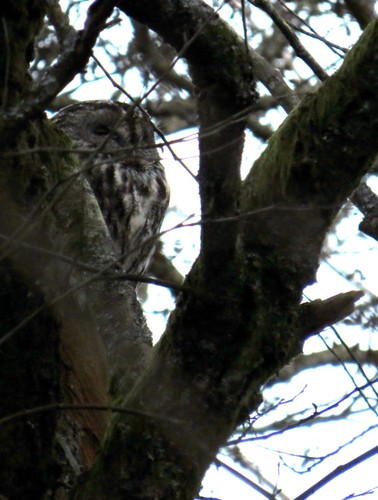
Tawny Owl
37-43 cm (15-17 in) long, 81-96 cm wingspan
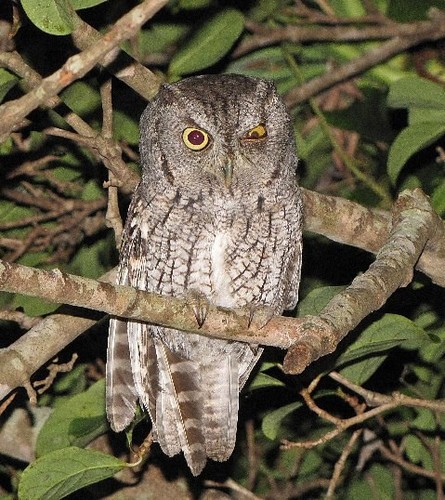
Screech Owl
16-25 cm long, wingspan about 46-61 cm
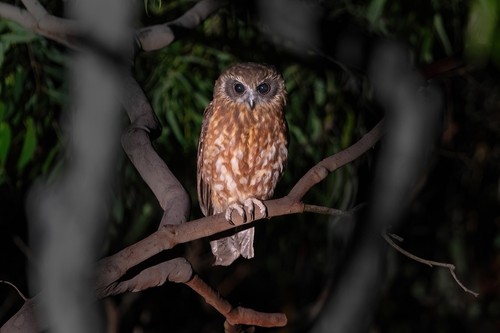
Southern Boobook
27-36 cm (11-14 in) long
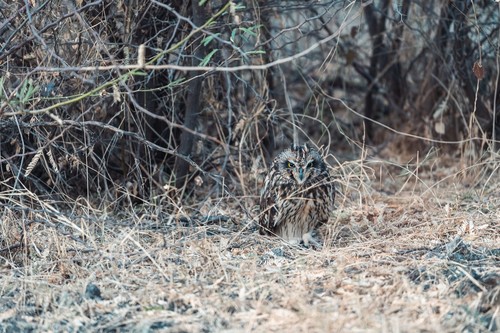
Short-eared Owl
34-42 cm (13-17 in) long, 85-110 cm wingspan
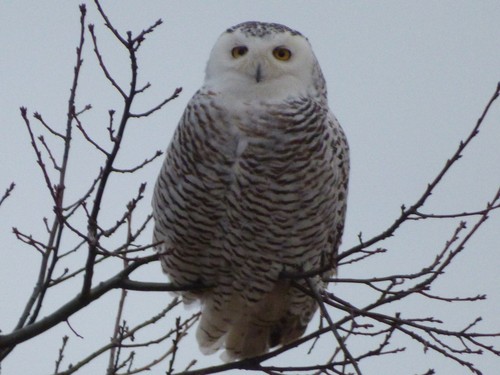
Snowy Owl
52-71 cm (20-28 in) long, 125-150 cm (49-59 in) wingspan
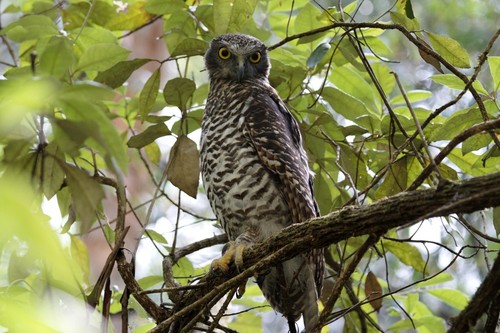
Powerful Owl
60-65 cm (24-26 in) long, 112-135 cm (44-53 in) wingspan
Northern Saw-whet Owl
18-21 cm (7-8.5 in) long, 42-56 cm (17-22 in) wingspan
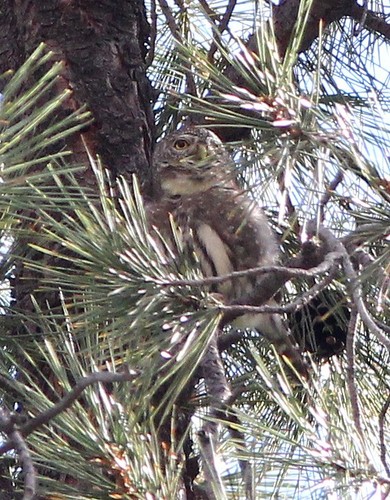
Northern Pygmy-Owl
16-18 cm (6.3-7.1 in) long, 35-39 cm wingspan
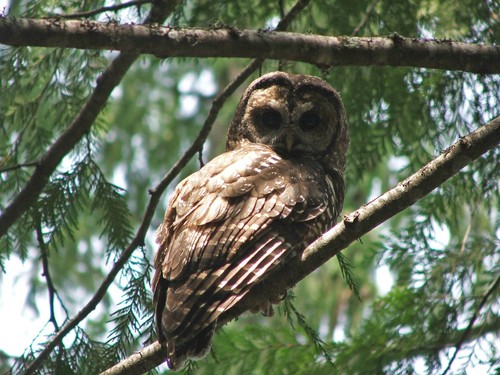
Spotted Owl
43-48 cm (17-19 in) long, 100-114 cm wingspan
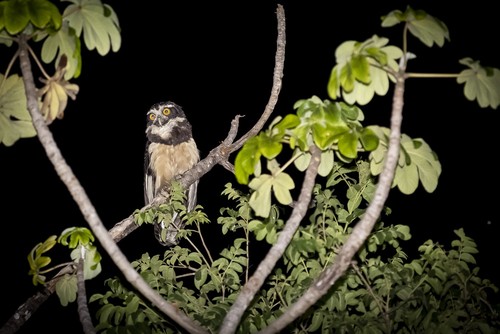
Spectacled Owl
43-52 cm (17-20 in) long