
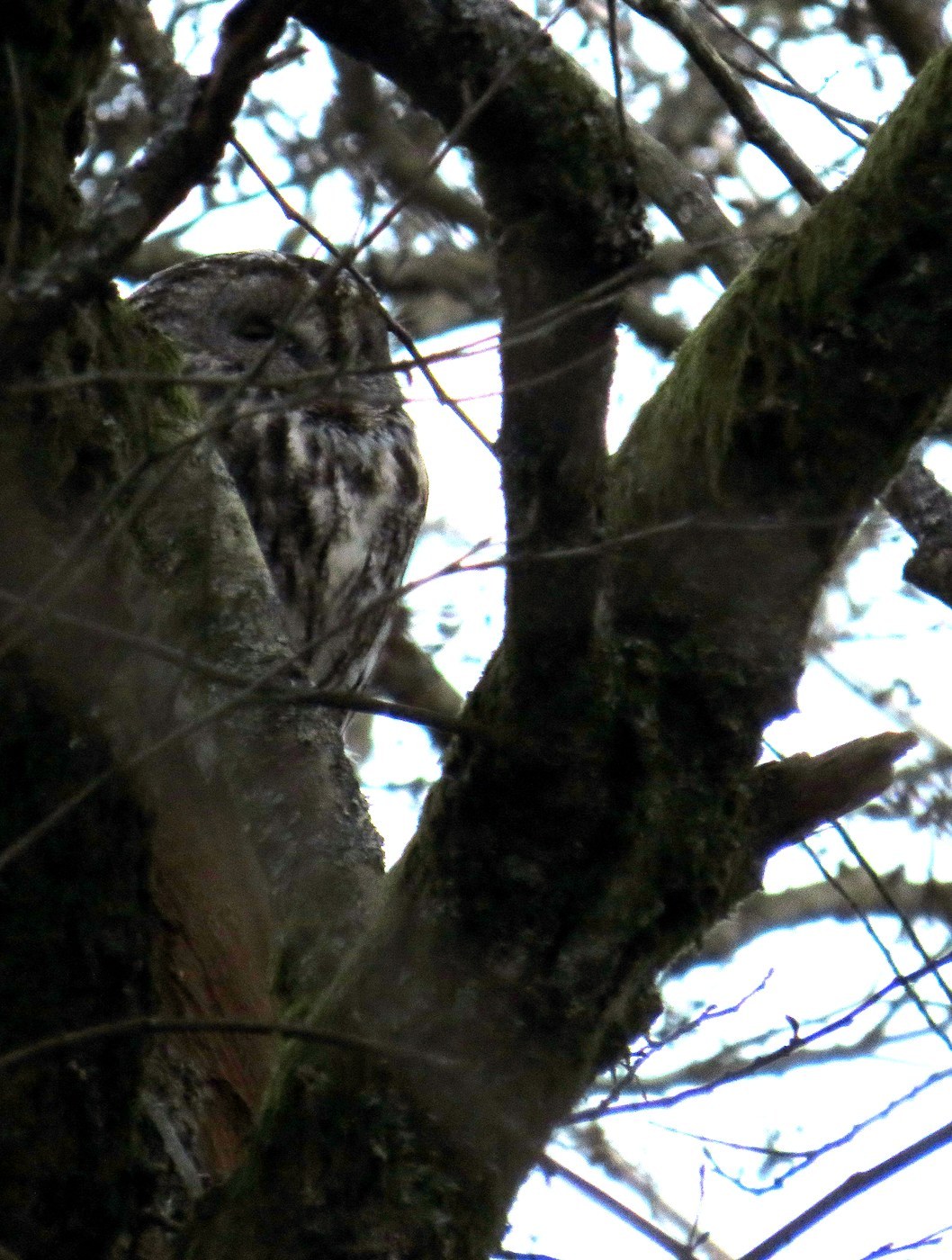
Tawny Owl
Strix aluco
A stocky, big-headed nocturnal owl of European woodlands, best known for its familiar hooting duet.
- Size
- 37-43 cm (15-17 in) long, 81-96 cm wingspan
- Habitat
- deciduous and mixed woodland, parks, large gardens, and wooded urban areas
- Type
- owl
Spotted a bird like this?
Identify any bird from a photo, free.
Overview
The Tawny Owl is a chunky, round-headed owl with no visible ear tufts, occurring in two color morphs: a warm rufous-brown form and a greyer form, both mottled and streaked for camouflage against bark. Large, dark brown-black eyes give it excellent night vision, and a pale facial disc frames the face.
It is one of the most widespread and familiar owls across Europe and western Asia, though its strictly nocturnal habits mean it is heard far more often than seen. By day it roosts motionless against a tree trunk, relying on cryptic plumage to avoid detection, and is frequently mobbed by small birds if discovered.
How to identify it
Key field marks
- Large rounded head with no ear tufts
- Dark brown-black eyes (not yellow or orange)
- Mottled rufous-brown or grey plumage with vertical streaking
- Stocky, broad-winged silhouette in flight, with silent, buoyant wingbeats
Similar species
- Long-eared Owl has prominent ear tufts and orange eyes.
- Little Owl is much smaller and flat-headed with yellow eyes.
- Eurasian Eagle-Owl is far larger with obvious ear tufts and orange eyes.
Tawny Owls are most reliably identified by voice after dark, since daytime sightings are usually brief glimpses of a roosting bird.
Habitat & range
Habitat
Tawny Owls favor mature broadleaf and mixed woodland with plenty of tree cavities for nesting, but they also thrive in parks, large gardens, churchyards, and wooded urban fringes, especially where old trees provide roosting and nest sites.
Range
The species is resident across most of Europe (absent from Ireland and much of Scandinavia's far north) and extends through the Middle East into central Asia.
Migration
Tawny Owls are strongly sedentary, holding fixed territories year-round and rarely moving far from where they hatched.
Behavior & voice
Behavior
Strictly nocturnal, the Tawny Owl hunts from a perch, dropping onto prey detected by keen hearing and low-light vision. Pairs hold permanent territories defended year-round through vocal duetting.
Voice
The familiar "twit-twoo" is actually a duet: females give a sharp "ke-wick" and males answer with a quavering "hoo-hoo-ooo" hoot, used for territory defense and pair bonding, especially audible on autumn and winter nights.
Feeding
Voles and wood mice make up the bulk of the diet, supplemented by shrews, small birds taken at roost, frogs, and large beetles.
Nesting and breeding
No nest is built; eggs are laid in tree hollows, old nests of other birds, or nest boxes from March. Females incubate 2-4 white eggs for about a month, and fledglings often leave the nest before they can fly, clambering about on branches ("branching") while still fed by the parents.
Frequently asked questions
Does the Tawny Owl really say "twit-twoo"?
The famous sound is actually two owls: the female gives a sharp "ke-wick" and the male answers with a hooting "hoo-hoo-ooo", which together are often transcribed as "twit-twoo".
Where do Tawny Owls nest?
In holes in mature trees, old squirrel dreys or other birds' nests, and readily in artificial nest boxes.
What do Tawny Owls eat?
Mainly small mammals like voles and wood mice, plus small birds, frogs, and large insects.
Are Tawny Owls found in the UK?
Yes, they are resident and widespread across mainland Britain, though absent from Ireland.
How can I tell a Tawny Owl from a Long-eared Owl?
Tawny Owls lack ear tufts and have dark eyes, while Long-eared Owls show prominent ear tufts and orange eyes.
Tawny Owl guides
In-depth guides for identifying, finding, and understanding Tawny Owl.
Other birds you may enjoy
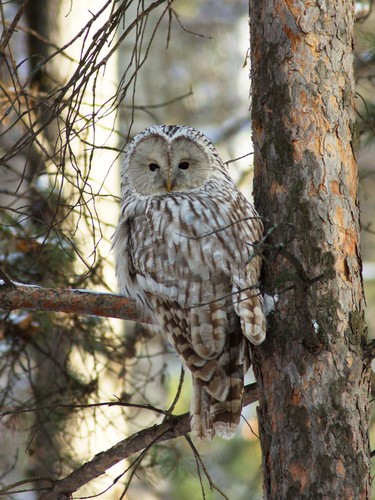
Ural Owl
50-62 cm long, wingspan about 1.0-1.3 m
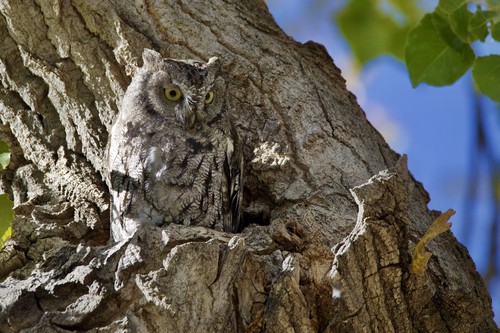
Western Screech-Owl
19-25 cm (7.5-10 in) long, about 55 cm (21.5 in) wingspan
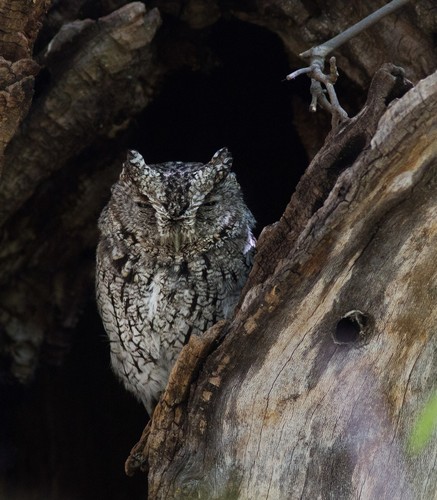
Whiskered Screech-Owl
17-19 cm (6.7-7.5 in) long, 43 cm wingspan
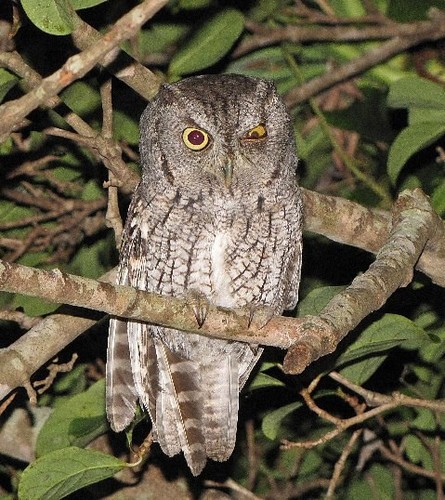
Screech Owl
16-25 cm long, wingspan about 46-61 cm
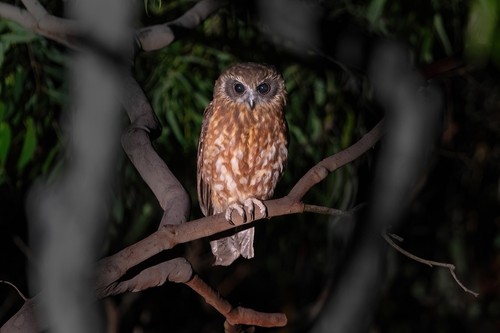
Southern Boobook
27-36 cm (11-14 in) long
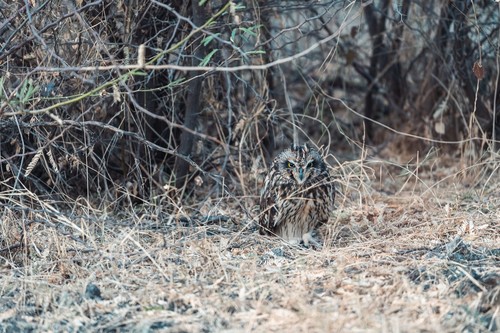
Short-eared Owl
34-42 cm (13-17 in) long, 85-110 cm wingspan
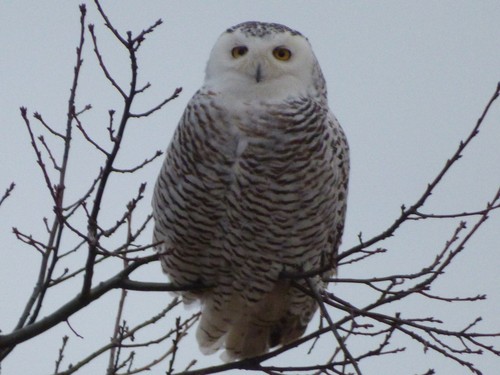
Snowy Owl
52-71 cm (20-28 in) long, 125-150 cm (49-59 in) wingspan
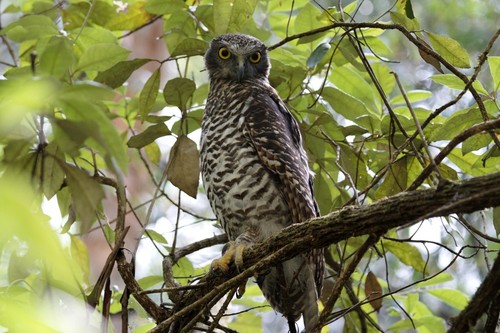
Powerful Owl
60-65 cm (24-26 in) long, 112-135 cm (44-53 in) wingspan
Northern Saw-whet Owl
18-21 cm (7-8.5 in) long, 42-56 cm (17-22 in) wingspan
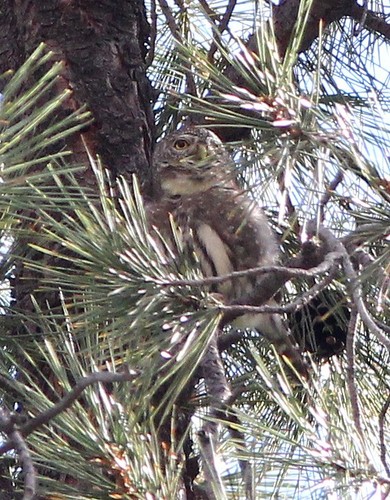
Northern Pygmy-Owl
16-18 cm (6.3-7.1 in) long, 35-39 cm wingspan
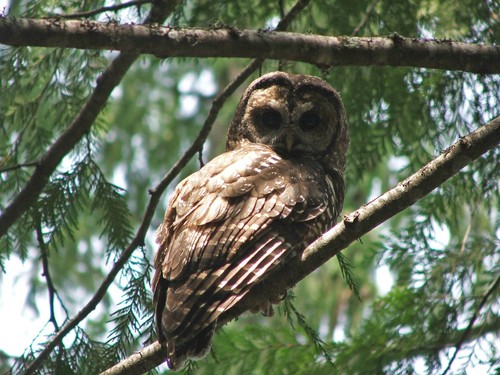
Spotted Owl
43-48 cm (17-19 in) long, 100-114 cm wingspan
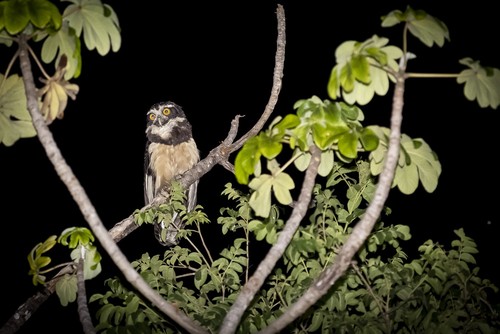
Spectacled Owl
43-52 cm (17-20 in) long