
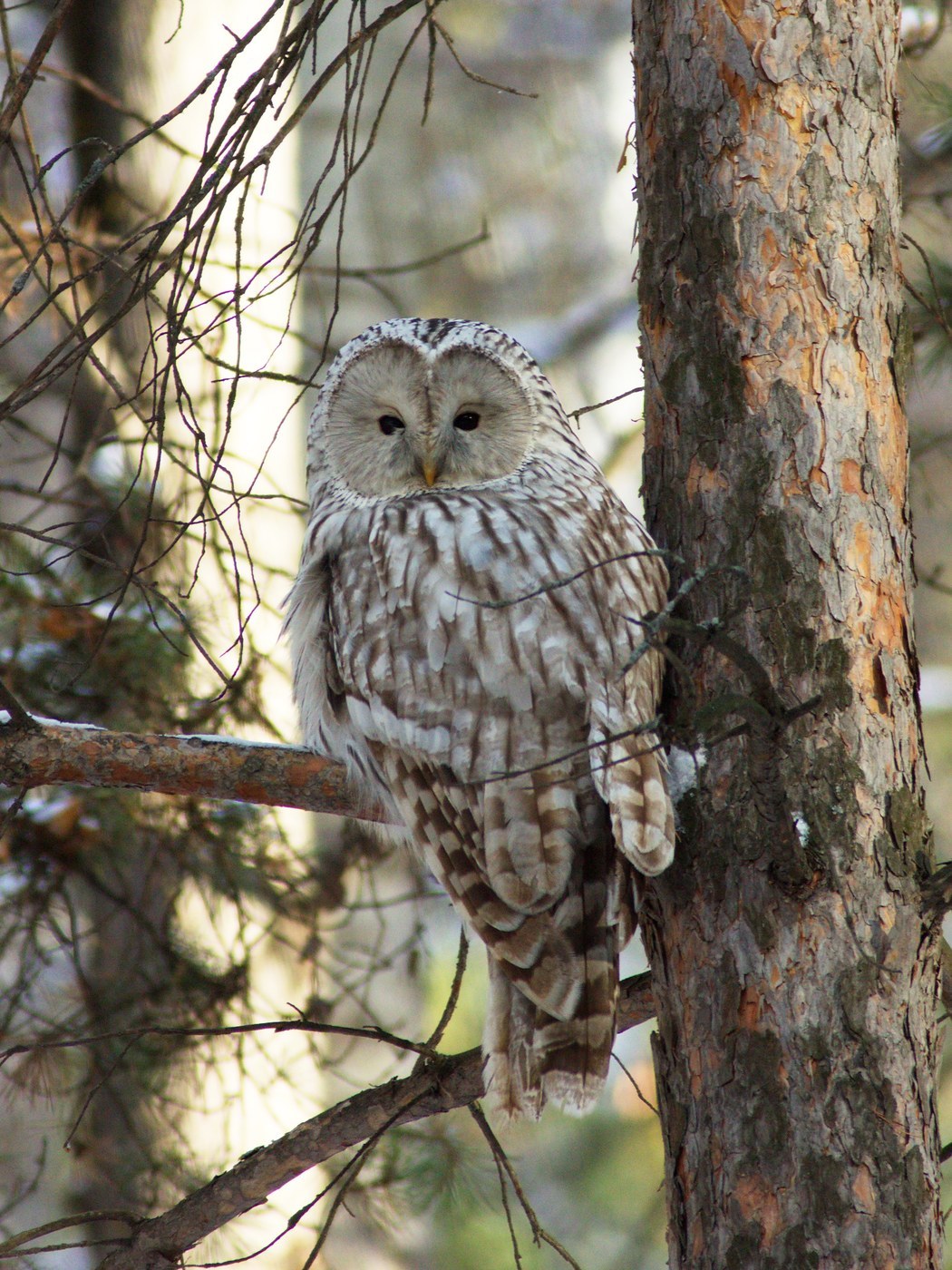
Ural Owl
Strix uralensis
A large pale grey owl of Eurasian forests, closely related to the Barred Owl, known for its fierce nest defense.
- Size
- 50-62 cm long, wingspan about 1.0-1.3 m
- Habitat
- Mature forest and taiga of Eurasia
- Type
- owl
Spotted a bird like this?
Identify any bird from a photo, free.
Overview
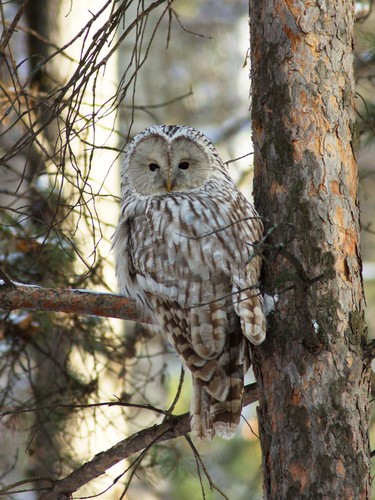
The Ural Owl is a large, pale grey-brown owl marked with dark vertical streaking rather than barring, and it lacks ear tufts. It has relatively small, dark eyes for the size of its head, and a proportionally long tail — the longest of any Strix owl — which gives it a distinctive elongated silhouette.
How to identify it
Key Field Marks
- Long, graduated tail with a rounded tip
- Pale grey-brown overall coloring
- Dark eyes
- Vertical streaking rather than intricate barring or mottling
Similar Species
- Tawny Owl — smaller, more richly colored with intricate mottled brown patterning and a shorter tail
- Great Grey Owl — has yellow eyes and a much larger facial disc, versus the Ural Owl's dark eyes and smaller disc
Habitat & range
Range
From Scandinavia and central Europe eastward across Russia to Japan (Hokkaido) and Sakhalin.
Habitat
Mature coniferous and mixed forest, including taiga; prefers old-growth stands with large trees for nesting, but also occurs in managed forest where nest boxes are provided.
Movements
Non-migratory, resident year-round across its range.
Behavior & voice
Feeding
Mainly nocturnal and crepuscular, though can be active during the day, especially when provisioning young. Hunts small mammals such as voles and mice, as well as birds, typically by dropping onto prey from a perch.
Voice
Deep, resonant hooting, often in a series such as "wo-ho...ho ho," audible over long distances as a territorial call.
Nesting and Breeding
Nests in tree cavities, broken snags, old raptor nests, or nest boxes, laying two to four eggs. The species is well known, particularly in Scandinavia, for aggressively defending its nest, sometimes striking humans or other intruders that approach too closely.
Frequently asked questions
How aggressive is the Ural Owl?
They are famous for fiercely defending their nests, sometimes striking humans who approach too closely, especially in Scandinavia.
How do you tell a Ural Owl from a Tawny Owl?
The Ural Owl is larger and paler with a longer tail and dark eyes, while the Tawny Owl is smaller with more richly mottled brown patterning and a shorter tail.
Where does the Ural Owl live?
In mature forests across Scandinavia, central Europe, and Russia to Japan.
What does the Ural Owl eat?
Mainly small mammals such as voles, along with birds.
Does the Ural Owl migrate?
No, it is a non-migratory, resident species throughout its range.
Ural Owl guides
In-depth guides for identifying, finding, and understanding Ural Owl.
Other birds you may enjoy
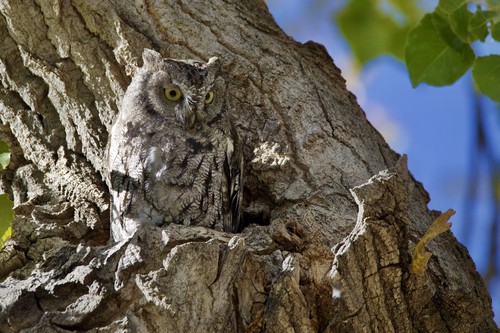
Western Screech-Owl
19-25 cm (7.5-10 in) long, about 55 cm (21.5 in) wingspan
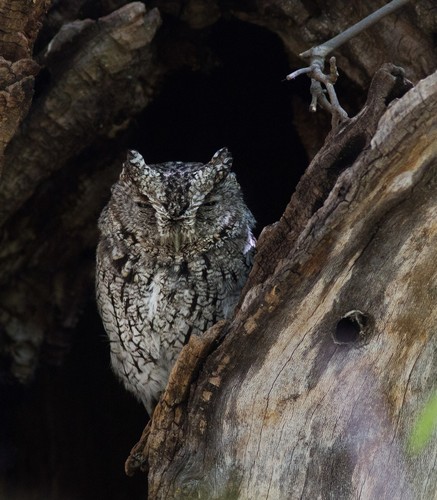
Whiskered Screech-Owl
17-19 cm (6.7-7.5 in) long, 43 cm wingspan
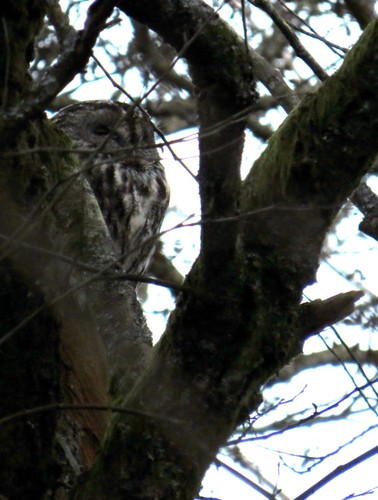
Tawny Owl
37-43 cm (15-17 in) long, 81-96 cm wingspan
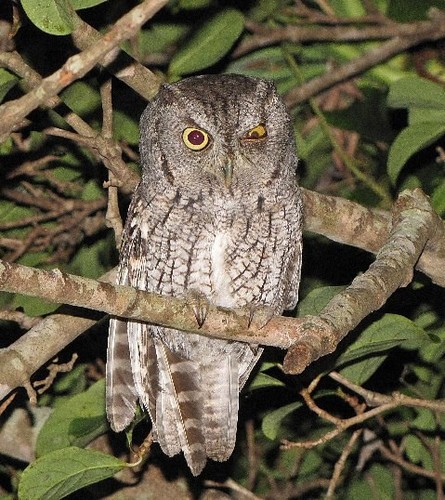
Screech Owl
16-25 cm long, wingspan about 46-61 cm
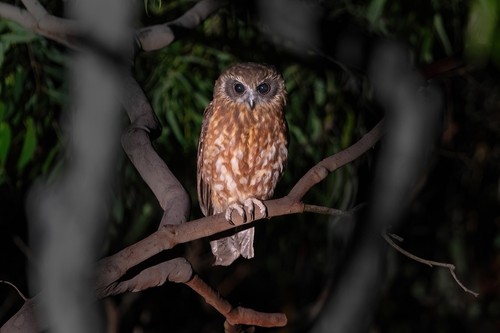
Southern Boobook
27-36 cm (11-14 in) long
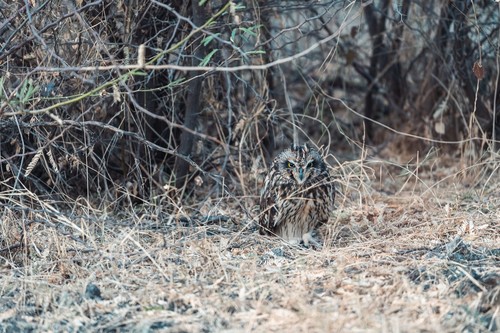
Short-eared Owl
34-42 cm (13-17 in) long, 85-110 cm wingspan
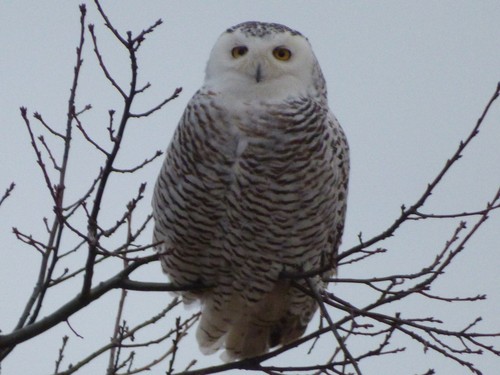
Snowy Owl
52-71 cm (20-28 in) long, 125-150 cm (49-59 in) wingspan
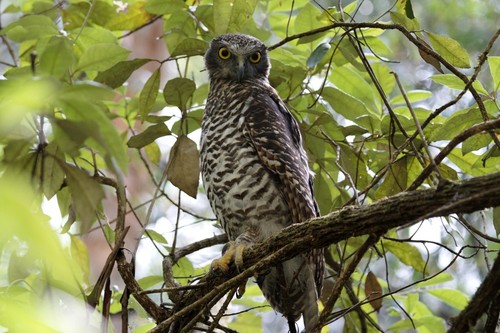
Powerful Owl
60-65 cm (24-26 in) long, 112-135 cm (44-53 in) wingspan
Northern Saw-whet Owl
18-21 cm (7-8.5 in) long, 42-56 cm (17-22 in) wingspan
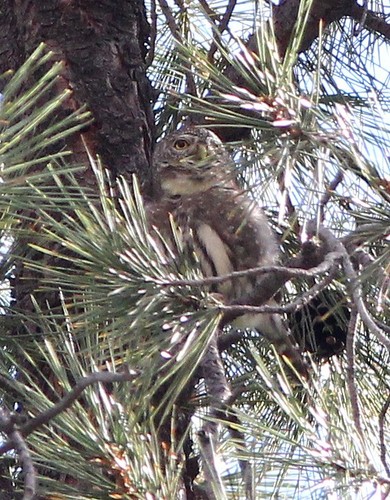
Northern Pygmy-Owl
16-18 cm (6.3-7.1 in) long, 35-39 cm wingspan
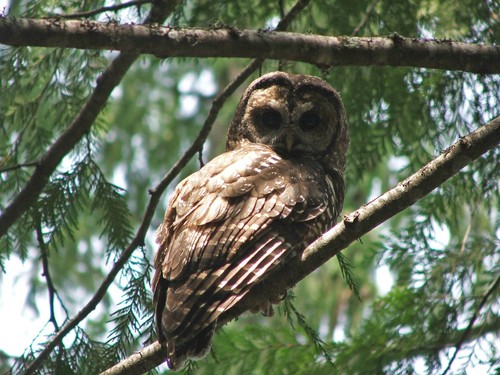
Spotted Owl
43-48 cm (17-19 in) long, 100-114 cm wingspan
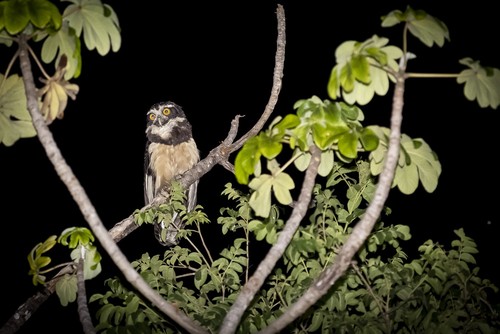
Spectacled Owl
43-52 cm (17-20 in) long