
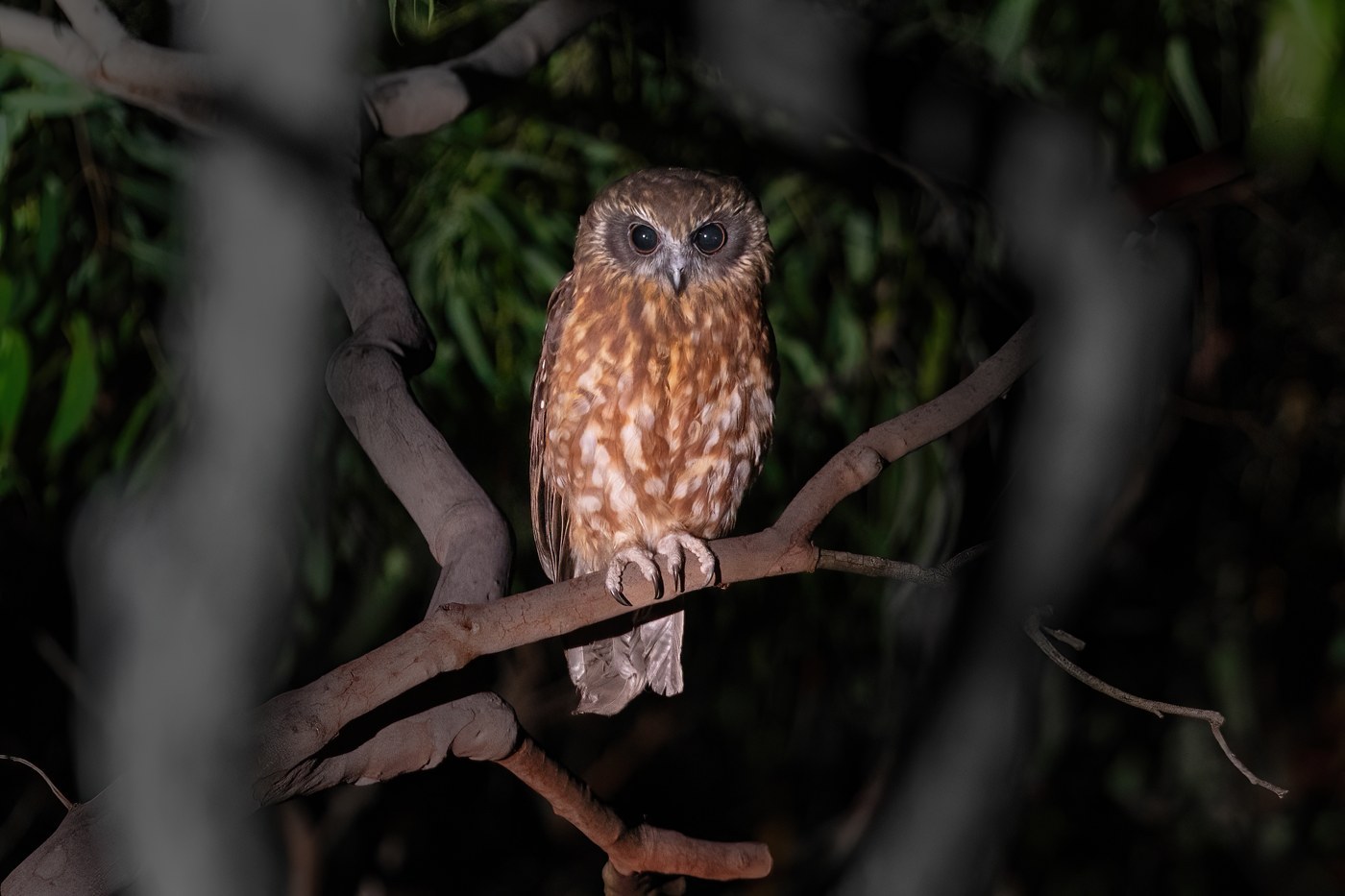
Southern Boobook
Ninox boobook
Australia's smallest and most common owl, best known for its distinctive two-note 'boobook' or 'mopoke' call.
- Size
- 27-36 cm (11-14 in) long
- Habitat
- woodlands, forests, and urban parks and gardens across Australia
- Type
- owl
Spotted a bird like this?
Identify any bird from a photo, free.
Overview
The Southern Boobook is Australia's smallest and most widely distributed owl, a compact bird with a rounded head, dark facial disc surrounding large yellow-green eyes, and rich brown plumage spotted and mottled with white and buff across the upperparts and underparts. Its overall coloration varies geographically, from dark chocolate-brown in wetter forested regions to paler, greyer forms in arid parts of the continent.
Despite being common and widespread, the Southern Boobook is far more often heard than seen, given its strictly nocturnal habits and tendency to roost quietly in dense foliage or tree hollows during the day, relying on cryptic plumage for camouflage.
Its familiar, far-carrying two-note call has made it one of the best-known sounds of the Australian night, giving rise to its onomatopoeic common names 'boobook' and 'mopoke', both widely used across the country.
How to identify it
Key field marks
- Small, compact owl with a rounded head and no ear tufts
- Dark facial disc contrasting with large yellow-green eyes
- Rich brown plumage spotted with white and buff
- Distinctive repeated two-note 'boo-book' or 'mo-poke' call
Similar species
The Powerful Owl and Barking Owl are both considerably larger with different underpart patterning and calls. The Southern Boobook's small size, rounded head without ear tufts, and instantly recognisable two-note call readily distinguish it from all other Australian owls.
Habitat & range
Habitat
This adaptable owl occupies a wide range of wooded habitats, including eucalypt forest, woodland, mallee, and well-treed urban parks and gardens, wherever suitable roosting cover and prey are available.
Range
The Southern Boobook is found throughout mainland Australia and Tasmania, and closely related boobook forms occur in New Zealand, where the species is known as the Morepork, and on various nearby islands.
Migration
Most populations are sedentary, holding stable territories, though some individuals, particularly in cooler regions, may move short distances seasonally.
Behavior & voice
Behavior
Southern Boobooks are strictly nocturnal, spending the day roosting quietly in dense foliage or tree hollows and becoming active at dusk to hunt from perches around forest edges, clearings, and gardens.
Voice
Its familiar call is a clear, repeated two-note 'boo-book' or 'mo-poke', often given through the night, especially in spring and summer during the breeding season, giving the species both its common names.
Feeding
It hunts mainly from a perch, dropping onto prey on the ground or catching flying insects in the air; its diet includes moths, beetles, and other large insects, as well as small mammals such as mice and occasionally small birds.
Nesting and breeding
Pairs nest in tree hollows, laying two to three eggs which the female incubates while the male provides food; the pair defends the nesting territory and young owlets remain near the nest hollow after fledging while still dependent on their parents.
Frequently asked questions
Why is the Southern Boobook called 'mopoke'?
Both 'boobook' and 'mopoke' are onomatopoeic names derived from its distinctive repeated two-note call.
Is the Southern Boobook common?
Yes, it is Australia's most widespread and common owl species, though it is more often heard than seen due to its nocturnal habits.
What does a Southern Boobook eat?
It eats large insects such as moths and beetles, along with small mammals and occasionally small birds.
How is the Southern Boobook related to the New Zealand Morepork?
They are closely related forms within the same boobook owl complex, with the Morepork being the New Zealand representative.
Where do Southern Boobooks nest?
They nest in tree hollows, where the female incubates the eggs while the male brings food.
Southern Boobook guides
In-depth guides for identifying, finding, and understanding Southern Boobook.
Other birds you may enjoy
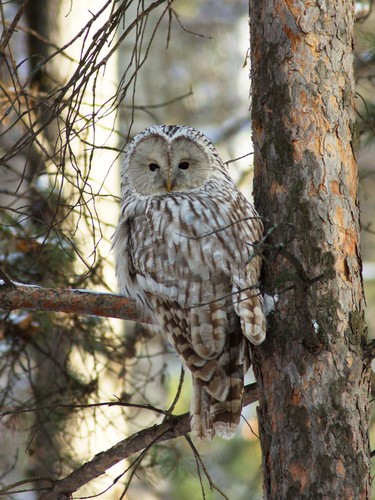
Ural Owl
50-62 cm long, wingspan about 1.0-1.3 m
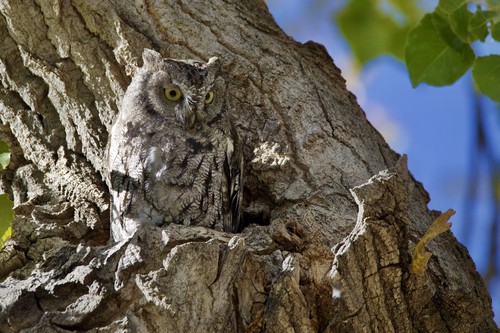
Western Screech-Owl
19-25 cm (7.5-10 in) long, about 55 cm (21.5 in) wingspan
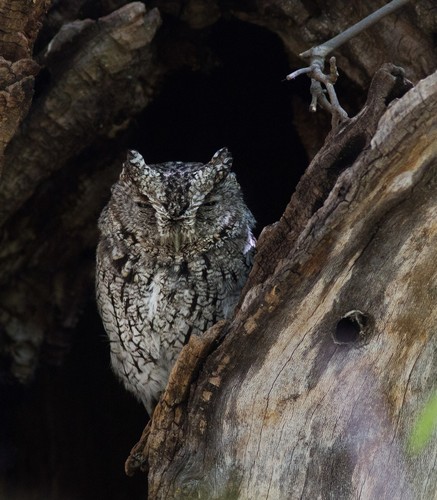
Whiskered Screech-Owl
17-19 cm (6.7-7.5 in) long, 43 cm wingspan
Tawny Owl
37-43 cm (15-17 in) long, 81-96 cm wingspan
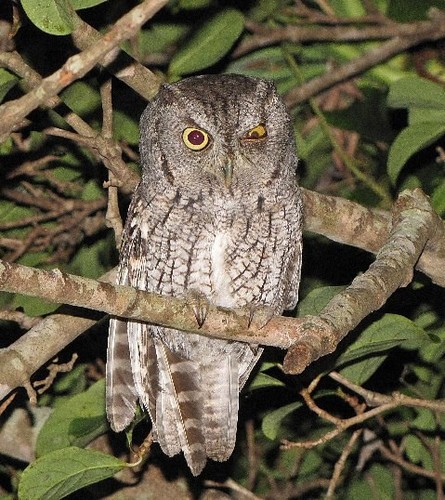
Screech Owl
16-25 cm long, wingspan about 46-61 cm
Short-eared Owl
34-42 cm (13-17 in) long, 85-110 cm wingspan
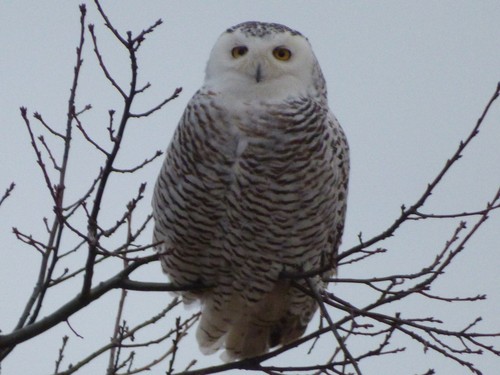
Snowy Owl
52-71 cm (20-28 in) long, 125-150 cm (49-59 in) wingspan
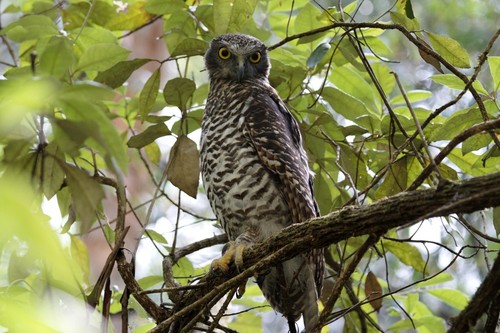
Powerful Owl
60-65 cm (24-26 in) long, 112-135 cm (44-53 in) wingspan
Northern Saw-whet Owl
18-21 cm (7-8.5 in) long, 42-56 cm (17-22 in) wingspan
Northern Pygmy-Owl
16-18 cm (6.3-7.1 in) long, 35-39 cm wingspan
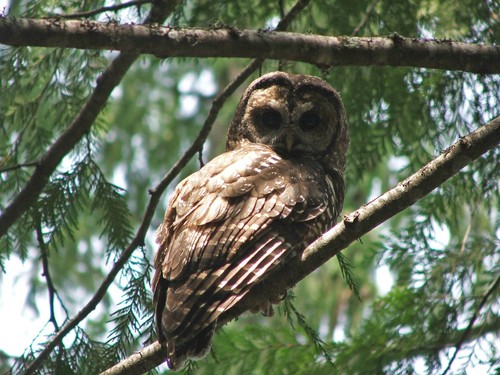
Spotted Owl
43-48 cm (17-19 in) long, 100-114 cm wingspan
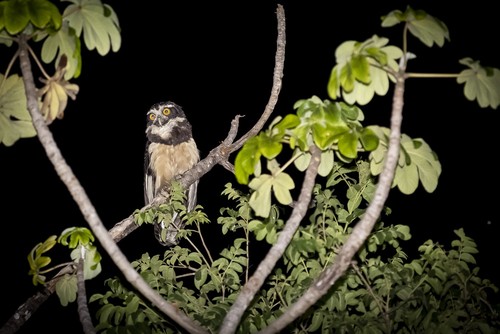
Spectacled Owl
43-52 cm (17-20 in) long