
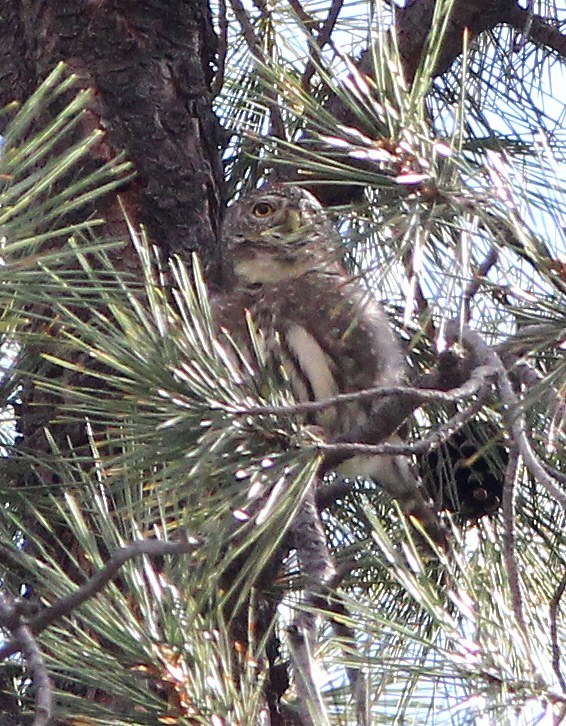
Northern Pygmy-Owl
Glaucidium gnoma
A tiny, fierce diurnal owl of western mountain forests, notable for the false 'eyespots' on the back of its head.
- Size
- 16-18 cm (6.3-7.1 in) long, 35-39 cm wingspan
- Habitat
- montane coniferous and mixed forests, forest edges and openings
- Type
- owl
Spotted a bird like this?
Identify any bird from a photo, free.
Overview
The Northern Pygmy-Owl is a diminutive owl of western North American mountains, barely larger than a sparrow yet capable of overpowering birds nearly its own size. It has a small, round head without ear tufts, bright yellow eyes, and a long tail that it often flicks and cocks upward.
Plumage is grayish-brown to rufous-brown above with fine white spotting, and white underparts streaked with brown. The most distinctive feature is a pair of black-and-white "false eyes" on the nape, thought to confuse predators or mobbing songbirds about which way the owl is facing.
Despite its tiny size, this is an unusually bold, diurnal hunter, and small songbirds react to its presence with intense mobbing behavior.
How to identify it
Key Field Marks
- Very small size, round head with no ear tufts
- Two black nape spots outlined in white ("false eyes") on the back of the head
- Long tail often held cocked at an angle and flicked side to side
- Yellow eyes; fine white spotting on brown upperparts
Similar Species
- Elf Owl is even smaller, has a shorter tail, and lacks the pygmy-owl's nape spots.
- Ferruginous Pygmy-Owl overlaps in the southwestern US and is very similar but has streaked (not spotted) crown feathers and a rustier tail; ranges mostly separate by elevation and habitat.
- Small songbirds mobbing a perched bird in daylight are a strong clue that a pygmy-owl may be present.
Habitat & range
This species inhabits coniferous and mixed montane forests of western North America, from southeastern Alaska and British Columbia south through the Rocky Mountains and Pacific coast ranges into Mexico and Central America, favoring forest edges, clearings, and open woodland where it can hunt in daylight.
Most populations are resident, though some birds shift to lower elevations in winter.
Behavior & voice
Behavior
Unusually for an owl, the Northern Pygmy-Owl is primarily diurnal and crepuscular, hunting actively in daylight from exposed perches. It often flicks its tail and bobs its head while scanning for prey, and is aggressive enough to take birds larger than itself.
Voice
The song is a series of evenly spaced, low, whistled "toot" or "poop" notes repeated at a steady pace, often used by birders to lure in mobbing songbirds for observation.
Feeding
It hunts by watching from a perch and making swift attacks, taking small birds, large insects, and small mammals such as mice; it will pursue and kill birds noticeably larger than itself.
Nesting & Breeding
Pygmy-owls nest in old woodpecker cavities in trees, typically laying 3-7 eggs. Both parents help feed the young, and fledglings remain dependent on the adults for several weeks after leaving the nest.
Frequently asked questions
What are the black spots on the back of a Northern Pygmy-Owl's head?
They are false eyespots formed by dark nape feathers outlined in white, likely serving to confuse predators or mobbing birds about the direction the owl is facing.
Is the Northern Pygmy-Owl active at night?
No, unlike most owls it is mainly diurnal and crepuscular, hunting in daylight from perches in forest clearings and edges.
Why do songbirds mob a Northern Pygmy-Owl?
Because this tiny owl actively hunts small birds even larger than itself, songbirds often gather to scold and harass a perched pygmy-owl to drive it away.
How big is a Northern Pygmy-Owl?
It is one of the smallest owls in North America, only about 16-18 cm (6-7 inches) long, roughly the size of a small thrush.
Northern Pygmy-Owl guides
In-depth guides for identifying, finding, and understanding Northern Pygmy-Owl.
Other birds you may enjoy
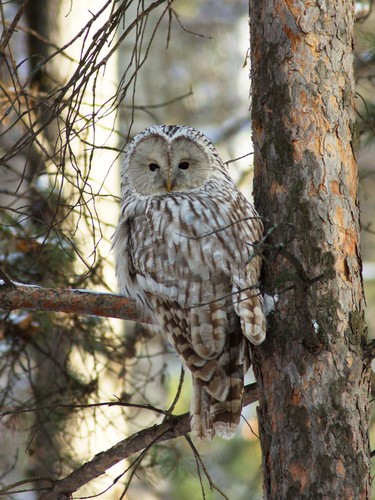
Ural Owl
50-62 cm long, wingspan about 1.0-1.3 m
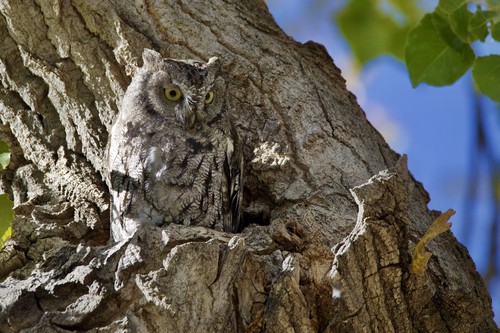
Western Screech-Owl
19-25 cm (7.5-10 in) long, about 55 cm (21.5 in) wingspan
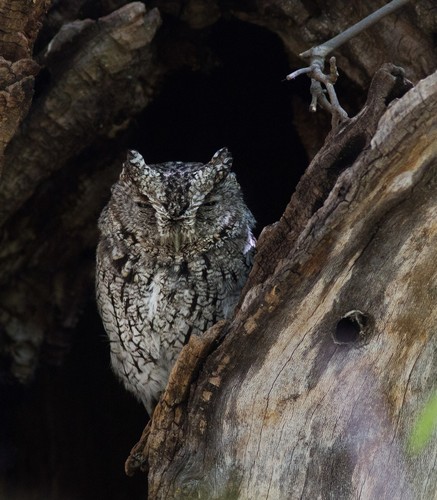
Whiskered Screech-Owl
17-19 cm (6.7-7.5 in) long, 43 cm wingspan
Tawny Owl
37-43 cm (15-17 in) long, 81-96 cm wingspan
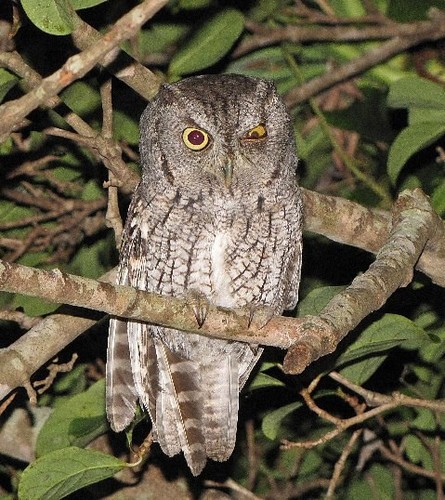
Screech Owl
16-25 cm long, wingspan about 46-61 cm
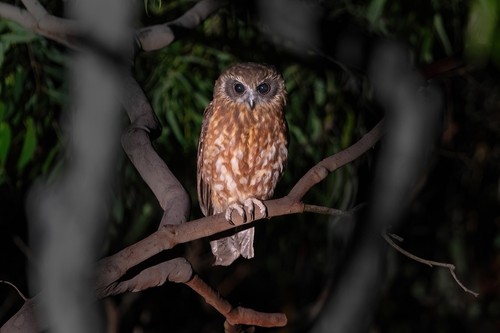
Southern Boobook
27-36 cm (11-14 in) long
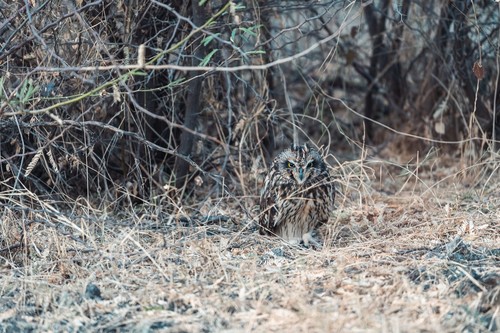
Short-eared Owl
34-42 cm (13-17 in) long, 85-110 cm wingspan
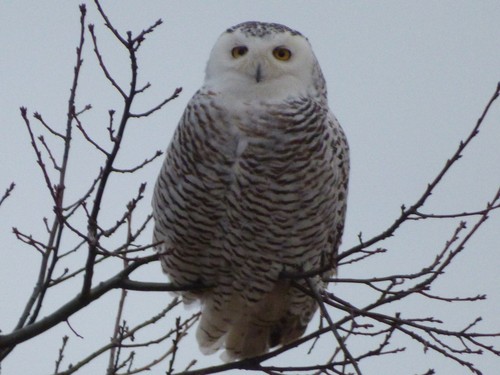
Snowy Owl
52-71 cm (20-28 in) long, 125-150 cm (49-59 in) wingspan
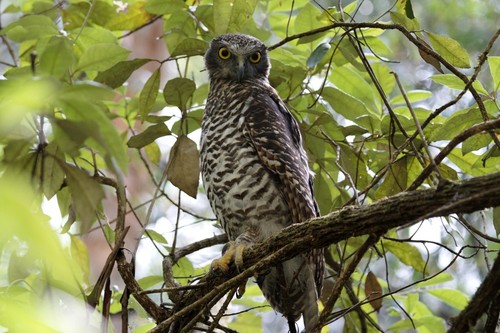
Powerful Owl
60-65 cm (24-26 in) long, 112-135 cm (44-53 in) wingspan
Northern Saw-whet Owl
18-21 cm (7-8.5 in) long, 42-56 cm (17-22 in) wingspan
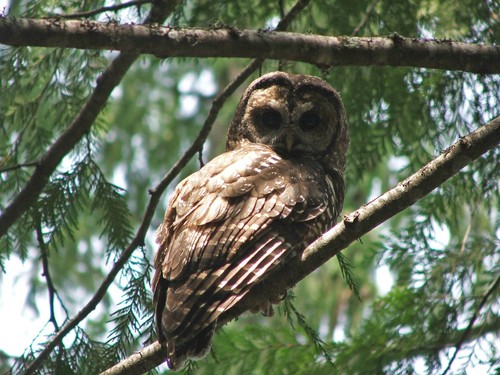
Spotted Owl
43-48 cm (17-19 in) long, 100-114 cm wingspan
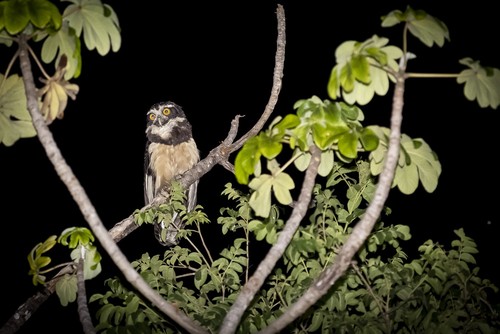
Spectacled Owl
43-52 cm (17-20 in) long