
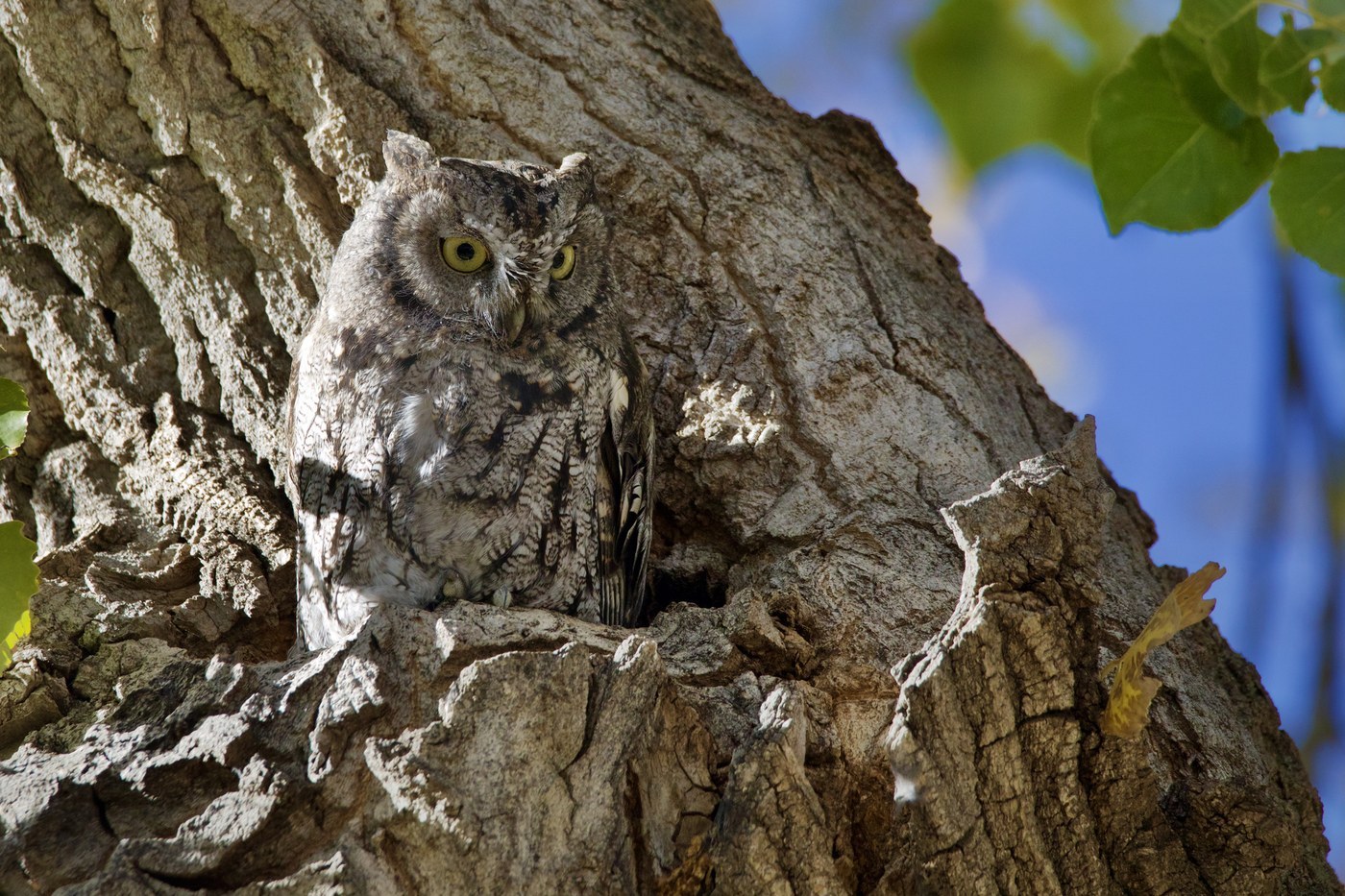
Western Screech-Owl
Megascops kennicottii
A small, tufted owl of the West, closely resembling its eastern counterpart but told apart by range and a distinctive accelerating call.
- Size
- 19-25 cm (7.5-10 in) long, about 55 cm (21.5 in) wingspan
- Habitat
- woodlands, riparian corridors, deserts, and suburban areas
- Type
- owl
Spotted a bird like this?
Identify any bird from a photo, free.
Overview
The Western Screech-Owl is a small, compact owl with prominent ear tufts and mottled gray-brown plumage (rarely a browner morph) that provides excellent camouflage against tree bark. It is nearly identical in size and shape to the Eastern Screech-Owl, and the two species occupy separate, largely non-overlapping ranges divided roughly along the Great Plains.
Its most distinctive feature is its voice: a series of short whistled notes that accelerate in tempo like a small bouncing ball, quite different from the Eastern species' descending whinny.
How to identify it
Key Field Marks
- Small size with prominent ear tufts
- Mottled gray-brown, bark-like plumage (rarely brownish in coastal populations)
- Yellow eyes and a dark bill
- Distinctive accelerating, bouncing-ball series of whistled hoots
Similar Species
- Eastern Screech-Owl: virtually identical in appearance; ranges do not naturally overlap, and voice is the most reliable distinction where ranges approach each other.
- Flammulated Owl: smaller with dark eyes (versus yellow) and found at higher elevations in coniferous forest.
Habitat & range
Range
Western Screech-Owls are found across western North America, from southeastern Alaska and British Columbia south through the western United States into Mexico.
Habitat
They occupy a wide variety of habitats including riparian woodlands, desert washes with saguaro or mesquite, oak and pine woodlands, and suburban areas with mature trees.
Behavior & voice
Voice
The classic call is a series of short hoots that accelerate in tempo, often compared to the sound of a bouncing ball coming to rest, used in territorial defense and pair communication.
Hunting
Western Screech-Owls hunt at night from low perches, taking insects, small mammals, and small birds, and in desert areas sometimes taking prey as large as small rabbits.
Nesting
They nest in natural tree cavities, old woodpecker holes (including those in saguaro cacti in desert habitat), and readily use nest boxes. Clutches typically contain three to five eggs.
Frequently asked questions
How do you tell a Western Screech-Owl from an Eastern Screech-Owl?
The two are nearly identical in appearance; they are best distinguished by range, since they rarely overlap, and by voice, with the Western's accelerating bouncing-ball call differing from the Eastern's descending whinny.
Where do Western Screech-Owls live?
Across western North America from southeastern Alaska south through the western United States into Mexico, in habitats ranging from desert washes to riparian woodland.
What does a Western Screech-Owl's call sound like?
A series of short whistled hoots that speed up in tempo, often likened to a bouncing ball coming to a stop.
Western Screech-Owl guides
In-depth guides for identifying, finding, and understanding Western Screech-Owl.
Other birds you may enjoy
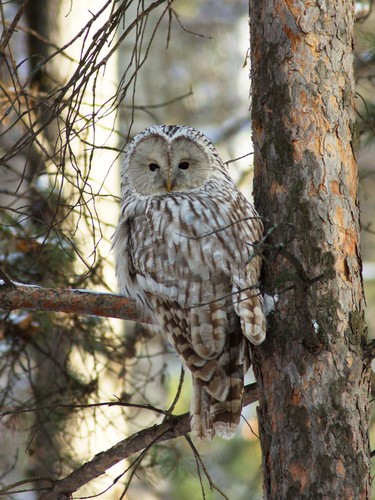
Ural Owl
50-62 cm long, wingspan about 1.0-1.3 m
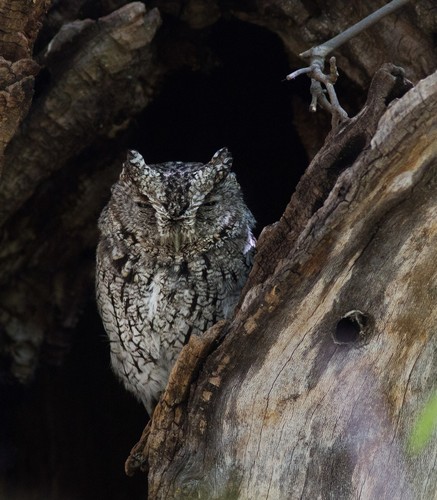
Whiskered Screech-Owl
17-19 cm (6.7-7.5 in) long, 43 cm wingspan
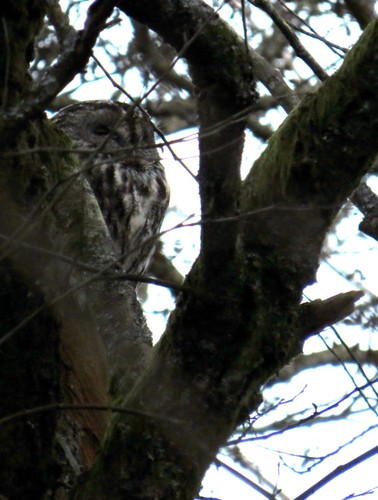
Tawny Owl
37-43 cm (15-17 in) long, 81-96 cm wingspan
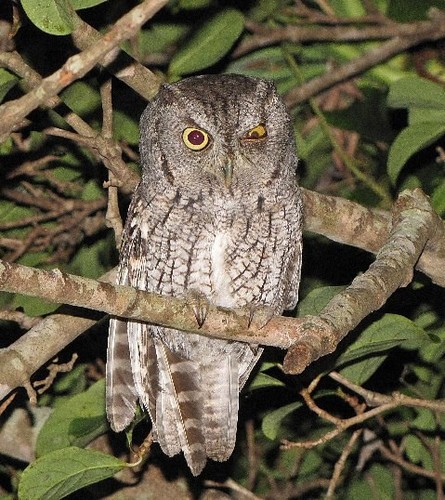
Screech Owl
16-25 cm long, wingspan about 46-61 cm
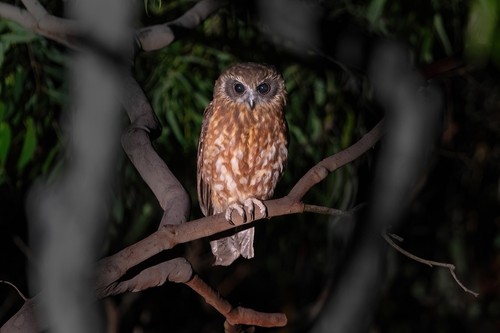
Southern Boobook
27-36 cm (11-14 in) long
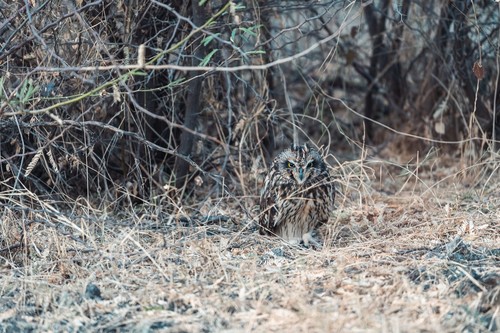
Short-eared Owl
34-42 cm (13-17 in) long, 85-110 cm wingspan
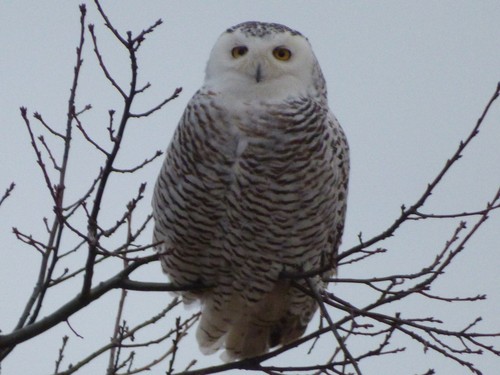
Snowy Owl
52-71 cm (20-28 in) long, 125-150 cm (49-59 in) wingspan
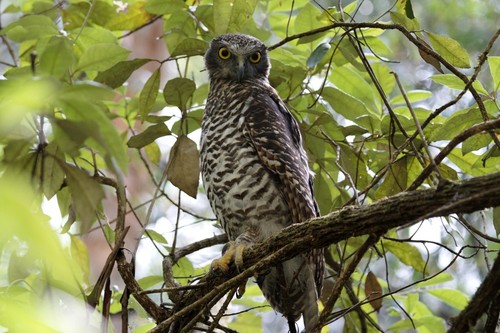
Powerful Owl
60-65 cm (24-26 in) long, 112-135 cm (44-53 in) wingspan
Northern Saw-whet Owl
18-21 cm (7-8.5 in) long, 42-56 cm (17-22 in) wingspan
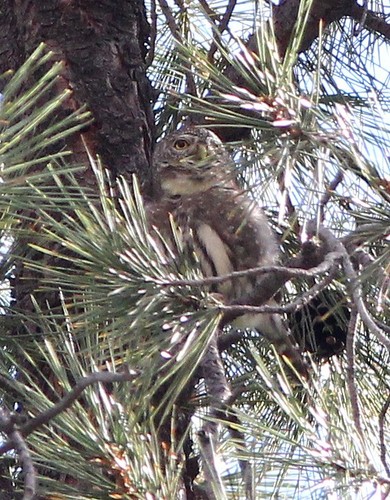
Northern Pygmy-Owl
16-18 cm (6.3-7.1 in) long, 35-39 cm wingspan
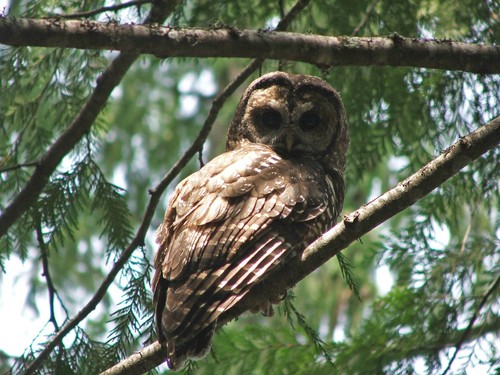
Spotted Owl
43-48 cm (17-19 in) long, 100-114 cm wingspan
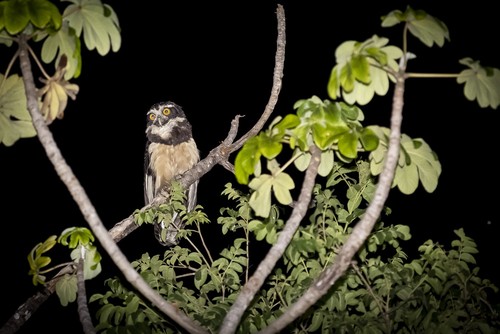
Spectacled Owl
43-52 cm (17-20 in) long