
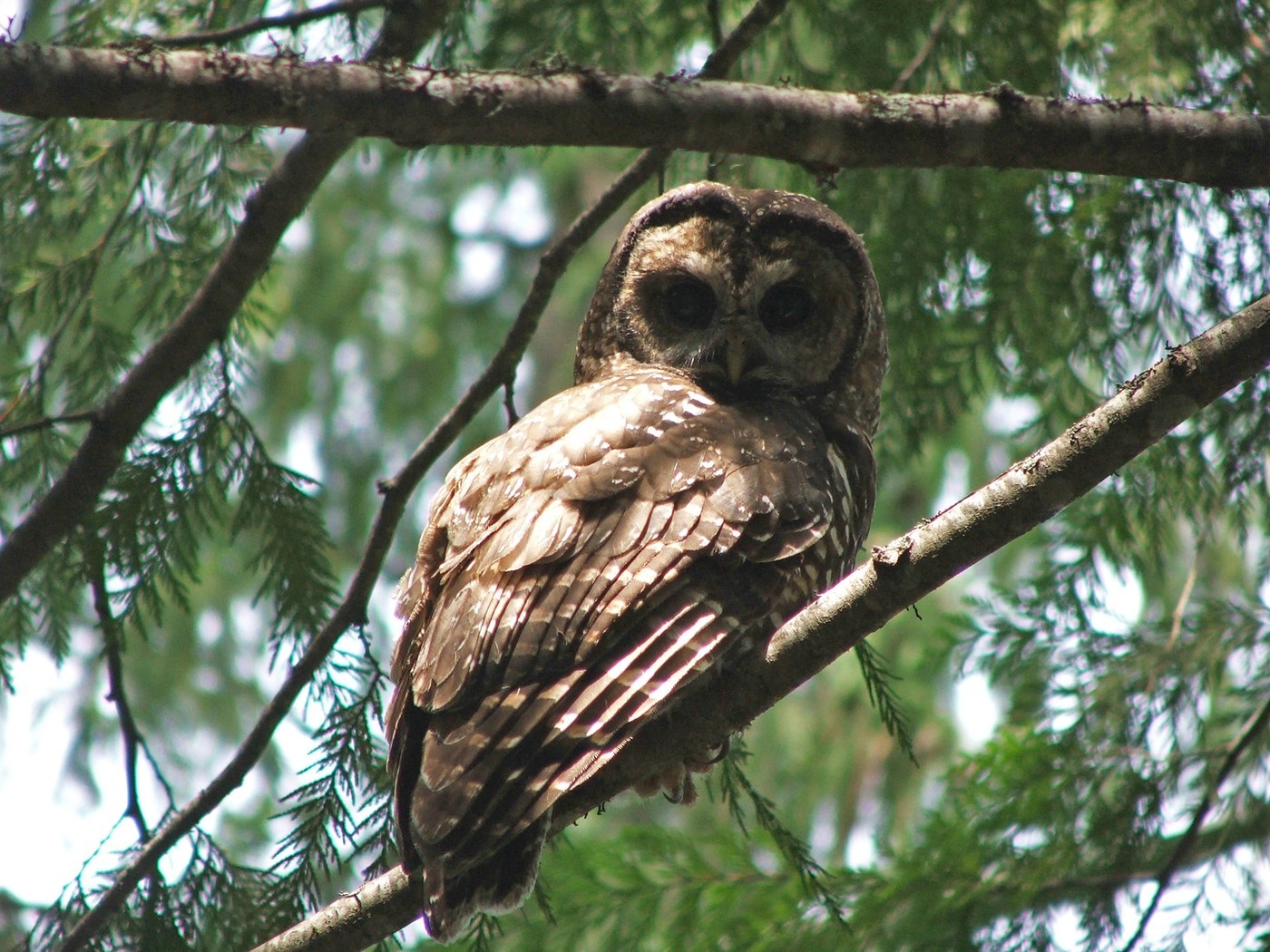
Spotted Owl
Strix occidentalis
A dark-eyed, chocolate-brown forest owl closely tied to old-growth woodland and famous as a flagship species for old-growth conservation debates.
- Size
- 43-48 cm (17-19 in) long, 100-114 cm wingspan
- Habitat
- old-growth and mature coniferous forests with dense canopy
- Type
- owl
Spotted a bird like this?
Identify any bird from a photo, free.
Overview
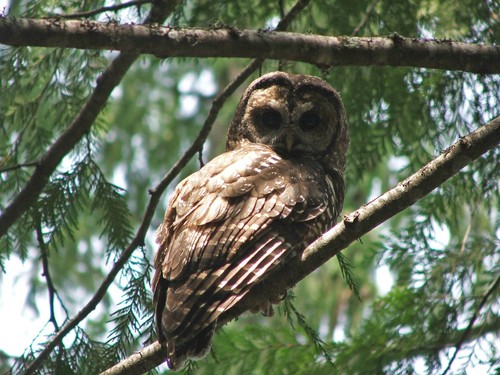
The Spotted Owl is a large, dark, richly patterned owl of mature and old-growth forests in western North America. It has a round head without ear tufts, deep brown plumage marked with round white spots (rather than the streaking typical of many owls), and distinctive dark brown eyes rather than the yellow eyes of most owls.
Three recognized subspecies - Northern, California, and Mexican Spotted Owl - vary subtly in tone and range but share the same gentle, soulful expression created by the dark eyes and rounded facial disc.
The species became a national symbol of the old-growth logging controversy in the Pacific Northwest during the late twentieth century, and it remains a key indicator species for the health of mature forest ecosystems.
How to identify it
Key Field Marks
- Dark brown eyes (unusual among North American owls, most of which have yellow eyes)
- Chocolate-brown plumage with round white spots on the head, back, and underparts
- No ear tufts; round head
- Relatively tame, often allowing close approach
Similar Species
- Barred Owl, a close relative that has expanded into Spotted Owl range and hybridizes with it, is paler grayish-brown with vertical streaking on the belly (rather than spotting) and horizontal barring on the chest; competition and hybridization with Barred Owls is a major conservation concern.
- Great Horned Owl is larger with prominent ear tufts and yellow eyes.
Habitat & range
Spotted Owls depend on structurally complex, mature and old-growth forest with dense multi-layered canopy, large trees, and abundant snags or cavities for nesting. The Northern subspecies occurs from British Columbia south through Washington, Oregon, and northern California; the California subspecies inhabits the Sierra Nevada and coastal ranges of California; and the Mexican subspecies ranges through the southwestern US and Mexican highlands.
Most individuals are non-migratory, maintaining large home ranges within suitable old-growth habitat year-round, though some higher-elevation populations shift to lower ground in winter.
Behavior & voice
Behavior
Strictly nocturnal, Spotted Owls roost quietly in dense canopy by day and are famously tame, sometimes allowing observers to approach closely. Pairs maintain large, stable territories and mate for life.
Voice
The common call is a series of four deep, resonant hoots, often rendered as "who... who-who... whoo," along with a rising contact bark. Pairs frequently duet.
Feeding
Flying squirrels and woodrats are primary prey across much of the range, supplemented by other small mammals, birds, and insects, captured by dropping from a perch in dense forest onto prey below.
Nesting & Breeding
Spotted Owls nest in tree cavities, broken-top snags, or old stick nests within old-growth stands, typically laying 2-3 eggs. Low reproductive rates and dependence on old-growth structure make the species highly sensitive to habitat loss.
Frequently asked questions
Why is the Spotted Owl a conservation concern?
It depends on structurally complex old-growth forest that has been heavily logged, and it faces additional pressure from competition and hybridization with the range-expanding Barred Owl.
How is the Spotted Owl different from a Barred Owl?
The Spotted Owl is darker with round white spots and dark brown eyes, while the closely related Barred Owl is paler with streaked underparts; Barred Owls have expanded into Spotted Owl range and outcompete them.
What does a Spotted Owl eat?
It preys mainly on small forest mammals such as flying squirrels and woodrats, along with other small mammals, birds, and insects.
Are there different kinds of Spotted Owls?
Yes, three subspecies are recognized - Northern, California, and Mexican Spotted Owl - differing slightly in range and plumage tone but similar in appearance and habits.
Spotted Owl guides
In-depth guides for identifying, finding, and understanding Spotted Owl.
Other birds you may enjoy
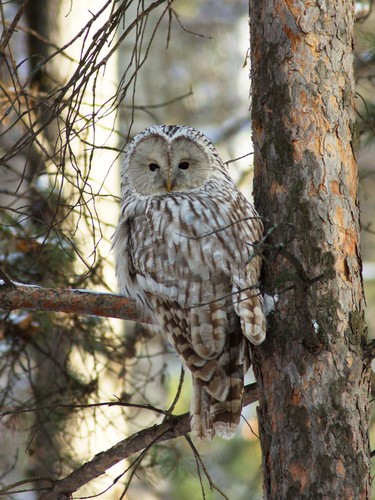
Ural Owl
50-62 cm long, wingspan about 1.0-1.3 m
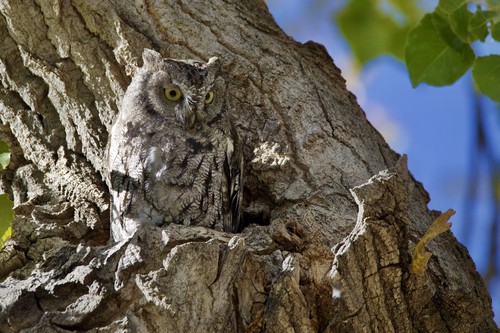
Western Screech-Owl
19-25 cm (7.5-10 in) long, about 55 cm (21.5 in) wingspan
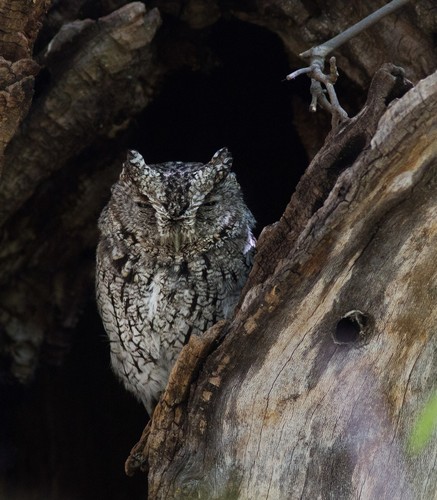
Whiskered Screech-Owl
17-19 cm (6.7-7.5 in) long, 43 cm wingspan
Tawny Owl
37-43 cm (15-17 in) long, 81-96 cm wingspan
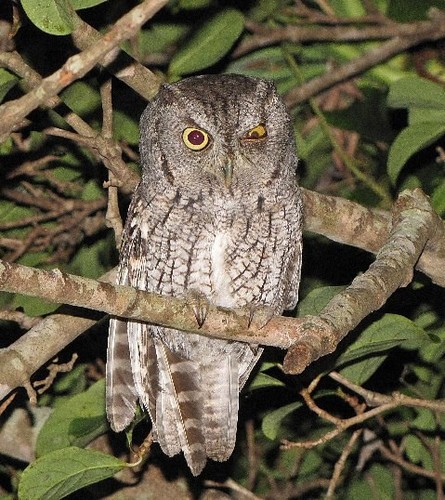
Screech Owl
16-25 cm long, wingspan about 46-61 cm
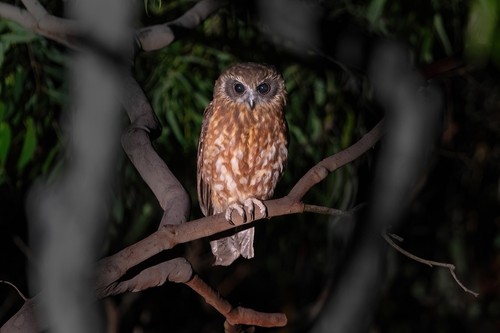
Southern Boobook
27-36 cm (11-14 in) long
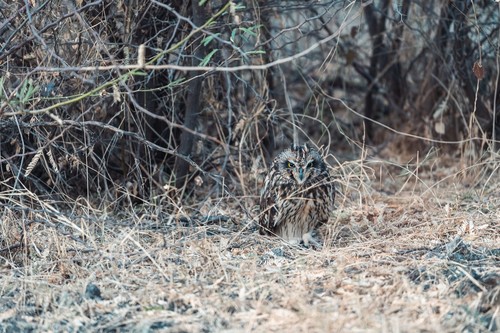
Short-eared Owl
34-42 cm (13-17 in) long, 85-110 cm wingspan
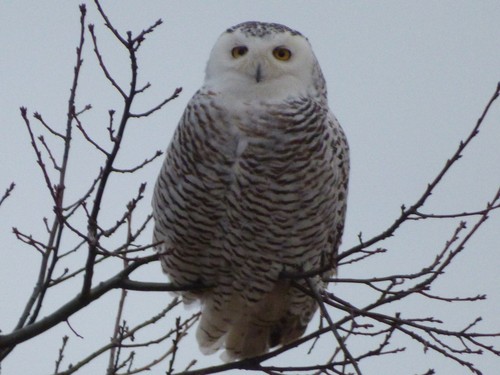
Snowy Owl
52-71 cm (20-28 in) long, 125-150 cm (49-59 in) wingspan
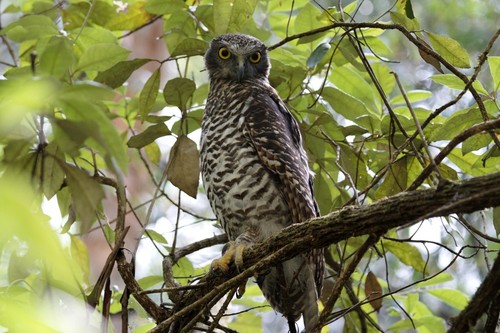
Powerful Owl
60-65 cm (24-26 in) long, 112-135 cm (44-53 in) wingspan
Northern Saw-whet Owl
18-21 cm (7-8.5 in) long, 42-56 cm (17-22 in) wingspan
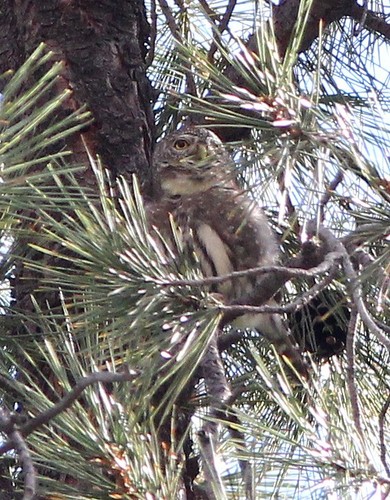
Northern Pygmy-Owl
16-18 cm (6.3-7.1 in) long, 35-39 cm wingspan
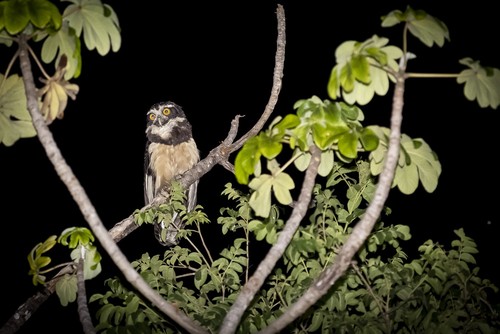
Spectacled Owl
43-52 cm (17-20 in) long