
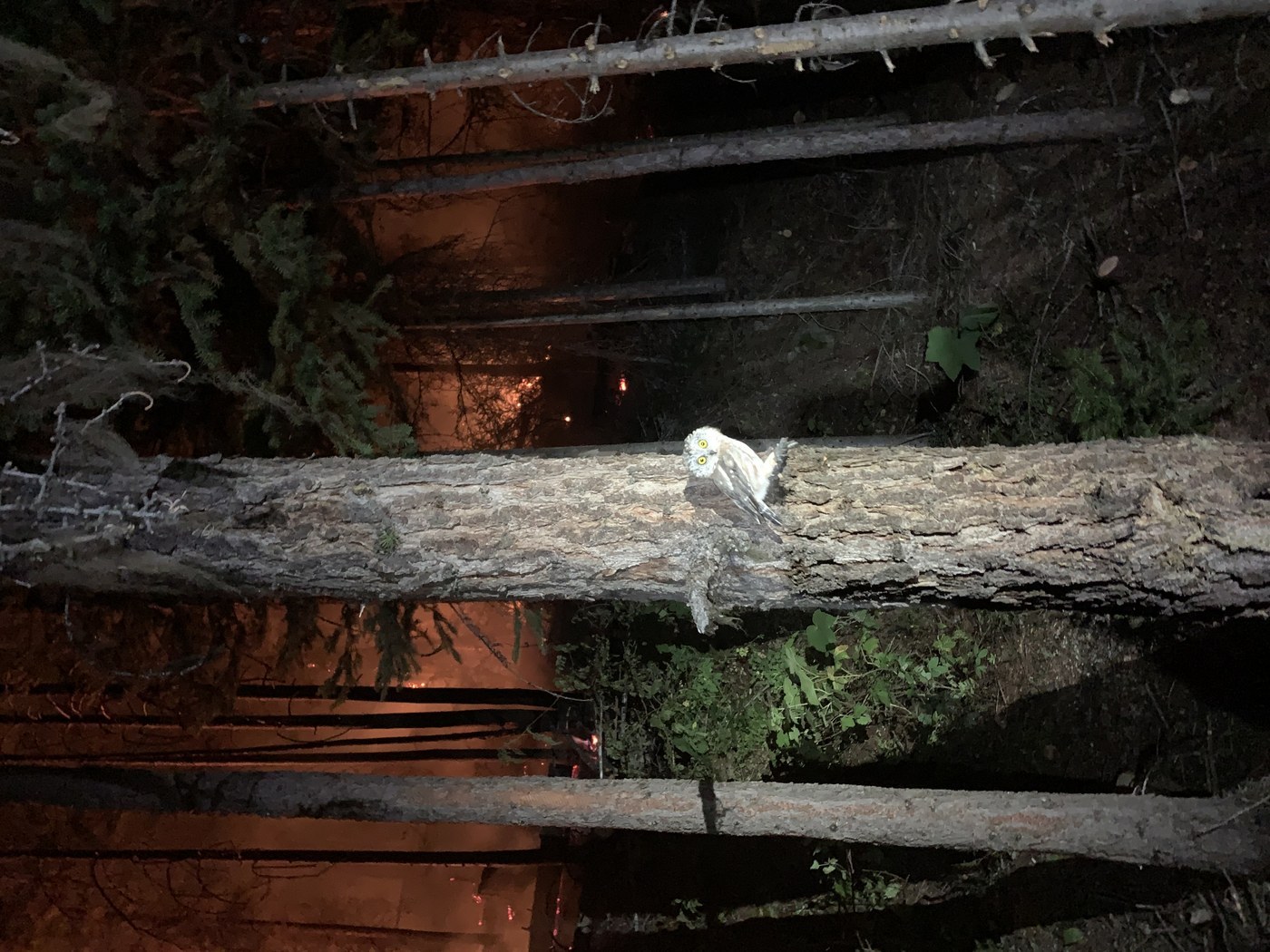
Northern Saw-whet Owl
Aegolius acadicus
One of North America's smallest owls, a secretive forest dweller named for a call once likened to a saw blade being sharpened.
- Size
- 18-21 cm (7-8.5 in) long, 42-56 cm (17-22 in) wingspan
- Habitat
- dense coniferous and mixed forests
- Type
- owl
Spotted a bird like this?
Identify any bird from a photo, free.
Overview
The Northern Saw-whet Owl is a tiny, round-headed owl with no ear tufts, large yellow eyes, and a rich reddish-brown, streaked plumage that provides excellent camouflage against forest bark. Young birds are strikingly different, with a chocolate-brown body, a buffy belly, and a bold white X or V pattern between the eyes.
Despite its small size, this owl is a fierce nocturnal predator of small rodents, and its old-fashioned name comes from one of its calls, a repeated, rasping note once likened to the sound of a saw blade being sharpened, or "whetted," on a stone.
How to identify it
Key Field Marks
- Very small size, roughly the size of an American Robin
- Round head with no ear tufts and large yellow eyes
- Reddish-brown, streaked plumage in adults; solid chocolate-brown with a white facial X pattern in juveniles
- Secretive and rarely seen, usually detected by voice
Similar Species
- Eastern/Western Screech-Owl: similar small size but has prominent ear tufts, distinguishing it readily from the tuft-less Saw-whet Owl.
- Boreal Owl: similar rounded, tuft-less shape but larger, with a more heavily spotted crown and a different facial pattern.
Habitat & range
Range
Northern Saw-whet Owls breed across the boreal and montane coniferous forests of Canada, the northern United States, and the mountainous West, with many populations migrating south in fall to winter across much of the continental United States.
Habitat
They favor dense coniferous or mixed forest for roosting and nesting, often selecting a low, concealed roost such as a dense conifer thicket during the day, making them notoriously difficult to spot despite sometimes roosting at eye level.
Behavior & voice
Voice
The primary song is a monotonous, repeated series of low whistled toots, given mainly at night during the breeding season and audible over considerable distances despite the bird's small size.
Hunting
Saw-whet Owls hunt small rodents, especially deer mice, from a low perch at night, striking prey on the ground with a quick, silent pounce.
Nesting
They nest in old woodpecker cavities, particularly those made by Northern Flickers or Pileated Woodpeckers, and readily use nest boxes. Clutches typically contain four to seven eggs.
Frequently asked questions
Why is it called a Saw-whet Owl?
One of its calls, a repeated rasping note, reminded early naturalists of the sound made when sharpening (whetting) a saw blade on a file.
How big is a Northern Saw-whet Owl?
It is one of the smallest owls in North America, roughly the size of an American Robin.
Where do Northern Saw-whet Owls roost during the day?
In dense coniferous thickets, often at surprisingly low, accessible heights, though their camouflage and stillness make them very hard to spot.
Do Northern Saw-whet Owls migrate?
Many populations do migrate south in fall, and large numbers are captured and banded each autumn at migration monitoring stations across North America.
Northern Saw-whet Owl guides
In-depth guides for identifying, finding, and understanding Northern Saw-whet Owl.
Other birds you may enjoy
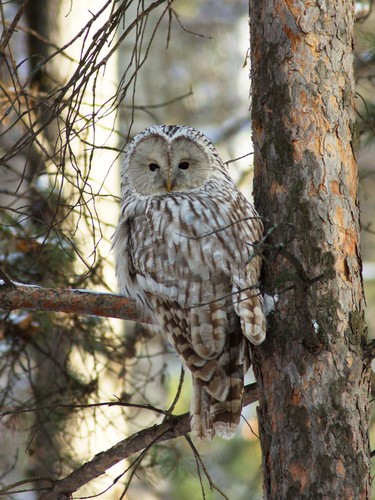
Ural Owl
50-62 cm long, wingspan about 1.0-1.3 m
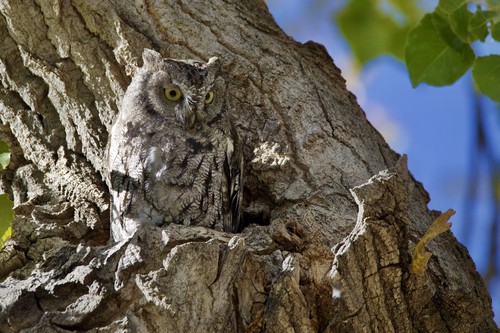
Western Screech-Owl
19-25 cm (7.5-10 in) long, about 55 cm (21.5 in) wingspan
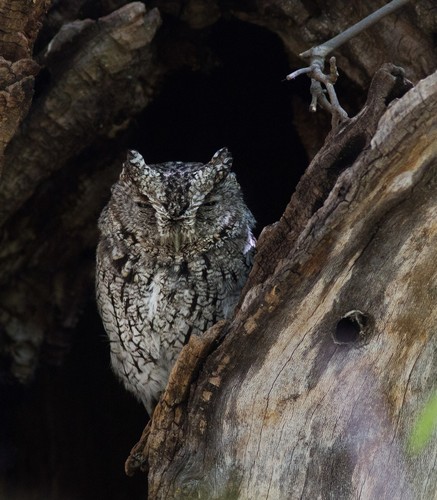
Whiskered Screech-Owl
17-19 cm (6.7-7.5 in) long, 43 cm wingspan
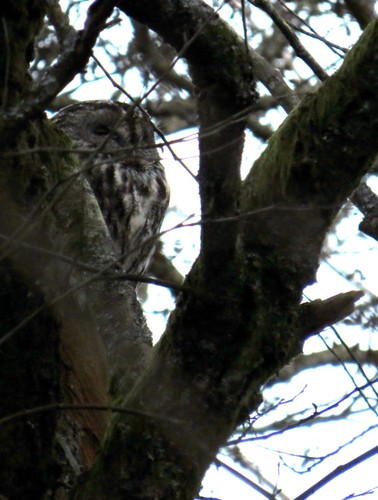
Tawny Owl
37-43 cm (15-17 in) long, 81-96 cm wingspan
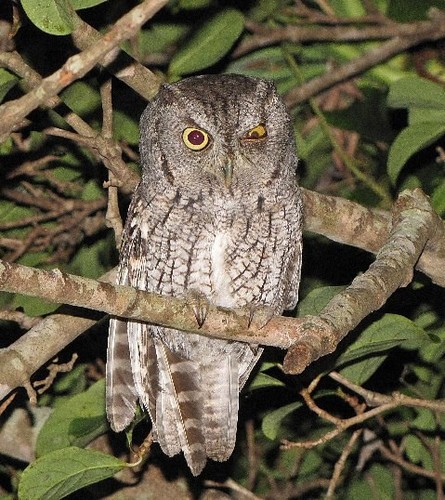
Screech Owl
16-25 cm long, wingspan about 46-61 cm
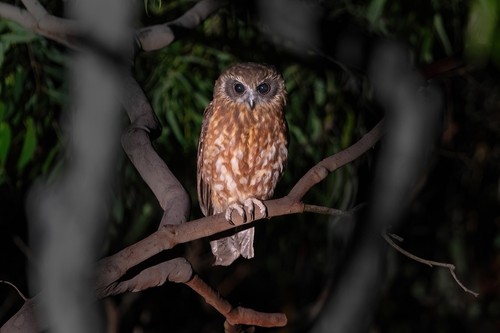
Southern Boobook
27-36 cm (11-14 in) long
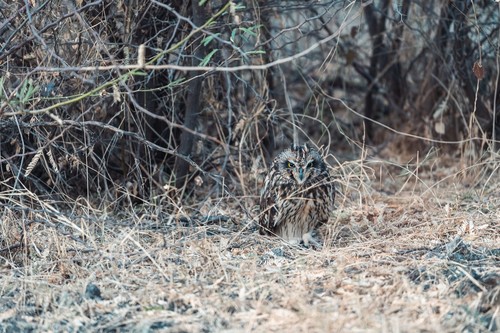
Short-eared Owl
34-42 cm (13-17 in) long, 85-110 cm wingspan
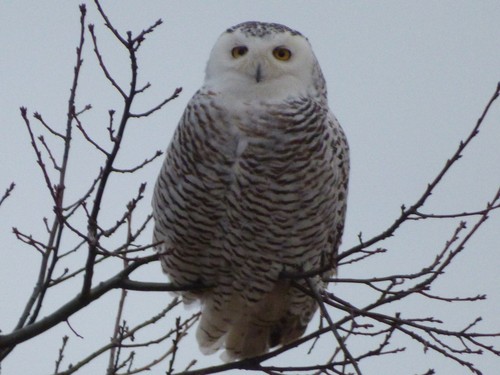
Snowy Owl
52-71 cm (20-28 in) long, 125-150 cm (49-59 in) wingspan
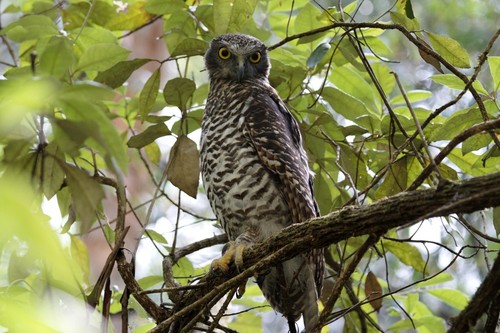
Powerful Owl
60-65 cm (24-26 in) long, 112-135 cm (44-53 in) wingspan
Northern Pygmy-Owl
16-18 cm (6.3-7.1 in) long, 35-39 cm wingspan
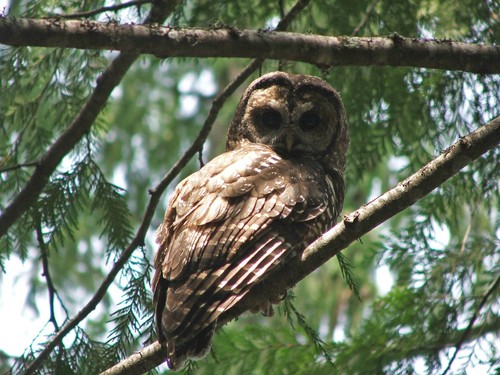
Spotted Owl
43-48 cm (17-19 in) long, 100-114 cm wingspan
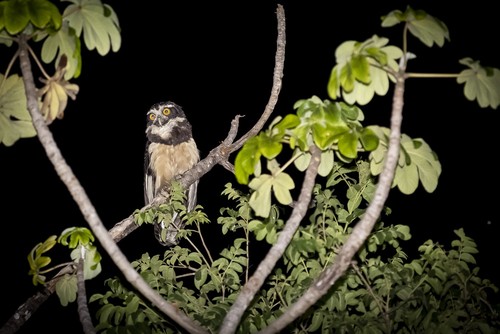
Spectacled Owl
43-52 cm (17-20 in) long