
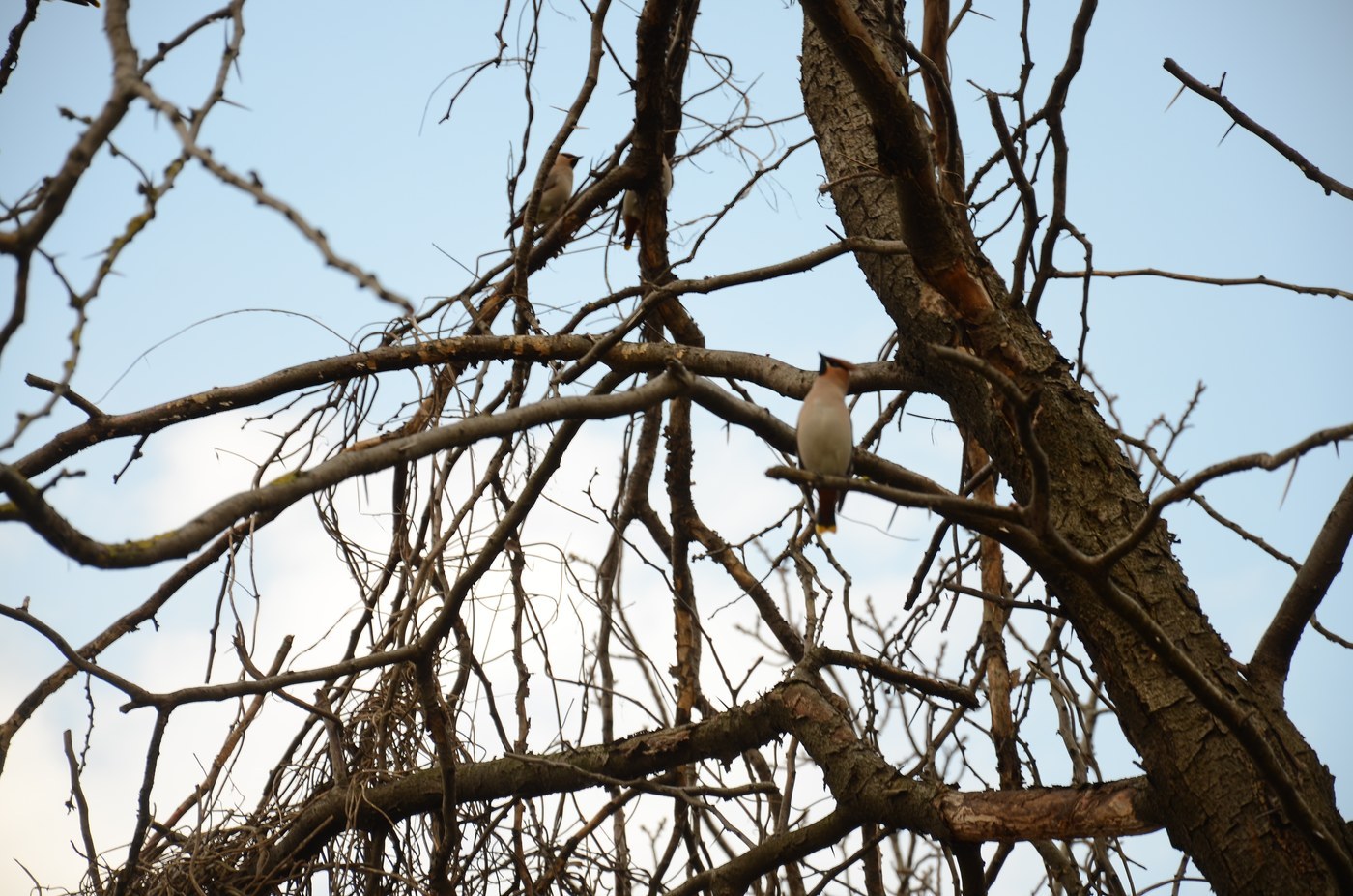
Waxwing
Bombycilla garrulus
A crested, silky pinkish-grey bird with a black mask, yellow-tipped tail, and waxy red wingtips, best known for irruptive winter berry-feasting flocks.
- Size
- 18-21 cm (7-8 in) long, 32-35 cm wingspan
- Habitat
- coniferous and mixed forest in the breeding season; gardens, hedgerows, and berry-bearing shrubs in winter
- Type
- songbird
Spotted a bird like this?
Identify any bird from a photo, free.
Overview
The (Bohemian) Waxwing is an unmistakable, elegant songbird with soft, silky plumage in shades of pinkish-buff and grey, topped with a pointed crest. A black mask runs through the eye and a black throat patch sets off the face, while the tail is tipped bright yellow. Its name comes from the small red, wax-like tips on the secondary wing feathers, a feature unique among songbirds.
Waxwings are highly nomadic outside the breeding season, forming flocks that erupt southward in years of poor berry crops in the north, sometimes appearing in large numbers far outside their normal winter range, often stripping ornamental berry bushes bare within hours.
How to identify it
Key field marks
- Pointed crest, pinkish-grey silky body plumage
- Black mask through the eye and black throat patch
- Bright yellow tail tip and waxy red tips on the wing feathers
- Chestnut undertail coverts and white/yellow wing markings
Similar species
No other bird shares the crest, mask, and yellow-tipped tail combination; Cedar Waxwing (a related North American species) is smaller, yellower-bellied, and lacks the chestnut undertail coverts and white wing markings of the Bohemian Waxwing.
Habitat & range
Range
Breeds across the boreal forest belt of northern Europe, Asia, and North America; winters variably to the south, with the extent of movement depending heavily on berry crop abundance.
Habitat
Breeds in coniferous and mixed forest near water. In winter, found wherever berries are abundant, including gardens, hedgerows, orchards, and parks, often visiting suburban areas.
Migration
An irruptive migrant: in years when northern berry crops fail, large flocks move far south of the normal wintering range in search of food, a phenomenon that can bring waxwings to areas they rarely visit.
Behavior & voice
Behavior
Highly social outside the breeding season, moving in tight, fast-flying flocks that descend on berry-laden trees and bushes, often stripping them within a short time before moving on.
Voice
A distinctive high, trilling "sirrrr" call, often the first sign of an approaching flock; lacks a complex song.
Feeding
Feeds almost entirely on berries and fruit outside the breeding season, switching to insects, caught in flycatcher-like sallies, during summer to feed itself and its young.
Nesting and breeding
Builds a cup nest of twigs and moss in a conifer, laying 4-6 eggs. Breeding success and timing are closely tied to insect abundance in the boreal forest.
Frequently asked questions
Why is it called a Waxwing?
It gets its name from the small, waxy red tips on its secondary wing feathers, a feature unique among songbirds.
Why do Waxwings sometimes appear in large flocks far south of their usual range?
They are irruptive migrants that move south in large numbers when berry crops fail in their northern breeding and wintering areas.
What do Waxwings eat in winter?
They feed almost entirely on berries and fruit, often descending on ornamental berry bushes in gardens and parks.
How does the Bohemian Waxwing differ from the Cedar Waxwing?
The Bohemian Waxwing is larger with chestnut undertail coverts and white wing markings, while the Cedar Waxwing is smaller with a yellower belly and lacks those features.
Waxwing guides
In-depth guides for identifying, finding, and understanding Waxwing.
Other birds you may enjoy

Black Redstart
13-14.5 cm (5.1-5.7 in) long, 23-26 cm wingspan

Black-throated Sparrow
12-14 cm (4.7-5.5 in) long, about 19-20 cm (7.5-8 in) wingspan

Greater Bird-of-paradise
Body about 43 cm; males with additional flank plumes up to 50 cm and long tail wires

Blue Tit
11-12 cm (4.3-4.7 in) long, 17-20 cm wingspan

Red-billed Quelea
11.5–13 cm long, wingspan about 20–22 cm
White-plumed Antbird
13-14 cm (5-5.5 in) long

Pyrrhuloxia
19-22 cm (7.5-8.7 in) long, 30 cm wingspan

Blue-gray Tanager
16-18 cm (6-7 in) long

Blackburnian Warbler
11-13 cm (4.3-5.1 in) long, 20-22 cm wingspan

Bluethroat
13-14 cm (5.1-5.5 in) long, 20-22 cm wingspan

Eurasian Nuthatch
12-14.5 cm (4.7-5.7 in) long, 22.5-27 cm wingspan

Wood Thrush
19-21 cm (7.5-8.3 in) long, about 33 cm (13 in) wingspan