
Waxwing Identification Guide
The (Bohemian) Waxwing is a plump, crested, pinkish-gray songbird identified by its black mask and throat, waxy red wingtips, and yellow-tipped tail, appearing in irruptive winter flocks feeding on berries.
Read the full Waxwing encyclopedia entry →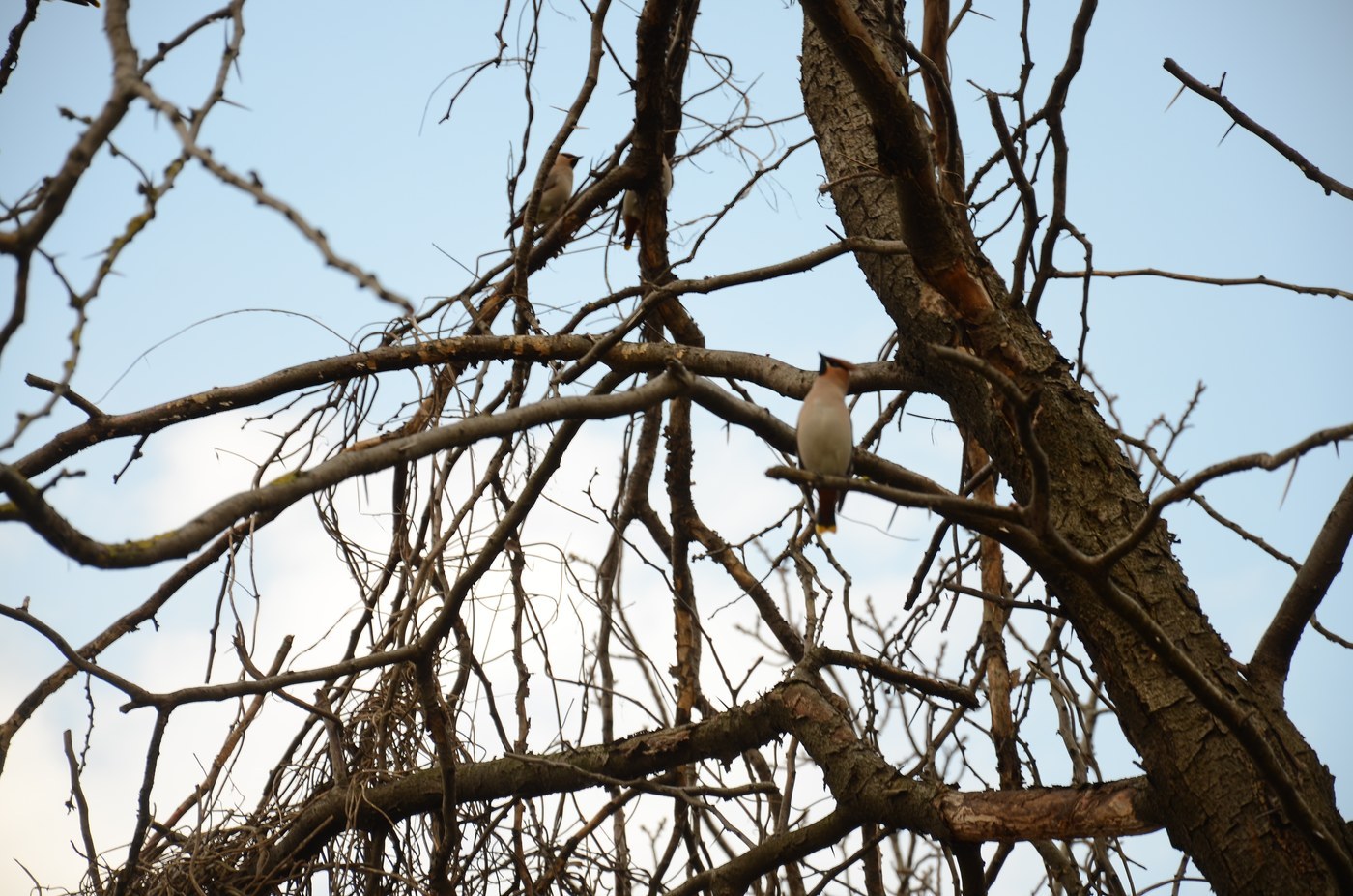
Key Field Marks
- Shape: A plump, starling-sized songbird with a prominent pointed crest and short tail.
- Plumage: Soft pinkish-brown to gray-brown overall, with a black mask through the eye and a black throat patch.
- Wings: Bold pattern of yellow and white markings on the flight feathers, plus distinctive waxy red tips on the secondary feathers (the source of the name), best seen at close range.
- Tail: Gray with a bright yellow terminal band (occasionally orange in birds that have fed heavily on certain non-native berries).
- Undertail: Rich chestnut/rufous undertail coverts.
Separating It From Similar Species
- Cedar Waxwing (in regions of overlap, e.g., North America): Bohemian Waxwing is larger and grayer overall, shows bold white and yellow wing patches that Cedar Waxwing lacks, and has rufous (not white) undertail coverts. Cedar Waxwing is browner with a pale yellowish belly and plainer wings.
- Starlings: Superficially similar silhouette in flight (short tail, pointed wings) but starlings lack the crest, mask, and waxy wingtips and have a completely different, glossy speckled plumage.
Behavior & Habitat
Highly gregarious, moving and feeding in tight, active flocks that strip berries from trees and shrubs. Famous for irruptive winter movements — in years when berry crops fail across their northern breeding range, large numbers push far south into farmland, hedgerows, parks, and gardens ("waxwing winters"), sometimes appearing in huge numbers far outside their usual winter range.
Range & Season
Breeds in northern coniferous (boreal/taiga) forest across Scandinavia, Russia, Alaska, and western Canada. Winters more widely and unpredictably, tracking berry availability (rowan, hawthorn, cotoneaster, and rose hips are favorites).
Voice
A high, thin, trilling "sirrrr" or "zeeeee," often the first clue to a flock passing overhead before they are seen.
Frequently asked questions
How do I identify a Waxwing?
Look for a plump, crested bird with a black mask and throat, waxy red tips on the wing feathers, and a yellow-tipped tail, often seen in active flocks stripping berries.
How is Bohemian Waxwing different from Cedar Waxwing?
Bohemian Waxwing is larger and grayer with bold white and yellow wing patches and rufous undertail coverts, while Cedar Waxwing is browner, has a yellowish belly, plainer wings, and white undertail coverts.
Why do waxwings sometimes appear in huge numbers unexpectedly?
They are irruptive: when berry crops fail in their northern breeding range, large flocks move far south in search of food, leading to unpredictable 'waxwing winters.'
What is the best way to hear a waxwing flock before seeing it?
Listen for a high, thin, trilling 'sirrrr' or 'zeeeee' call, often given by flocks flying overhead.