
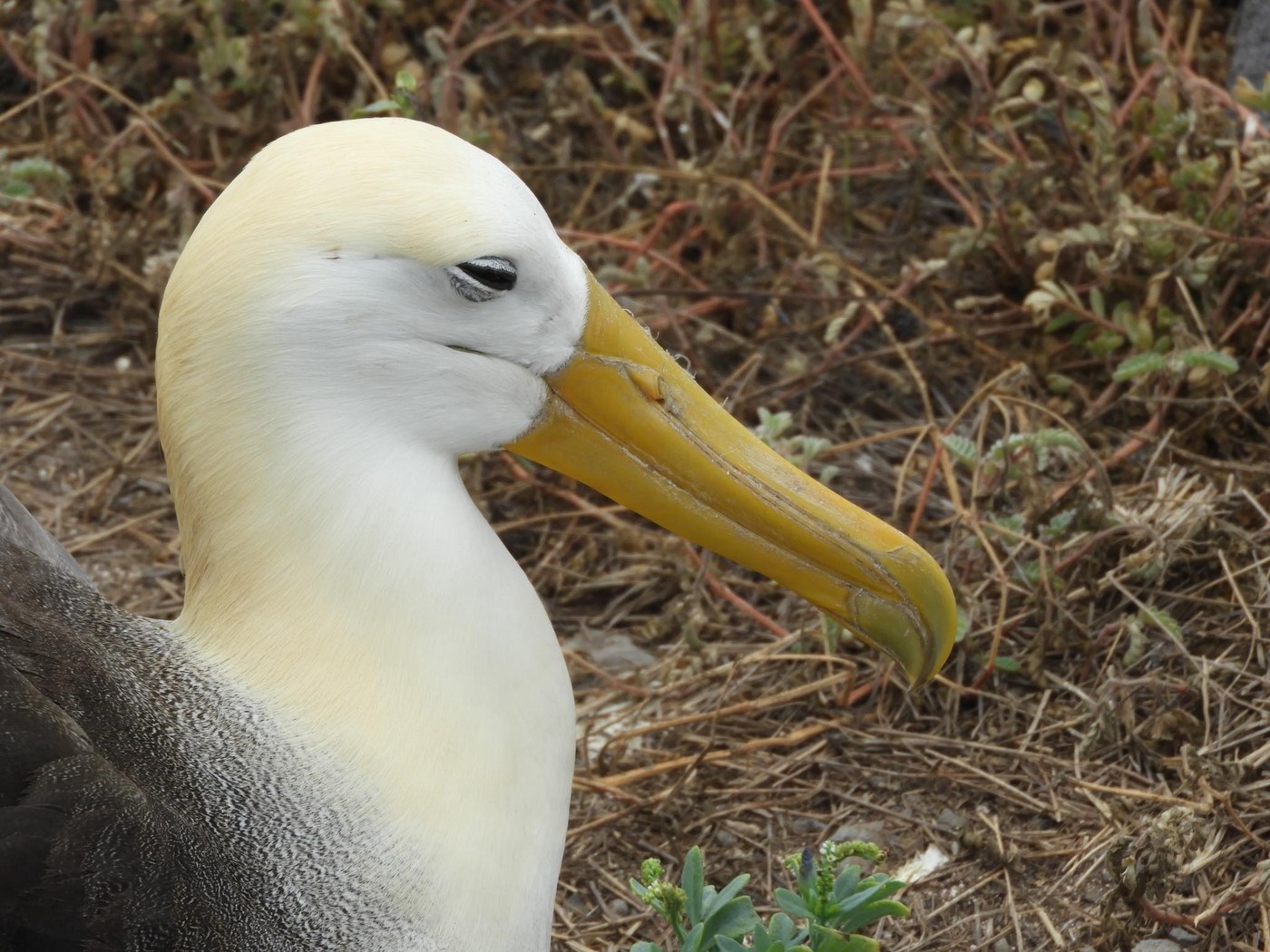
Waved Albatross
Phoebastria irrorata
The only albatross species found in the tropics, breeding almost exclusively on a single Galapagos island and famous for its elaborate bill-fencing courtship dance.
- Size
- 84-91 cm (33-36 in) long, wingspan 220-250 cm (87-98 in)
- Habitat
- tropical eastern Pacific waters, breeding almost entirely on Española Island
- Type
- seabird
Spotted a bird like this?
Identify any bird from a photo, free.
Overview
The Waved Albatross is the only albatross species adapted to breed in tropical waters, nesting almost entirely on Española Island in the Galapagos archipelago. Adults have a warm buffy-yellow wash across the head and neck, a body finely marked with brown "waved" barring that gives the species its name, and a notably long, bright yellow bill.
This species relies on the cool, food-rich Humboldt and Cromwell Currents that reach the Galapagos, which make life possible for a cold-water-adapted seabird so close to the equator. Its dependence on a single nesting island makes it one of the most range-restricted albatross species in the world.
Waved Albatrosses are famous for an elaborate courtship ritual involving synchronized bill-circling and fencing, bowing, and a distinctive loud bill-clacking display performed by pairs on the ground.
How to identify it
Key field marks
- Buffy-yellow wash across the head and neck contrasting with a brown, finely barred body
- Long, bright yellow bill, notably longer than in most other albatrosses
- Pale bluish legs and feet
Similar species
- No other albatross species regularly occurs in the tropical eastern Pacific, and the combination of a yellow bill with warm-toned head and barred brown body is unique among albatrosses, making misidentification unlikely.
Habitat & range
Waved Albatrosses breed almost exclusively on Española Island in the Galapagos, with a very small number nesting on nearby Isla de la Plata off Ecuador. Colonies are located on rocky, semi-open lava terrain used as a runway for the long takeoffs and landings this large bird requires.
Outside the breeding season, the species disperses to forage in the cool, productive waters of the Humboldt Current off the coasts of Ecuador and Peru, rather than ranging widely across open ocean like many other albatrosses.
Behavior & voice
Voice
Courting pairs perform loud bill-clacking and a distinctive "woo-hoo" call during their elaborate ground display, one of the most theatrical courtship rituals among seabirds.
Feeding
They feed mainly on squid and fish caught at or near the surface, and are also known to scavenge regurgitated food and offal from other seabirds such as boobies.
Nesting and breeding
Pairs perform an extended courtship dance involving bill-circling, bowing, and clacking before laying a single egg on bare ground rather than in a constructed nest. Both parents share incubation and chick-rearing duties over several months on the breeding island.
Frequently asked questions
Where does the Waved Albatross breed?
Almost the entire world population breeds on Española Island in the Galapagos, with a very small number on Isla de la Plata off Ecuador.
Why is the Waved Albatross unusual among albatrosses?
It is the only albatross species that breeds in the tropics, made possible by cool, food-rich currents reaching the Galapagos Islands.
What does the Waved Albatross courtship display look like?
Pairs perform an elaborate ritual of bill-circling, fencing, bowing, and loud bill-clacking calls on the ground.
Why is the Waved Albatross critically endangered?
Its extremely restricted breeding range on essentially one island makes the entire population vulnerable to threats like fishing bycatch and changing ocean conditions.
What does the Waved Albatross eat?
It feeds mainly on squid and fish, and also scavenges food regurgitated by other seabirds such as boobies.
Waved Albatross guides
In-depth guides for identifying, finding, and understanding Waved Albatross.
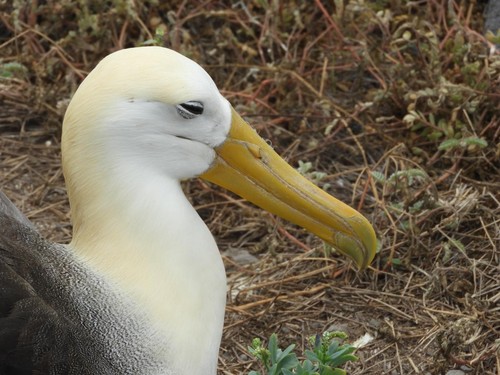
Other birds you may enjoy
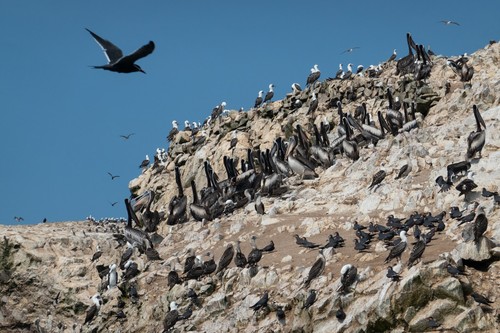
Peruvian Pelican
137-152 cm (54-60 in) long, up to 228 cm wingspan
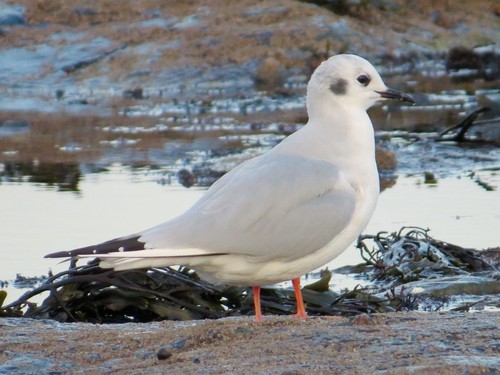
Bonaparte's Gull
28-33 cm (11-13 in) long, 76-84 cm wingspan
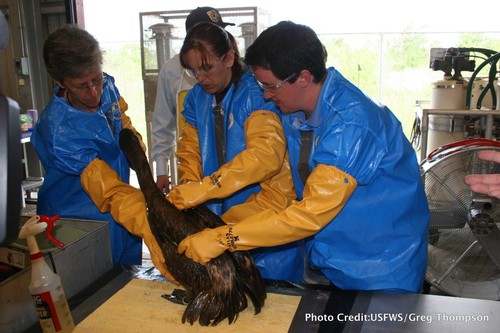
Brown Pelican
106-137 cm (42-54 in) long, 200-230 cm wingspan
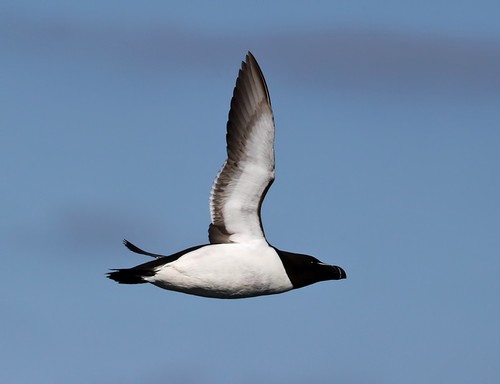
Razorbill
37-39 cm (15-15.5 in) long, 63-68 cm wingspan
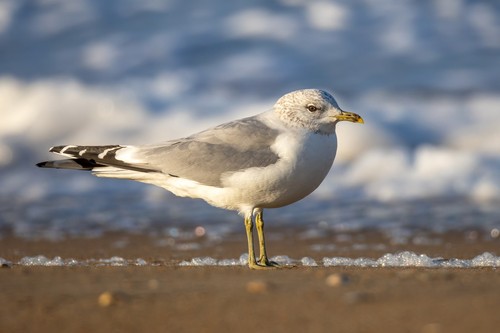
Common Gull
40-46 cm (16-18 in) long, 110-130 cm wingspan
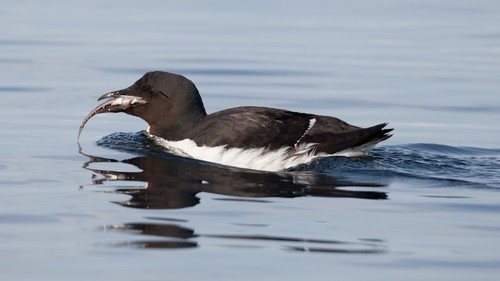
Thick-billed Murre
40-48 cm (16-19 in) long, 65-75 cm wingspan
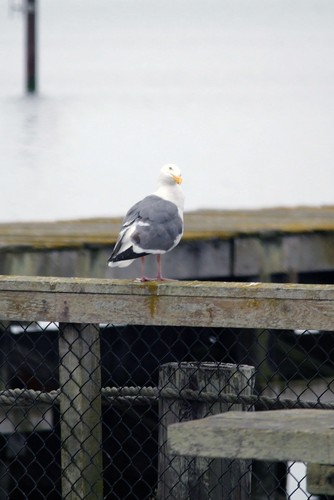
Western Gull
55-68 cm (22-27 in) long, 130-144 cm wingspan
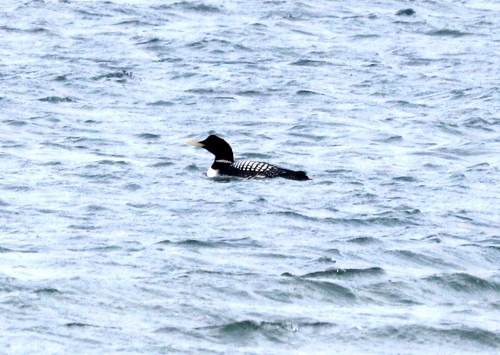
Yellow-billed Loon
76-97 cm (30-38 in) long, 135-152 cm wingspan
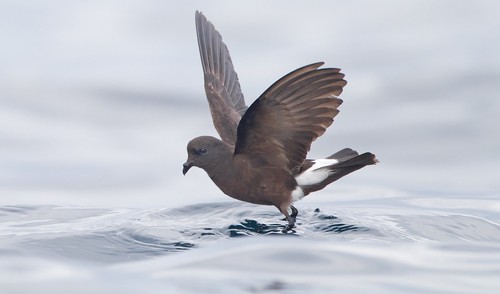
Wilson's Storm-Petrel
15-19 cm (6-7.5 in) long, wingspan 38-42 cm (15-16.5 in)
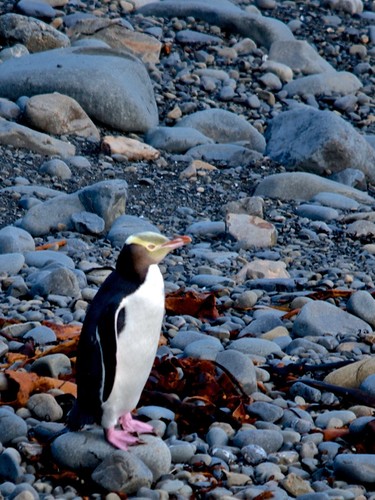
Yellow-eyed Penguin
62-79 cm (24-31 in) tall, 3-8.5 kg (6.6-18.7 lb)
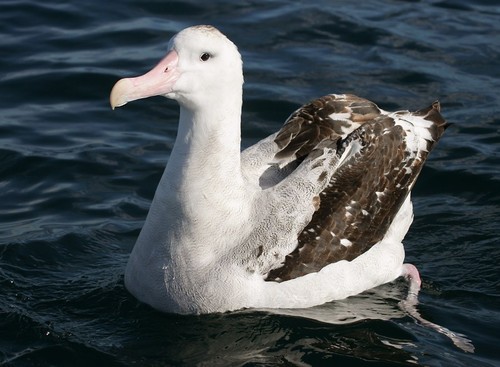
Wandering Albatross
107-135 cm (42-53 in) long, wingspan up to 3.5 m (11.5 ft)
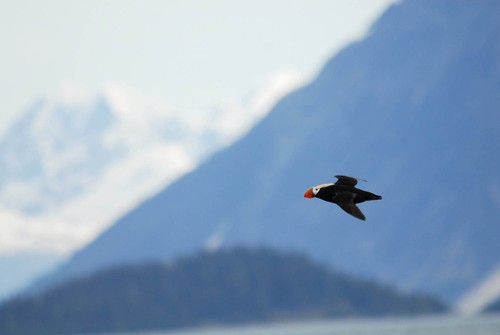
Tufted Puffin
35-41 cm (14-16 in) long, about 63-70 cm wingspan