
Waved Albatross Identification Guide
The Waved Albatross is the world's only tropical albatross, identified by its bright yellow bill, finely barred brownish body, and near-total restriction to Española Island in the Galápagos.
Read the full Waved Albatross encyclopedia entry →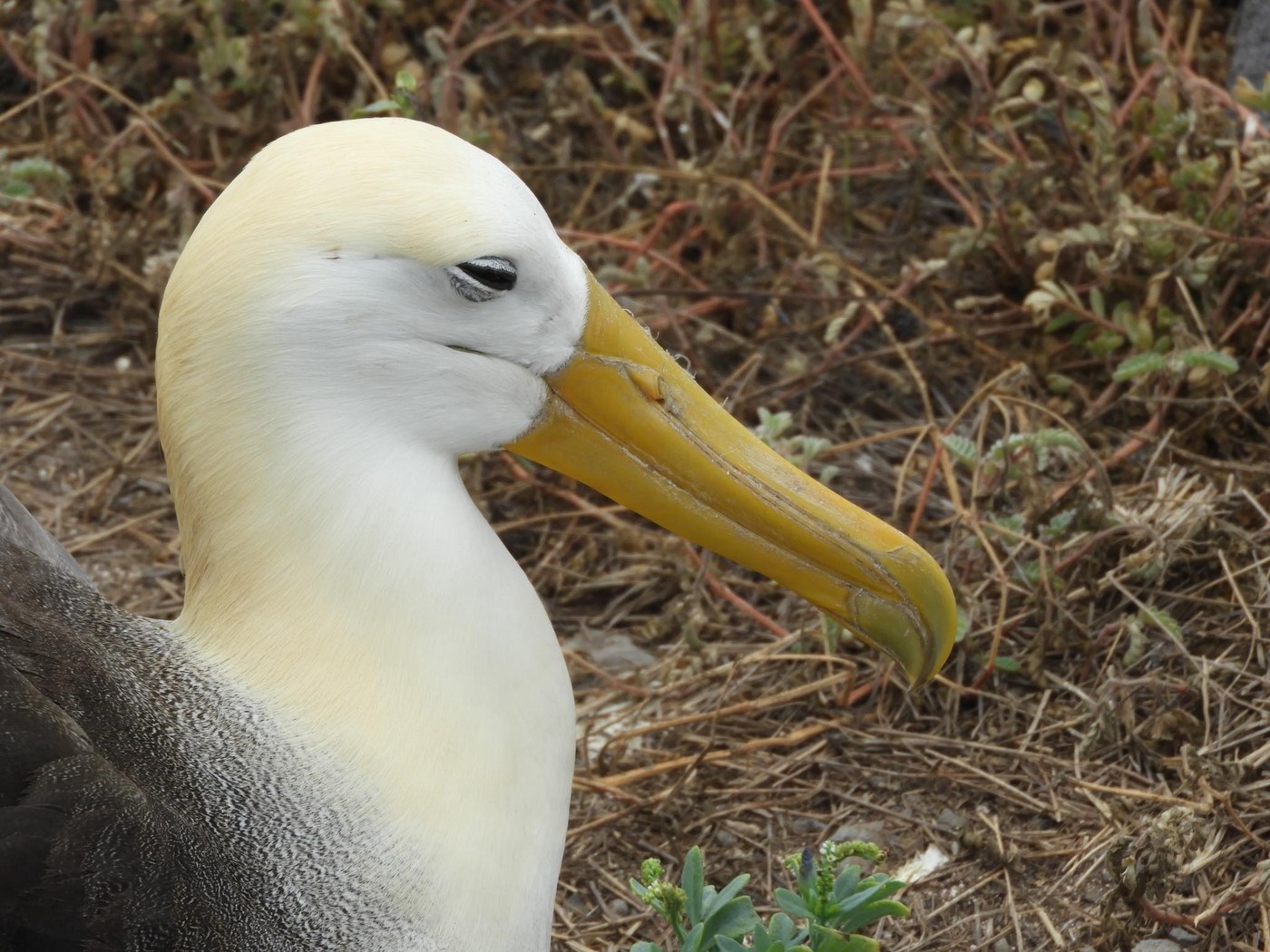
Key Field Marks
- Bill: Long, bright yellow bill — the single most diagnostic feature, unique among albatrosses (all others have pale pink, gray, or dark bills).
- Head and neck: Grayish-white head with a subtle warm yellowish wash on the nape and neck.
- Body: Brownish-gray plumage finely marked with wavy white barring ("vermiculations") across the back and underparts, giving the species its name.
- Legs: Blue-gray.
- Size: A large albatross overall, though smaller than the great albatrosses like Wandering or Royal.
Separating It From Similar Species
- Other albatrosses: No other albatross shares its bright yellow bill, and no other albatross occurs regularly in the warm tropical waters off Ecuador and Peru, making range alone a strong clue.
- Range overlap: Occasionally seen alongside Galápagos seabirds like boobies and frigatebirds, which are entirely different in shape and plumage and not easily confused.
Behavior
Famous for an elaborate, prolonged courtship dance involving bill circling and clacking, "sky-pointing," gaping, and bowing — among the most complex displays of any seabird.
Habitat, Range & Season
Breeds almost exclusively on Española Island in the Galápagos (with a handful of pairs on Isla de la Plata off mainland Ecuador), nesting in loose colonies on open, rocky, sparsely vegetated lava terrain. Outside the breeding season, forages over the cold, productive waters of the Humboldt Current off the coasts of Peru and Ecuador. Listed as Critically Endangered due to its extremely restricted breeding range and threats such as bycatch and disease.
Voice
Mostly silent at sea. At the colony, pairs produce bill-clacking sounds during courtship along with moans, whistles, and bill-circling "clop" sounds.
Frequently asked questions
What is the easiest way to identify a Waved Albatross?
Its bright yellow bill is unmistakable — no other albatross species has one — combined with finely wavy-barred brown plumage.
Where is the only place to reliably see Waved Albatross?
Almost the entire world population breeds on Española Island in the Galápagos, with a small number of additional pairs on Isla de la Plata off mainland Ecuador.
Why is the Waved Albatross unusual among albatrosses?
It is the only albatross species that breeds in the tropics, nesting on equatorial Galápagos islands rather than subantarctic or temperate islands like other albatrosses.
Is the Waved Albatross endangered?
Yes, it is Critically Endangered because its entire breeding population is concentrated on essentially one island, making it highly vulnerable to threats like fisheries bycatch and disease.