
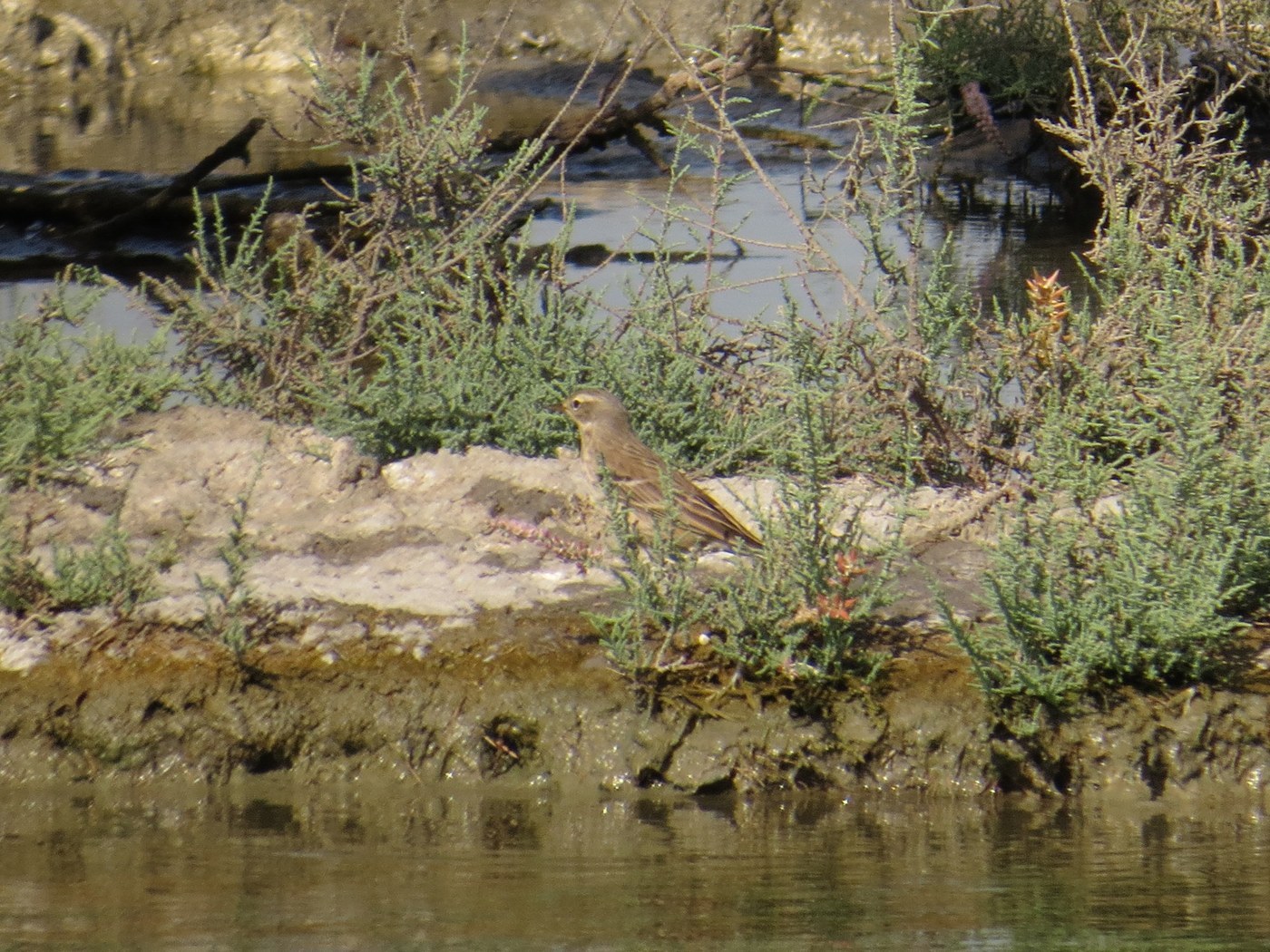
Water Pipit
Anthus spinoletta
A gray-toned mountain pipit that breeds above the treeline and descends to lowland wetlands in winter.
- Size
- 16-17 cm long; wingspan around 23-28 cm
- Habitat
- Alpine meadows and rocky slopes for breeding; wetlands, marshes, and wet fields in winter
- Type
- songbird
Spotted a bird like this?
Identify any bird from a photo, free.
Overview
The Water Pipit is a medium-sized pipit best known for its striking seasonal plumage change and its unusual breeding habitat high in mountain zones. In breeding plumage, adults show a clean gray head and back, a pale pinkish-buff wash on the breast, and reduced streaking, giving a fairly plain, elegant look.
In non-breeding (winter) plumage, the bird becomes grayer and more heavily streaked below on a whitish background, sometimes causing confusion with the closely related Rock Pipit, though habitat and finer plumage details separate them.
Sexes are similar in appearance. The species was formerly considered part of a broader complex that included the Rock Pipit and Buff-bellied Pipit before being split into separate species.
How to identify it
Key field marks
- Grayish-brown upperparts, cleaner and less streaked than Rock Pipit in breeding season
- Whitish underparts with fine streaking in winter, buffier and plainer in summer
- Prominent whitish supercilium (eyebrow stripe)
- Blackish legs
- White outer tail feathers, brighter than Rock Pipit
Similar species
- Rock Pipit: darker, more heavily and diffusely streaked, duller outer tail feathers, and tied to rocky coastlines rather than mountains or inland wetlands.
- Meadow Pipit: smaller, browner, with pink legs and crisper streaking; found in open grassland year-round.
- Tree Pipit: shorter hind claw, more buffy overall, and typically perches in trees, unlike the ground-loving Water Pipit.
Habitat & range
Habitat
During the breeding season, Water Pipits occupy high-altitude alpine meadows, rocky pastures, and tundra-like terrain above the treeline in mountain ranges.
Range
The species breeds in mountainous regions of Europe and Central Asia, including the Alps, Pyrenees, Carpathians, and other high ranges. In winter, populations move to lower elevations and latitudes.
Migration
Water Pipits are altitudinal and short-distance migrants, descending from mountain breeding grounds to spend winter in lowland wetlands, wet meadows, marshes, and coastal areas across southern and western Europe, North Africa, and parts of Asia.
Behavior & voice
Behavior
Water Pipits forage on the ground with a characteristic walking gait and frequent tail-bobbing, similar to other pipits. In winter they can form loose flocks in favorable wetland habitat.
Voice
The call is a thin "pseep" or "fist," sharper and more distinct than a Meadow Pipit's call. The song, delivered in a rising and falling display flight over alpine terrain, is a series of accelerating musical notes ending in a trilled flourish.
Feeding
They feed mainly on insects, spiders, and other invertebrates gleaned from the ground, supplementing their diet with small seeds during colder months when insects are scarce.
Nesting and breeding
Nests are built on the ground, well hidden among rocks or tufts of alpine vegetation. Females typically lay 4-5 eggs, and the short alpine summer means breeding is timed tightly to the snow-free season.
Frequently asked questions
Where does the Water Pipit breed?
It breeds in high alpine meadows and rocky terrain above the treeline in mountain ranges such as the Alps, Pyrenees, and Carpathians.
Where do Water Pipits go in winter?
They descend to lower elevations and move to wetlands, wet meadows, and coastal areas across southern and western Europe and parts of North Africa and Asia.
How is a Water Pipit different from a Rock Pipit?
Water Pipits are grayer with cleaner underparts and brighter white outer tail feathers, and they breed in mountains rather than on rocky coastlines.
What do Water Pipits eat?
Mostly insects, spiders, and other small invertebrates, with some seeds eaten in winter when invertebrates are less available.
Is the Water Pipit related to the Rock Pipit?
Yes, they were once considered the same species but are now classified as separate, closely related species in the pipit genus Anthus.
Water Pipit guides
In-depth guides for identifying, finding, and understanding Water Pipit.
Other birds you may enjoy

Black Redstart
13-14.5 cm (5.1-5.7 in) long, 23-26 cm wingspan

Black-throated Sparrow
12-14 cm (4.7-5.5 in) long, about 19-20 cm (7.5-8 in) wingspan

Greater Bird-of-paradise
Body about 43 cm; males with additional flank plumes up to 50 cm and long tail wires

Blue Tit
11-12 cm (4.3-4.7 in) long, 17-20 cm wingspan

Red-billed Quelea
11.5–13 cm long, wingspan about 20–22 cm
White-plumed Antbird
13-14 cm (5-5.5 in) long

Pyrrhuloxia
19-22 cm (7.5-8.7 in) long, 30 cm wingspan

Blue-gray Tanager
16-18 cm (6-7 in) long

Blackburnian Warbler
11-13 cm (4.3-5.1 in) long, 20-22 cm wingspan

Bluethroat
13-14 cm (5.1-5.5 in) long, 20-22 cm wingspan

Eurasian Nuthatch
12-14.5 cm (4.7-5.7 in) long, 22.5-27 cm wingspan

Wood Thrush
19-21 cm (7.5-8.3 in) long, about 33 cm (13 in) wingspan