
Water Pipit Identification Guide
The Water Pipit is a slender Eurasian mountain-and-wetland songbird identified by its streaked brown upperparts, pinkish unstreaked breast in breeding plumage, and thin high-pitched call.
Read the full Water Pipit encyclopedia entry →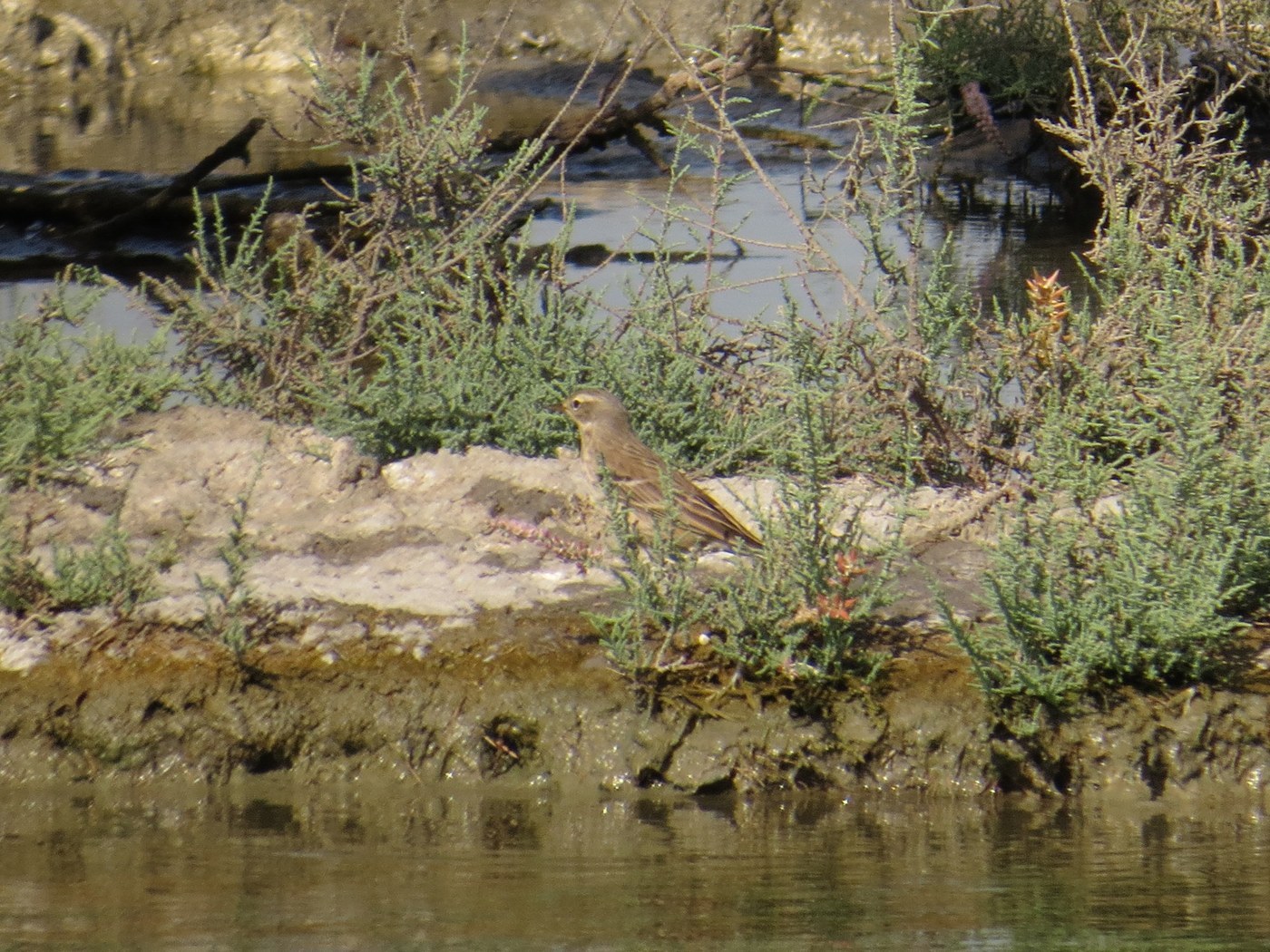
Key Field Marks
- Size and shape: A slim, long-tailed pipit around 16-17 cm, with an upright stance and constant tail-wagging typical of pipits.
- Bill and legs: Thin, dark bill; legs dark to pinkish-brown depending on season.
- Breeding plumage (spring/summer): Grayish head with a clean white supercilium, pale pinkish-buff, largely unstreaked underparts, and grayish-brown, lightly streaked upperparts.
- Nonbreeding plumage (autumn/winter): Browner overall with clearer dark streaking on a whitish breast, closer in appearance to other pipits.
- Tail: Shows white outer tail feathers in flight, a useful mark against similar species.
Separating It From Similar Species
- Rock Pipit: Darker and drabber overall, with olive-gray (not white) outer tail feathers, dark blackish legs, and sootier, more diffusely streaked underparts. Rock Pipit sticks close to rocky coastlines; Water Pipit favors mountains and freshwater wetlands.
- Meadow Pipit: Smaller, shorter-billed, with a weaker supercilium and buffier (not white) outer tail feathers, and a thinner, higher call. Meadow Pipit is heavily streaked below year-round, unlike breeding Water Pipit.
- Tree Pipit: Shorter-tailed with a stubbier bill, streaked flanks, and a preference for open woodland edge rather than open water margins.
Habitat, Range & Season
Breeds in alpine and subalpine meadows and rocky slopes across the mountains of central and southern Europe and into Asia. In winter, birds descend to lowlands, favoring wet meadows, riverbanks, flooded fields, sewage farms, and reservoir margins, often walking briskly along muddy edges.
Voice
Call is a thin, sharp "phist" or "pseep," often given in flight. The song, delivered in a rising-then-parachuting display flight, is a trilling, accelerating series of notes ending in a slower phrase.
Frequently asked questions
How do I tell Water Pipit from Rock Pipit?
Water Pipit is paler and grayer with clean white outer tail feathers and pinkish-brown legs, while Rock Pipit is darker, sootier, and has dark legs and dull olive outer tail feathers. Habitat also helps — Rock Pipit sticks to rocky coasts.
What does a breeding Water Pipit look like compared to winter plumage?
In breeding plumage it has a grayish head and largely unstreaked pinkish-buff underparts, while in winter it looks browner with obvious dark streaking on the breast, more like other pipits.
Where can I find Water Pipits in summer?
Look in alpine and subalpine meadows and rocky mountain slopes across Europe and parts of Asia during the breeding season.
What is the Water Pipit's call like?
A thin, sharp single-note 'phist' or 'pseep,' typically given as the bird flushes or flies overhead.