
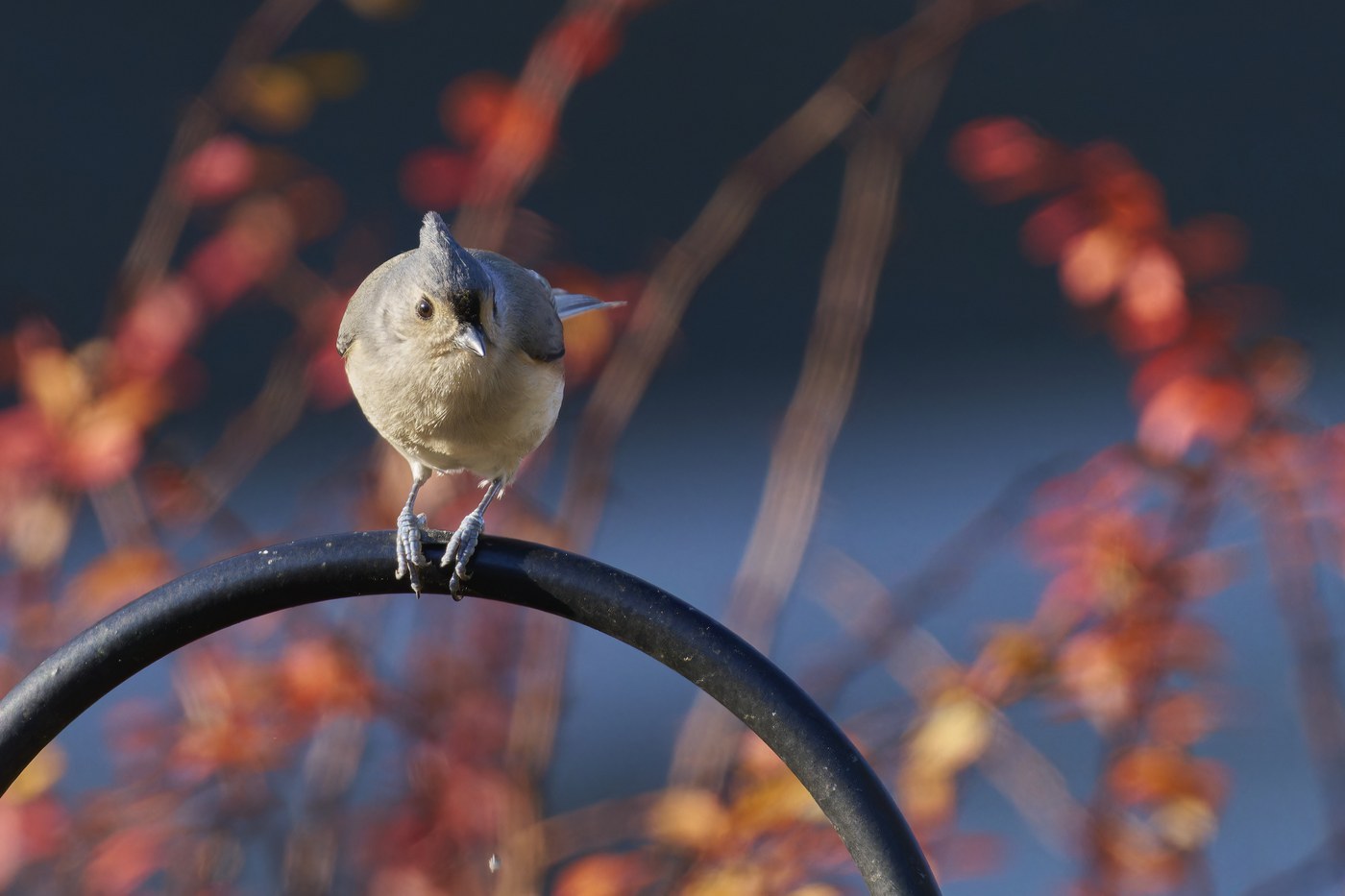
Tufted Titmouse
Baeolophus bicolor
A gray, crested songbird with a black forehead patch, white underparts, and rusty flanks, common at eastern U.S. feeders.
- Size
- 13-17 cm (5-6.5 in) long, 20-26 cm (8-10 in) wingspan
- Habitat
- deciduous and mixed forests, woodland edges, parks, and gardens
- Type
- songbird
Spotted a bird like this?
Identify any bird from a photo, free.
Overview
The Tufted Titmouse is a small, active songbird found throughout the eastern United States, easily recognized by its prominent gray crest, large dark eyes, and soft, plush-looking plumage. It is pale gray above and whitish below, with a small black patch on the forehead just above the bill and a wash of rusty-orange color along the flanks.
A close relative of chickadees, the Tufted Titmouse is a common and vocal bird at backyard feeders, known for its bold, curious personality and habit of carrying away single sunflower seeds to cache or hammer open.
How to identify it
Key Field Marks
- Prominent gray crest, often raised
- Small black patch on the forehead
- Pale gray upperparts, whitish underparts with rusty-orange flanks
- Large black eyes standing out against a plain gray face
Similar Species
- Black-crested Titmouse (south Texas): has a black crest instead of gray, otherwise very similar; ranges barely overlap and interbreeding occurs in a narrow zone in Texas.
- Carolina/Black-capped Chickadee: smaller, with a black cap and bib rather than a crest, and lacks the titmouse's rusty flanks.
- No other common eastern songbird shares the titmouse's combination of crest and plain gray plumage.
Habitat & range
Habitat
Tufted Titmice favor deciduous and mixed forests with mature trees, as well as woodland edges, parks, and residential yards with trees, especially where nesting cavities are available.
Range
They are resident throughout the eastern United States, from the Great Plains east to the Atlantic coast, and have expanded their range northward over recent decades, likely aided by feeders and milder winters.
Migration
Tufted Titmice are non-migratory and remain on or near their territory year-round, forming small family groups or joining mixed-species foraging flocks in winter.
Behavior & voice
Behavior
Titmice are active and vocal, often the first to investigate new food sources or scold potential predators, and they frequently join chickadees, nuthatches, and woodpeckers in mixed winter foraging flocks.
Voice
The song is a clear, whistled "peter-peter-peter," repeated several times; calls include a scratchy, chickadee-like scolding chatter.
Feeding
They eat insects, seeds, and nuts, often taking a single sunflower seed from a feeder to a perch, where they hold it with their feet and hammer it open with their bill; they also cache food for later.
Nesting & Breeding
Tufted Titmice nest in tree cavities, using natural holes, old woodpecker cavities, or nest boxes, and often line the nest with soft materials, including fur sometimes plucked directly from living animals. They typically lay 5-6 eggs in a single brood.
Frequently asked questions
What does the Tufted Titmouse's song sound like?
It is a clear, whistled, repeated "peter-peter-peter" song, one of the more frequently heard sounds in eastern deciduous woodlands and yards.
Do Tufted Titmice migrate?
No, they are non-migratory residents that stay in their home range throughout the year.
Why do titmice take one seed at a time from feeders?
They typically grab a single sunflower seed and fly to a nearby perch, where they hold it with their feet and hammer it open with repeated bill strikes, rather than eating multiple seeds at the feeder.
What is unusual about Tufted Titmouse nest-building?
They are known to pluck fur directly from living mammals, including dogs, squirrels, and even people, to line their nest cavity.
Where do Tufted Titmice live?
They are year-round residents of deciduous and mixed forests, woodland edges, parks, and wooded neighborhoods throughout the eastern United States.
Tufted Titmouse guides
In-depth guides for identifying, finding, and understanding Tufted Titmouse.
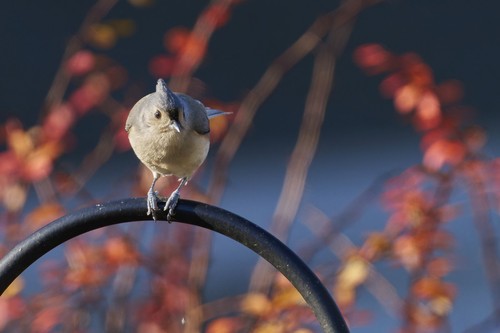
Tufted Titmouse identified by the community
Real birds identified with Bird Identifier.
Other birds you may enjoy

Black Redstart
13-14.5 cm (5.1-5.7 in) long, 23-26 cm wingspan

Black-throated Sparrow
12-14 cm (4.7-5.5 in) long, about 19-20 cm (7.5-8 in) wingspan

Greater Bird-of-paradise
Body about 43 cm; males with additional flank plumes up to 50 cm and long tail wires

Blue Tit
11-12 cm (4.3-4.7 in) long, 17-20 cm wingspan

Red-billed Quelea
11.5–13 cm long, wingspan about 20–22 cm
White-plumed Antbird
13-14 cm (5-5.5 in) long

Pyrrhuloxia
19-22 cm (7.5-8.7 in) long, 30 cm wingspan

Blue-gray Tanager
16-18 cm (6-7 in) long

Blackburnian Warbler
11-13 cm (4.3-5.1 in) long, 20-22 cm wingspan

Bluethroat
13-14 cm (5.1-5.5 in) long, 20-22 cm wingspan

Eurasian Nuthatch
12-14.5 cm (4.7-5.7 in) long, 22.5-27 cm wingspan

Wood Thrush
19-21 cm (7.5-8.3 in) long, about 33 cm (13 in) wingspan