
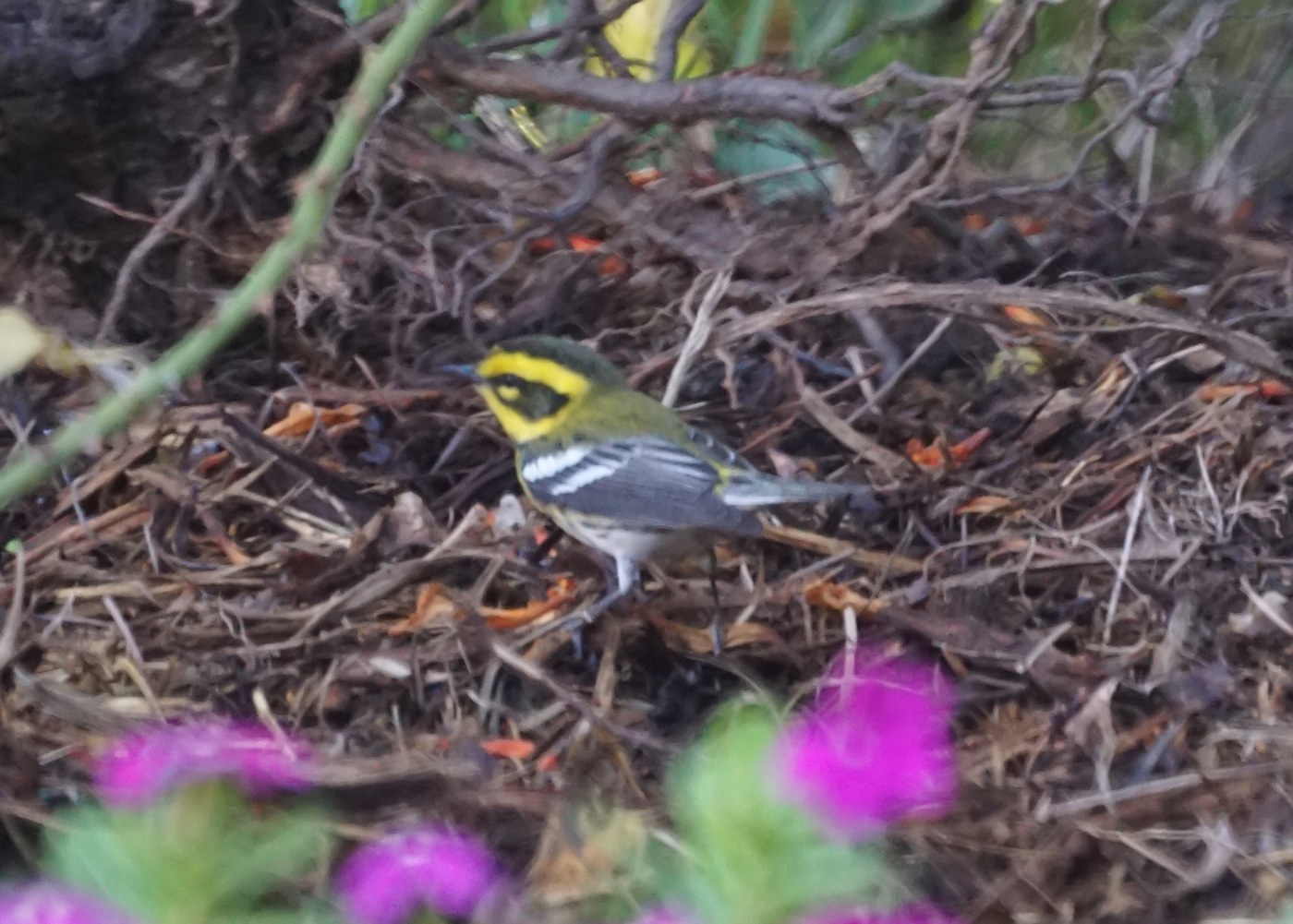
Townsend's Warbler
Setophaga townsendi
A boldly patterned warbler of Pacific Northwest conifer forests, with a black-and-yellow face pattern, dark cheek patch, and streaked yellow breast.
- Size
- 12-13 cm (4.7-5.1 in) long, 19-22 cm wingspan
- Habitat
- coniferous forest, especially old-growth stands
- Type
- songbird
Spotted a bird like this?
Identify any bird from a photo, free.
Overview
Townsend's Warbler is a strikingly marked bird of western coniferous forests, combining an olive-green back with a bold black-and-yellow facial pattern. Adult males have a black crown and cheek patch bordered by bright yellow, a black throat, and yellow underparts streaked with black on the sides, while females show a more muted version of the same pattern with less black on the face and throat.
Two white wingbars stand out against the otherwise dark wings, and the overall effect is one of the most dramatically patterned faces among North American warblers.
How to identify it
Key field marks
- Black crown and cheek patch bordered by yellow
- Black throat (more extensive in males, reduced in females)
- Yellow breast with black streaking on the sides
- Olive-green back, white belly, two white wingbars
Similar species
Hermit Warbler is closely related and hybridizes with Townsend's where ranges overlap; Hermit Warbler has a plain yellow face without the black cheek patch and a gray (not olive-streaked) back. Black-throated Green Warbler lacks the black cheek patch and has a plainer yellow face with an olive crown.
Habitat & range
Townsend's Warblers breed in coniferous forest, often favoring tall, old-growth stands, across the Pacific Northwest, western Canada, and into Alaska. They forage and nest primarily in the upper canopy of large conifers.
They winter along the Pacific coast from the northwestern United States south through Mexico and Central America, and some individuals overwinter as far north as coastal Washington and Oregon, where in winter they are known to feed on aphid honeydew and other sugary secretions on conifer foliage.
Behavior & voice
Behavior and voice
Townsend's Warblers forage actively in the outer branches and canopy of conifers, gleaning insects, and in winter they have been documented supplementing their diet with aphid honeydew, an unusual food source among warblers that helps some individuals survive in relatively cold coastal climates.
The song is a buzzy series of notes, variable but often rendered as "zee-zee-zee-zee-zoo-zee," with a wheezy quality typical of the Setophaga "green warbler" complex.
Nesting
The nest is built high in a conifer, often well out on a horizontal branch, made of twigs, moss, and lichen. Clutches typically contain 3-5 eggs.
Frequently asked questions
How do you tell Townsend's Warbler from Hermit Warbler?
Townsend's Warbler has a black cheek patch bordered by yellow and an olive, somewhat streaked back, while Hermit Warbler has a plain, unmarked yellow face and a plainer gray back. The two species hybridize where their ranges overlap in the Pacific Northwest.
What does a Townsend's Warbler eat in winter?
In addition to insects, wintering Townsend's Warblers are known to feed on aphid honeydew and other sugary secretions found on conifer foliage, an unusual food source that helps some birds overwinter in cooler coastal climates.
Where does Townsend's Warbler breed?
In coniferous forest, often old-growth stands, across the Pacific Northwest, western Canada, and Alaska.
Does Townsend's Warbler hybridize with other warblers?
Yes, it hybridizes with the closely related Hermit Warbler where their breeding ranges overlap in Washington and Oregon.
What does a Townsend's Warbler's song sound like?
A variable, buzzy series often rendered as "zee-zee-zee-zee-zoo-zee," typical of the wheezy songs in this group of Setophaga warblers.
Townsend's Warbler guides
In-depth guides for identifying, finding, and understanding Townsend's Warbler.
Other birds you may enjoy
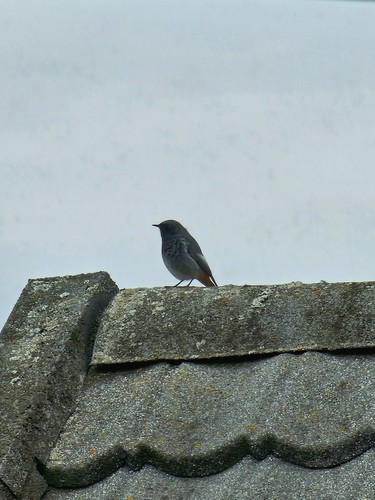
Black Redstart
13-14.5 cm (5.1-5.7 in) long, 23-26 cm wingspan
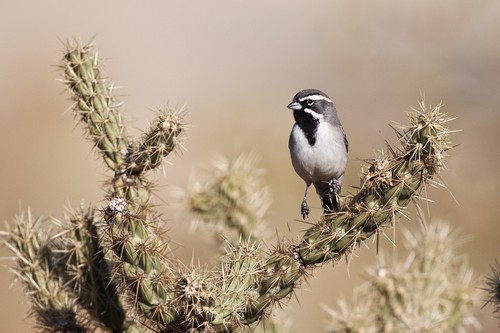
Black-throated Sparrow
12-14 cm (4.7-5.5 in) long, about 19-20 cm (7.5-8 in) wingspan
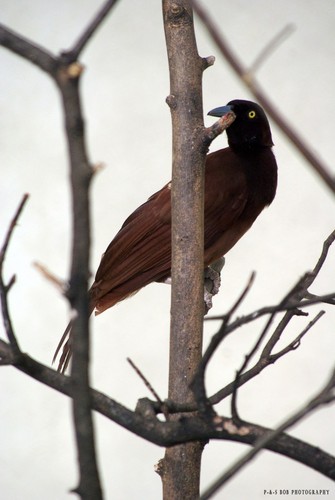
Greater Bird-of-paradise
Body about 43 cm; males with additional flank plumes up to 50 cm and long tail wires
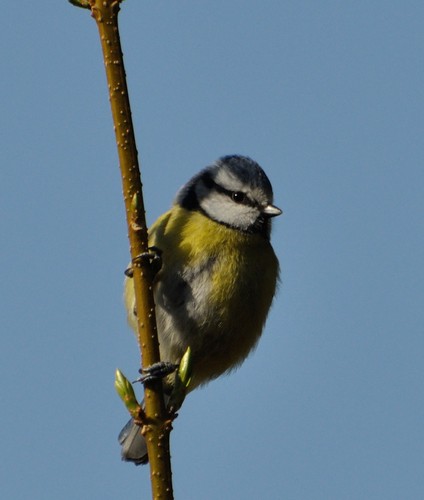
Blue Tit
11-12 cm (4.3-4.7 in) long, 17-20 cm wingspan
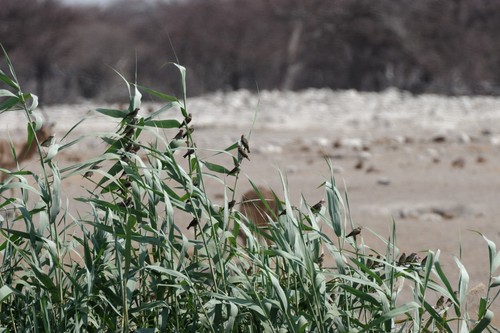
Red-billed Quelea
11.5–13 cm long, wingspan about 20–22 cm
White-plumed Antbird
13-14 cm (5-5.5 in) long
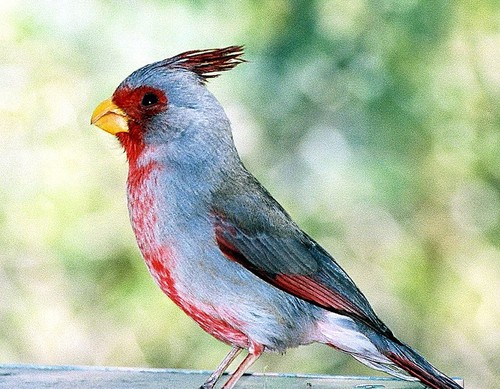
Pyrrhuloxia
19-22 cm (7.5-8.7 in) long, 30 cm wingspan
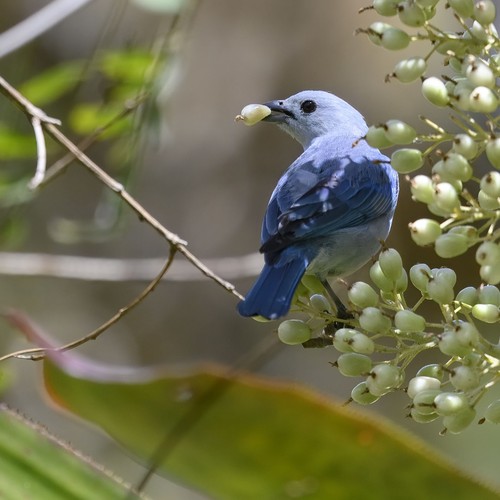
Blue-gray Tanager
16-18 cm (6-7 in) long
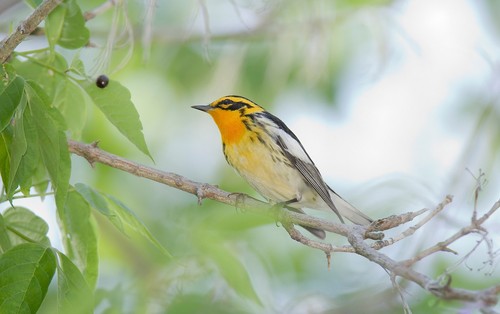
Blackburnian Warbler
11-13 cm (4.3-5.1 in) long, 20-22 cm wingspan
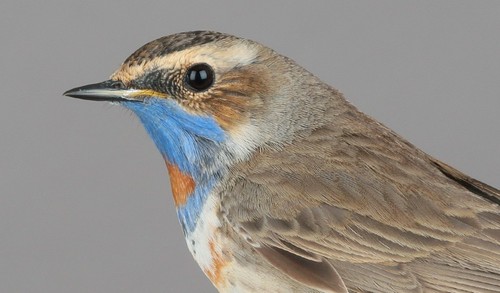
Bluethroat
13-14 cm (5.1-5.5 in) long, 20-22 cm wingspan
Eurasian Nuthatch
12-14.5 cm (4.7-5.7 in) long, 22.5-27 cm wingspan
Wood Thrush
19-21 cm (7.5-8.3 in) long, about 33 cm (13 in) wingspan