
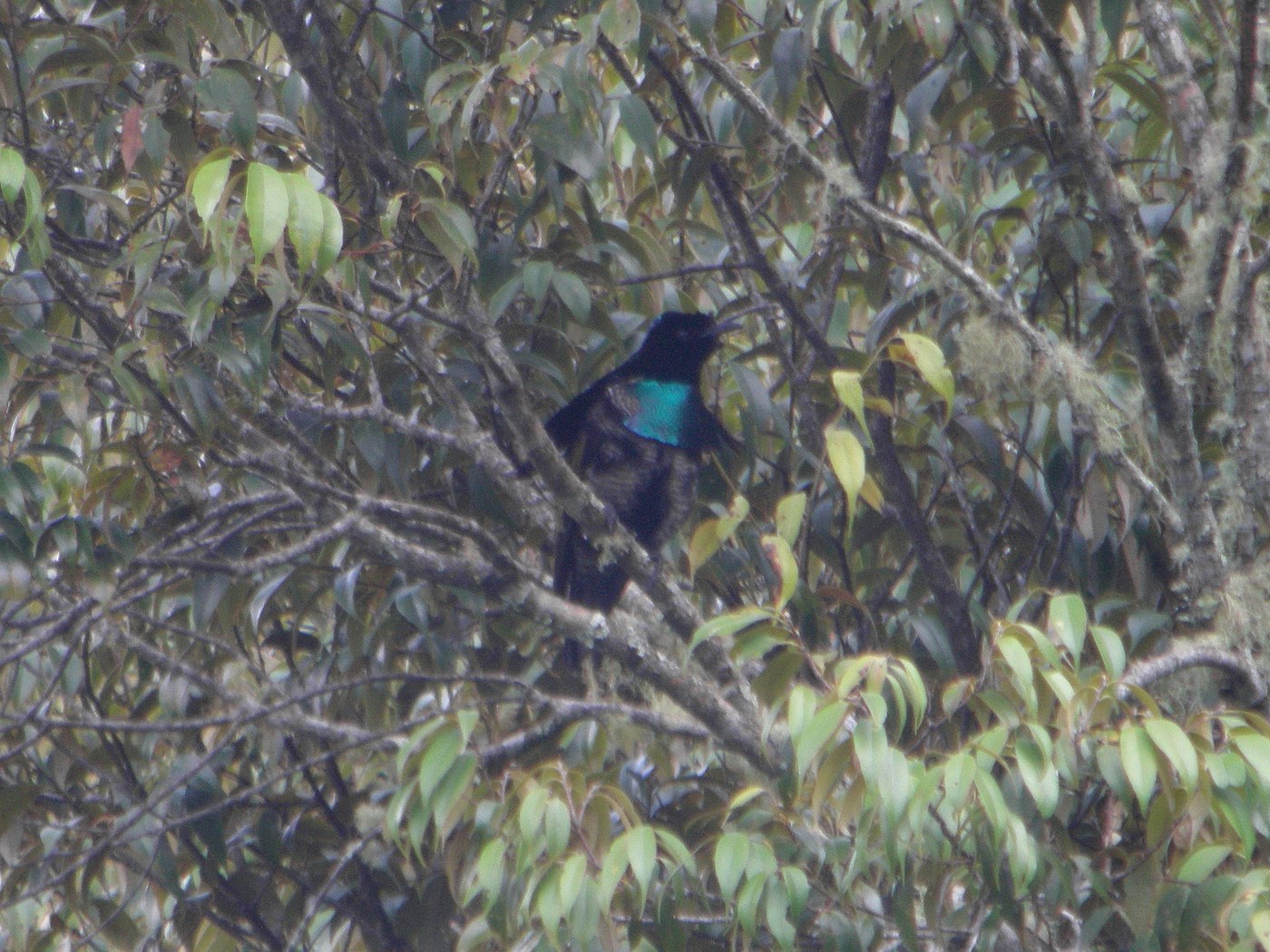
Superb Bird-of-paradise
Lophorina superba
A montane bird-of-paradise whose male transforms into an oval black cape with a glowing blue breast shield during his famous dancing display.
- Size
- Body about 26 cm (10 in)
- Habitat
- Mid-montane rainforest
- Type
- songbird
Spotted a bird like this?
Identify any bird from a photo, free.
Overview
The Superb Bird-of-paradise is a mid-sized species best known for one of the most extraordinary courtship displays in the bird world. At rest, the male appears mostly black with an iridescent blue-green crown and a modest breast shield.
During display, he erects an oversized black occipital cape over his head and back and expands an iridescent blue breast shield outward, together forming an almost perfectly oval, seemingly two-dimensional shape often described as resembling a smiling alien face. Females and immatures are cryptic, with dark brown barred plumage typical of many bird-of-paradise females.
How to identify it
Key field marks
- Male at rest: velvety black body with iridescent blue-green crown patch
- Male displaying: raised black cape forms an oval silhouette with a bright blue crescent breast shield
- Female: dark brown body with fine barring below, no ornamental feathers
Similar species
- Recent taxonomy split the former "Superb Bird-of-paradise" into two species: Lophorina superba (this species) and the Vogelkop Superb Bird-of-paradise (Lophorina niedda) from the Bird's Head Peninsula, distinguished mainly by display shape and range
- Female/immature plumage can resemble other Lophorina and Astrapia females, best separated by range and habitat elevation
Habitat & range
Habitat
Mid-montane rainforest, typically between about 1,300 and 2,850 m elevation.
Range
Widespread across the central mountain ranges of New Guinea, excluding the Bird's Head Peninsula (home to the related Vogelkop Superb Bird-of-paradise).
Migration
Non-migratory resident of montane forest, generally remaining within an elevational band year-round.
Behavior & voice
Behavior
Males display solo on cleared display logs or the forest floor, snapping open the black cape and blue breast shield into an oval shape while hopping and vibrating in front of an observing female.
Voice
Harsh, buzzy calls and mechanical-sounding clicks, along with softer notes during the display sequence.
Feeding
Forages on fruit in the forest canopy and understory, supplemented with insects and other small invertebrates.
Nesting and breeding
Polygynous; females alone build the nest, incubate, and raise chicks without help from the male.
Frequently asked questions
Why is the Superb Bird-of-paradise's display so famous?
The male raises a black cape and blue breast shield into an oval, face-like shape often nicknamed the 'smiley face' display.
Where does the Superb Bird-of-paradise live?
In mid-montane rainforests across the central mountains of New Guinea.
Is the Superb Bird-of-paradise the same as the Vogelkop Superb Bird-of-paradise?
No, they were split into separate species; the Vogelkop form occurs only on New Guinea's Bird's Head Peninsula and has a different display shape.
What do Superb Birds-of-paradise eat?
Mainly fruit, along with insects and other small invertebrates.
Superb Bird-of-paradise guides
In-depth guides for identifying, finding, and understanding Superb Bird-of-paradise.
Other birds you may enjoy
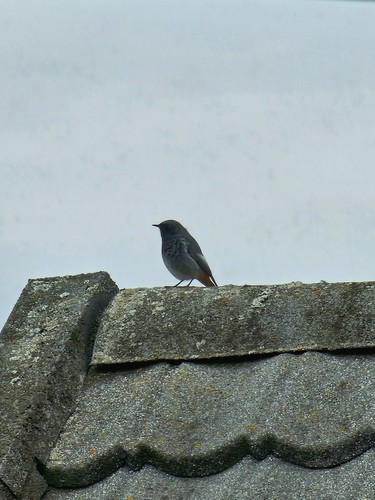
Black Redstart
13-14.5 cm (5.1-5.7 in) long, 23-26 cm wingspan
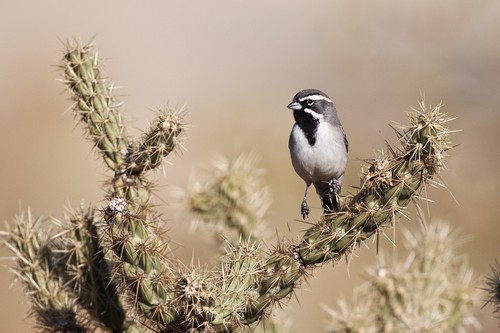
Black-throated Sparrow
12-14 cm (4.7-5.5 in) long, about 19-20 cm (7.5-8 in) wingspan
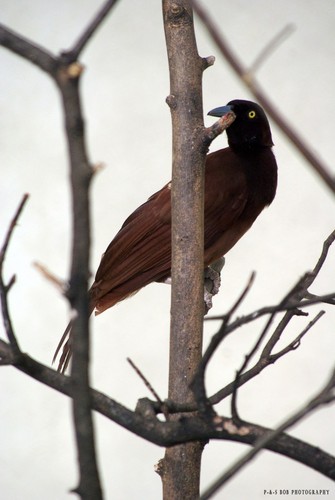
Greater Bird-of-paradise
Body about 43 cm; males with additional flank plumes up to 50 cm and long tail wires
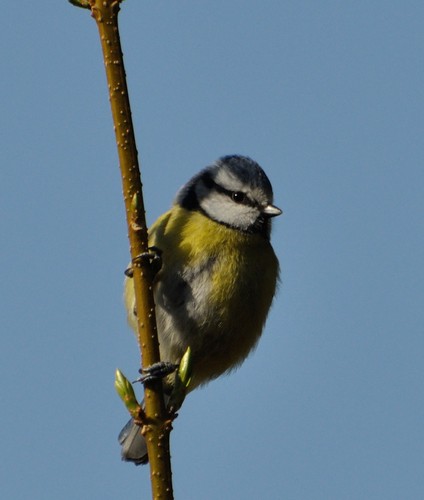
Blue Tit
11-12 cm (4.3-4.7 in) long, 17-20 cm wingspan
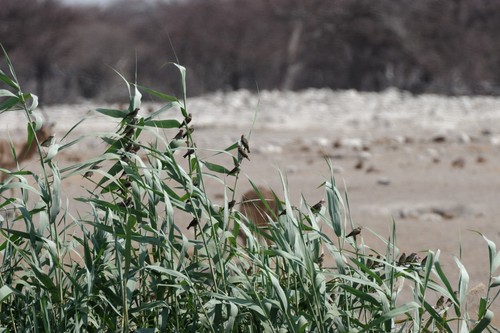
Red-billed Quelea
11.5–13 cm long, wingspan about 20–22 cm
White-plumed Antbird
13-14 cm (5-5.5 in) long
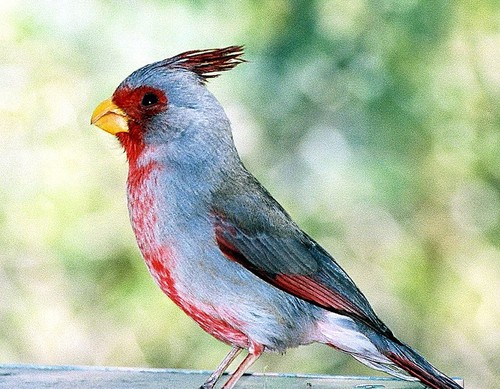
Pyrrhuloxia
19-22 cm (7.5-8.7 in) long, 30 cm wingspan
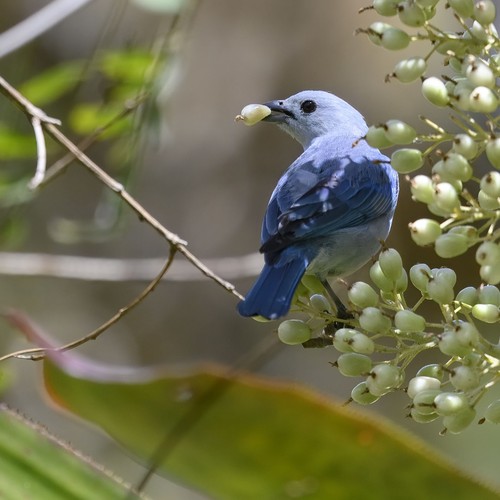
Blue-gray Tanager
16-18 cm (6-7 in) long
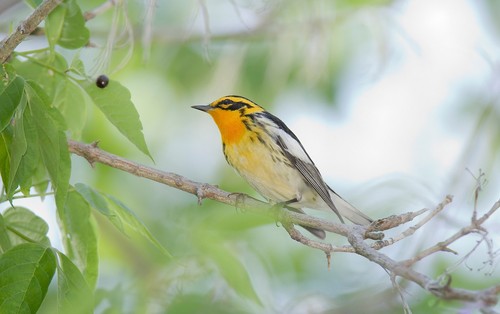
Blackburnian Warbler
11-13 cm (4.3-5.1 in) long, 20-22 cm wingspan
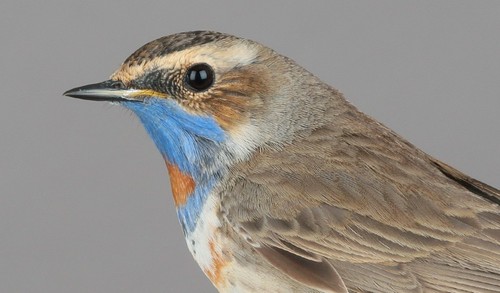
Bluethroat
13-14 cm (5.1-5.5 in) long, 20-22 cm wingspan
Eurasian Nuthatch
12-14.5 cm (4.7-5.7 in) long, 22.5-27 cm wingspan
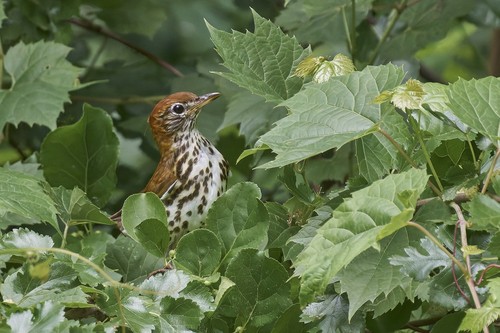
Wood Thrush
19-21 cm (7.5-8.3 in) long, about 33 cm (13 in) wingspan