
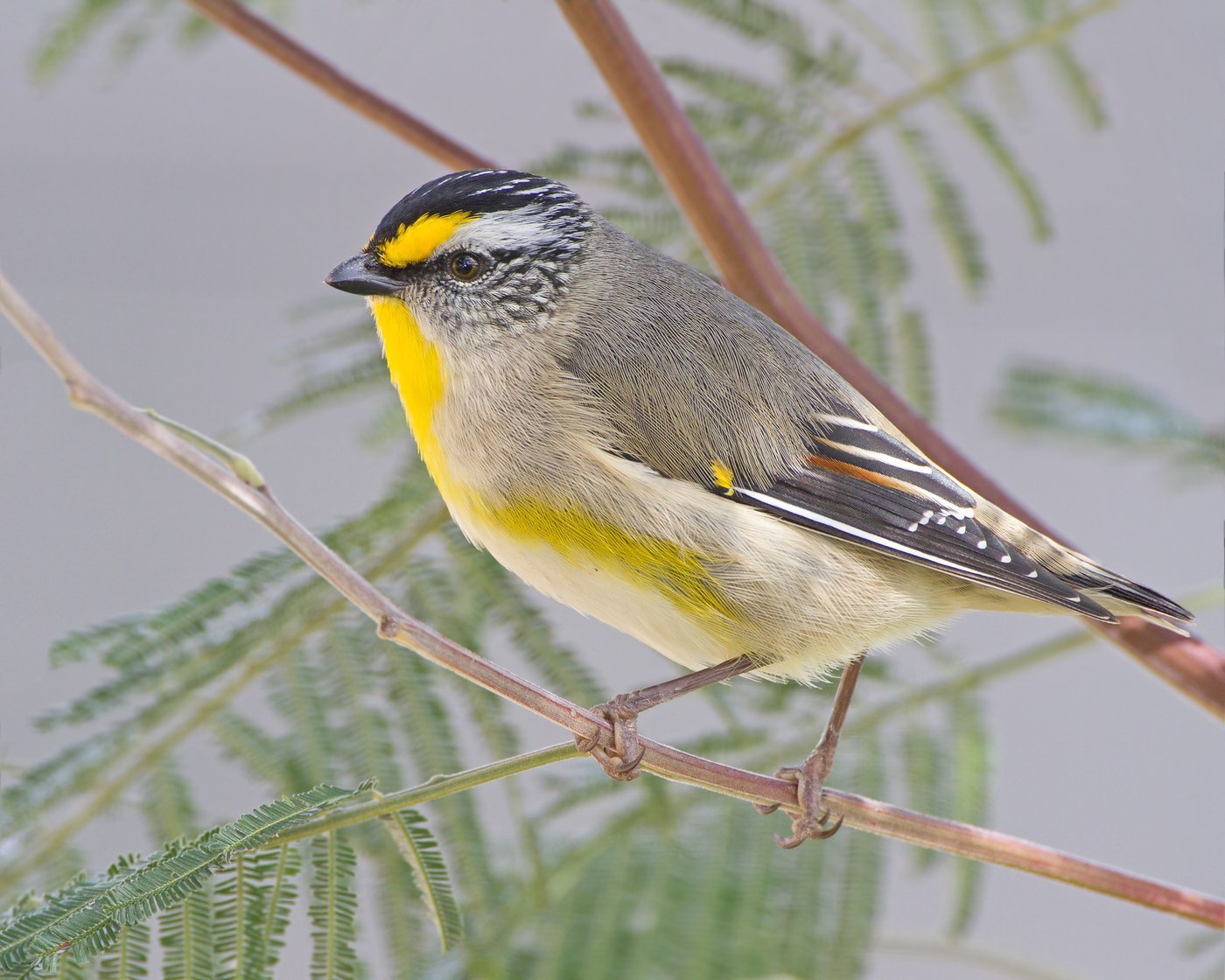
Striated Pardalote
Pardalotus striatus
Australia's most widespread pardalote, a tiny streak-headed canopy bird with a distinctive repeated 'pick-it-up' call.
- Size
- 9-11.5 cm (3.5-4.5 in) long
- Habitat
- eucalypt forests and woodlands across Australia
- Type
- songbird
Spotted a bird like this?
Identify any bird from a photo, free.
Overview
The Striated Pardalote is a tiny, compact songbird and the most widely distributed of Australia's pardalotes, showing considerable geographic variation in plumage across its range. It typically has a streaked blackish crown, a bright yellow spot in front of the eye, olive-grey upperparts, a yellow-tinged throat and breast, and varying amounts of chestnut or red on the wing depending on subspecies and region.
Like other pardalotes, it spends much of its time high in the eucalypt canopy feeding on tiny sugary lerps produced by psyllid insects, making it, despite being common and widespread, more frequently heard than seen by most observers looking up into tall gum trees.
Its short, clipped, repetitive call, often likened to 'pick-it-up' or 'wit-e-choo', is a familiar and ever-present sound of eucalypt forests and woodlands across the continent, and some populations undertake substantial seasonal migrations, unusual among Australia's small songbirds.
How to identify it
Key field marks
- Tiny size, streaked blackish crown (not spotted)
- Bright yellow spot in front of the eye
- Olive-grey upperparts with yellow-washed throat and breast
- Chestnut or red markings on the wing, varying by subspecies
- Short, sharply repeated 'pick-it-up' type call
Similar species
The Spotted Pardalote has a boldly white-spotted (not streaked) black crown and a red rump, and gives a different, more rhythmic three-note call. The Striated Pardalote's streaked crown, yellow eye spot, and clipped call are the best distinguishing features.
Habitat & range
Habitat
Striated Pardalotes occupy a wide range of eucalypt-dominated habitats, including forests, woodlands, and mallee, feeding mainly in the outer canopy but nesting in tree hollows, earthen banks, or occasionally artificial cavities.
Range
The species is found across almost all of mainland Australia and Tasmania, making it the most widely distributed of the Australian pardalotes.
Migration
Some populations, particularly the Tasmanian and southeastern mainland forms, are strongly migratory, moving north to spend the winter in warmer parts of the mainland before returning south to breed, while other populations are more sedentary.
Behavior & voice
Behavior
Striated Pardalotes forage actively and often in small flocks high in the eucalypt canopy, gleaning food from leaves, and can gather in larger numbers during migration.
Voice
Its call is a short, clipped, repeated phrase, often rendered as 'pick-it-up' or 'wit-e-choo', delivered frequently from the canopy and one of the most familiar background sounds of Australian eucalypt woodland.
Feeding
It feeds mainly on lerps and small insects gleaned from eucalypt foliage, occasionally taking prey in brief aerial sallies.
Nesting and breeding
Nests are built in tree hollows, or in tunnels excavated in earthen banks, depending on subspecies and location; both parents share incubation and feeding of the young, and pairs may raise more than one brood in a season.
Frequently asked questions
How can I identify a Striated Pardalote?
Look for its streaked blackish crown, bright yellow spot in front of the eye, and listen for its short, clipped 'pick-it-up' call.
Do Striated Pardalotes migrate?
Some populations, especially from Tasmania and southeastern Australia, are strongly migratory, moving north for winter, while others are more sedentary.
Where does the Striated Pardalote nest?
Depending on the population, it nests in tree hollows or in tunnels excavated into earthen banks.
What does a Striated Pardalote eat?
It feeds mainly on lerps and small insects gleaned from eucalypt leaves.
Is the Striated Pardalote common?
Yes, it is the most widespread pardalote species in Australia, found across almost the entire mainland and Tasmania.
Striated Pardalote guides
In-depth guides for identifying, finding, and understanding Striated Pardalote.
Other birds you may enjoy
Black Redstart
13-14.5 cm (5.1-5.7 in) long, 23-26 cm wingspan
Black-throated Sparrow
12-14 cm (4.7-5.5 in) long, about 19-20 cm (7.5-8 in) wingspan
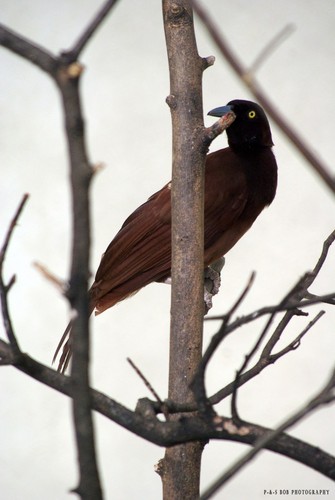
Greater Bird-of-paradise
Body about 43 cm; males with additional flank plumes up to 50 cm and long tail wires
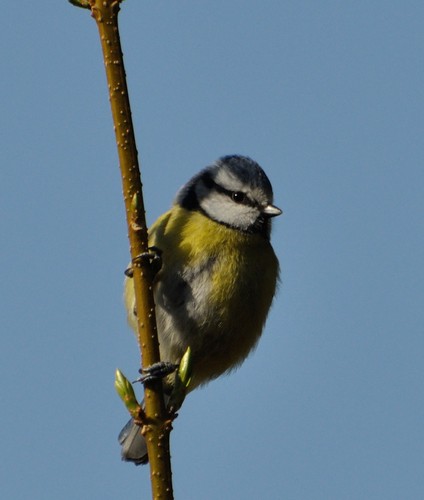
Blue Tit
11-12 cm (4.3-4.7 in) long, 17-20 cm wingspan
Red-billed Quelea
11.5–13 cm long, wingspan about 20–22 cm
White-plumed Antbird
13-14 cm (5-5.5 in) long
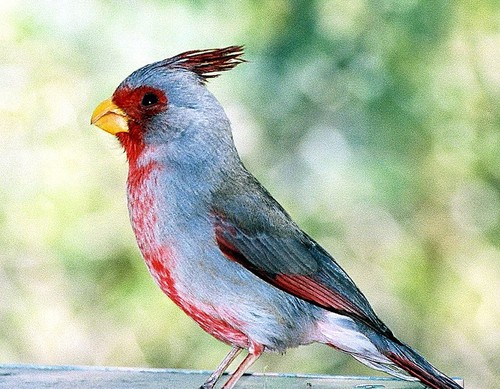
Pyrrhuloxia
19-22 cm (7.5-8.7 in) long, 30 cm wingspan
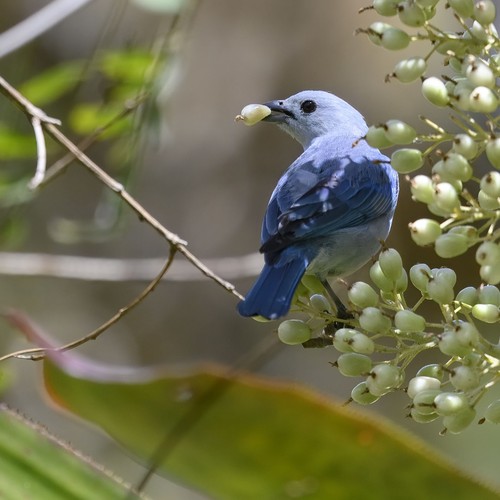
Blue-gray Tanager
16-18 cm (6-7 in) long
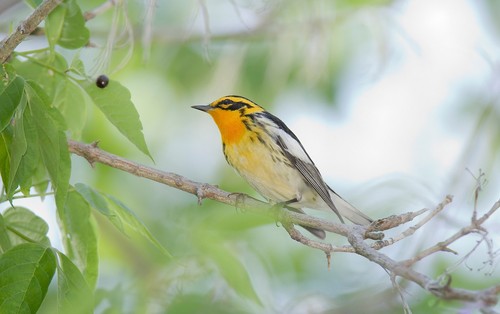
Blackburnian Warbler
11-13 cm (4.3-5.1 in) long, 20-22 cm wingspan
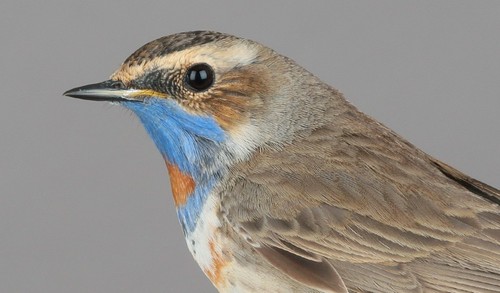
Bluethroat
13-14 cm (5.1-5.5 in) long, 20-22 cm wingspan
Eurasian Nuthatch
12-14.5 cm (4.7-5.7 in) long, 22.5-27 cm wingspan
Wood Thrush
19-21 cm (7.5-8.3 in) long, about 33 cm (13 in) wingspan