
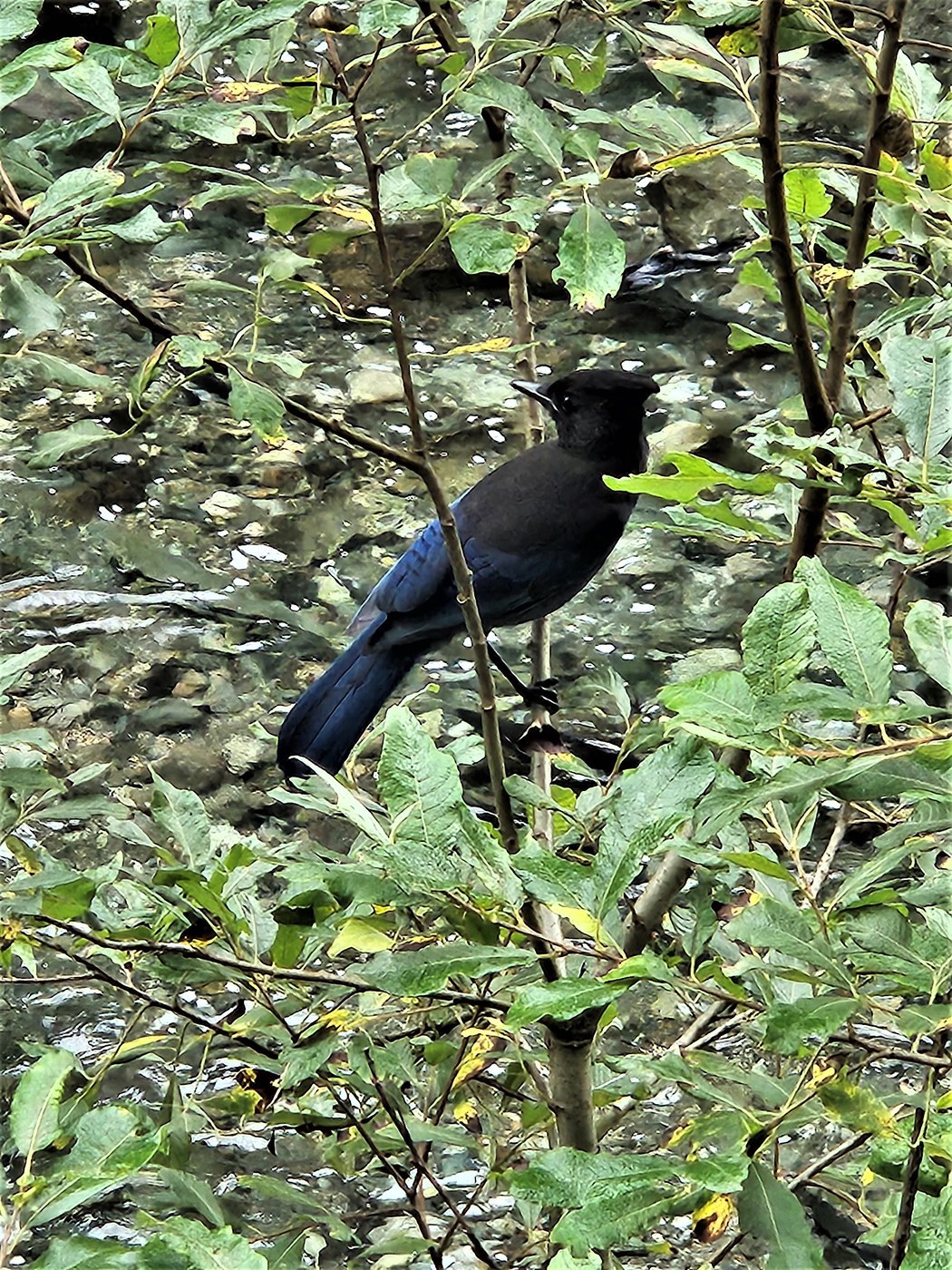
Steller's Jay
Cyanocitta stelleri
A bold, crested jay of western conifer forests with a striking black head and deep blue body.
- Size
- 30-34 cm (12-13.4 in) long, 44-48 cm wingspan
- Habitat
- coniferous and mixed forests of the western mountains and Pacific coast
- Type
- songbird
Spotted a bird like this?
Identify any bird from a photo, free.
Overview
Steller's Jay is a large, crested corvid of western North America, easily recognized by its sooty black head, back, and crest contrasting with vivid deep blue wings, tail, and belly. Some interior populations show thin white or blue streaks on the forehead and above the eye.
As the western counterpart to the Blue Jay, Steller's Jay is common and conspicuous around campgrounds, picnic areas, and bird feeders in mountain and coastal forests, known for its bold, inquisitive, and sometimes aggressive personality.
How to identify it
Key Field Marks
- Prominent black crest, unique among western jays
- Sooty black to dark brown head, back, and chest
- Bright deep blue wings, tail, and belly
- Fine white or blue streaks on the forehead in some populations
Similar Species
- Blue Jay has white underparts and face with a black necklace, lacking the solid black head, and ranges are mostly separate with limited overlap in the Rockies.
- California Scrub-Jay and Woodhouse's Scrub-Jay lack a crest entirely and show white underparts with a blue necklace, quite different from Steller's Jay's dark, crested look.
Habitat & range
Habitat
Steller's Jays inhabit coniferous and mixed conifer-deciduous forests, favoring pine, fir, and spruce stands, and are common in mountain campgrounds, parks, and forested suburban areas.
Range
Found from southern Alaska south through the Pacific coast, Rocky Mountains, and interior mountain ranges of the western United States into Mexico and Central America.
Migration
Most populations are resident, though some birds at high elevations move to lower elevations in winter.
Behavior & voice
Behavior
Steller's Jays are bold, curious, and often aggressive at feeders and campsites, readily approaching humans for food. They are also accomplished vocal mimics, imitating the calls of hawks and other birds, and cache food such as acorns and pine seeds for later retrieval.
Voice
Calls include a harsh, scratchy shaak-shaak-shaak and a wide variety of other notes, including convincing imitations of Red-tailed Hawk calls.
Feeding
Diet includes pine seeds, acorns and other nuts, insects, berries, and occasionally eggs or nestlings of other birds; they readily visit feeders for peanuts and suet.
Nesting
Pairs build a bulky twig nest, often cemented with mud, in a conifer; the female incubates 2-6 blue-green, spotted eggs while the male provides food.
Frequently asked questions
How is Steller's Jay different from a Blue Jay?
Steller's Jay has a solid black head and crest with a deep blue body, while the Blue Jay has a white face and underparts with a black necklace; their ranges mostly do not overlap.
Where does Steller's Jay live?
It lives in coniferous and mixed forests from Alaska south through the Pacific coast and interior mountains of the western United States into Mexico and Central America.
Can Steller's Jays imitate other birds?
Yes, they are skilled mimics and frequently imitate the calls of Red-tailed Hawks and other birds.
What do Steller's Jays eat?
They eat pine seeds, acorns and nuts, insects, berries, and occasionally eggs or nestlings, and readily visit feeders.
Steller's Jay guides
In-depth guides for identifying, finding, and understanding Steller's Jay.
Other birds you may enjoy
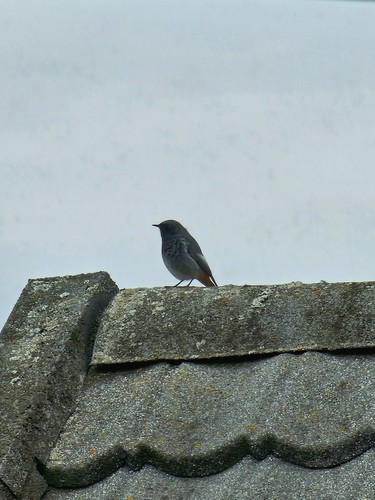
Black Redstart
13-14.5 cm (5.1-5.7 in) long, 23-26 cm wingspan
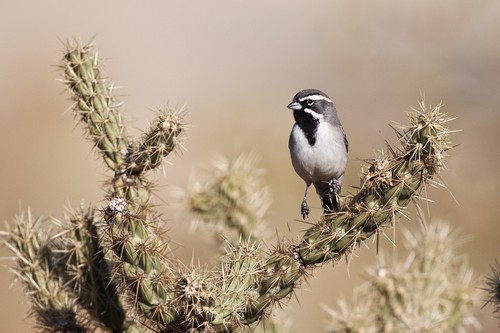
Black-throated Sparrow
12-14 cm (4.7-5.5 in) long, about 19-20 cm (7.5-8 in) wingspan
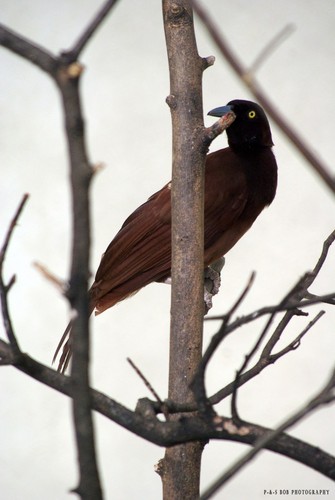
Greater Bird-of-paradise
Body about 43 cm; males with additional flank plumes up to 50 cm and long tail wires
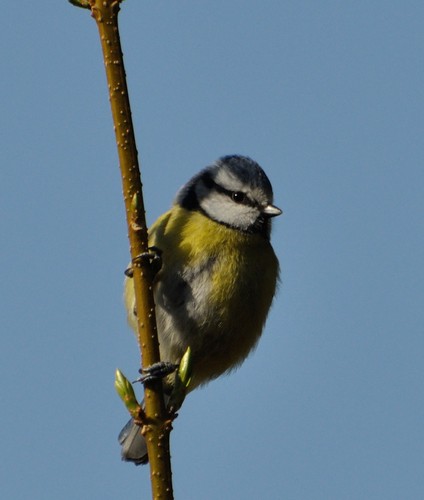
Blue Tit
11-12 cm (4.3-4.7 in) long, 17-20 cm wingspan

Red-billed Quelea
11.5–13 cm long, wingspan about 20–22 cm
White-plumed Antbird
13-14 cm (5-5.5 in) long
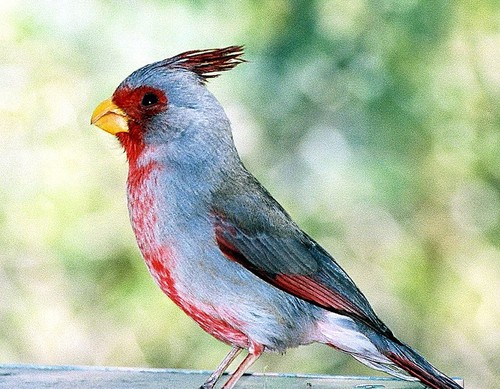
Pyrrhuloxia
19-22 cm (7.5-8.7 in) long, 30 cm wingspan
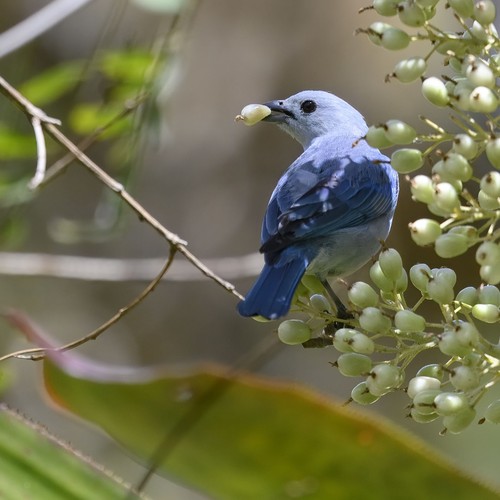
Blue-gray Tanager
16-18 cm (6-7 in) long
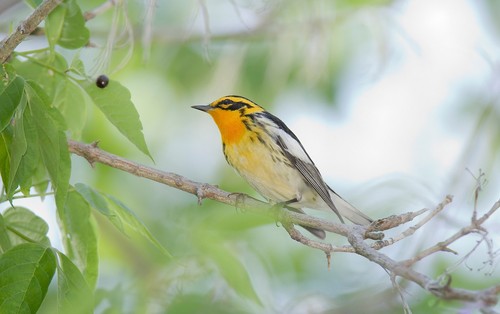
Blackburnian Warbler
11-13 cm (4.3-5.1 in) long, 20-22 cm wingspan
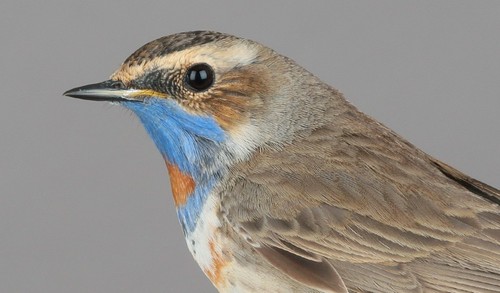
Bluethroat
13-14 cm (5.1-5.5 in) long, 20-22 cm wingspan
Eurasian Nuthatch
12-14.5 cm (4.7-5.7 in) long, 22.5-27 cm wingspan
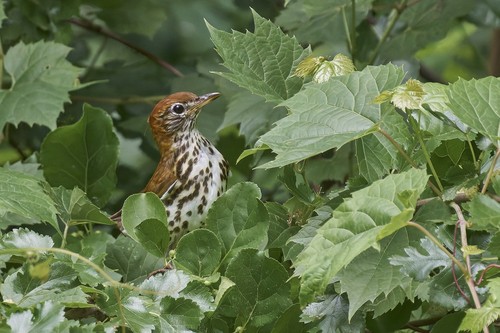
Wood Thrush
19-21 cm (7.5-8.3 in) long, about 33 cm (13 in) wingspan