
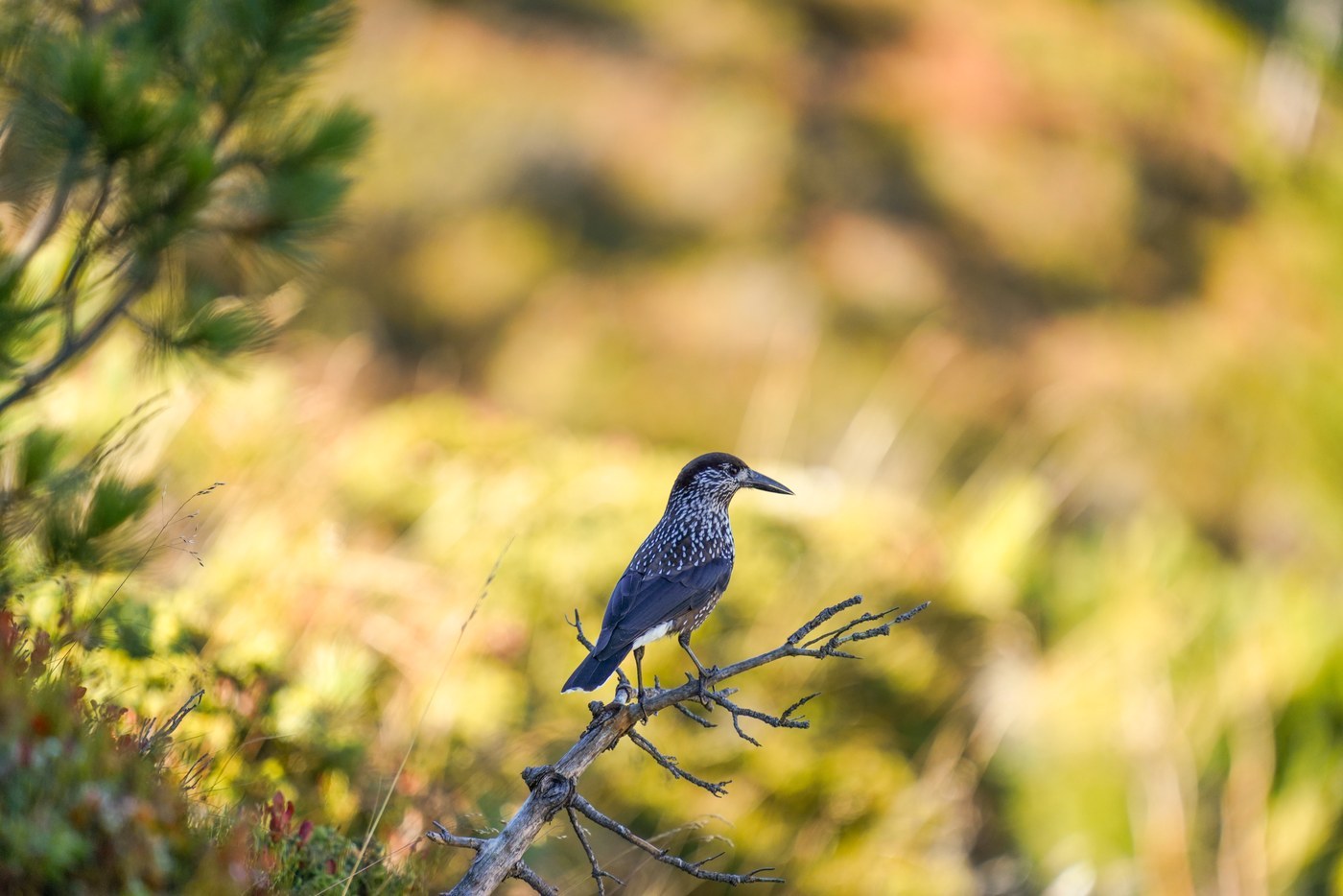
Spotted Nutcracker
Nucifraga caryocatactes
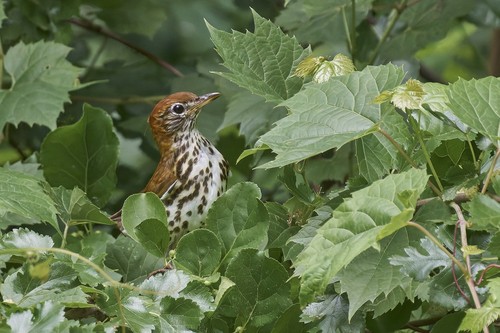
A stocky, chocolate-brown corvid densely spotted with white, specialized for harvesting and caching conifer seeds in mountain forests.
- Size
- 32–35 cm long, wingspan 52–58 cm
- Habitat
- Coniferous and mixed mountain forests across Europe and Asia
- Type
- songbird
Spotted a bird like this?
Identify any bird from a photo, free.
Overview
The Spotted Nutcracker is a distinctive, stocky corvid of coniferous forests, easily recognized by its dark chocolate-brown plumage densely covered in bold white spots and streaks. It has a solid black cap, a long, straight, chisel-like black bill suited to extracting seeds from cones, and white undertail coverts that contrast with a dark tail tipped white.
This species is closely tied to conifer and hazel forests, where it plays an important ecological role by caching thousands of seeds each autumn, many of which are never retrieved and go on to germinate — making the nutcracker a key disperser of trees like Swiss pine and hazel.
How to identify it
Key field marks
- Dark chocolate-brown body densely covered in white spots
- Solid blackish cap
- Long, straight, sturdy black bill
- White undertail coverts and white tail tip, conspicuous in flight
- Stocky build with rounded wings
Similar species
- Jay: differs in having pinkish-brown body, blue wing patches, and no white spotting
- Other corvids: no other corvid in its range shows the combination of dense white spotting on brown plumage
Behavior cues
Nutcrackers are usually found in or near conifer forest, often perched atop a spruce or pine, and their undulating flight with flashes of white in the tail aids identification.
Habitat & range
Habitat
Strongly associated with coniferous and mixed mountain forests, especially those containing spruce, pine (including Swiss/arolla pine), larch, and hazel.
Range
Found across mountainous and boreal regions of Europe (including the Alps and other ranges) eastward across the taiga of Asia to Japan.
Migration
Generally resident, but populations can show irruptive movements in years of poor cone crops, when birds move well outside their normal range in search of food.
Behavior & voice
Behavior
Nutcrackers are famous for their remarkable spatial memory, caching tens of thousands of seeds in scattered locations each autumn and relocating a large proportion of them throughout the winter and following year.
Voice
A harsh, grating, repeated "kraaak" or "schaak" call, often given from a treetop perch.
Feeding
Feeds heavily on conifer seeds extracted from cones using its strong bill, as well as hazelnuts, which it hammers open; also eats insects and other invertebrates.
Nesting and breeding
Builds a well-insulated nest of twigs, lichen, and grass in a conifer, often beginning to breed very early in the year while snow still lies on the ground. Clutches typically number 3–4 eggs.
Frequently asked questions
How do you identify a Spotted Nutcracker?
Look for a stocky brown corvid densely covered in white spots, with a black cap and a long, straight black bill.
What does a nutcracker eat?
It feeds mainly on conifer seeds and hazelnuts, which it caches in large numbers for later retrieval.
Why is the Spotted Nutcracker important to forests?
Its habit of caching far more seeds than it retrieves helps disperse and regenerate conifer and hazel trees.
Where does the Spotted Nutcracker live?
It inhabits coniferous and mixed mountain forests across Europe and Asia, from the Alps to Japan.
Does the Spotted Nutcracker migrate?
It is mostly resident but can irrupt outside its normal range in years when conifer seed crops fail.
Spotted Nutcracker guides
In-depth guides for identifying, finding, and understanding Spotted Nutcracker.
Other birds you may enjoy
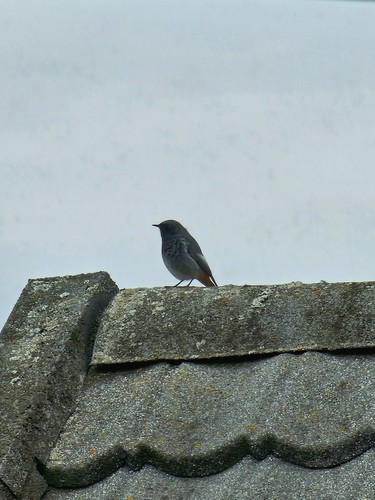
Black Redstart
13-14.5 cm (5.1-5.7 in) long, 23-26 cm wingspan
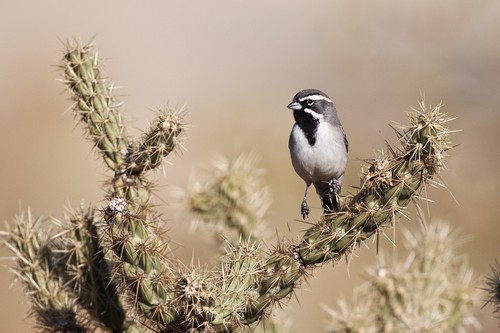
Black-throated Sparrow
12-14 cm (4.7-5.5 in) long, about 19-20 cm (7.5-8 in) wingspan
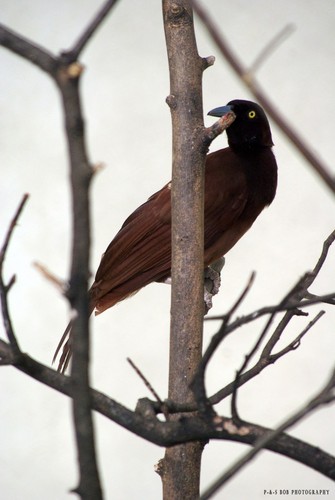
Greater Bird-of-paradise
Body about 43 cm; males with additional flank plumes up to 50 cm and long tail wires
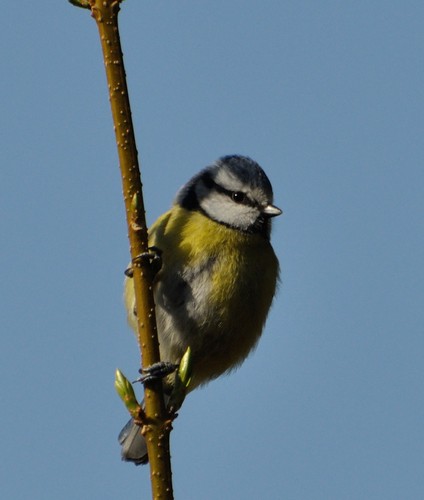
Blue Tit
11-12 cm (4.3-4.7 in) long, 17-20 cm wingspan
Red-billed Quelea
11.5–13 cm long, wingspan about 20–22 cm
White-plumed Antbird
13-14 cm (5-5.5 in) long
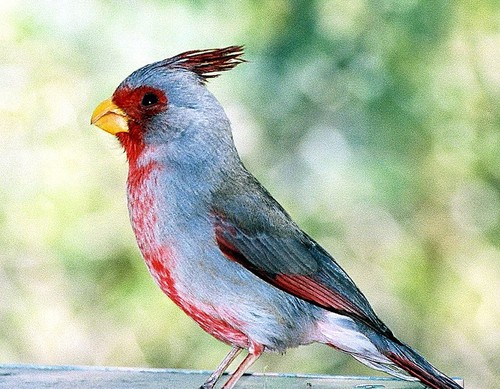
Pyrrhuloxia
19-22 cm (7.5-8.7 in) long, 30 cm wingspan
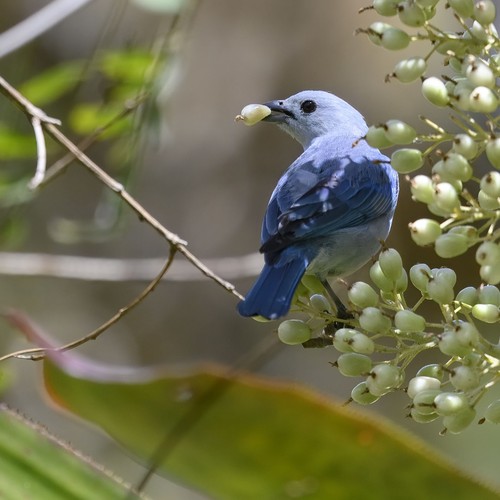
Blue-gray Tanager
16-18 cm (6-7 in) long
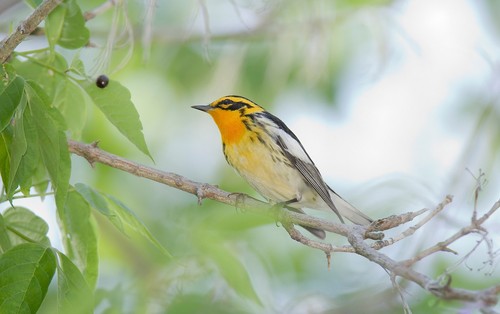
Blackburnian Warbler
11-13 cm (4.3-5.1 in) long, 20-22 cm wingspan
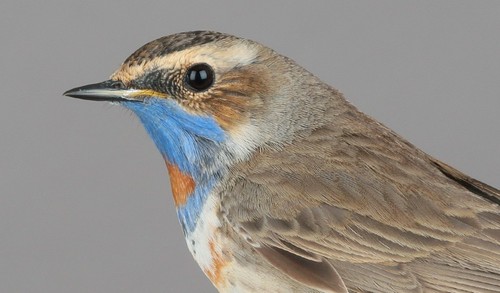
Bluethroat
13-14 cm (5.1-5.5 in) long, 20-22 cm wingspan
Eurasian Nuthatch
12-14.5 cm (4.7-5.7 in) long, 22.5-27 cm wingspan
Wood Thrush
19-21 cm (7.5-8.3 in) long, about 33 cm (13 in) wingspan