
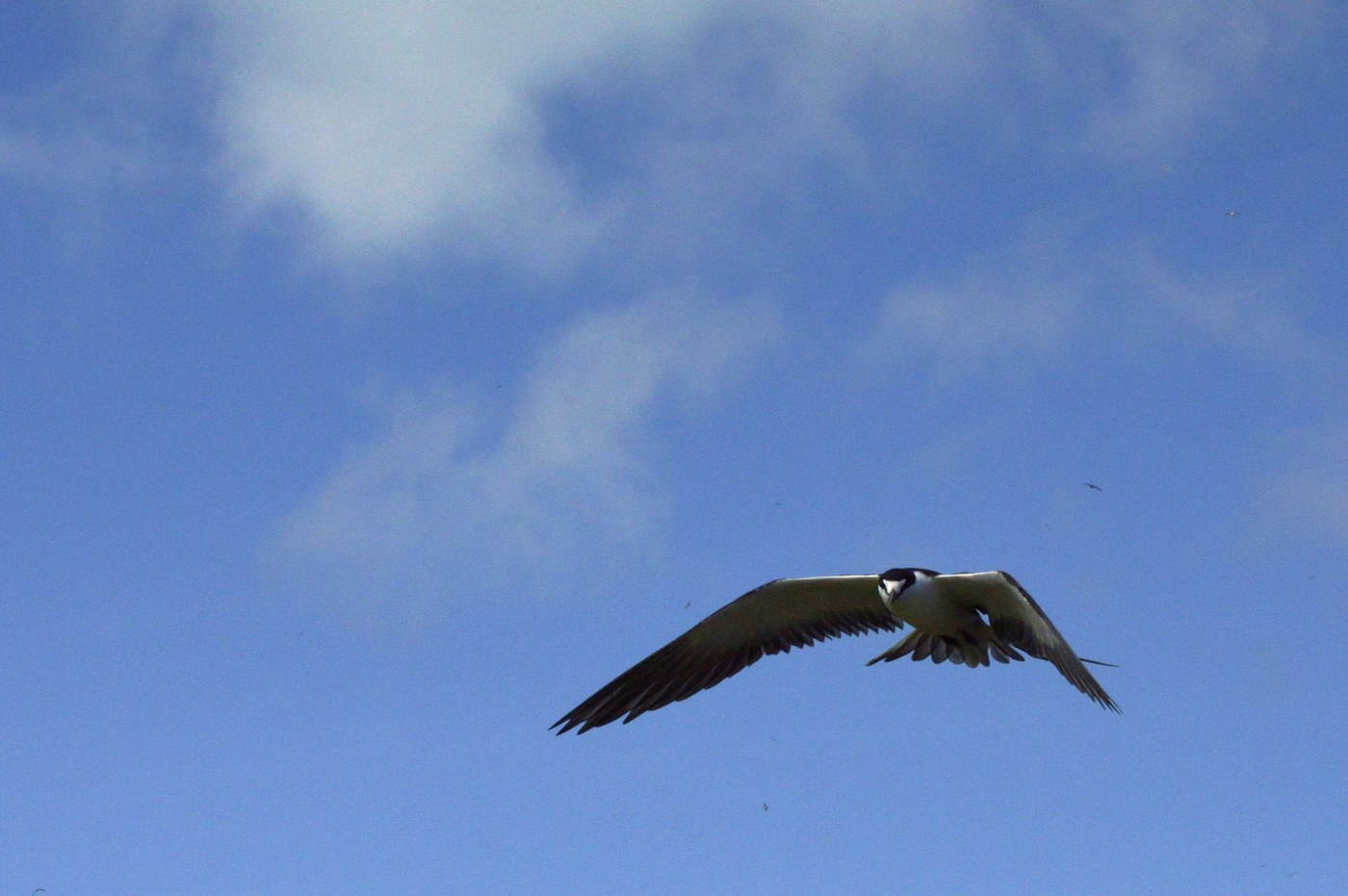
Sooty Tern
Onychoprion fuscatus
A truly pelagic tern with sooty black-brown upperparts and crisp white underparts that spends most of its life on the wing far out over tropical seas.
- Size
- 33-45 cm (13-18 in) long, 82-94 cm wingspan
- Habitat
- open tropical oceans, breeding on remote islands
- Type
- seabird
Spotted a bird like this?
Identify any bird from a photo, free.
Overview
The Sooty Tern is one of the most oceanic of all terns, spending years at sea without ever landing on water, only coming ashore to breed in vast, noisy colonies on remote tropical islands. Its distinctive dark-and-white plumage and constant, buoyant flight make it a familiar sight to sailors and seabird watchers alike.
Appearance
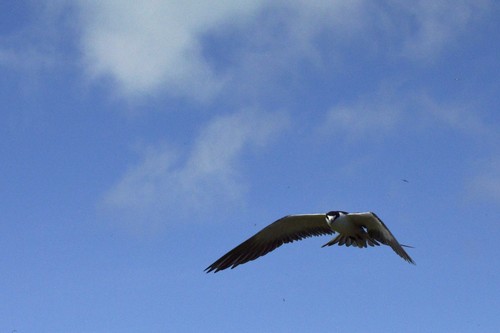
Adults have blackish-brown upperparts and a sharply contrasting white forehead patch, white underparts, and a deeply forked black tail. The bill and legs are black, and in flight the long, pointed wings appear entirely dark above.
How to identify it
Key field marks
- Blackish-brown upperparts contrasting sharply with white underparts
- White forehead patch that does not extend behind the eye (unlike the Bridled Tern)
- Deeply forked black tail
- Long, pointed wings and strong, direct flight far from land
- Rarely settles on the water
Similar species
The Sooty Tern is most easily confused with the Bridled Tern, which is paler grey-brown above (not blackish) and has a white forehead patch that extends as a thin line behind the eye, along with a pale collar on the hindneck.
Habitat & range
Habitat and range
Sooty Terns range across tropical and subtropical oceans worldwide, breeding in enormous, densely packed colonies on remote islands, atolls, and cays largely free of ground predators. Non-breeding birds and juveniles remain almost entirely at sea, sometimes for years, ranging widely across ocean basins.
Major colonies occur on islands in the tropical Atlantic, Indian, and Pacific Oceans, with birds dispersing widely between breeding seasons.
Behavior & voice
Behavior
Sooty Terns feed on the wing, dipping down to snatch small fish and squid from the surface, often in association with schools of predatory fish such as tuna that drive prey to the surface. They rarely rest on the water, instead remaining airborne for extended periods.
Voice
The call is a distinctive, far-carrying "wide-awake" cry, which has earned the species the nickname "wideawake tern" in some regions.
Nesting and breeding
Sooty Terns nest in enormous, densely packed ground colonies, sometimes numbering hundreds of thousands of pairs, laying a single egg in a shallow scrape. Colonies are extremely noisy and synchronized breeding helps overwhelm predators.
Frequently asked questions
Why is it called the Sooty Tern?
Its blackish-brown upperparts give it a sooty appearance, sharply contrasting with its white underparts.
How is the Sooty Tern different from the Bridled Tern?
The Sooty Tern is darker (blackish) above with a forehead patch that stops at the eye, while the Bridled Tern is paler brownish-grey with a thin white line extending behind the eye and a pale hindneck collar.
Do Sooty Terns land on water?
Rarely. Their plumage is not well waterproofed for prolonged swimming, so they spend almost all their time at sea in flight, resting on the wing rather than on the water.
Where do Sooty Terns nest?
In massive, densely packed colonies on remote tropical islands and atolls, often numbering hundreds of thousands of pairs.
What do Sooty Terns eat?
Small fish and squid, caught by dipping to the surface, often while following schools of tuna that push prey upward.
Sooty Tern guides
In-depth guides for identifying, finding, and understanding Sooty Tern.
Other birds you may enjoy
Peruvian Pelican
137-152 cm (54-60 in) long, up to 228 cm wingspan
Bonaparte's Gull
28-33 cm (11-13 in) long, 76-84 cm wingspan
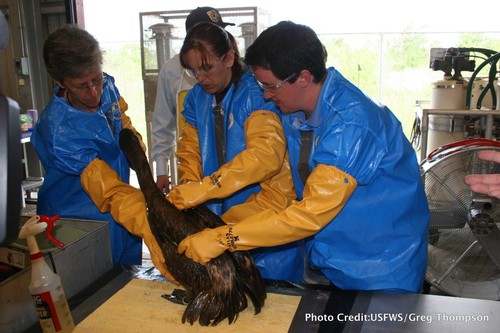
Brown Pelican
106-137 cm (42-54 in) long, 200-230 cm wingspan
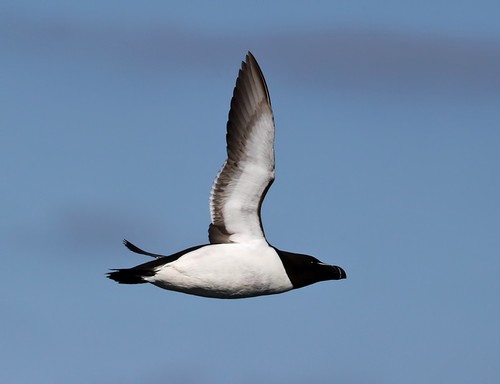
Razorbill
37-39 cm (15-15.5 in) long, 63-68 cm wingspan
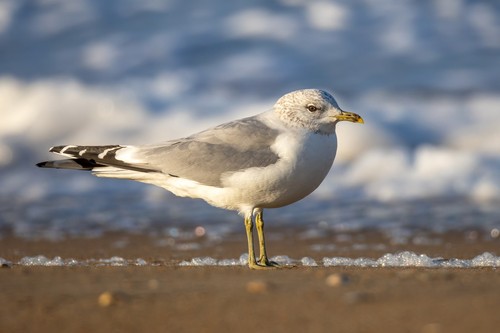
Common Gull
40-46 cm (16-18 in) long, 110-130 cm wingspan
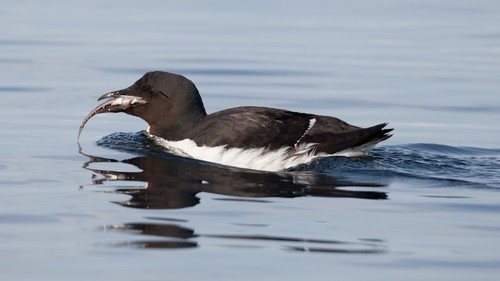
Thick-billed Murre
40-48 cm (16-19 in) long, 65-75 cm wingspan
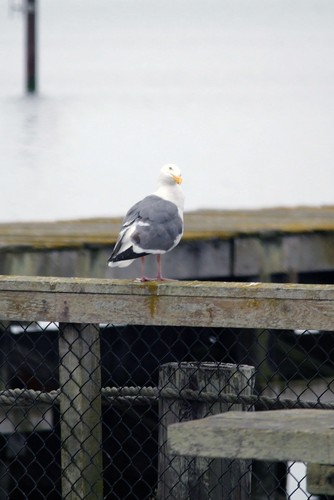
Western Gull
55-68 cm (22-27 in) long, 130-144 cm wingspan
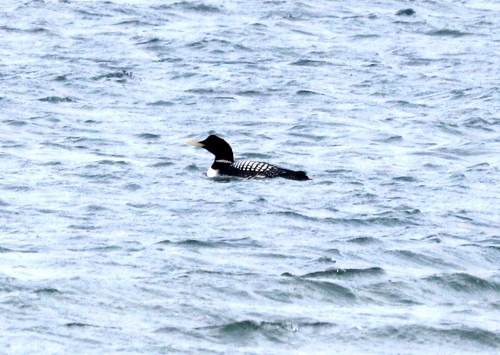
Yellow-billed Loon
76-97 cm (30-38 in) long, 135-152 cm wingspan
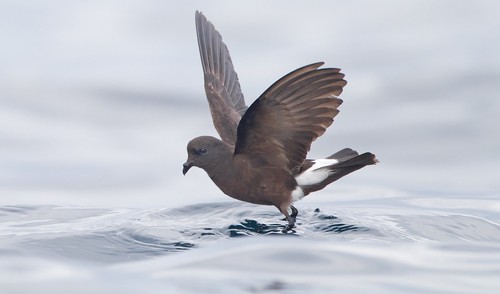
Wilson's Storm-Petrel
15-19 cm (6-7.5 in) long, wingspan 38-42 cm (15-16.5 in)
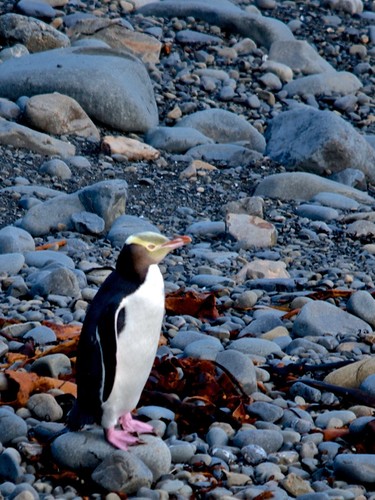
Yellow-eyed Penguin
62-79 cm (24-31 in) tall, 3-8.5 kg (6.6-18.7 lb)
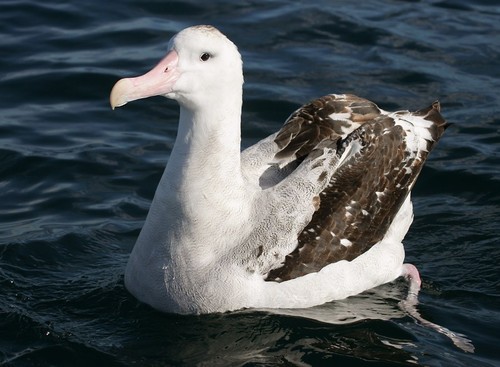
Wandering Albatross
107-135 cm (42-53 in) long, wingspan up to 3.5 m (11.5 ft)

Tufted Puffin
35-41 cm (14-16 in) long, about 63-70 cm wingspan