
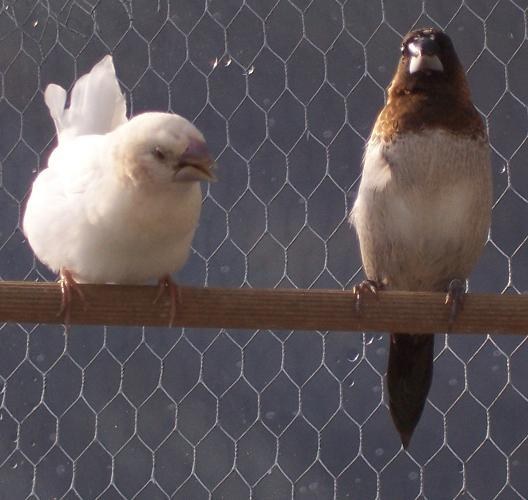
Society Finch
Lonchura striata domestica
A small, domesticated estrildid finch derived from the wild White-rumped Munia, bred over centuries into a range of plumage colors and patterns.
- Size
- About 10-11 cm (4-4.5 in) long
- Habitat
- Occurs only as a domesticated bird; its wild ancestor inhabits grassland, scrub, and cultivated land across South and Southeast Asia
- Type
- songbird
Spotted a bird like this?
Identify any bird from a photo, free.
Overview
The Society Finch, also known as the Bengalese Finch, is a domesticated form of the White-rumped Munia (Lonchura striata), developed through centuries of selective breeding, likely beginning in China and refined in Japan. Unlike most finches described in field guides, it has no wild population of its own; all Society Finches trace their ancestry to the wild White-rumped Munia of Asia.
Because it is entirely a product of selective breeding, plumage is highly variable, ranging from pure white to fawn, chocolate, and pied combinations of brown and white, unlike the more uniform brown, black, and white streaked plumage of its wild ancestor.
Plumage
- Highly variable due to domestication: white, fawn, chocolate, pied, and other combinations
- Compact, short-tailed finch body shape
- Stout, conical seed-eating bill
- Wild ancestor (White-rumped Munia) is uniformly brown above with a white rump and scaly dark underparts
How to identify it
Key field marks
- Small, compact finch with a short tail and thick conical bill typical of munias
- Plumage extremely variable in domesticated birds, from all-white to brown-and-white pied patterns
- Lacks the streaked, scaly underpart pattern of most wild munias due to selective breeding
Similar species
Society Finches are distinguished from their wild ancestor, the White-rumped Munia, by their variable, often pale or pied plumage compared to the ancestor's uniform brown body, dark scaly underparts, and clean white rump.
Habitat & range
Range and origin
The Society Finch has no independent wild range; it exists only as a domesticated bird descended from the White-rumped Munia, which is native to South and Southeast Asia, from the Himalayan foothills through China and into Taiwan and parts of Southeast Asia.
Habitat of wild ancestor
The White-rumped Munia inhabits open grassland, scrubby edges, reed beds, and cultivated land, often in flocks, across its native Asian range. The domesticated Society Finch itself does not occur in the wild.
Behavior & voice
Behavior
Society Finches are highly social, typically kept and observed in groups, reflecting the strong flocking instinct retained from their wild munia ancestry.
Voice
Vocalizations include soft chirps and a simple, quiet warbling song, generally softer and less complex than the songs of many other finches.
Feeding
They feed primarily on small grass and grain seeds, consistent with the diet of their wild munia ancestor.
Nesting and breeding
Society Finches build small domed nests of grass and readily breed in captivity, and are well known among aviculturists for their reliable, attentive parenting, sometimes even fostering eggs of other finch species.
Frequently asked questions
Is the Society Finch a wild bird?
No, it exists only as a domesticated form, bred from the wild White-rumped Munia over many generations, and has no wild population of its own.
What wild species is the Society Finch descended from?
It is descended from the White-rumped Munia (Lonchura striata), native to South and Southeast Asia.
Why does the Society Finch have such variable colors?
Centuries of selective breeding for novel colors and patterns produced white, fawn, chocolate, and pied forms far more variable than the uniform brown plumage of its wild ancestor.
What is another name for the Society Finch?
It is also widely known as the Bengalese Finch.
What does a Society Finch eat?
It eats small grass and grain seeds, similar to the diet of its wild munia ancestor.
Society Finch guides
In-depth guides for identifying, finding, and understanding Society Finch.
Other birds you may enjoy
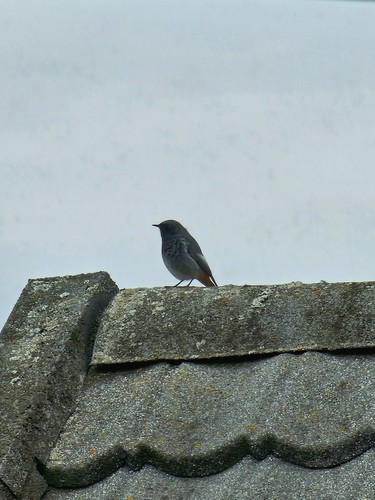
Black Redstart
13-14.5 cm (5.1-5.7 in) long, 23-26 cm wingspan
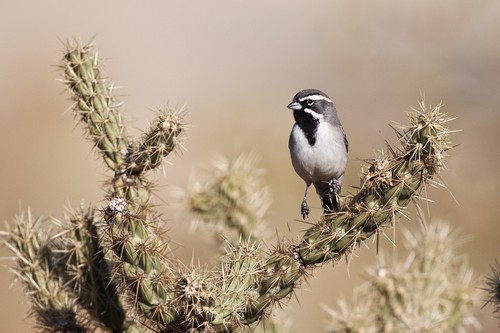
Black-throated Sparrow
12-14 cm (4.7-5.5 in) long, about 19-20 cm (7.5-8 in) wingspan
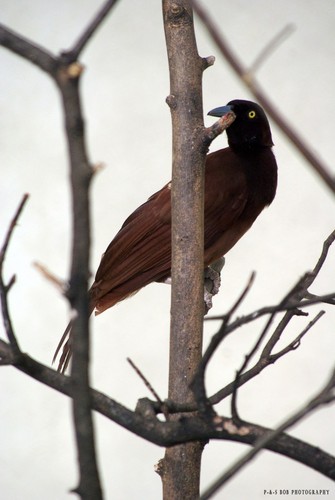
Greater Bird-of-paradise
Body about 43 cm; males with additional flank plumes up to 50 cm and long tail wires
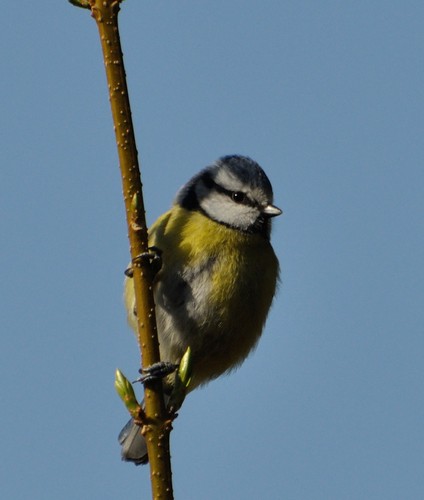
Blue Tit
11-12 cm (4.3-4.7 in) long, 17-20 cm wingspan
Red-billed Quelea
11.5–13 cm long, wingspan about 20–22 cm
White-plumed Antbird
13-14 cm (5-5.5 in) long
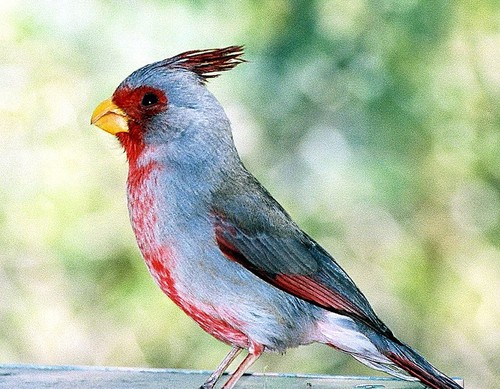
Pyrrhuloxia
19-22 cm (7.5-8.7 in) long, 30 cm wingspan
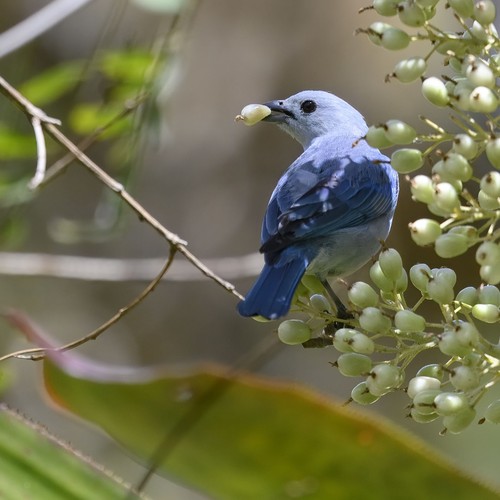
Blue-gray Tanager
16-18 cm (6-7 in) long
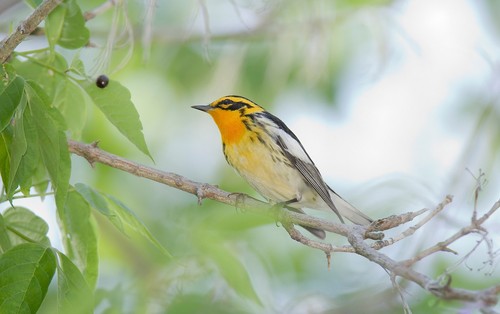
Blackburnian Warbler
11-13 cm (4.3-5.1 in) long, 20-22 cm wingspan
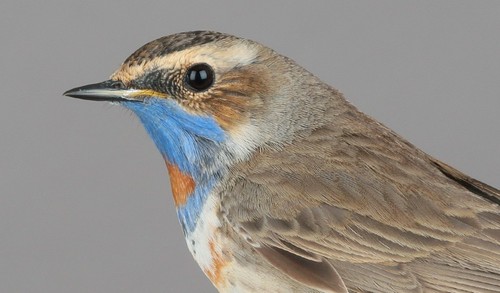
Bluethroat
13-14 cm (5.1-5.5 in) long, 20-22 cm wingspan
Eurasian Nuthatch
12-14.5 cm (4.7-5.7 in) long, 22.5-27 cm wingspan
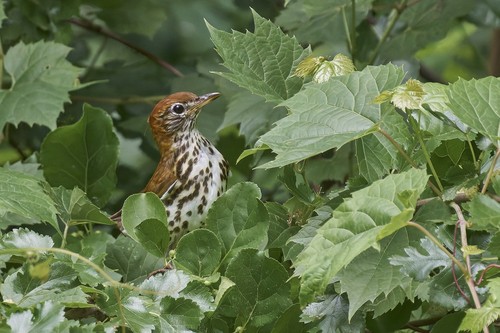
Wood Thrush
19-21 cm (7.5-8.3 in) long, about 33 cm (13 in) wingspan