
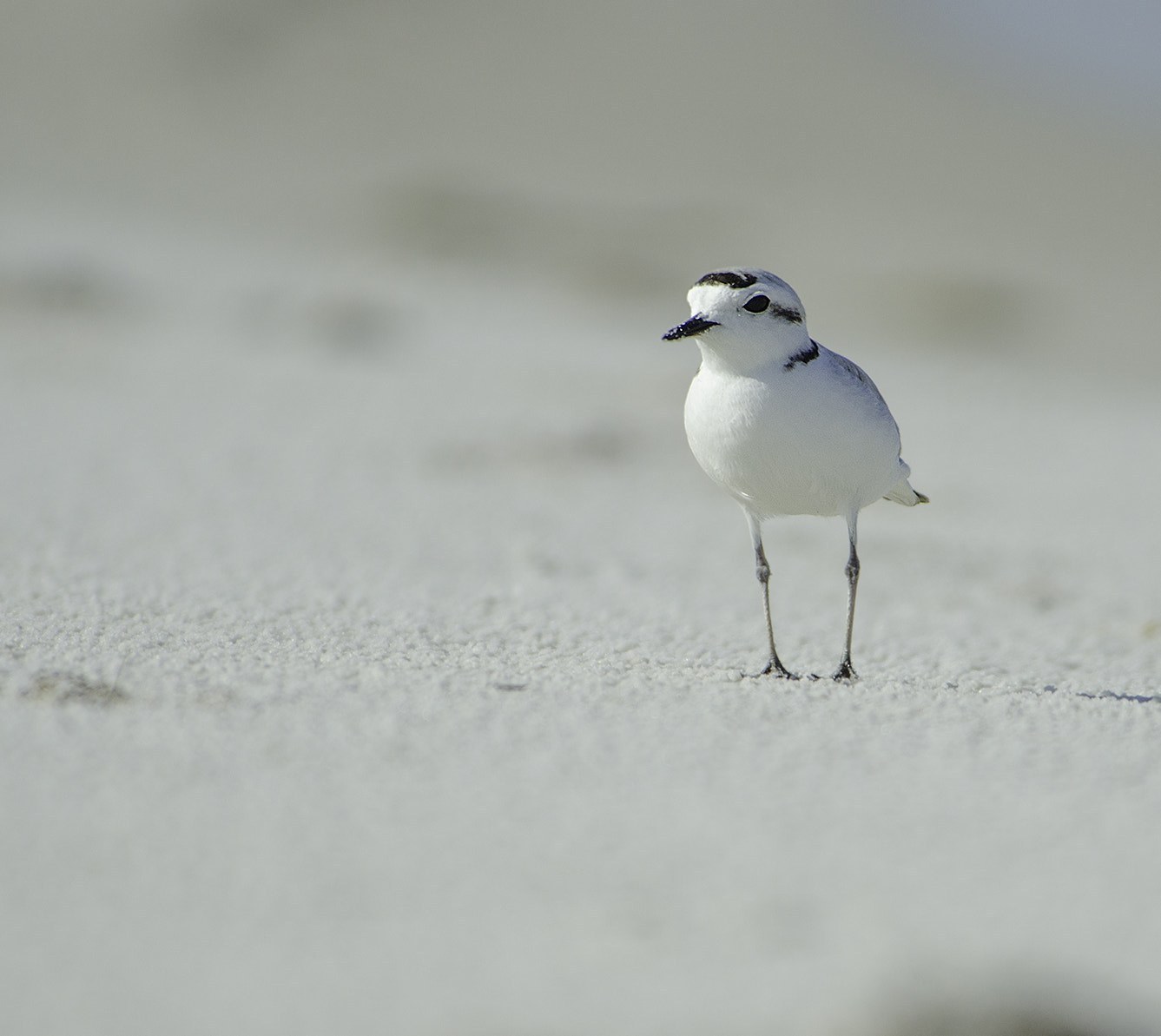
Snowy Plover
Charadrius nivosus
A pale, delicate plover of Pacific and Gulf Coast beaches and interior salt flats, once considered the same species as the Old World Kentish Plover.
- Size
- 15-17 cm (6-6.7 in) long, 34-43 cm wingspan
- Habitat
- sandy beaches, salt flats, and dry alkaline lake margins
- Type
- shorebird
Spotted a bird like this?
Identify any bird from a photo, free.
Overview
The Snowy Plover is a small, pale, sand-colored shorebird with a slim build and dark, thin legs. Its very pale plumage blends seamlessly with dry, light-colored sand, making it easy to overlook.
Breeding adults show small dark patches on the sides of the breast (not a full band), a dark ear patch, and a partial dark bar on the forehead; non-breeding birds are even paler with reduced markings. The bill is thin, short, and entirely black.
Until relatively recently, the Snowy Plover was lumped with the Kentish Plover of the Old World as a single species; the two are now generally treated separately based on genetic and behavioral differences.
How to identify it
Key field marks
- Pale sandy-gray upperparts, white underparts
- Small dark patches at the sides of the breast, not meeting in a full collar
- Thin, entirely dark (black) bill
- Dark grayish legs (not orange)
- Small, delicate build with a rounded head
Similar species
- Piping Plover has orange legs and a stubbier bill with orange at the base.
- Kentish Plover is nearly identical in appearance (formerly considered the same species) but occurs in the Old World.
- Wilson's Plover is larger with a much heavier, longer black bill.
Habitat & range
Snowy Plovers breed on sparsely vegetated sandy beaches, salt pans, and dry margins of alkaline or saline lakes across the western and southern United States, Mexico, the Caribbean, and coastal South America.
Coastal populations tend to be resident or make short movements, while interior populations at salt flats and alkali lakes may shift seasonally in response to water levels. Wintering birds gather on open beaches and coastal flats.
Behavior & voice
Voice
A soft, low krut or tu-wheet contact call, along with a purring trill given during breeding displays.
Feeding
Forages by running and pecking along the sand and at the wrack line, taking small insects, amphipods, and other tiny invertebrates; sometimes probes wet sand near the water's edge.
Nesting
Like other small plovers, it nests in a shallow scrape on open sand, often near shell fragments or debris for camouflage. It is highly susceptible to disturbance by beachgoers, vehicles, and pets, and many coastal populations are actively managed with fencing and monitoring during the nesting season.
Frequently asked questions
How do you tell a Snowy Plover from a Piping Plover?
Snowy Plovers have dark legs and an all-black bill, while Piping Plovers have orange legs and an orange-based bill.
Where do Snowy Plovers live?
They breed on sandy beaches and dry alkaline lake flats in the western and southern United States, Mexico, and parts of South America.
Is the Snowy Plover the same as the Kentish Plover?
They were once considered one species; the Snowy Plover of the Americas is now usually treated as separate from the Old World Kentish Plover.
Why are Snowy Plover nesting areas sometimes fenced off?
Their beach nests are extremely vulnerable to disturbance from people, dogs, and vehicles, so many nesting beaches are protected during breeding season.
Snowy Plover guides
In-depth guides for identifying, finding, and understanding Snowy Plover.
Other birds you may enjoy
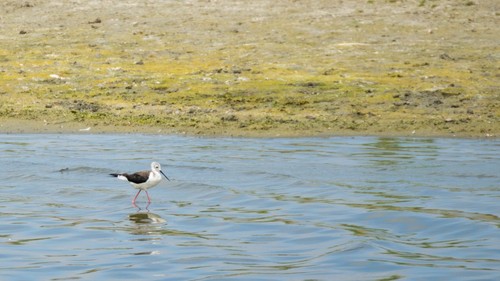
Black-winged Stilt
33-36 cm (13-14 in) long, wingspan 67-83 cm
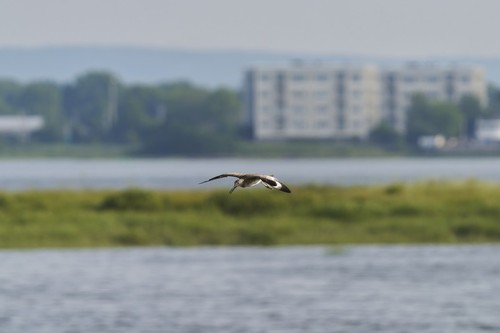
Willet
33-41 cm (13-16 in) long, 65-70 cm wingspan
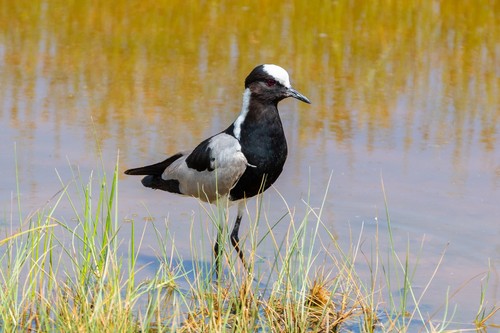
Blacksmith Lapwing
Body length about 30 cm; wingspan 55-65 cm
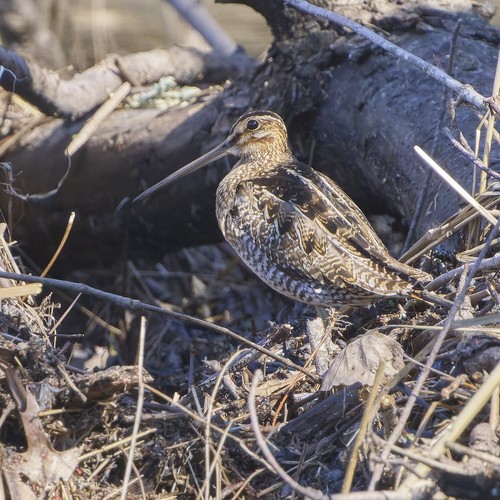
Wilson's Snipe
25-30 cm (10-12 in) long, 39-45 cm wingspan
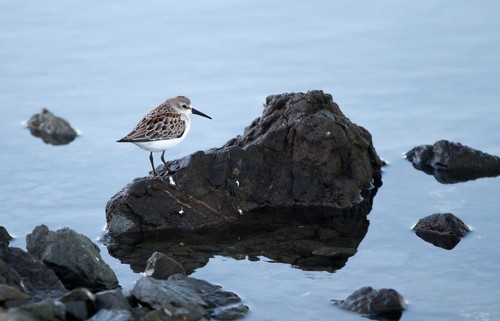
Western Sandpiper
14-17 cm (5.5-6.7 in) long, 28-37 cm wingspan
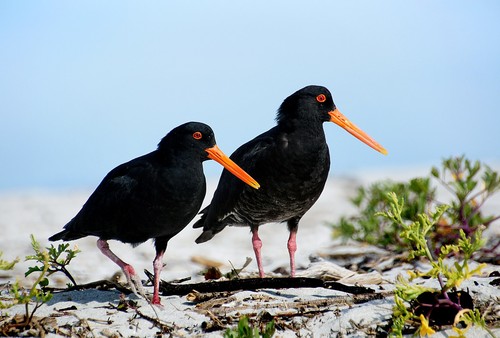
Variable Oystercatcher
46-49 cm (18-19 in) long
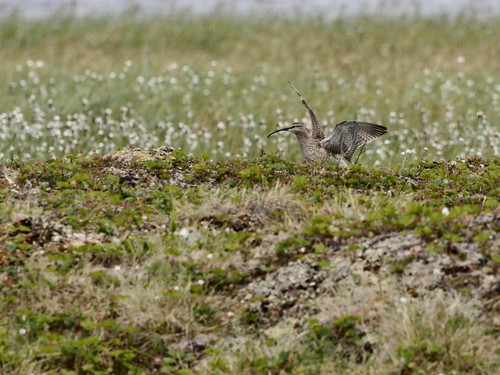
Whimbrel
40-46 cm (16-18 in) long, 76-89 cm wingspan
Wilson's Phalarope
22-24 cm (8.5-9.5 in) long, 37-43 cm wingspan
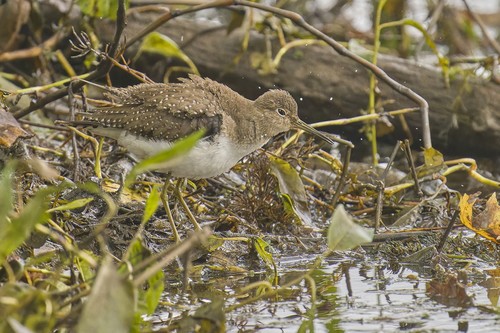
Solitary Sandpiper
19-23 cm (7.5-9 in) long, 50-56 cm wingspan
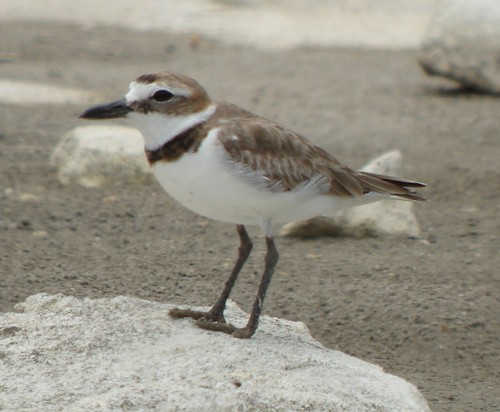
Wilson's Plover
17-19 cm (6.7-7.5 in) long, 45-50 cm wingspan
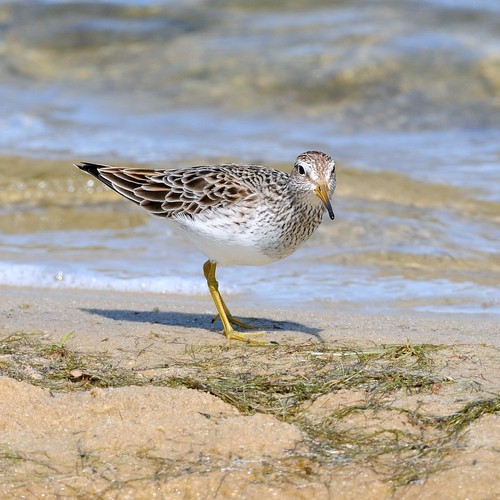
Pectoral Sandpiper
19-23 cm (7.5-9 in) long, 43-49 cm wingspan
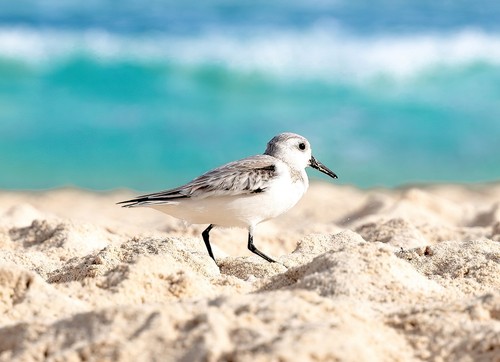
Sanderling
18-20 cm (7-8 in) long, 40-43 cm wingspan