
Snowy Plover Identification Guide
A pale, sand-colored shorebird of beaches and alkali flats, told from other small plovers by its incomplete breast band and dark legs.
Read the full Snowy Plover encyclopedia entry →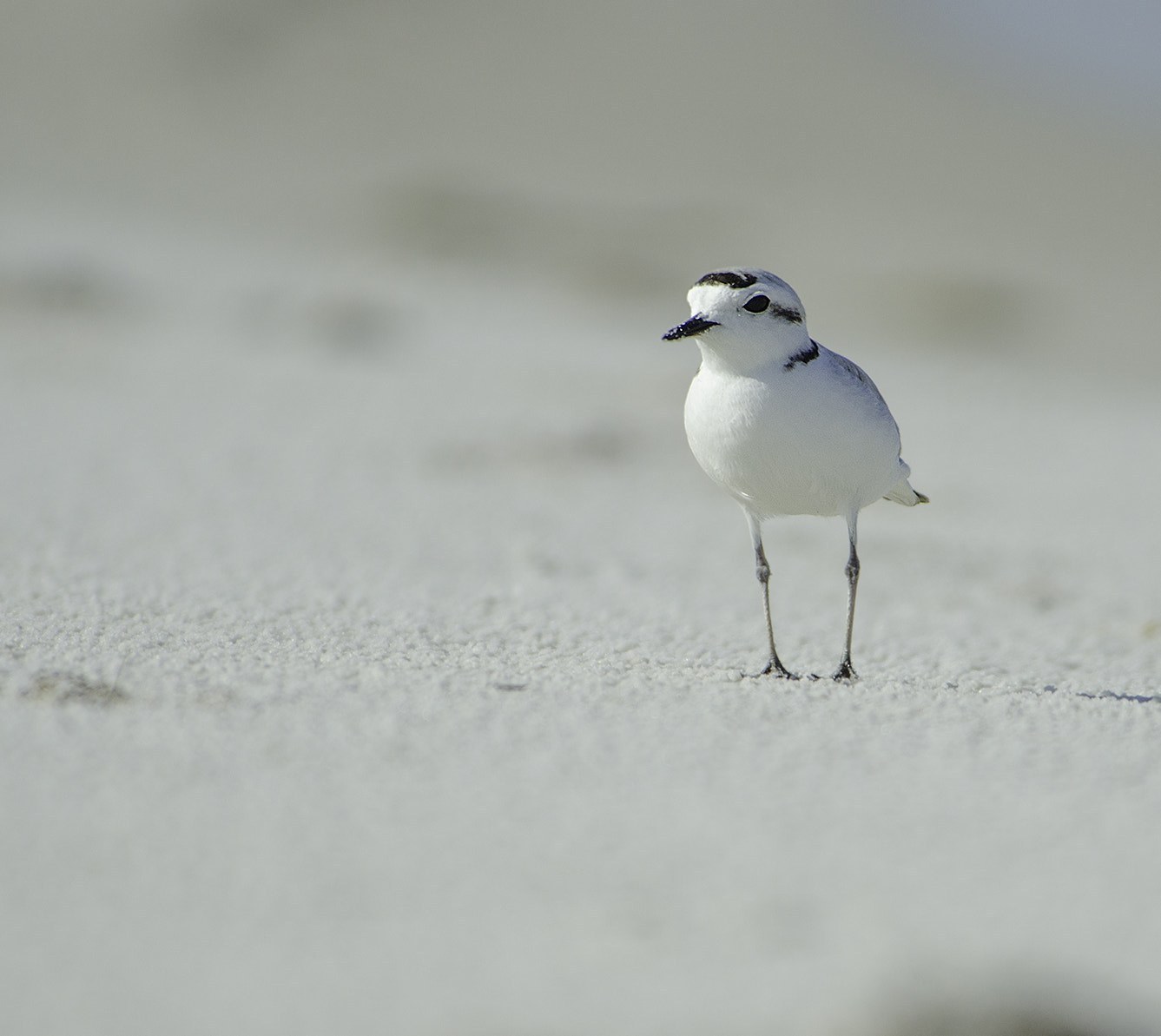
Key Field Marks
- Size & shape: Very small plover, about 5.5–6.7 inches, with a rounded body and short neck — noticeably paler than most other plovers.
- Plumage: Pale sandy gray-brown above, white below. Breeding birds show a dark patch on each side of the breast (the band does not meet across the chest), a dark ear patch, and a small dark patch on the forecrown.
- Bill: Thin, short, and black — finer than a Semipalmated Plover's.
- Legs: Dark gray to blackish-gray (not bright orange), a useful mark at a distance.
- Behavior: Runs in short bursts and freezes, blending remarkably well into pale sand; often forages just above the waterline or on dry upper beach and salt flats.
Separating It From Similar Species
- Piping Plover: Paler and sandier still, but has a stubby bill with an orange base, orange legs, and a breast band that is often more complete.
- Semipalmated Plover: Darker brown above, complete black breast band, and orange-yellow legs — much more contrasty overall.
- Wilson's Plover: Larger with a notably thick, long black bill and pink-gray legs.
- Overall impression: Snowy Plover is the palest, "washed-out" looking small plover with a broken breast band and dark legs — a good combination for quick ID.
Where & When to See One
- Habitat: Open sandy beaches, coastal dunes, sparsely vegetated barrier islands, and inland alkaline or saline lakeshores and playas.
- Range: Pacific coast beaches, Gulf Coast beaches, and scattered interior salt flats and alkali lakes across the western United States; a separate population breeds along South American and other coasts.
- Season: Many coastal populations are present year-round; interior breeders arrive in spring and depart for coastal wintering areas in fall.
Voice
- Soft, low calls — a short "krut" or "prrit," and a thin, whistled "ku-wheet" — much quieter and less strident than the calls of Semipalmated or Killdeer plovers.
Frequently asked questions
What is the easiest way to tell a Snowy Plover from a Piping Plover?
Look at leg color and bill: Snowy Plover has dark grayish legs and an all-black bill, while Piping Plover has orange legs and an orange-based bill, plus paler, sandier overall plumage.
Does the Snowy Plover have a complete breast band?
No. Breeding adults show two separate dark patches on the sides of the breast rather than a continuous band across the chest, unlike Semipalmated Plover.
Where is the best habitat to look for Snowy Plovers?
Open, sparsely vegetated sand beaches and dunes on the Pacific and Gulf coasts, and dry salt flats or alkali lake margins in the interior West.
Are Snowy Plovers present year-round?
Along much of the coast, yes — many populations are resident. Interior breeders at inland alkali lakes are more migratory, moving to coastal areas outside the breeding season.