

Smith's Longspur
Calcarius pictus
A warmly buff-colored longspur with an unusual multi-male mating system, wintering in a very restricted range of south-central US grasslands.
- Size
- 15-16 cm (6-6.3 in) long, about 26 cm (10 in) wingspan
- Habitat
- Arctic and subarctic tundra with tussock grass when breeding; native prairie remnants and grassy airfields in winter
- Type
- songbird
Spotted a bird like this?
Identify any bird from a photo, free.
Overview
The Smith's Longspur stands apart from its relatives by its warm, buffy-orange tones, quite different from the black-bellied pattern typical of other longspurs, and by an unusual breeding system in which females routinely mate with multiple males in a single season.
Breeding males show rich buffy-orange underparts and face, set off by a bold black-and-white head pattern and a distinctive white patch on the shoulder, visible both perched and in flight. Females and winter birds are duller but retain much of the warm buffy wash that distinguishes the species from other longspurs.
The species has an especially narrow winter range, concentrated in a relatively small area of native and semi-native grassland in the south-central United States, making it one of the more localized and sought-after winter birds for grassland specialists.
How to identify it
Key Field Marks
- Warm buffy-orange face and underparts, unlike the black-bellied pattern of most other longspurs
- Bold black-and-white head pattern in breeding males
- White patch on the shoulder (lesser coverts)
- Sharply pointed tail feathers
Similar Species
- Chestnut-collared and Lapland Longspur: both show black or dark underparts rather than the warm buffy tones of Smith's Longspur
- Sprague's Pipit: shares similar prairie winter habitat but has a plainer, streakier appearance without the buffy-orange coloring or shoulder patch
The warm, unstreaked buffy underparts combined with the white shoulder patch are the most reliable marks separating this species from all other longspurs.
Habitat & range
Smith's Longspur breeds in Arctic and subarctic tundra with tussock grass and sedge across northern Alaska and Canada, favoring drier, well-vegetated tundra rather than wet lowland habitat.
In winter, the species has an unusually narrow and specific range, concentrated in native prairie remnants, pastures, and grassy airfields of the south-central United States, particularly Oklahoma, Texas, and Kansas, where it often associates closely with cattle pastures and short, native grass cover.
Behavior & voice
Behavior
On the wintering grounds, Smith's Longspurs often forage in tight flocks in short grass, sometimes closely associated with cattle, and can be inconspicuous due to their cryptic plumage when not breeding.
Voice
The song is a rich, buzzy, jingling series of notes, delivered on the breeding grounds, often as part of display behavior.
Feeding
Diet includes seeds and insects, with insects more important during the Arctic breeding season and seeds dominating the winter diet in prairie grassland.
Nesting and Breeding
The species has an unusual mating system in which females often mate with multiple males in a season (polygynandry), and multiple males may help provision young at a single nest. The nest is a grass-lined cup built on the ground amid tundra tussocks.
Frequently asked questions
What makes Smith's Longspur different from other longspurs?
It has warm buffy-orange underparts rather than a black belly, a white shoulder patch, and an unusual mating system in which females often mate with more than one male.
Where does Smith's Longspur winter?
It has an unusually narrow winter range concentrated in native prairie remnants, pastures, and grassy airfields of Oklahoma, Texas, and Kansas.
Where does Smith's Longspur breed?
It breeds in Arctic and subarctic tundra with tussock grass across northern Alaska and Canada.
Do multiple male Smith's Longspurs help raise young?
Yes, because females often mate with more than one male, multiple males may help provision chicks at a single nest.
Why is Smith's Longspur considered a specialty bird for birders?
Its very narrow, specific winter range makes it a localized and sought-after species to find.
Smith's Longspur guides
In-depth guides for identifying, finding, and understanding Smith's Longspur.

Other birds you may enjoy
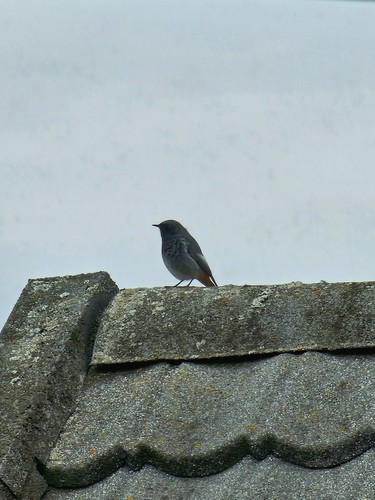
Black Redstart
13-14.5 cm (5.1-5.7 in) long, 23-26 cm wingspan
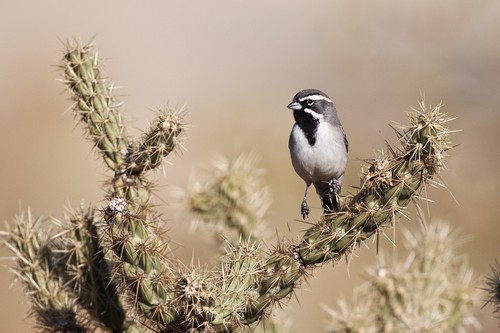
Black-throated Sparrow
12-14 cm (4.7-5.5 in) long, about 19-20 cm (7.5-8 in) wingspan
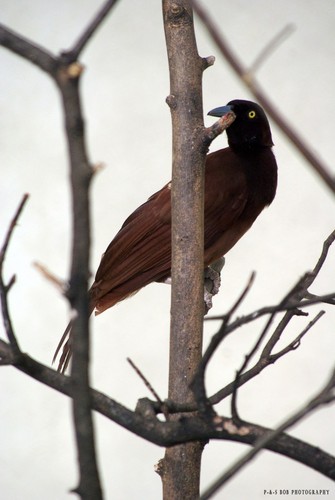
Greater Bird-of-paradise
Body about 43 cm; males with additional flank plumes up to 50 cm and long tail wires
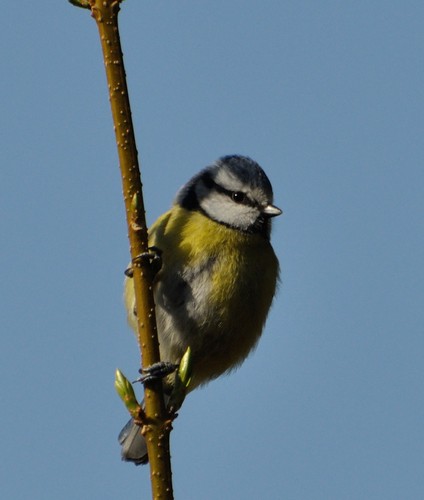
Blue Tit
11-12 cm (4.3-4.7 in) long, 17-20 cm wingspan
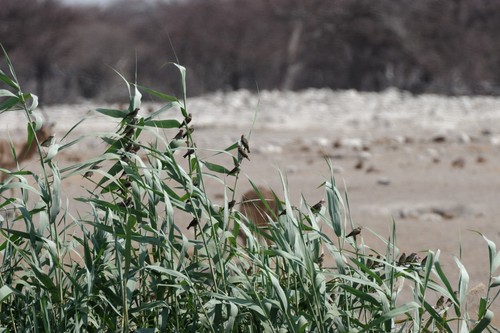
Red-billed Quelea
11.5–13 cm long, wingspan about 20–22 cm
White-plumed Antbird
13-14 cm (5-5.5 in) long
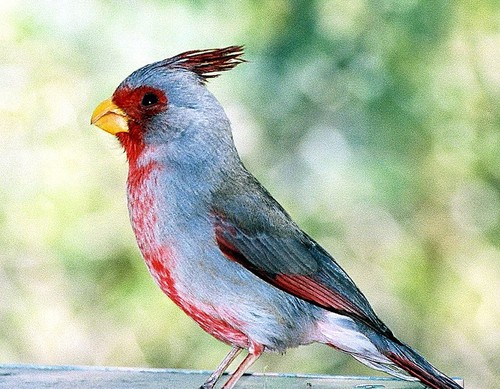
Pyrrhuloxia
19-22 cm (7.5-8.7 in) long, 30 cm wingspan
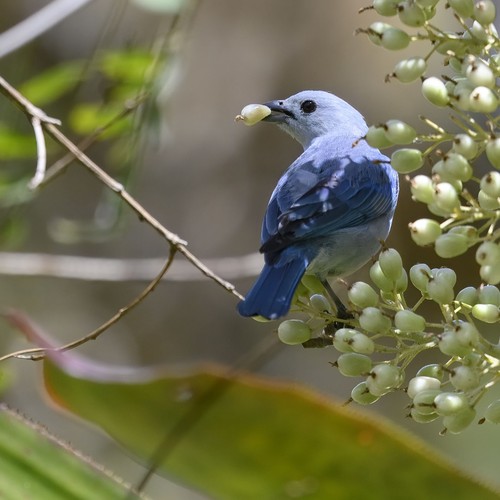
Blue-gray Tanager
16-18 cm (6-7 in) long
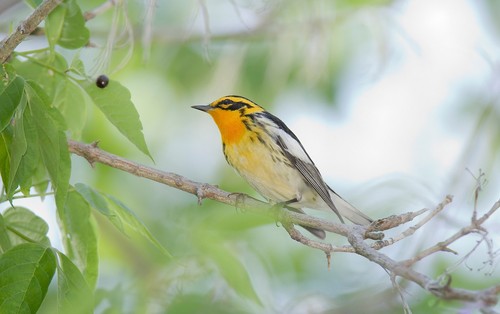
Blackburnian Warbler
11-13 cm (4.3-5.1 in) long, 20-22 cm wingspan
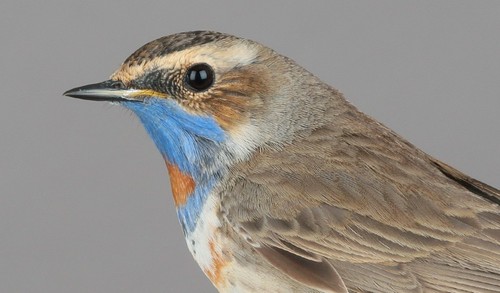
Bluethroat
13-14 cm (5.1-5.5 in) long, 20-22 cm wingspan
Eurasian Nuthatch
12-14.5 cm (4.7-5.7 in) long, 22.5-27 cm wingspan
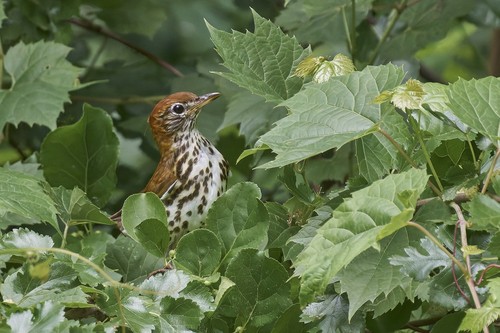
Wood Thrush
19-21 cm (7.5-8.3 in) long, about 33 cm (13 in) wingspan