
Smith's Longspur Identification Guide
A sparrow-like grassland bird of the North American prairies and Arctic tundra, breeding males showing a striking buff-orange face and underparts framed by black-and-white head stripes.
Read the full Smith's Longspur encyclopedia entry →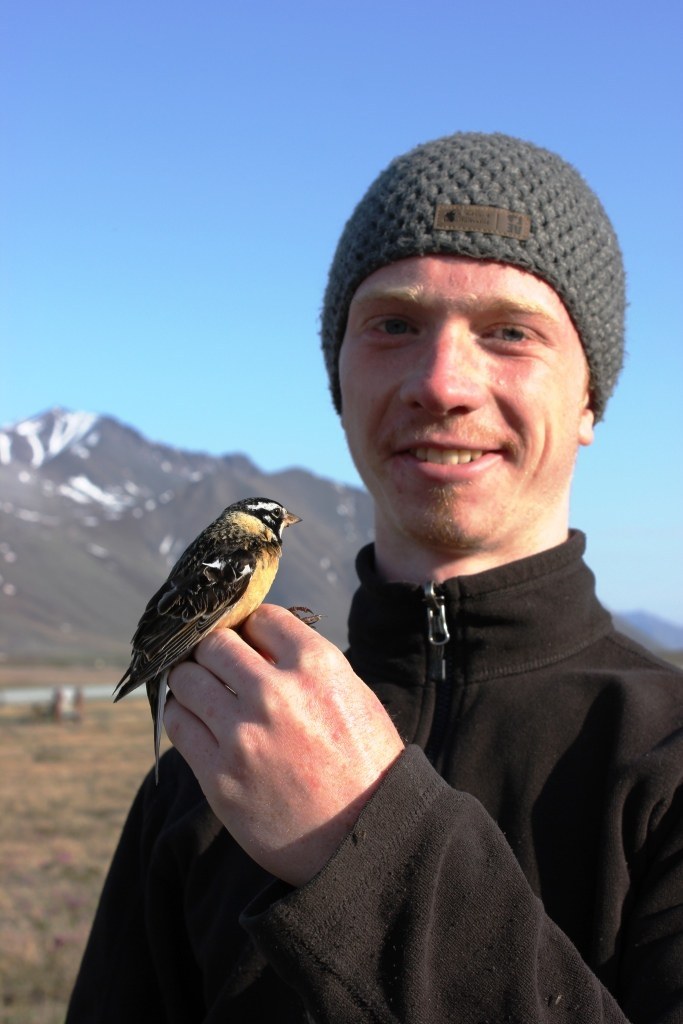
Overview
Smith's Longspur (Calcarius pictus) is a secretive, ground-dwelling songbird that breeds in the low Arctic tundra of Canada and Alaska and winters in short-grass prairies and airfields of the south-central United States. It is one of the least frequently seen North American longspurs, both because of its remote breeding range and its habit of walking quietly through grass rather than flushing readily, and it is a sought-after target for birders during migration and winter.
Key Field Marks
- Size and shape: A medium-sized longspur, about 15-16 cm, with a fairly long, pointed tail, a flattish head profile, and the long hind claw ('longspur') characteristic of the genus, though rarely visible in the field.
- Breeding male: Rich buffy-orange face and underparts, framed by a bold black-and-white head pattern — a black crown, white supercilium, and a black-bordered white patch on the ear coverts/auriculars, creating a distinctive harlequin-like face pattern unlike any other North American longspur.
- Breeding female and nonbreeding/winter plumage: Much duller and more streaky brown overall, with a buffy wash on the underparts and a less bold face pattern, making winter and female birds considerably harder to identify with confidence.
- Wings: Shows a distinctive white patch at the base of the primaries, visible in flight and sometimes at rest as a small white flash on the folded wing — a useful mark at all ages and both sexes.
- Tail: White outer tail feathers flash in flight, though this is shared with other longspur species and is not diagnostic alone.
- Behavior: Walks (rather than hops) through short grass, often staying low and remaining hard to flush; frequently detected first by flight calls given as birds flush and circle before dropping back into cover.
Separating It From Similar Species
- Lapland Longspur: In winter plumage the two can be confused, but Lapland Longspur typically shows more contrasting rufous on the nape/wing coverts and lacks the buffy overall wash and white primary patch of Smith's Longspur; Smith's tends to look more evenly buffy-brown overall.
- Chestnut-collared Longspur: Breeding male has a black underside and chestnut nape, quite different from Smith's orange-buff underparts; nonbreeding birds are best separated by the white primary patch and flight call of Smith's Longspur.
- Sparrows (e.g., Vesper Sparrow, Savannah Sparrow): Superficially similar in open grassland habitat, but lack the longspur's distinctive flight call, white primary patch, and (in breeding males) the bold black-and-white harlequin face pattern.
- General tip: Winter and juvenile longspurs are notoriously difficult; the combination of buffy overall tone, white patch at the base of the primaries, and a distinctive dry rattling flight call offers the best combination of marks for Smith's Longspur outside of breeding plumage.
Habitat and Range
Breeds in moist, hummocky low Arctic and subarctic tundra and open taiga clearings across northern Canada and Alaska. On migration and in winter it favors short-grass habitats such as native prairie, airport grasslands, sod farms, and heavily grazed pastures, with a core wintering range concentrated in Texas, Oklahoma, Louisiana, and adjacent states. It migrates through the central Great Plains states in spring and fall.
Voice
The flight call, a dry, rattling "ticket" or "prrt" often given in a rapid series as flushed birds circle overhead, is frequently the best way to detect and confirm this species, since flushed birds are often reluctant to land where observers can get a clear view. The song, heard on the breeding grounds, is a bright, warbling jumble of notes given in flight display over the tundra.
When to Look
Best sought on wintering grounds in the south-central U.S. (Texas, Oklahoma, Louisiana) from late autumn through early spring, especially at traditional short-grass sites, or during spring and fall migration through the Great Plains; breeding-ground encounters require travel to remote Arctic tundra in June and July.
Frequently asked questions
How do you identify a breeding male Smith's Longspur?
Look for a rich buffy-orange face and underparts framed by a bold black-and-white head pattern, including a black crown and a distinct white patch on the ear coverts — a unique combination among North American longspurs.
How do you tell Smith's Longspur from Lapland Longspur in winter?
Smith's Longspur looks more evenly buffy-brown overall and shows a small white patch at the base of the primaries, while Lapland Longspur typically shows more rufous tones on the nape and wing coverts.
Where can I see a Smith's Longspur in winter?
Core wintering areas are short-grass habitats in Texas, Oklahoma, and Louisiana, including native prairie remnants, airport grasslands, and heavily grazed pastures.
Why is Smith's Longspur hard to see?
It walks quietly through short grass rather than perching conspicuously, is reluctant to flush, and even when flushed often circles high and lands out of view, making both detection and confirmation challenging.
What does a Smith's Longspur sound like?
Its flight call is a dry, rattling "ticket" or "prrt" note, often the first and only clue to its presence in winter grassland habitat.