
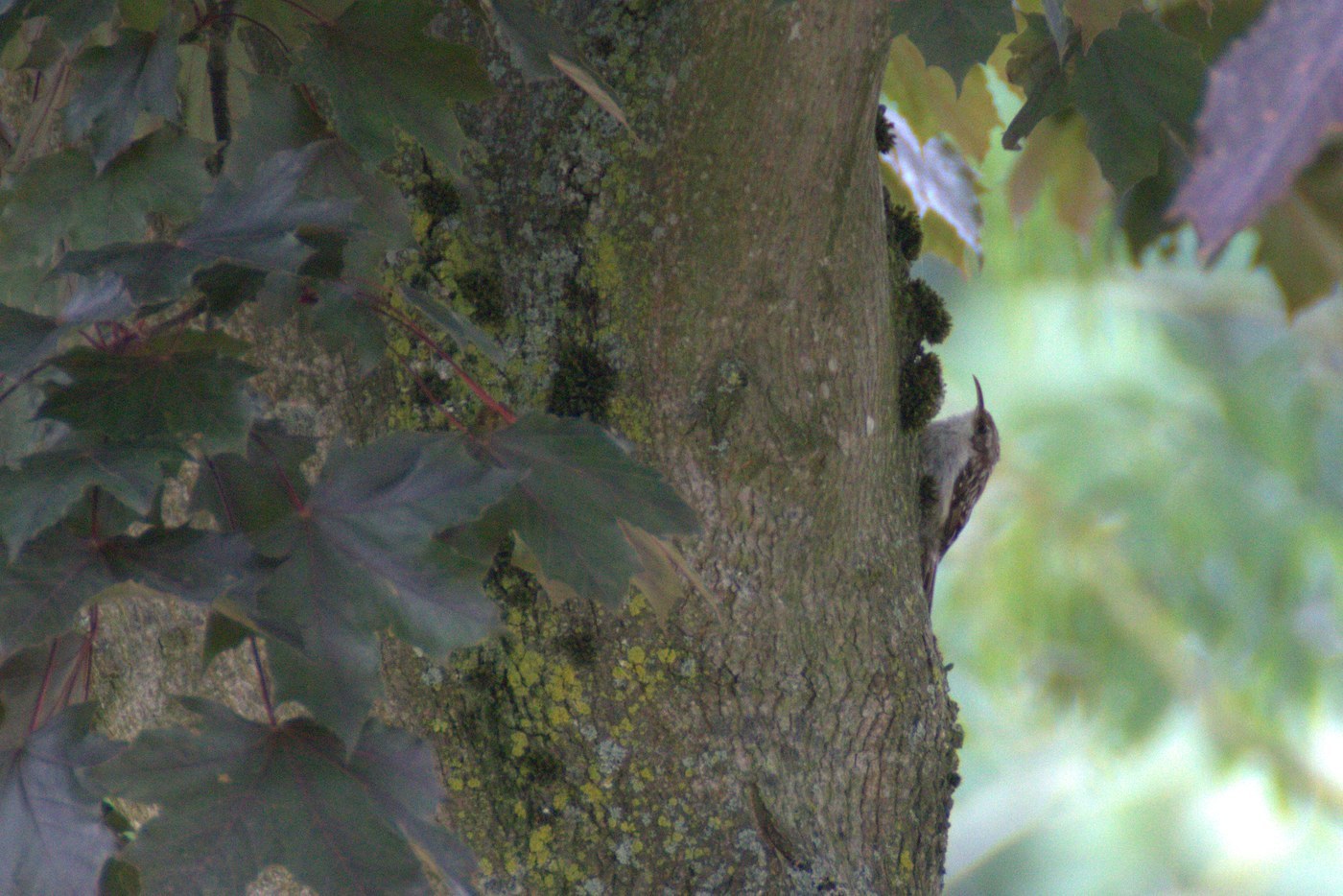
Short-toed Treecreeper
Certhia brachydactyla
A close relative of the Eurasian Treecreeper, nearly identical in appearance but favouring broadleaf woodland at lower elevations and best identified by its distinct voice.
- Size
- 12.5 cm (5 in) long, 17.5-20 cm wingspan
- Habitat
- broadleaf and mixed woodland, parks, and orchards, often at lower elevations
- Type
- songbird
Spotted a bird like this?
Identify any bird from a photo, free.
Overview
The Short-toed Treecreeper is a small, slender woodland bird nearly indistinguishable in the field from its close relative, the Eurasian Treecreeper, sharing the same mottled brown, bark-camouflaged upperparts and pale underparts. Overall it tends to be slightly browner and less contrastingly patterned, with underparts often showing a faint buffy wash on the flanks rather than pure white.
It has a proportionately longer bill than the Eurasian Treecreeper, an adaptation that may help it exploit bark crevices in the broadleaf trees it favours, and, as the name suggests, marginally shorter toes, though this feature is not practical for field identification.
Where the two treecreeper species overlap in western and central Europe, they occupy subtly different habitats and are most reliably separated by their distinct calls and songs rather than by plumage alone.
How to identify it
Key field marks
- Mottled brown, buff, and white upperparts, very similar to Eurasian Treecreeper
- Slightly browner tone overall with a buffier wash on the flanks
- Proportionately longer, more decurved bill
- Thin, high-pitched calls distinct from Eurasian Treecreeper
- Same spiralling, upward climbing behaviour as its relative
Similar species
- Eurasian Treecreeper: nearly identical, but typically whiter underparts, a slightly shorter bill, and a different song and call; in areas of overlap, voice is the most reliable distinguishing feature.
- Eurasian Nuthatch: blue-grey above with a black eyestripe and orange underparts, unlike the camouflaged bark pattern of both treecreeper species.
- Wren: rounder body, cocked tail, and lacks the treecreeper's spiralling bark-foraging behaviour.
Habitat & range
Short-toed Treecreepers are found across western and central Europe and into parts of North Africa, generally favouring broadleaf and mixed woodland, parks, orchards, and gardens with mature trees, often at lower elevations than the Eurasian Treecreeper where the two overlap.
In regions where both species occur together, Short-toed Treecreeper tends to dominate in lowland deciduous woodland while Eurasian Treecreeper is more associated with coniferous forest and higher elevations, though there is some overlap and local variation.
The species is resident and non-migratory, with pairs typically remaining in the same woodland territory throughout the year.
Behavior & voice
Voice
The song is a distinctive, rhythmic series of notes, often described as more complex and varied than the Eurasian Treecreeper's simpler song, and is the most reliable way to separate the two species where their ranges overlap. The call is a thin, sharp, single-note "tsit," different in tone from the Eurasian Treecreeper's call.
Feeding
Short-toed Treecreepers glean insects and spiders from bark crevices using their fine, downcurved bill, foraging with the same characteristic spiralling climb up tree trunks as the Eurasian Treecreeper.
Nesting and breeding
The nest is built behind loose bark or in a narrow crevice against a trunk, constructed from twigs, moss, and spider silk. Clutches typically contain five to six eggs.
Frequently asked questions
How do you tell a Short-toed Treecreeper from a Eurasian Treecreeper?
The two species look almost identical; the most reliable differences are their distinct calls and songs, along with subtle differences such as a slightly longer bill and browner tone in Short-toed Treecreeper.
What habitat does the Short-toed Treecreeper prefer?
It favours broadleaf and mixed woodland, parks, and orchards, generally at lower elevations, unlike the Eurasian Treecreeper's preference for coniferous forest in areas of overlap.
Where is the Short-toed Treecreeper found?
It occurs across western and central Europe and into parts of North Africa, generally more southerly and westerly in distribution than the Eurasian Treecreeper.
What does a Short-toed Treecreeper eat?
It feeds on insects and spiders gleaned from bark crevices using its fine, downcurved bill, foraging in the same spiralling manner as its close relative.
Does the Short-toed Treecreeper migrate?
No, it is a resident, non-migratory species that typically remains within the same woodland territory year-round.
Short-toed Treecreeper guides
In-depth guides for identifying, finding, and understanding Short-toed Treecreeper.
Other birds you may enjoy
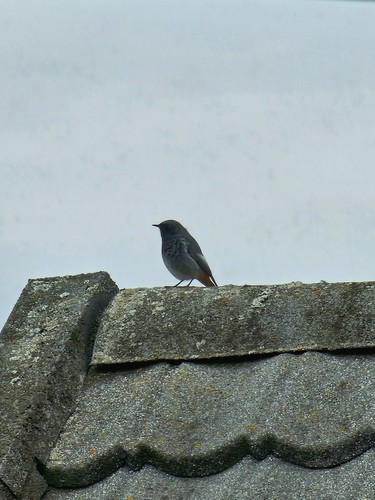
Black Redstart
13-14.5 cm (5.1-5.7 in) long, 23-26 cm wingspan
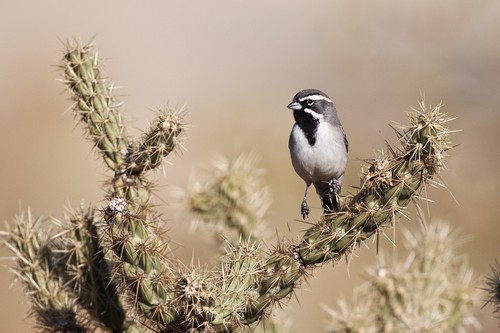
Black-throated Sparrow
12-14 cm (4.7-5.5 in) long, about 19-20 cm (7.5-8 in) wingspan
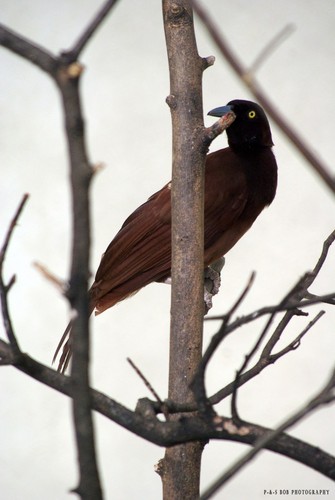
Greater Bird-of-paradise
Body about 43 cm; males with additional flank plumes up to 50 cm and long tail wires
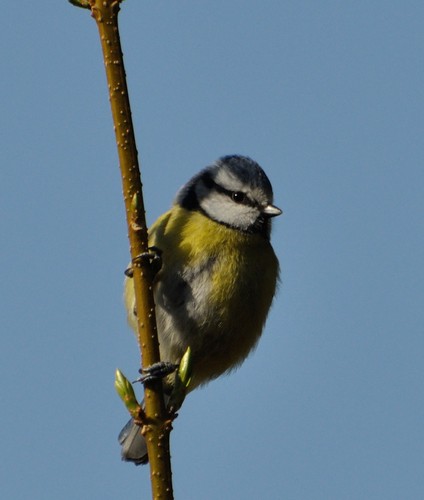
Blue Tit
11-12 cm (4.3-4.7 in) long, 17-20 cm wingspan

Red-billed Quelea
11.5–13 cm long, wingspan about 20–22 cm
White-plumed Antbird
13-14 cm (5-5.5 in) long
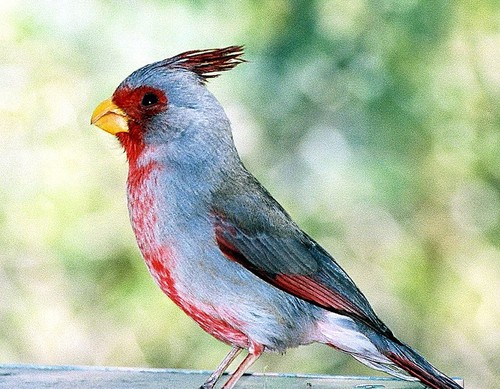
Pyrrhuloxia
19-22 cm (7.5-8.7 in) long, 30 cm wingspan
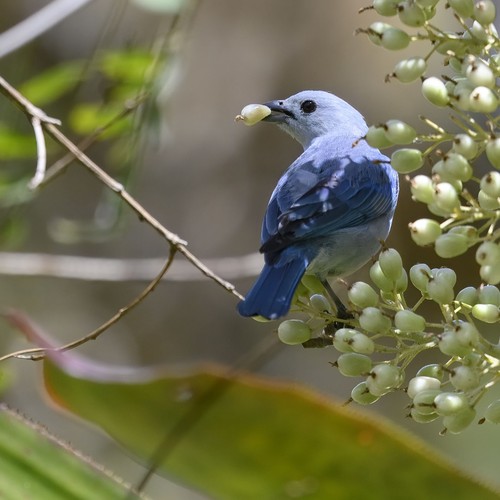
Blue-gray Tanager
16-18 cm (6-7 in) long
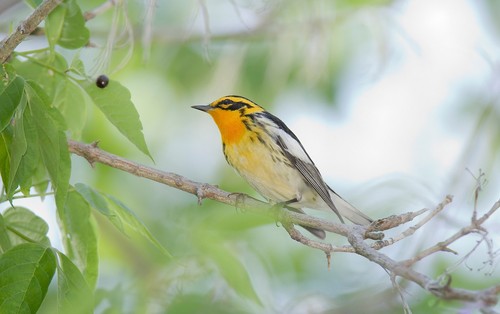
Blackburnian Warbler
11-13 cm (4.3-5.1 in) long, 20-22 cm wingspan
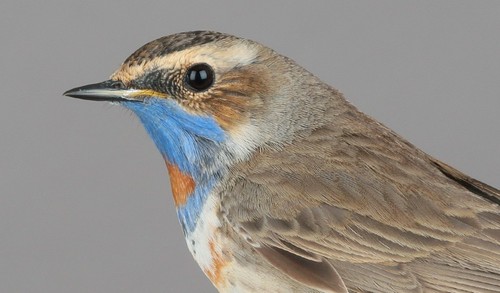
Bluethroat
13-14 cm (5.1-5.5 in) long, 20-22 cm wingspan
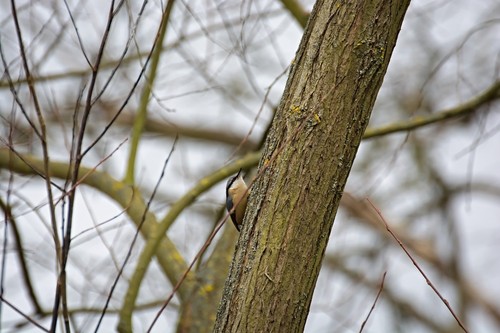
Eurasian Nuthatch
12-14.5 cm (4.7-5.7 in) long, 22.5-27 cm wingspan
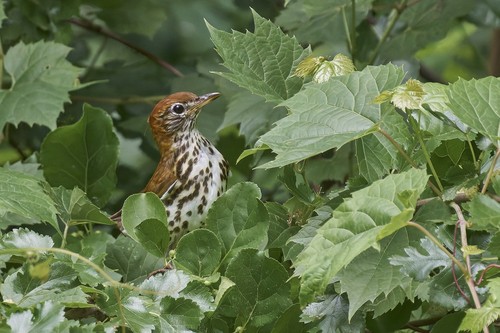
Wood Thrush
19-21 cm (7.5-8.3 in) long, about 33 cm (13 in) wingspan