
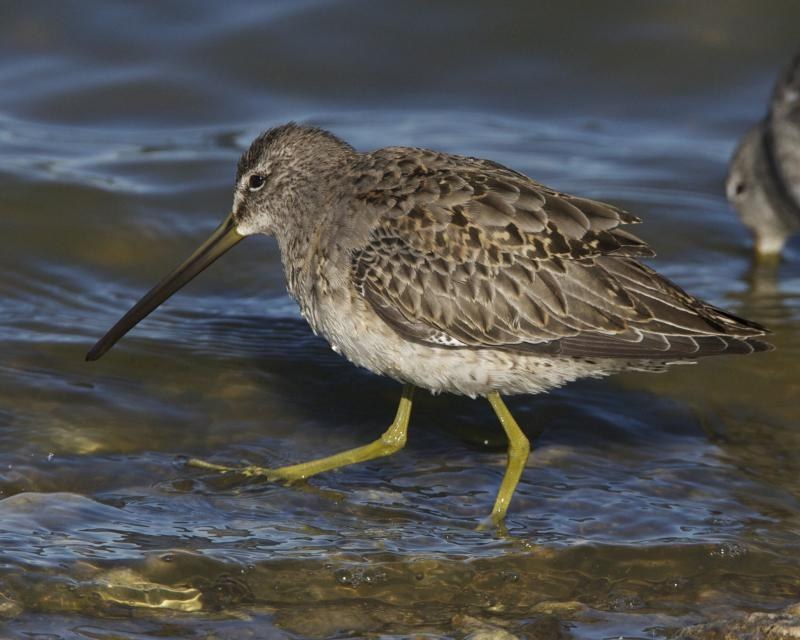
Short-billed Dowitcher
Limnodromus griseus
A medium-large sandpiper with a long, straight bill and a distinctive rapid up-and-down probing action likened to a sewing machine, favoring coastal habitats.
- Size
- 25-30 cm (10-12 in) long, 46-56 cm wingspan
- Habitat
- coastal mudflats, salt marshes, and brackish wetlands
- Type
- shorebird
Spotted a bird like this?
Identify any bird from a photo, free.
Overview
The Short-billed Dowitcher is a medium to large sandpiper best known for its distinctive feeding action: it probes mud rapidly with an up-and-down motion of its long, straight bill, often likened to the needle of a sewing machine.
Breeding plumage varies by subspecies but generally shows orange-rufous underparts with barring on the flanks, while nonbreeding birds are plain gray above and below. The bill is long and straight, though — despite the name — it overlaps considerably in length with the very similar Long-billed Dowitcher, making bill length alone an unreliable field mark.
How to identify it
Key field marks
- Long, straight bill used in a rapid, sewing-machine-like probing action
- Orange-rufous underparts with flank barring in breeding plumage (variable by subspecies)
- Plain gray upperparts and underparts in nonbreeding plumage
- White wedge on the lower back visible in flight
Similar species
- Long-billed Dowitcher: virtually identical in structure and plumage; best separated by voice (Short-billed gives a mellow, multi-note "tu-tu-tu" call, Long-billed a sharp, single "keek"), habitat preference (Short-billed favors coastal/brackish sites, Long-billed favors freshwater), and subtle differences in barring pattern on breeding-plumage flanks and belly.
- Wilson's Snipe: shorter legs, more strongly striped head and back pattern, found in dense marsh vegetation rather than open mudflats.
Habitat & range
Habitat
Short-billed Dowitchers favor coastal habitats such as tidal mudflats, salt marshes, and brackish lagoons, more so than the freshwater wetlands preferred by the closely related Long-billed Dowitcher.
Range and migration
They breed in boreal and subarctic bog and muskeg habitats across Canada and Alaska. They winter along coastal areas of the southern United States, Mexico, Central America, and the northern coast of South America, migrating through much of North America en route.
Behavior & voice
Behavior
Dowitchers often feed in tight groups, probing rapidly and repeatedly in the same spot with their long bills, a rhythmic up-and-down motion that distinguishes them at a glance from most other shorebirds even before plumage details are visible.
Voice
The call is a soft, mellow, multi-noted "tu-tu-tu," a key distinguishing feature from the sharper, single-note call of the Long-billed Dowitcher.
Feeding
They feed by rapidly probing soft mud with a rapid vertical motion, taking insect larvae, marine worms, and small mollusks, often submerging the bill's full length.
Nesting and breeding
Pairs nest on the ground in boreal bog and muskeg habitat, typically laying four eggs in a shallow, well-hidden scrape; incubation and chick-rearing duties are shared between the parents, though details vary by population.
Frequently asked questions
How can you tell a Short-billed from a Long-billed Dowitcher?
The most reliable way is voice: Short-billed gives a mellow, multi-note 'tu-tu-tu' call while Long-billed gives a sharp, single 'keek'; habitat also helps, since Short-billed favors coastal/brackish sites and Long-billed favors freshwater wetlands. Bill length alone is unreliable due to overlap.
Why does the dowitcher's feeding action look like a sewing machine?
It probes mud with a rapid, repetitive up-and-down motion of its long bill in the same spot, resembling the needle action of a sewing machine.
What does a Short-billed Dowitcher eat?
Insect larvae, marine worms, and small mollusks, probed from soft mud in coastal wetlands.
Where does the Short-billed Dowitcher breed?
In boreal and subarctic bog and muskeg habitats across Canada and Alaska.
What habitat does the Short-billed Dowitcher prefer compared to the Long-billed?
It favors coastal and brackish habitats like tidal mudflats and salt marshes, while the Long-billed Dowitcher more often uses freshwater wetlands.
Short-billed Dowitcher guides
In-depth guides for identifying, finding, and understanding Short-billed Dowitcher.
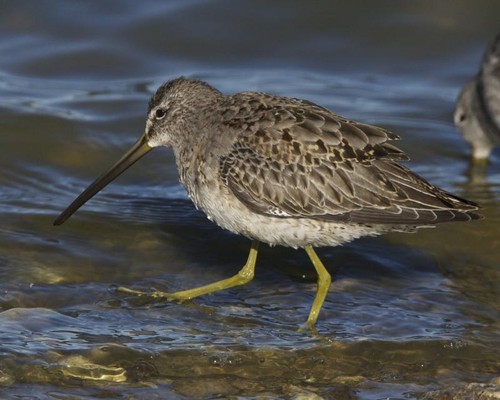
Other birds you may enjoy
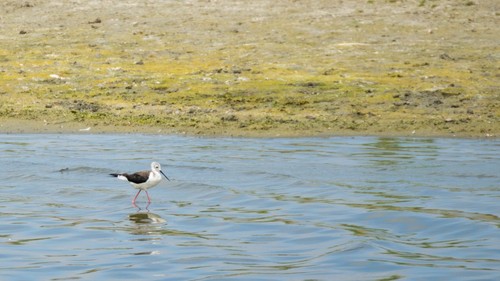
Black-winged Stilt
33-36 cm (13-14 in) long, wingspan 67-83 cm
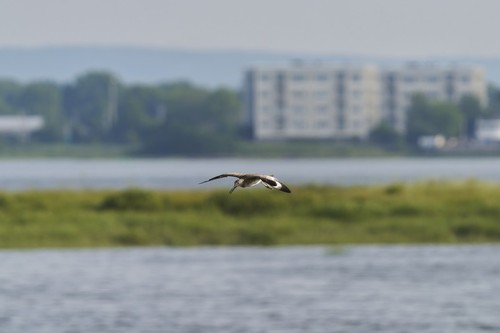
Willet
33-41 cm (13-16 in) long, 65-70 cm wingspan
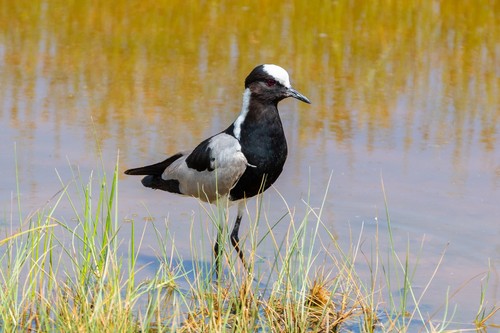
Blacksmith Lapwing
Body length about 30 cm; wingspan 55-65 cm
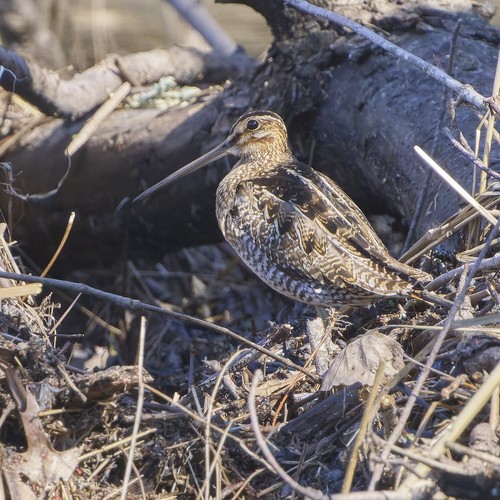
Wilson's Snipe
25-30 cm (10-12 in) long, 39-45 cm wingspan
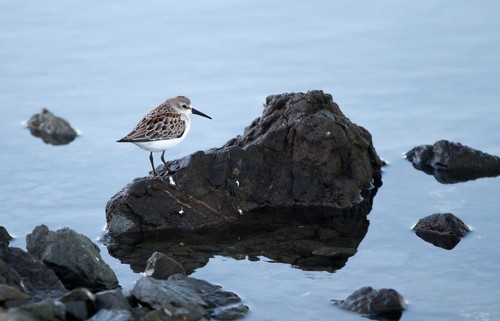
Western Sandpiper
14-17 cm (5.5-6.7 in) long, 28-37 cm wingspan
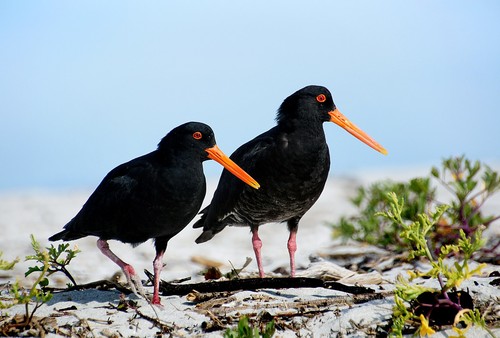
Variable Oystercatcher
46-49 cm (18-19 in) long
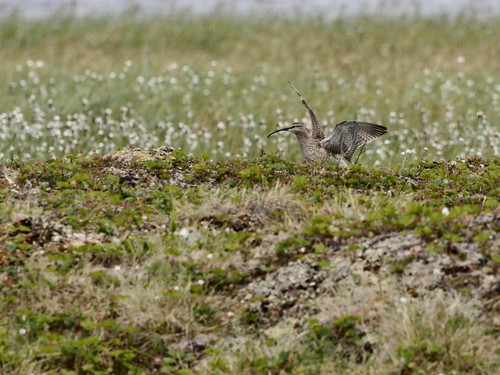
Whimbrel
40-46 cm (16-18 in) long, 76-89 cm wingspan
Wilson's Phalarope
22-24 cm (8.5-9.5 in) long, 37-43 cm wingspan
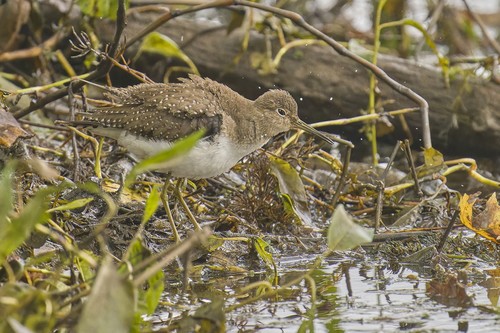
Solitary Sandpiper
19-23 cm (7.5-9 in) long, 50-56 cm wingspan
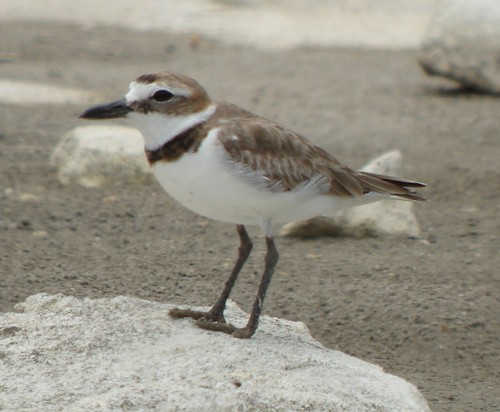
Wilson's Plover
17-19 cm (6.7-7.5 in) long, 45-50 cm wingspan
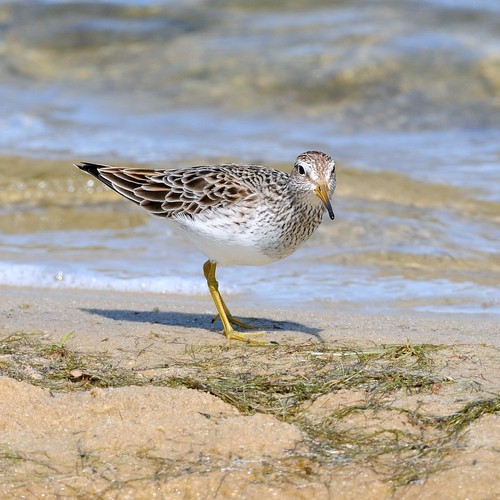
Pectoral Sandpiper
19-23 cm (7.5-9 in) long, 43-49 cm wingspan
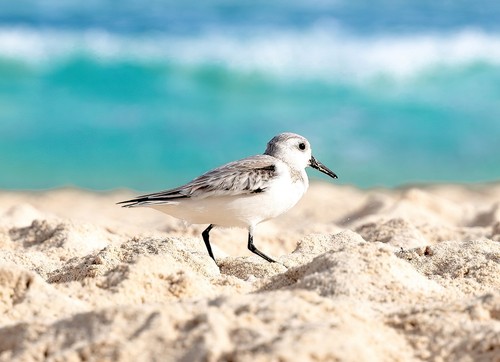
Sanderling
18-20 cm (7-8 in) long, 40-43 cm wingspan