
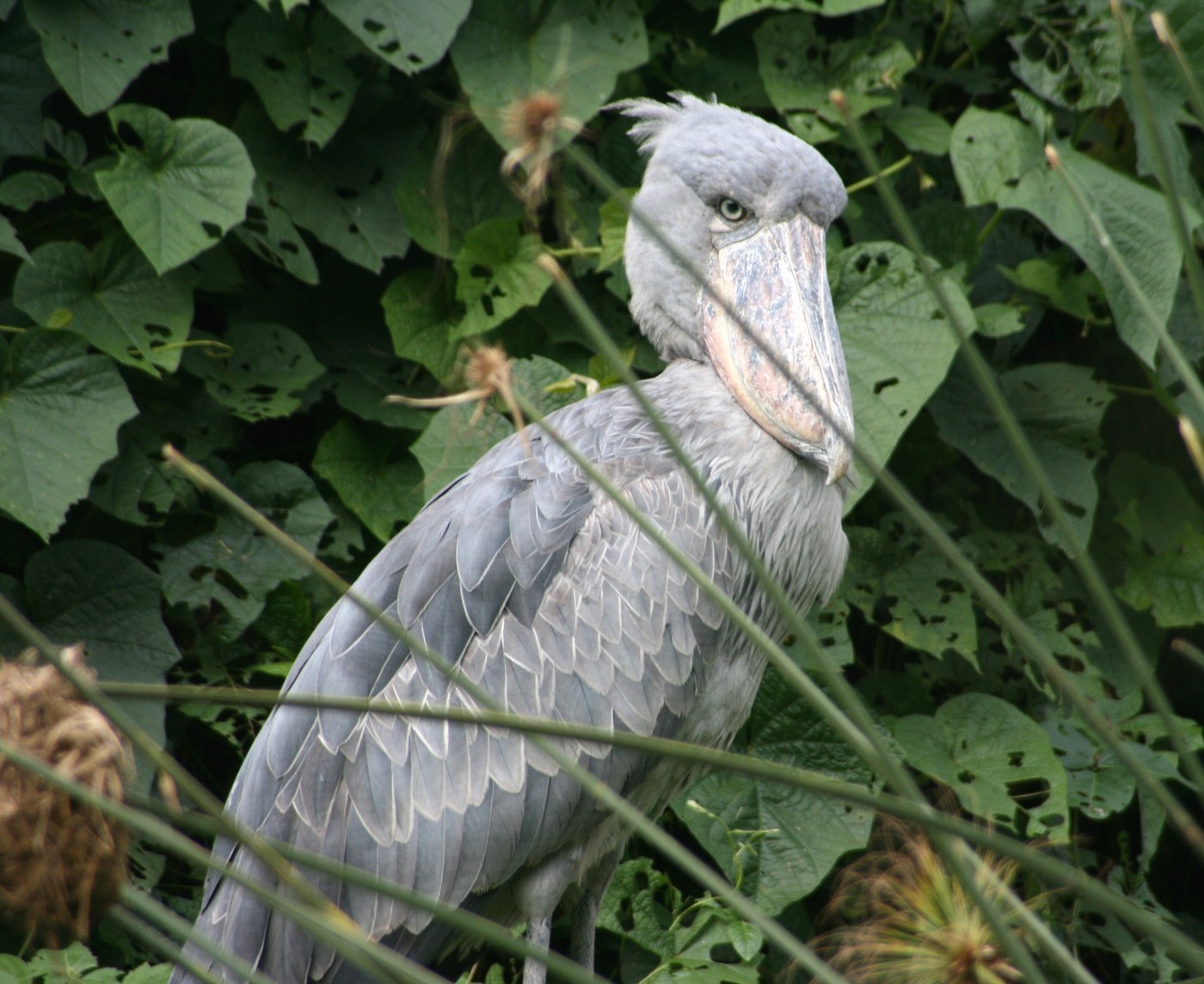
Shoebill
Balaeniceps rex
An enormous, prehistoric-looking wading bird of African swamps, famous for its massive shoe-shaped bill and statue-like patience while hunting.
- Size
- 1.1-1.4 m (3.6-4.6 ft) tall; wingspan around 2.3-2.6 m (7.5-8.5 ft)
- Habitat
- Extensive freshwater swamps and marshes of tropical east-central Africa
- Type
- wading-bird
Spotted a bird like this?
Identify any bird from a photo, free.
Overview
The Shoebill is one of the most distinctive birds in the world, named for its huge, bulbous, shoe-shaped bill that ends in a sharp hooked tip. Standing well over a meter tall with slate-gray plumage and broad rounded wings, it has an unmistakable, almost prehistoric silhouette. Its exact taxonomic relationships were long debated, but it is now generally placed near pelicans.
Shoebills are famed for their extraordinary stillness, standing motionless for long periods while waiting to ambush prey in dense papyrus swamps.
How to identify it
Key Field Marks
- Massive, broad, shoe-shaped bill with a sharp hooked tip
- Large size with a hunched, statuesque posture
- Slate-gray plumage overall
- Broad, rounded wings often held in a shaggy crest at the back of the head
- Pale eyes that give an intense, staring expression
Similar Species
- The bill shape alone makes the Shoebill unmistakable; no other African bird has anything resembling it
- Superficially recalls a large stork or heron in silhouette, but the enormous bill immediately distinguishes it
Habitat & range
Range
Patchily distributed across tropical east-central Africa, including South Sudan, Uganda, the Democratic Republic of Congo, Zambia, Tanzania, and Rwanda.
Habitat
Extensive freshwater swamps, marshes, and floodplains dominated by papyrus and reeds, particularly areas with poorly oxygenated water that concentrate lungfish and other prey.
Migration
Generally sedentary and resident within suitable swamp habitat, though some local movement may occur with seasonal water level changes.
Behavior & voice
Behavior
Solitary and famously motionless, standing for long periods before striking suddenly at prey with a fast, dramatic lunge and dropping of the whole body. Territorial and typically avoids close contact with other Shoebills outside of pairs.
Voice
Mostly silent away from the nest; at close range delivers a distinctive rapid bill-clattering sound used in greeting displays and communication between mates and chicks.
Feeding
Ambush predator of fish, particularly lungfish and catfish, also taking frogs, water snakes, baby crocodiles, and other small aquatic animals from shallow, oxygen-poor swamp water.
Nesting & Breeding
Builds a large flattened nest platform of aquatic vegetation on floating mats or small islands within the swamp; typically lays one to three eggs, though usually only a single chick survives to fledge after several months of parental care.
Frequently asked questions
Why does the Shoebill have such a big bill?
Its huge, hook-tipped bill helps it seize and subdue large slippery prey like lungfish and catfish in murky swamp water.
Where do Shoebills live?
In freshwater papyrus swamps and marshes of tropical east-central Africa, including South Sudan, Uganda, and the DRC.
Is the Shoebill related to storks?
It was long classified with storks, but genetic evidence places it closer to pelicans; it is now usually placed in its own family.
Why is the Shoebill considered Vulnerable?
Habitat loss, disturbance, and a naturally small, fragmented population make it sensitive to further decline.
How does a Shoebill hunt?
It stands motionless for long periods, then strikes suddenly with a rapid forward lunge to seize prey in its powerful bill.
Shoebill guides
In-depth guides for identifying, finding, and understanding Shoebill.
Other birds you may enjoy
Demoiselle Crane
85-100 cm (33-39 in) long, 155-180 cm wingspan
Boat-billed Heron
41-56 cm (16-22 in) long
Purple Heron
78-90 cm (31-35 in) long, 120-152 cm wingspan
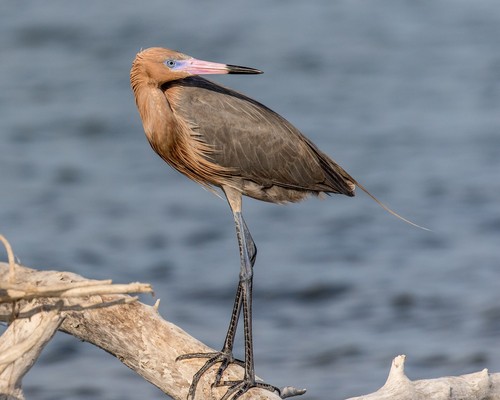
Reddish Egret
68-82 cm (27-32 in) long, 116-125 cm wingspan
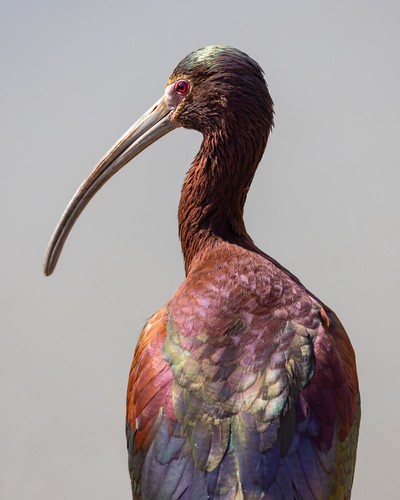
White-faced Ibis
46-56 cm (18-22 in) long, 88-93 cm wingspan
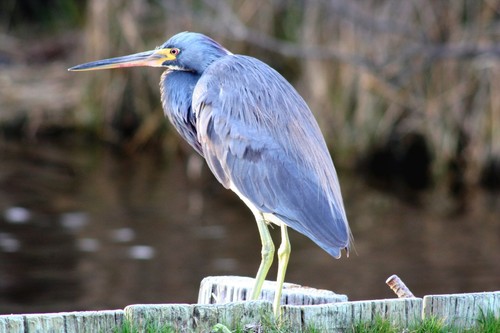
Tricolored Heron
61-76 cm (24-30 in) long, about 96 cm wingspan
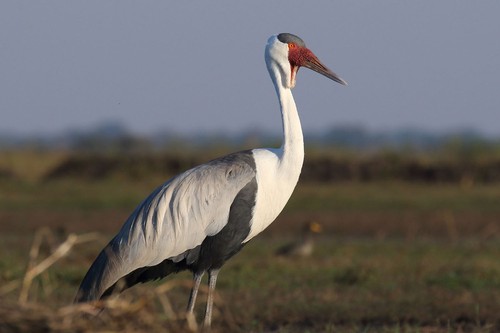
Wattled Crane
120-175 cm (47-69 in) tall, one of the tallest cranes, wingspan up to about 230 cm (7.5 ft)
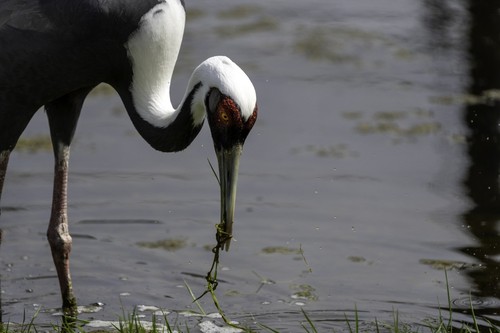
White-naped Crane
112-125 cm (44-49 in) long, 195-210 cm wingspan
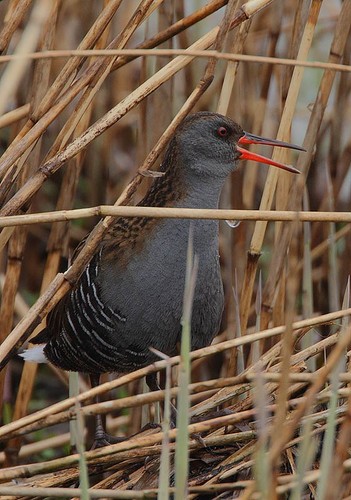
Water Rail
23-28 cm (9-11 in) long, wingspan 38-45 cm
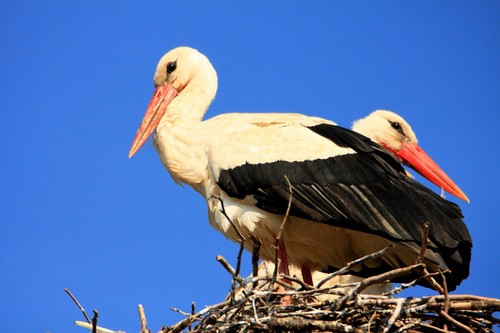
White Stork
100-125 cm (39-49 in) long, 155-215 cm wingspan
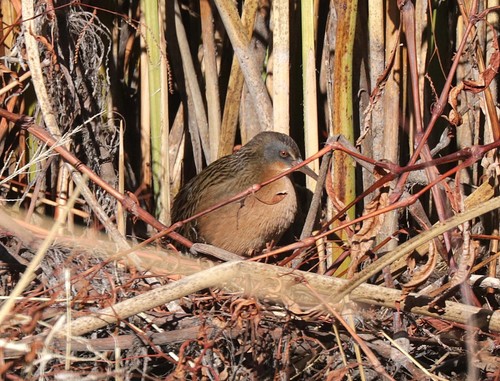
Virginia Rail
20-27 cm (8-11 in) long, wingspan 32-38 cm
Wattled Jacana
17-23 cm (7-9 in) long