
Shoebill Identification Guide
An unmistakable giant African wetland bird with a massive, bulbous shoe-shaped bill, gray plumage, and a statuesque, motionless hunting posture.
Read the full Shoebill encyclopedia entry →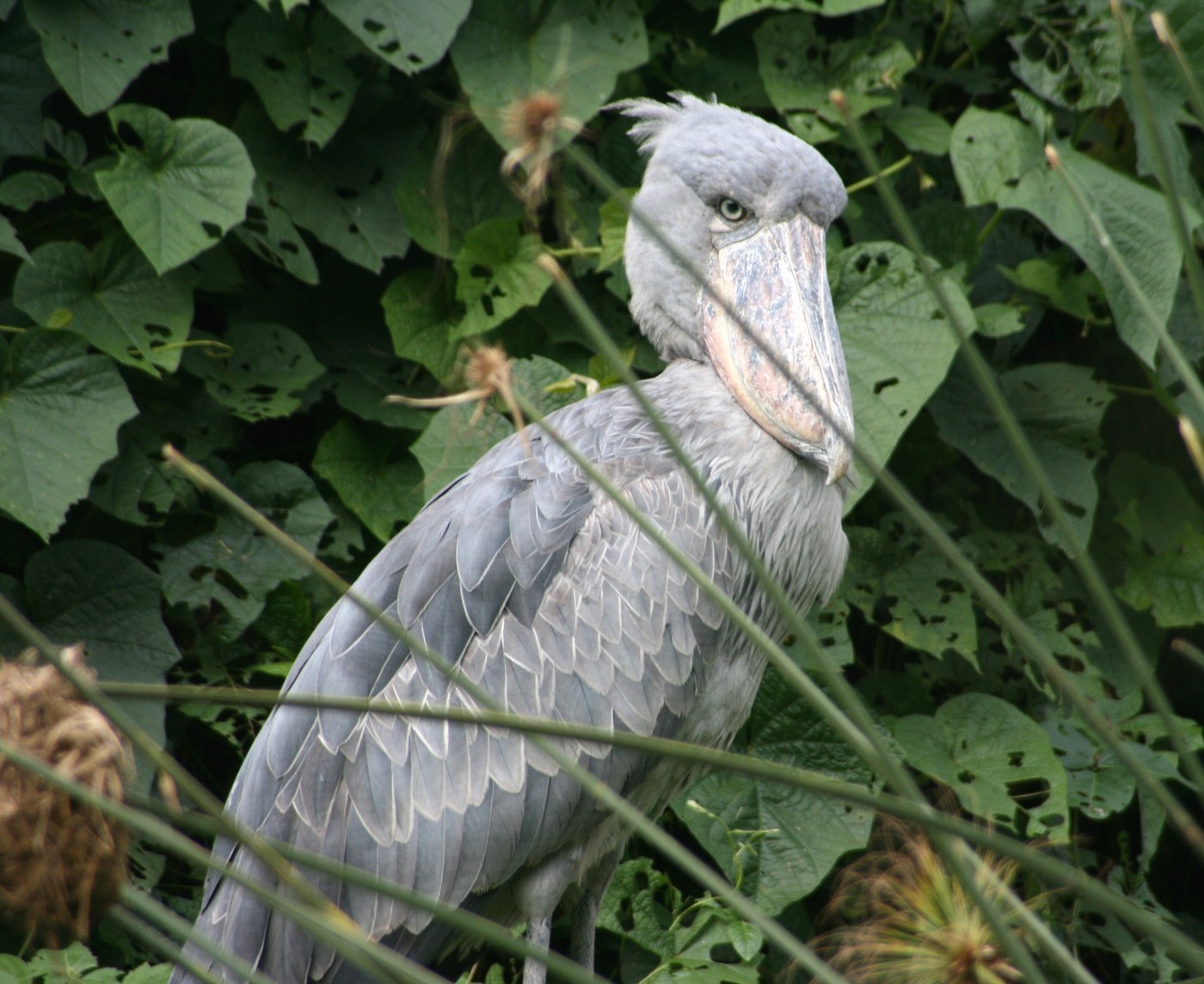
Key Field Marks
- Size & shape: A huge, stork-like wading bird standing about 110–140 cm tall, with a heavy body, broad wings, and a short, thick neck.
- Bill: The defining feature — an enormous, bulbous, pale grayish bill shaped like a Dutch clog or shoe, with a sharp hooked tip and a visible ridge (culmen) running along the top.
- Plumage: Overall slate-gray, darker on the crown, with a shaggy crest of feathers at the back of the head that can be raised.
- Legs: Long, dark gray legs suited to wading in swampy vegetation.
- Behavior: Renowned for standing motionless for long periods while hunting, then striking explosively at prey (mainly lungfish, catfish, and other large fish) with a lunging "collapse" onto the target; often engages in bill-clattering displays.
Separating It From Similar Species
- The Shoebill's massive shoe-shaped bill makes it unmistakable and unlikely to be confused with any other bird within its range. At a distance, its gray color and large size might suggest a heron or stork, but no African heron or stork shares its bill shape, hunched stationary posture, or shaggy nape crest.
- Goliath Heron: Also very large and found in similar wetland habitat, but has a slender dagger-like bill, chestnut-and-gray plumage, and an active hunting style rather than the Shoebill's frozen ambush posture.
- Marabou Stork: Large with a heavy bill, but has a bare pink head/neck and a very different flat, straight bill shape, and is often seen scavenging rather than hunting fish in swamps.
Where & When to See It
- Habitat: Extensive freshwater swamps, papyrus and reed marshes, and floodplains with poorly oxygenated water that concentrates lungfish and other prey.
- Range: Found in a broad but patchy band across east-central tropical Africa, including South Sudan, Uganda, Rwanda, eastern DR Congo, Zambia, and Tanzania; notable sites include the Bangweulu Swamps, Mabamba Bay, and the Sudd.
- Season: Non-migratory resident throughout its range; sightings are possible year-round, though water levels and boat access to swamps can vary seasonally.
Voice
- Largely silent away from the nest; the main vocal/acoustic signal is a loud, rapid bill-clattering display given between mates and at the nest, sounding like a rattling machine-gun burst rather than a true vocalization.
Frequently asked questions
What makes the Shoebill so easy to identify?
Its enormous, bulbous, shoe-shaped bill is unlike that of any other bird, making the Shoebill essentially unmistakable wherever it occurs.
Where is the best place to see a Shoebill?
Reliable sites include Mabamba Bay and Murchison Falls in Uganda, the Bangweulu Swamps in Zambia, and the Sudd wetlands in South Sudan, among other extensive papyrus swamps in east-central Africa.
What does the Shoebill eat and how does it hunt?
It primarily hunts lungfish, catfish, and other large fish (as well as occasional frogs, snakes, and even young crocodiles) by standing motionless for long periods before lunging suddenly to seize prey.
Does the Shoebill migrate?
No, it is non-migratory and resident year-round within its swamp habitats, though local movements can occur with changing water levels.